5 min read
Orpine plant: how to grow, identify and care for it
Hylotelephium telephium
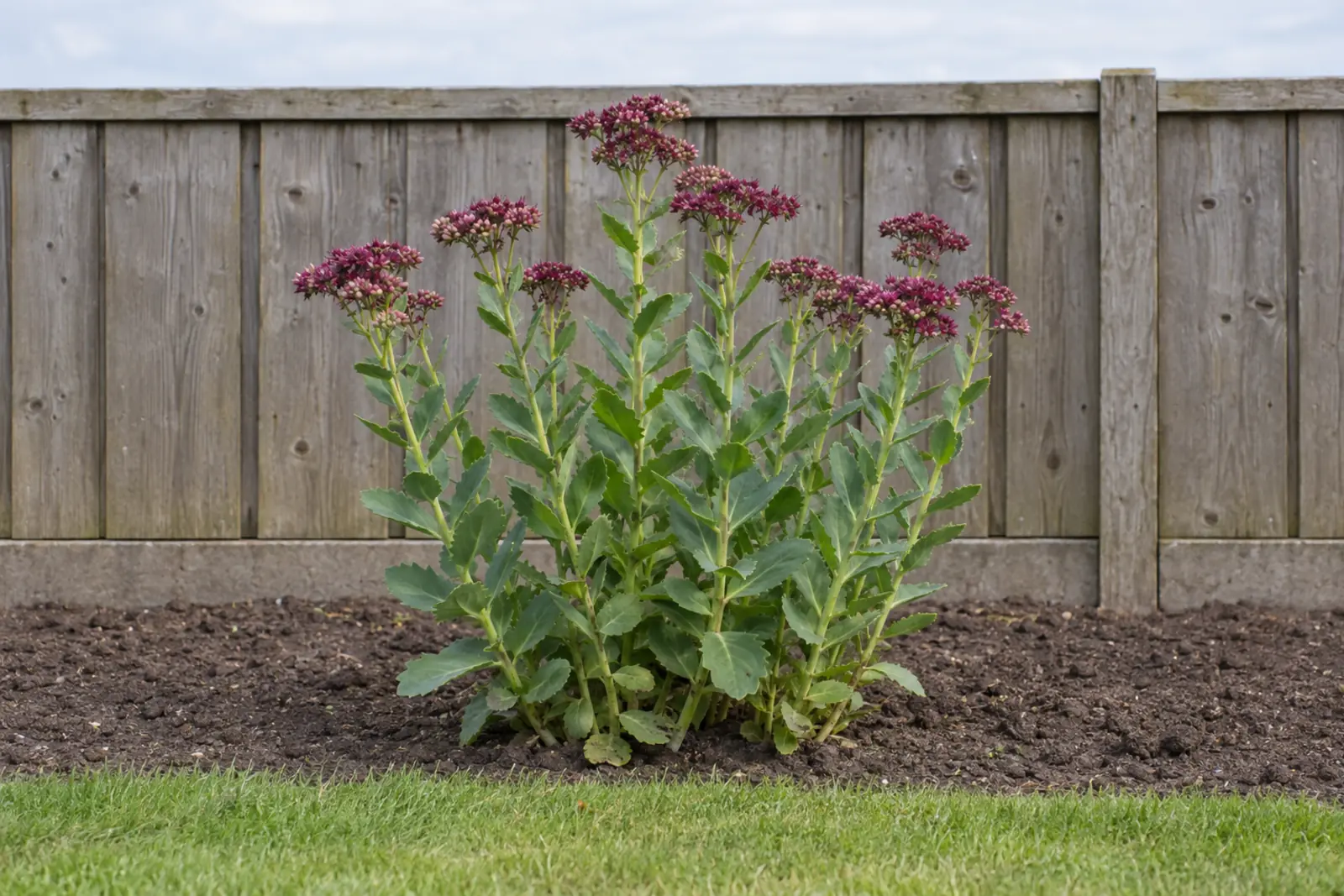
Orpine (Hylotelephium telephium) is a native succulent plant, 25 to 60 centimetres tall. Unbranched stems carry thick, light green to blue-green leaves. From June to September, dense clusters of small purple-red star-shaped flowers open on top. The plant wants full sun and soil that drains well.
Orpine at a glance
| Feature | Orpine |
|---|---|
| Height | 0.25 to 0.6 m |
| Spread | Up to 0.5 m per clump |
| Full grown after | 2 to 5 years |
| Sun | Full sun |
| Soil | Free-draining, preferably not fertilised |
| Water | Little: copes well with drought |
| Maintenance | Low: one cutback in spring |
| Flowers | June to September, purple-red to pink |
| For bees | Yes: plenty of nectar, July to September |
| Hay fever | Not or weakly allergenic |
| Leaves | Drop in autumn |
| Hardy | Yes |
| Native | Yes |
| Poisonous | No: not known to be a risk |
| Pricks or stings | No |
| Price, young | About €3.50 to €4.61 per plant, young in a small pot |
| Price, grown | Not for sale |
- Leaf
- April to October
- Flower
- June to September
- Fruit
- no noticeable fruit
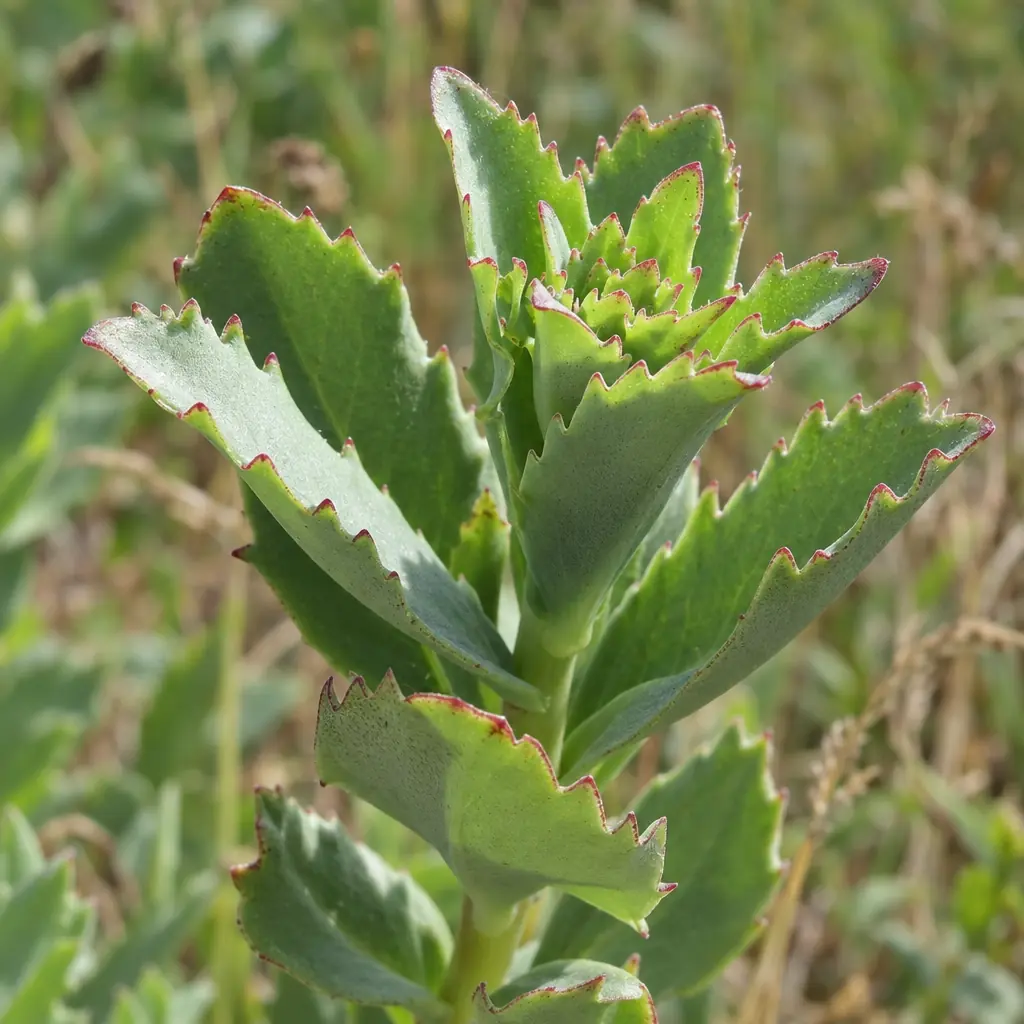
Leaf 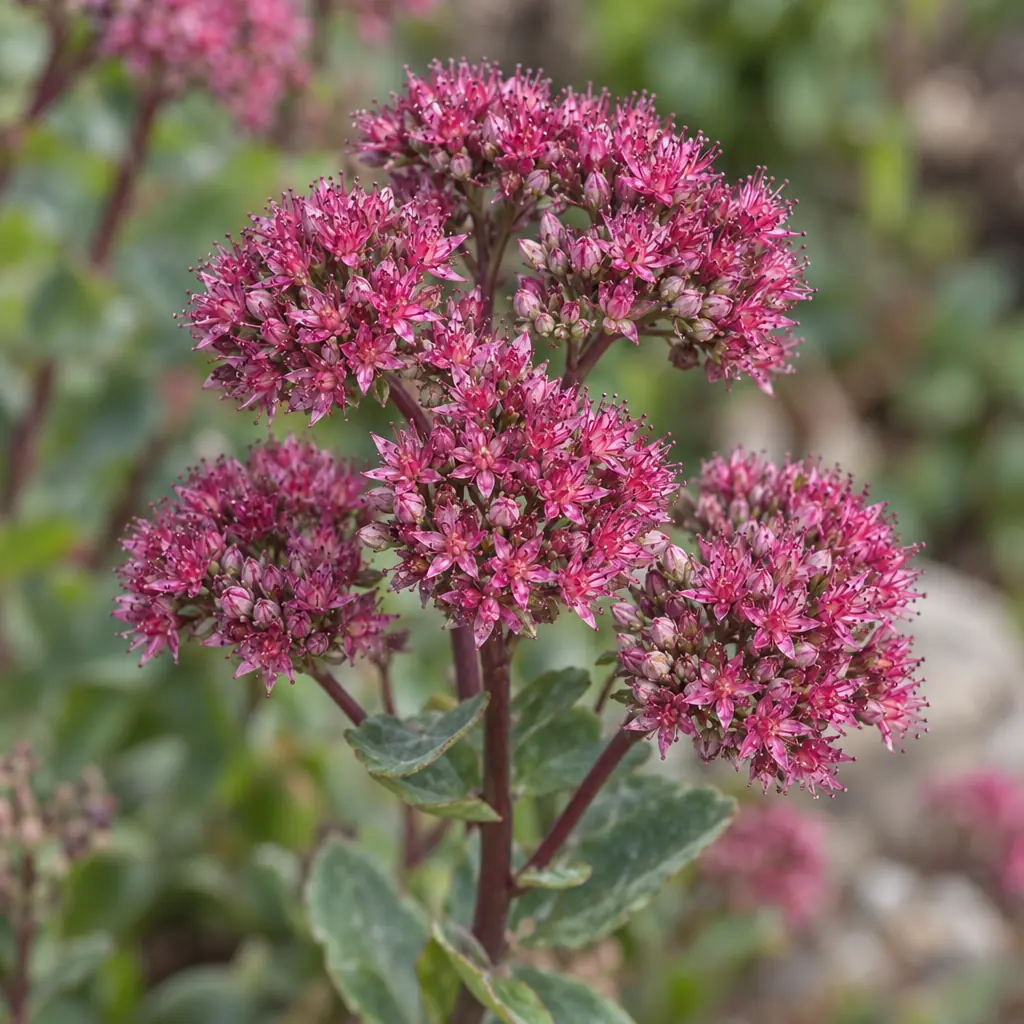
Flower
How do you recognise orpine?
Start with the leaves. Each leaf is thick, fleshy and hairless, 5 to 8 centimetres long. The colour ranges from light green to blue-green. The edge is coarsely scalloped or toothed, sometimes smooth too. Along the stem the leaves sit one at a time, though it can look as if they stand in pairs.
The stems are unbranched. They stand upright or curve upward in an arch. At the top sits a dense cluster of many flowers, each 0.8 to 1 centimetre wide. Each flower has five petals in a star shape. Ripe fruit is rarely seen.
Garden centres also sell ice plant (Hylotelephium spectabile), a species from China and Korea. Look at the leaves and flowers to tell them apart. Ice plant has broad, shallowly scalloped leaves and bright pink flowers in flat clusters up to 15 centimetres wide.
Where does orpine grow best?
Orpine belongs in full sun. Such a spot gets more than six hours of direct sunlight a day around midsummer. The soil can be dry or moist, as long as water drains through it well. Chalky or neutral soil suits it fine. In the wild, the plant grows on verges, dyke slopes and along railway tracks.
Avoid these spots for orpine:
- Soil that stays wet for a long time. The base and roots can then rot.
- A richly fertilised border. Too much feeding makes the stems weak, and they fall over.
In autumn, orpine dies back above ground. If you leave the dead stems and their flower heads, the border keeps its shape through winter. Animals then find food and shelter there. If you cut them away in autumn, only bare soil remains until spring.
 The same border in August and in January, with the dead stems cut away in autumn. This is a generated image, not a photograph.
A full-grown clump is at most half a metre wide, so it also fits at the front of a narrow border. On the plan of your plot, the app draws orpine at a grown plant's width, not at pot size.
Planting and caring for orpine
The best times to plant are autumn, while the soil is still warm, and spring. Nurseries sell the wild species as a young plant in a small pot. Such a potted plant can also go into the ground outside those months, as long as it is not freezing and the soil is not waterlogged. Dig a hole just as deep and wide as the rootball. Then water generously, even if the soil already feels moist.
Plan on nine plants per square metre, which means just over 30 centimetres between two plants. On planting day that looks sparse. After a few years, the clumps grow into each other. Keep the soil moist in the first year. After that, orpine manages on rainwater alone.
| When | What to do |
|---|---|
| Early spring | Cut last year's dead stems back to the ground, before the new shoots appear |
| Late May, if you want | Cut new stems back by half, for a lower clump that flops open less |
Many birds breed from March through July, and some species continue into August. Before you cut, check between the stems for a nest first.
What can go wrong?
There are few or no flowers. Its spot is too dark, or it is getting too much feed. Move the clump to a sunny spot in spring, and stop feeding it.
A potted plant grows poorly and hangs limp. Vine weevil larvae may be feeding on the roots. That damage mostly happens to plants in pots.
The leaves are suddenly stripped bare. Look for small caterpillars on the plant. These may be caterpillars of the orpine ermine. A healthy plant recovers from this and often grows new leaves the same year. So leave the caterpillars alone.
Which insects and birds use orpine?
Orpine is the host plant of the orpine ermine (Yponomeuta sedella), a moth from the small ermine group. The caterpillars of this moth eat the fleshy leaves.
In summer, the flowers give plenty of nectar. Which bees, butterflies and moths visit this wild species is not well described. No bird that uses orpine is known by name either.
Is orpine poisonous or edible?
Orpine is not known to be poisonous: no risk has been described. That says nothing about eating it, because edibility is a separate question. The leaves count as edible, raw or cooked. The root is only edible when cooked.
The photos on this page were made with AI, based on real photos and descriptions of this plant.
Frequently asked questions
How tall does orpine grow?
Usually 25 to 60 centimetres. A clump grows at most half a metre wide.
How much sun does orpine need?
Full sun: a spot that gets more than six hours of direct sunlight a day around midsummer. In too much shade, the stems become weak and few flowers appear.
When do you cut back orpine?
Early in spring, last year's dead stems are cut back to the ground. If you want a lower, sturdier clump, cut the new stems back by half in late May.
Is orpine poisonous?
No, no risk is known. That does not automatically mean the plant is edible.
How is orpine different from ice plant?
Ice plant (Hylotelephium spectabile) is a different species, originally from China and Korea. Its leaves are broad and shallowly scalloped, and its pink flowers sit in flat clusters up to 15 centimetres wide. Wild orpine is native to the Netherlands.
Sources (20)
- Duistermaat, Sparrius & Denters, Standaardlijst van de Nederlandse flora 2020 (Gorteria 43)
- NDFF Verspreidingsatlas — Hylotelephium telephium
- NDFF Verspreidingsatlas — Roze hemelsleutel
- Flora van Nederland — Hemelsleutel
- Wilde planten in Nederland en België — Hemelsleutel
- RHS — Hylotelephium telephium
- RHS — Hylotelephium spectabile
- RHS — How to grow hylotelephium
- RHS — Shade gardening (definities zon en schaduw)
- RHS — Perennials: planting
- RHS — Perennials: cutting back
- PFAF — Sedum telephium
- Pollennieuws / Flora van Nederland — Aandachtspunten hooikoorts vriendelijke tuin
- Imkerpedia — Drachtplanten
- De Vlinderstichting — Stippelmotten pakken bomen in
- Vogelbescherming — Snoeien in het broedseizoen, mag dat?
- Arjan Schepers Vaste Planten — Hylotelephium telephium subsp. maximum (prijs, plantdichtheid)
- De Cruydt-Hoeck — Hemelsleutel (prijs)
- Wikimedia Commons — Leaf: photo by AnRo0002 (CC0)
- Wikimedia Commons — Flower: photo by Averater (CC BY 4.0)