5 min read
Tansy plant: recognise it, grow it, keep it in check
Tanacetum vulgare
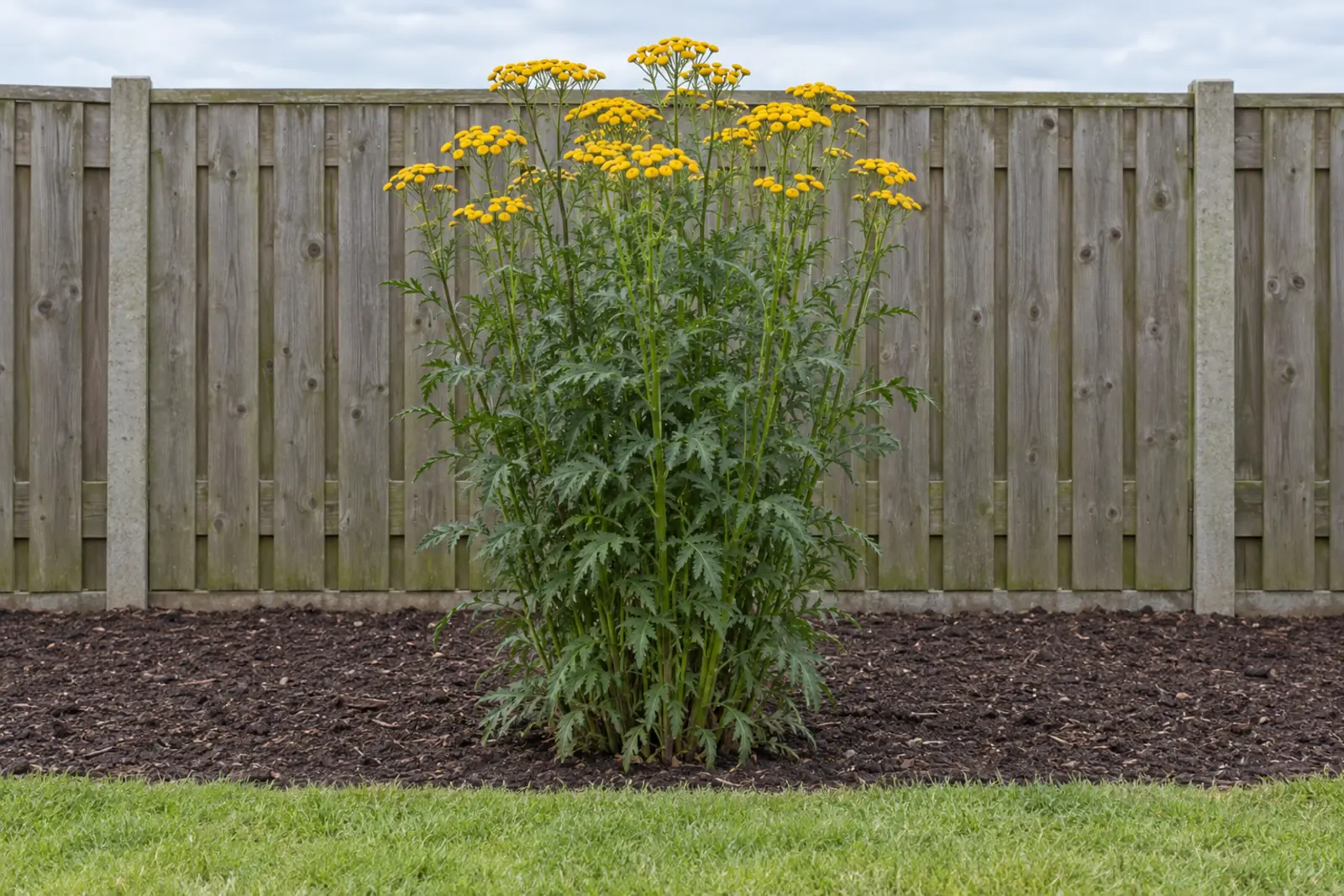
Tansy (Tanacetum vulgare) is a native perennial plant, 60 to 120 centimetres tall. From July to September its stems carry flat clusters of yellow buttons. The leaves look like fern fronds. Tansy likes a sunny spot, and bees collect nectar and pollen from the flowers.
Tansy at a glance
| Feature | Tansy |
|---|---|
| Height | 0.6 to 1.2 m |
| Spread | Up to 0.5 m, wider through runners |
| Full grown after | 2 to 5 years |
| Sun | Full sun |
| Soil | Dry to moist, fertile |
| Water | Little: copes with dry soil |
| Maintenance | Average: curb the runners, cut back in March |
| Flowers | July to September, yellow |
| For bees | Yes: nectar and pollen, July to September |
| Hay fever | Not or weakly allergenic |
| Leaves | Drop in autumn |
| Hardy | Yes |
| Native | Yes |
| Poisonous | Mildly: mainly the leaves |
| Pricks or stings | No |
| Price, young | About €2.45 to €4.09 each, in a small pot |
| Price, grown | Not for sale |
- Leaf
- April to October
- Flower
- July to September
- Fruit
- no noticeable fruit
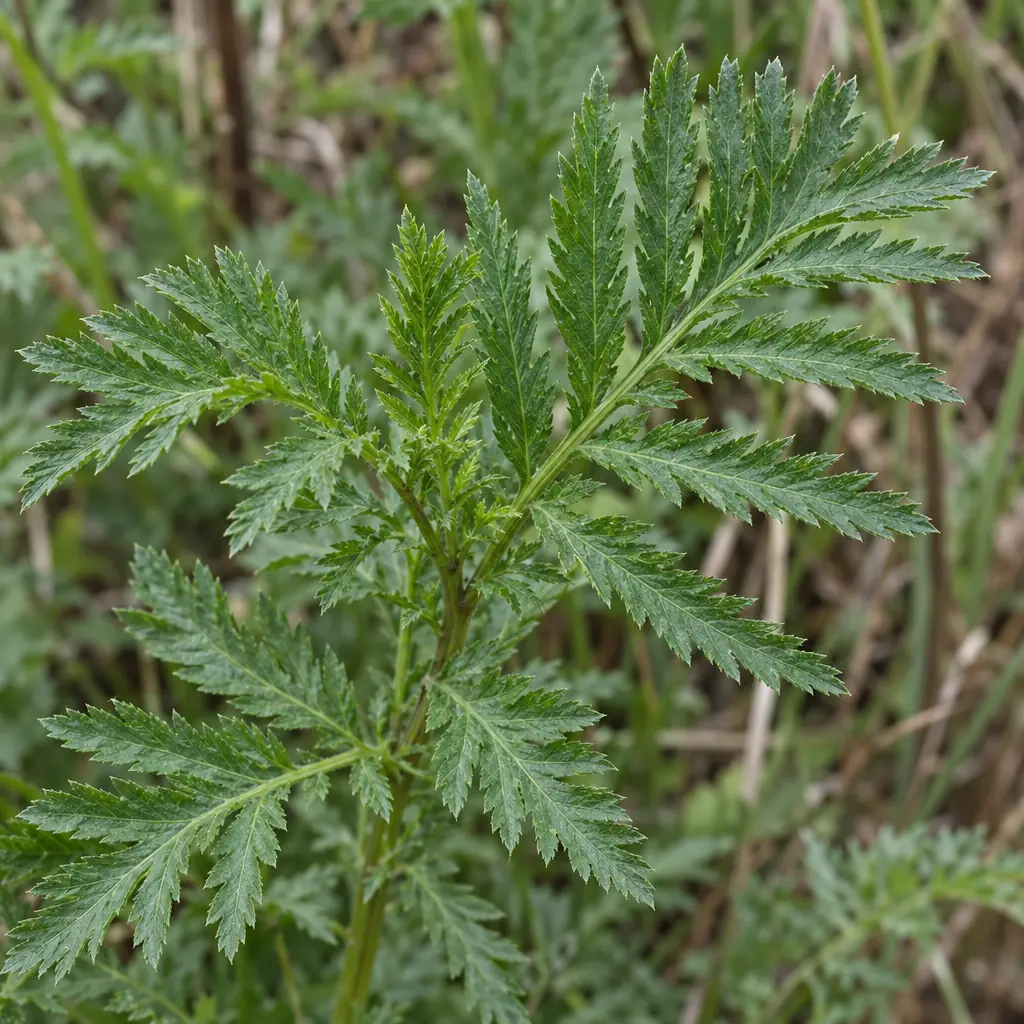
Leaf 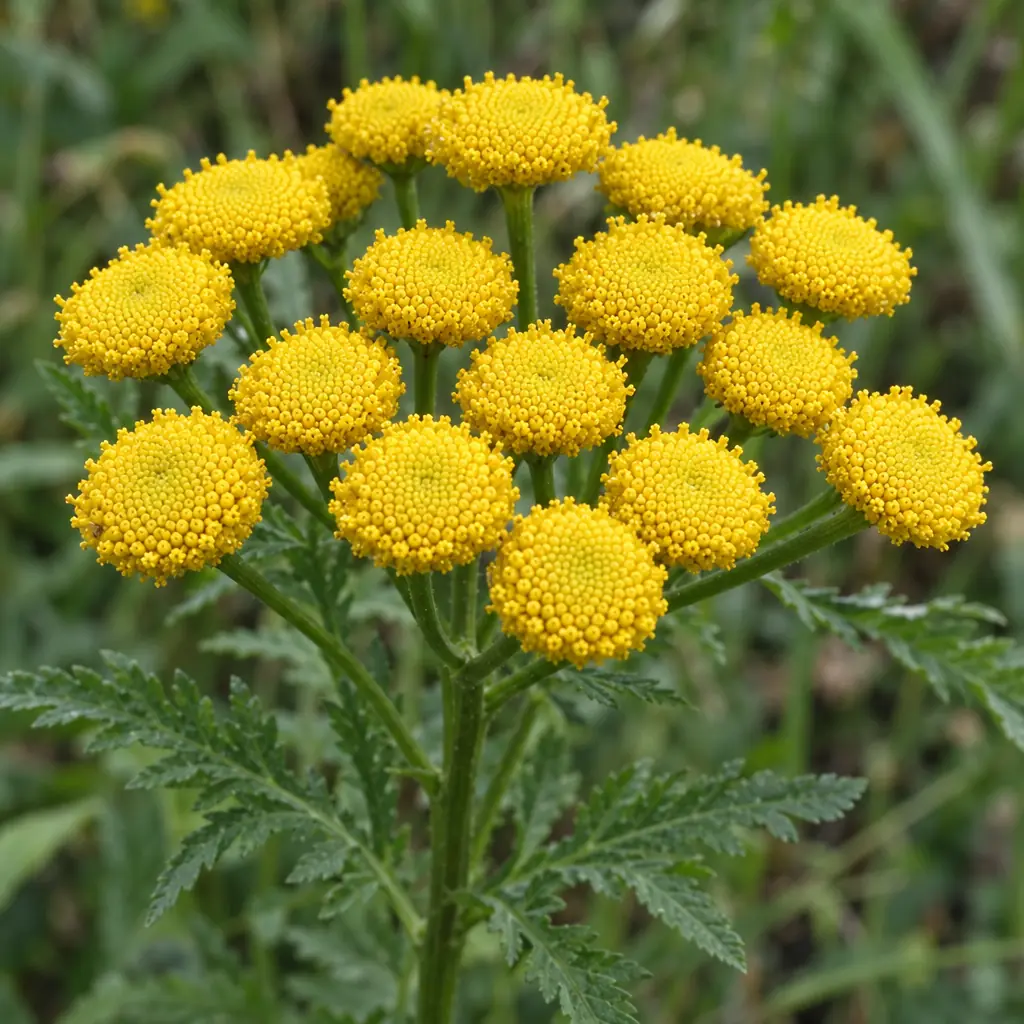
Flower
How do I recognise tansy?
Start with the leaves. Each leaf is dark green and 5 to 25 centimetres long. Deep cuts divide it into narrow segments, each with a coarsely toothed edge and a pointed tip. Rubbed between your fingers, a leaf smells spicy.
The stems grow stiffly upright and feel tough. Only near the top do they branch. There the flower heads sit close together in a broad, flat cluster, each head 7 to 12 millimetres across. Every head is a yellow button made only of tiny tubular florets, with no petals around it. After flowering, small nutlets ripen inside the heads.
Common ragwort (Jacobaea vulgaris) also flowers yellow in broad clusters. To tell the two apart, look at the edge of a flower head. Ragwort has twelve to fifteen golden-yellow ray florets, so each head looks like a small yellow daisy. Tansy never has ray florets.
Where does tansy grow best?
Plant tansy in full sun: a spot that gets more than six hours of direct sunlight a day around midsummer. The soil can be dry or moist, preferably rich in nutrients. In the wild, tansy grows on road verges, along railways, on dikes and on disturbed ground.
Two spots in a garden do not suit tansy:
- A spot in the shade. Tansy does not grow there.
- A narrow border between other perennials. The rhizome sends out runners, and these shoot up among the neighbouring plants.
In autumn, tansy dies back above ground. Many gardeners leave the dead stems in place through the winter. The stems give the border shape, and wildlife finds food and shelter among them.
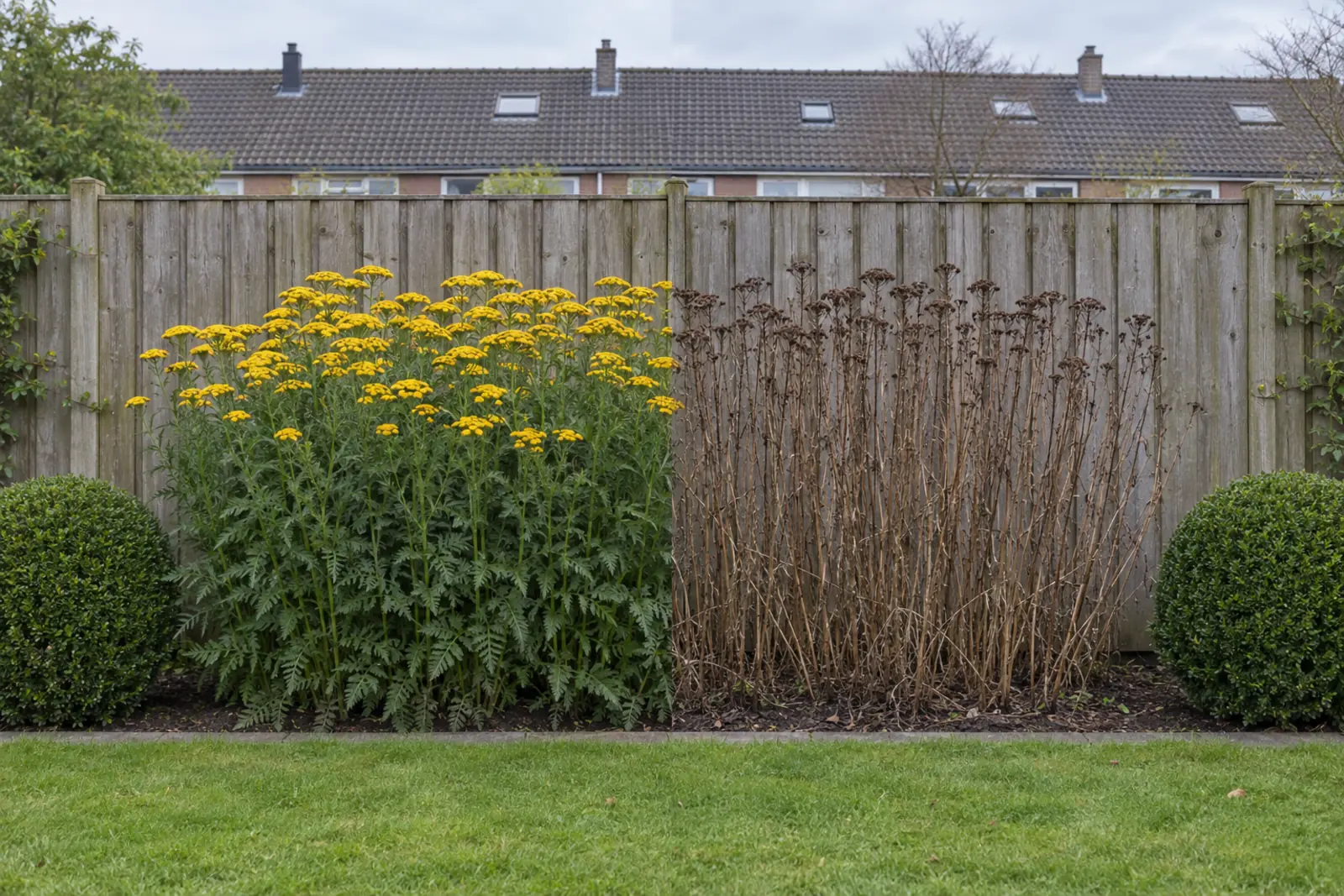 The same border in August and in January. This is a generated image, not a photograph.
Around a creeping clump, the question is how much room is left for other perennials. On the plan of your plot, the app draws tansy at a grown plant's width, not at pot size.
How to plant and care for tansy
Nurseries sell tansy as a young plant in a small pot, labelled boerenwormkruid in Dutch shops. A potted plant can go into the ground at any time of year, as long as the soil is not frozen or waterlogged. Water it in well after planting, even when the soil is already wet. In the first year the plant needs regular watering, though later on it tolerates drought.
Keep about 40 centimetres between two plants, which comes to five to seven per square metre. Around a small potted plant, that looks empty at first. Within a few years the clumps close the gaps.
| When | What to do |
|---|---|
| From March | Cut the dead stems off just above the ground, without touching the new shoots |
| When the clump creeps too far | Cut off the runners at its edge with a spade |
Many birds breed from March through July, and some keep going into August. Before you cut in March, look between the old stems for a nest.
Tansy problems and what to do
The plant pops up all over the border. Those are runners from the rhizome. Cut them off with a spade and dig out the pieces.
Small caterpillars sit in the leaves and flowers. These may be caterpillars of the bordered pug (Eupithecia succenturiata). From July to October they eat both leaves and flowers at night. Leave them alone: this moth is listed as vulnerable on the provisional Dutch Red List.
A newly planted clump droops. The soil around the young roots is too dry. Give it a good soaking straight away.
Which insects and birds use tansy?
Tansy is a host plant for moths. The caterpillar of the bordered pug lives mainly on mugwort and tansy. This moth is found scattered across the whole country, sometimes in gardens as well.
The caterpillar of the tawny speckled pug (Eupithecia icterata) feeds mainly on yarrow, but also on tansy. That moth is fairly rare and lives mostly on sandy soils and in the dunes.
No bird that uses tansy has been described by name.
Is tansy poisonous?
Tansy is mildly poisonous. The poison sits mainly in the leaves. Eaten in large amounts, the plant is poisonous. Grazing livestock leave tansy alone for that reason, as they do with common ragwort.
The photos on this page were made with AI, based on real photos and descriptions of this plant.
Frequently asked questions
How tall does tansy grow?
Usually 60 to 120 centimetres. A clump grows up to half a metre wide, and after that it keeps spreading through runners.
Does tansy spread?
Yes. Its rhizome sends out runners, so the plant can spread widely. With a spade, cut off runners that go too far.
When should you cut back tansy?
From March. Cut last year's dead stems off just above the ground, and spare the new shoots.
Is tansy poisonous?
Yes, mildly. The poison is mainly in the leaves, and eaten in large amounts the plant is poisonous.
Is tansy native to the Netherlands?
Yes, tansy is originally native to the Netherlands. The species grows here along road verges and railways, on dikes and on river dunes.
Sources (23)
- Duistermaat, Sparrius & Denters, Standaardlijst van de Nederlandse flora 2020 (Gorteria 43)
- NDFF Verspreidingsatlas — Tanacetum vulgare
- NDFF Verspreidingsatlas — Gewoon jakobskruiskruid
- Flora van Nederland — Boerenwormkruid
- RHS — Tanacetum vulgare
- RHS — Shade gardening (definities zon en schaduw)
- RHS — Perennials: planting (vaste planten uit een pot)
- RHS — Perennials: cutting back
- PFAF — Tanacetum vulgare
- Pollennieuws / Flora van Nederland — Aandachtspunten hooikoorts vriendelijke tuin
- Imkerpedia — Drachtplanten
- De Vlinderstichting — Boerenwormkruid (waardplant)
- De Vlinderstichting — Witvlakdwergspanner
- De Vlinderstichting — Oranje dwergspanner
- Vogelbescherming — Vaste planten
- Vogelbescherming — Snoeien in het broedseizoen, mag dat?
- Heijnen Planten — Tanacetum vulgare (prijs)
- De Cruydt-Hoeck — Boerenwormkruid (prijs)
- Natuurlijk Sterker — Tanacetum vulgare (prijs)
- Yarinde — Tanacetum vulgare (plantafstand)
- Directplant — Boerenwormkruid (plantdichtheid)
- Wikimedia Commons — Leaf: photo by AnRo0002 (CC0)
- Wikimedia Commons — Flower: photo by AnRo0002 (CC0)