5 min read
Common yarrow: where to plant it, care and insects
Achillea millefolium
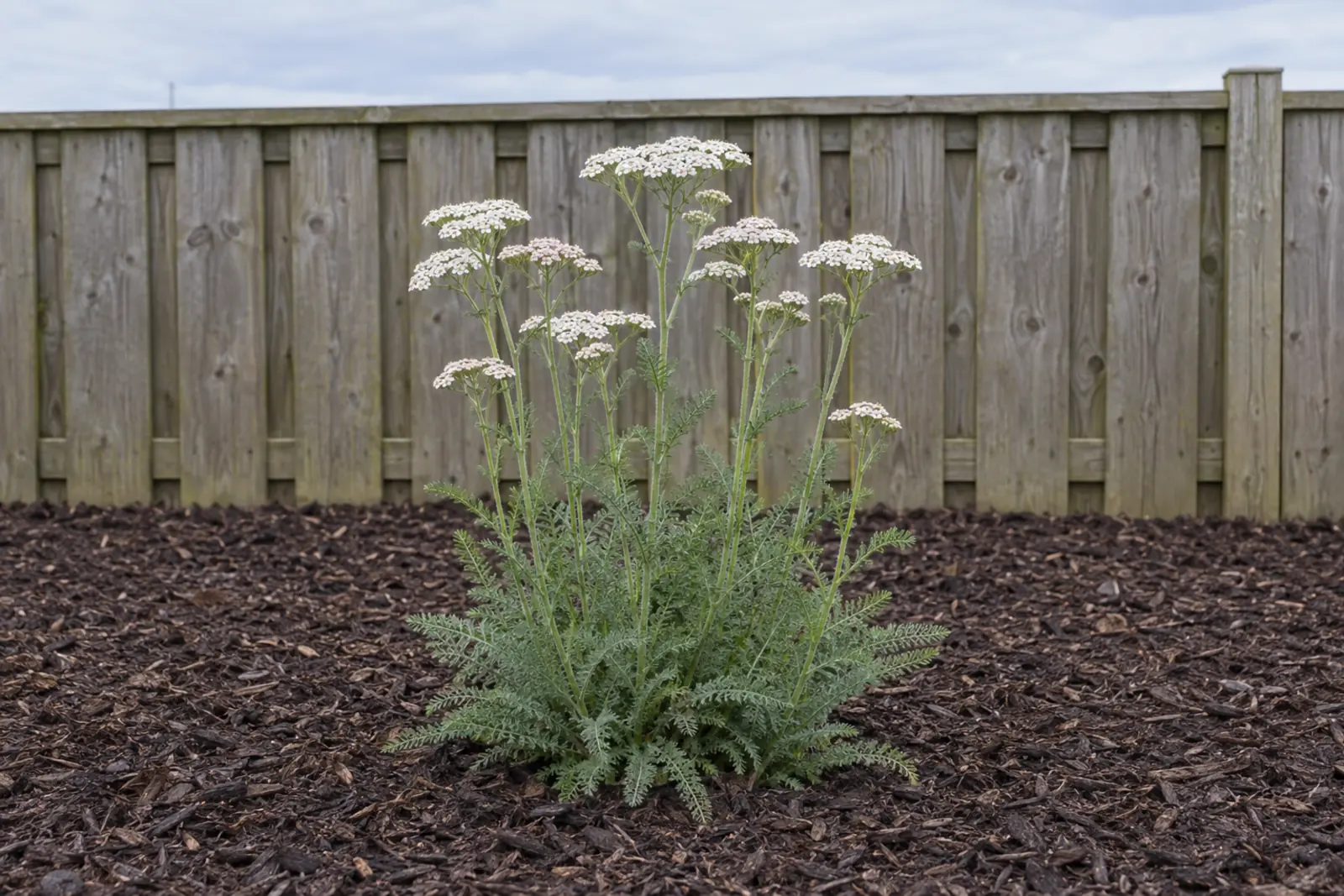
Common yarrow (Achillea millefolium) is a native perennial with finely divided, feathery leaves. The plant grows 15 to 50 centimetres tall. From June to November it carries flat clusters of white flowers. Yarrow wants a sunny spot. In the wild it is very common in the Netherlands.
Common yarrow at a glance
| Feature | Common yarrow |
|---|---|
| Height | 15 to 50 cm |
| Spread | 10 to 50 cm per plant, creeps further |
| Full grown after | 2 to 5 years |
| Sun | Full sun to partial shade |
| Soil | Dry to moist, moderately rich to rich in nutrients |
| Water | Little: copes with drought |
| Maintenance | Low: no pruning needed |
| Flowers | June to November, white or pale pink |
| For bees | Little: some nectar and pollen, June to October |
| Hay fever | Not or weakly allergenic |
| Leaves | Drop in autumn |
| Hardy | Yes |
| Native | Yes |
| Poisonous | Can cause eczema in people allergic to the daisy family |
| Pricks or stings | No |
| Price, young | About €3 to €4.09 each, in a small pot |
| Price, grown | About €5.34 to €6.50 each, in a larger pot |
- Leaf
- April to November
- Flower
- June to November
- Fruit
- no noticeable fruit
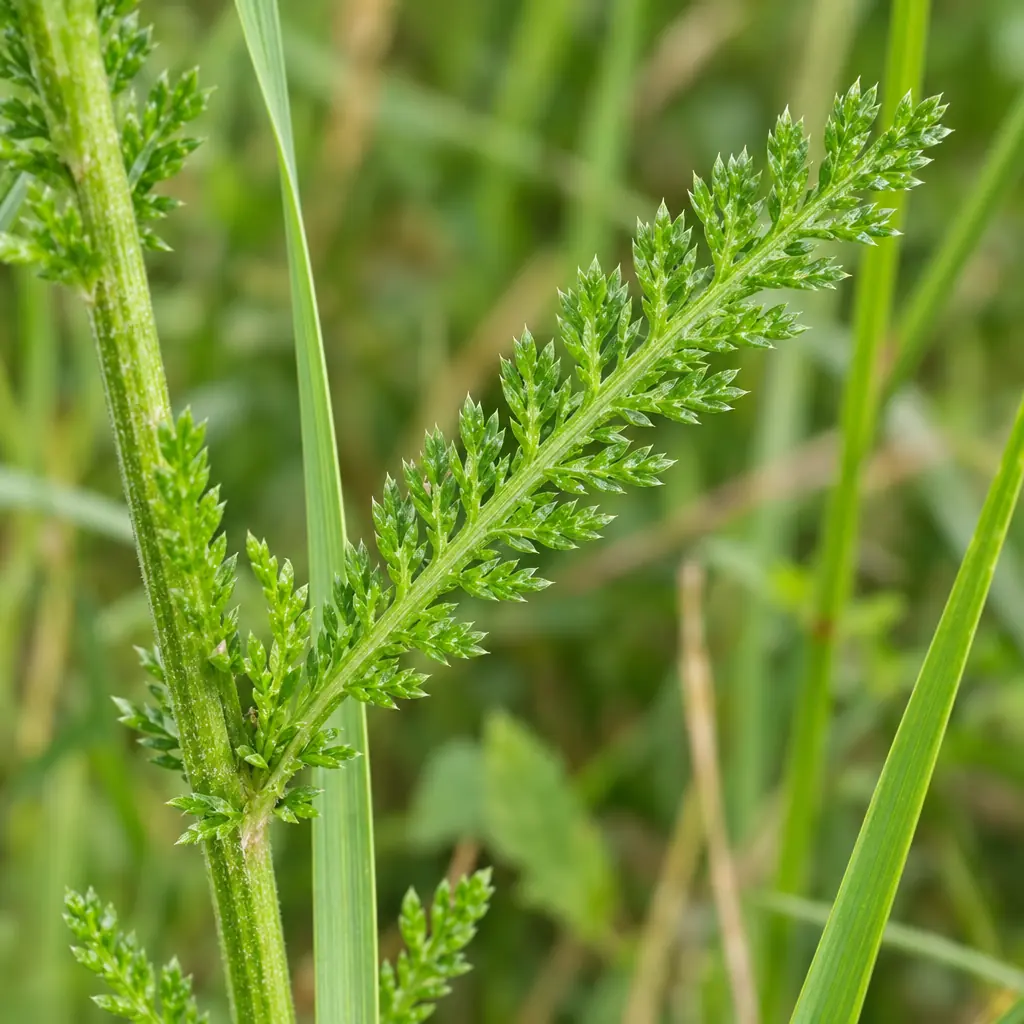
Leaf 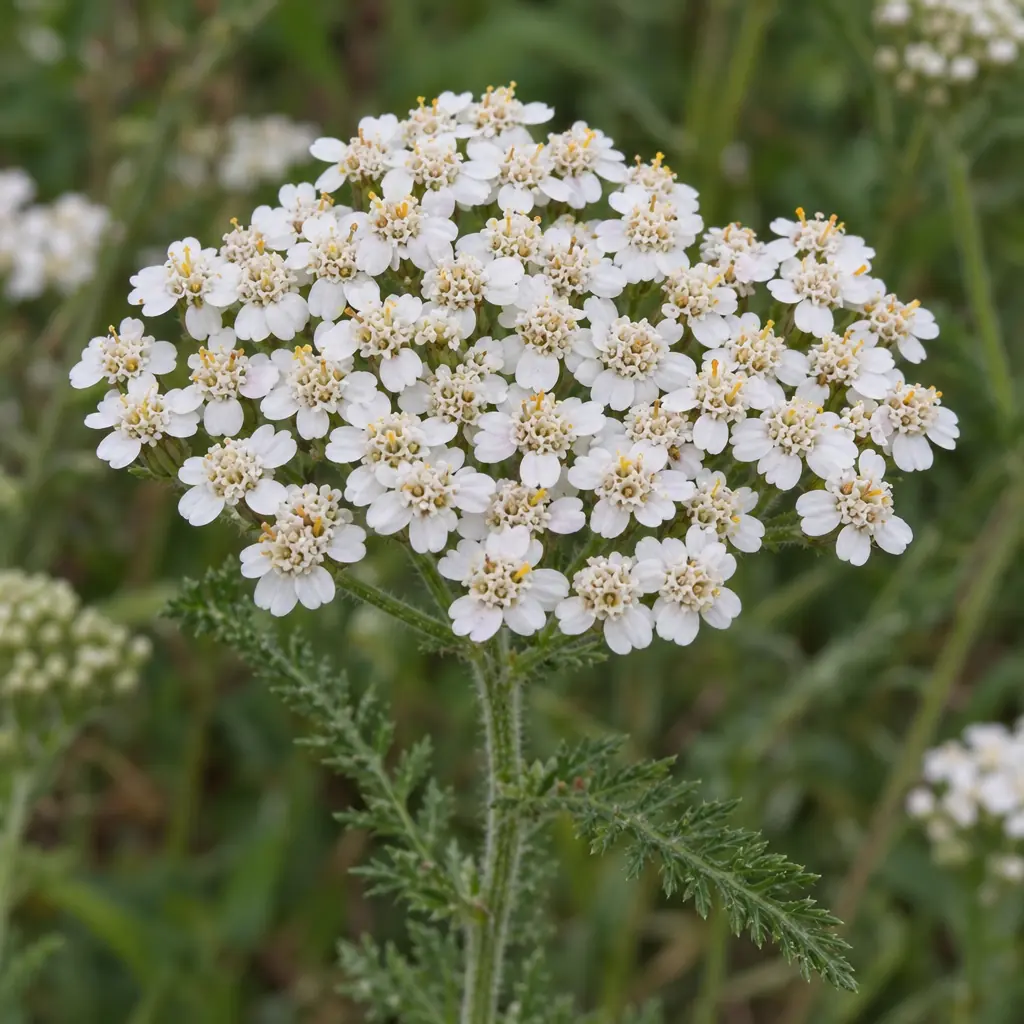
Flower
How do I recognise common yarrow?
Start with the leaves. Each leaf is narrow and divided twice into tiny segments, so it looks like a small feather. A rubbed leaf gives off a fairly strong scent.
The stems grow upright. They are tough and slightly woolly with fine hairs. At the top sits a dense, flat cluster of many small flower heads. Each head has about five white outer petals, at most 2 millimetres long.
Take note of sneezewort (Achillea ptarmica), a close relative. Its leaves are whole, not divided, with a sharply toothed edge. A sneezewort flower head has eight to ten outer petals. The plant also usually grows in wetter places.
There are also cultivars with their own name, such as 'Cerise Queen' or 'Red Velvet'. For the wild species, choose yarrow sold without such a name.
Where does common yarrow grow best?
Common yarrow belongs in the sun: six hours of direct sun or more a day around midsummer. Partial shade works too. The soil can be dry or moist, and moderately rich to rich in nutrients. In the wild the plant grows in grassland, on road verges and on dikes.
In a garden, two spots cause trouble:
- Beside a narrow border of other perennials. The rhizomes creep underground, so yarrow comes up among its neighbours.
- In a fine ornamental lawn. For the same reason: yarrow spreads readily and turns a neat lawn into a flowering one.
In winter the plant dies back above ground. All that is left of the white flower clusters is dead stems.
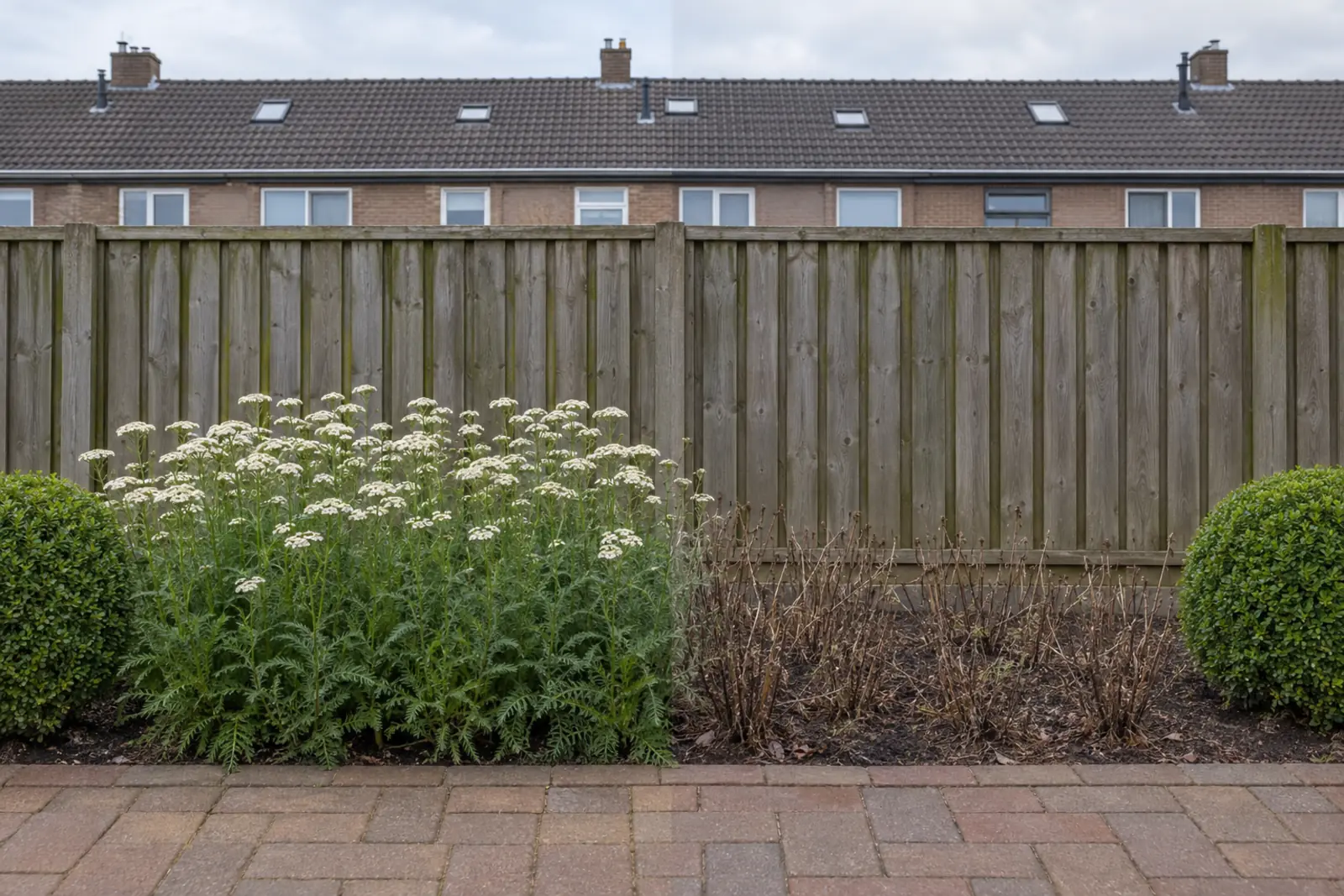 The same border in July and in January. This is a generated image, not a photograph.
Whether a spreading clump like this suits your garden shows in the app, on a drawing of your own plot: to scale, with the buildings around it.
Planting and care
Yarrow is sold as a young plant in a small pot. Dutch nurseries label it duizendblad. Planting works on any day when the ground is neither frozen nor waterlogged. After a summer planting, water often for the first few weeks.
Plant 5 to 7 per square metre, about 30 to 40 centimetres apart. On the day you plant, the pots sit in mostly bare soil. The rhizomes close those gaps on their own.
| When | What to do |
|---|---|
| Late March or early April | In a flower-rich lawn, mow once, then leave it until August or September |
| Spring | Dig up a clump that has grown too big and divide it |
Beyond that, no pruning is needed. Many birds nest from March through July. If you mow in late March, first check the long grass for a nest.
Common problems and what to do
A white powder covers the leaves. That is powdery mildew, a fungus. Cut out affected stems and clear away the fallen leaves in autumn. Water in dry weeks: a plant that keeps drying out gets it sooner.
Small green or black insects sit on the stems. Those are aphids. There is no need to control them. Ladybirds and hoverflies eat them.
Yarrow comes up everywhere. The rhizomes cause that. Dig up the clump in spring, divide it and replant a single piece.
Slugs have stripped the border bare. Slugs and snails leave yarrow alone, so here there is nothing to do.
Which insects and birds use common yarrow?
Two moths live on yarrow as caterpillars. The first carries the plant in its name: the yarrow pug (Eupithecia millefoliata). The yarrow pug flies from mid-June to late August and comes to light.
The caterpillar of the tawny speckled pug (Eupithecia icterata) feeds mainly on yarrow. Besides yarrow, it also eats mugwort and tansy. The adult moth flies from dusk, from mid-May to early October.
Which birds benefit from yarrow has not been well described.
Is common yarrow poisonous or edible?
With yarrow, the main risk is to the skin. The plant belongs to the daisy family, also called the composites. People who are allergic to that family get eczema when the plant touches their skin. That means red, itchy patches with small blisters that feel slightly thick.
Whether eating yarrow is harmful has not been established. That does not mean the plant is edible.
The photos on this page were made with AI, based on real photos and descriptions of this plant.
Frequently asked questions
How tall does common yarrow grow?
Usually 15 to 50 centimetres. The flower stems stand upright above a low layer of fine, feathery leaves.
When does common yarrow flower?
From June to November. The flowers are white and sometimes pale pink.
Does common yarrow spread?
It spreads underground through creeping rhizomes. Next to a fine lawn or a narrow border you will sometimes need to hold it back. To do that, dig out part of the clump in spring.
Is common yarrow poisonous?
The known risk is to the skin. Common yarrow belongs to the daisy family, and people who are allergic to that family get eczema when the plant touches their skin. Whether eating the plant is harmful has not been established.
Is common yarrow native to the Netherlands?
Yes. It grows wild in grassland, on road verges and on dikes, and it is very common in the Netherlands.
Sources (26)
- Duistermaat, Sparrius & Denters, Standaardlijst van de Nederlandse flora 2020 (Gorteria 43)
- NDFF Verspreidingsatlas — Achillea millefolium
- Flora van Nederland — Duizendblad
- Flora van Nederland — Wilde bertram
- RHS — Achillea millefolium (common yarrow)
- RHS — Achillea millefolium 'Cerise Queen'
- RHS — Achillea millefolium 'Red Velvet'
- RHS — Shade gardening (definities zon en schaduw)
- RHS — Perennials: planting (vaste planten uit een pot)
- RHS — Powdery mildews
- RHS — Aphids
- Imkerpedia — Drachtplanten
- De Vlinderstichting — Duizendbladdwergspanner
- De Vlinderstichting — Oranje dwergspanner
- Vogelbescherming — Vies voor slakken, fijn voor vogels: 10 tuinplanten
- Vogelbescherming — Minder maaien: méér vogels
- Vogelbescherming — Snoeien in het broedseizoen, mag dat?
- NVDV — Allergie voor composieten
- Ecoflora — Duizendblad, gewoon (prijs)
- De Cruydt-Hoeck — Duizendblad (prijs)
- Bloemenpark Appeltern — Achillea millefolium (prijs en planten per m²)
- Puur van 't Veld — Duizendblad (prijs)
- Pollennieuws / Flora van Nederland — Aandachtspunten hooikoorts vriendelijke tuin
- PFAF — Achillea millefolium
- Wikimedia Commons — Leaf: photo by Tournasol7 (CC BY 4.0)
- Wikimedia Commons — Flower: photo by AnRo0002 (CC0)