5 min read
Common hazel: where it grows, planting and wildlife
Corylus avellana
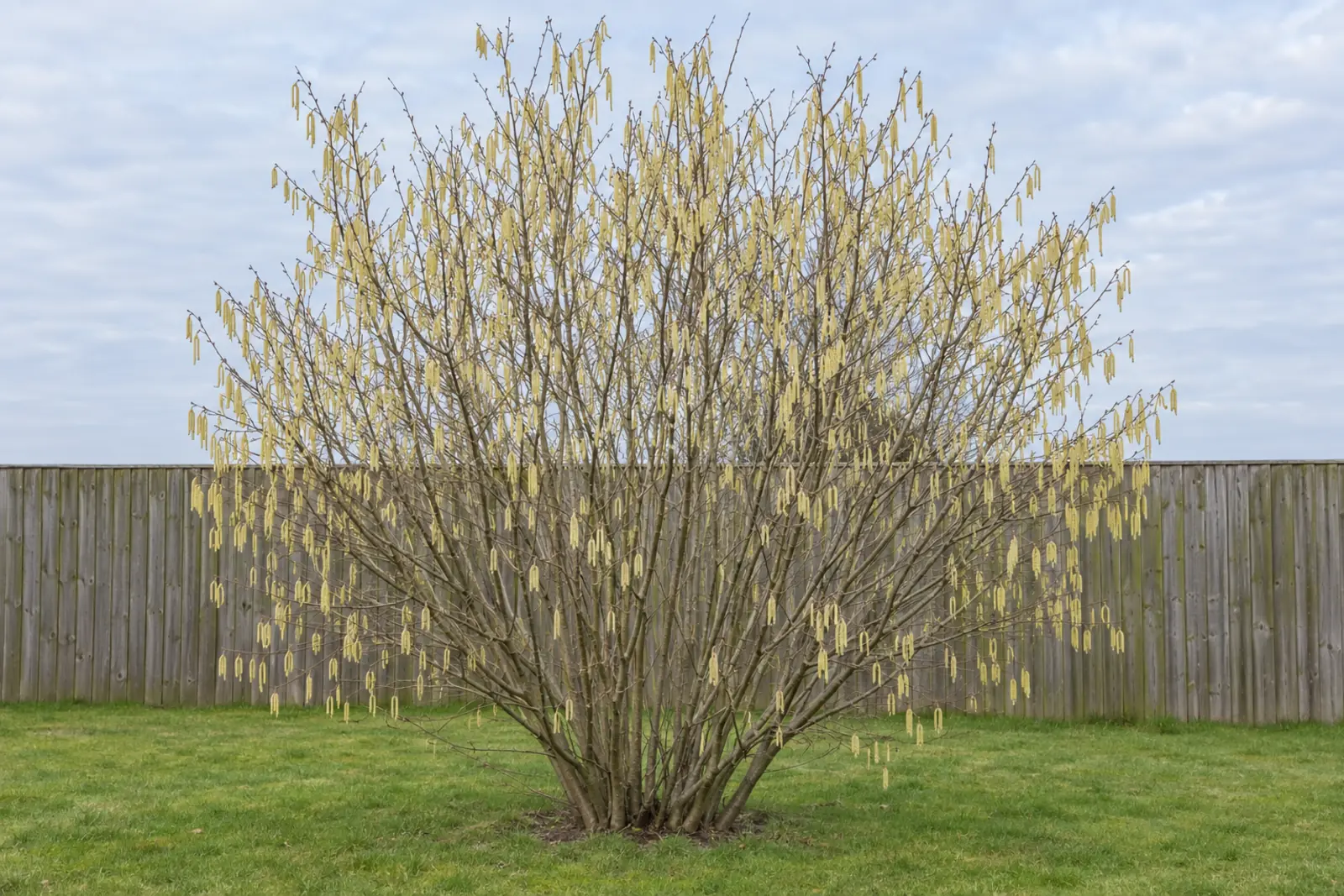
Common hazel (Corylus avellana) is a native shrub with many straight stems rising from one base. The shrub grows 4 to 8 metres tall and just as wide. As early as January, yellow catkins hang from the bare branches. In autumn the shrub bears edible hazelnuts. Hazel does well in full sun and in partial shade.
Common hazel at a glance
| Feature | Common hazel |
|---|---|
| Height | 4 to 8 m |
| Spread | 4 to 8 m |
| Full grown after | 5 to 10 years |
| Sun | Full sun to partial shade |
| Soil | Rich in nutrients and moisture-retentive, not waterlogged |
| Water | Average: ideally soil that stays moist |
| Maintenance | Low: it hardly needs pruning |
| Flowers | January to March, yellow catkins |
| For bees | Little: some pollen, January to March |
| Hay fever | Strongly allergenic, January to March |
| Leaves | Drop in autumn |
| Hardy | Yes |
| Native | Yes |
| Poisonous | No: the nuts are edible |
| Pricks or stings | No |
| Price, young | About €1.49 to €2.59 each, 60-100 cm, bare-root |
| Price, grown | About €54 to €60 each, 150-200 cm, with a root ball or in a pot |
- Leaf
- April to November
- Flower
- January to March
- Fruit
- August to October
Leaf 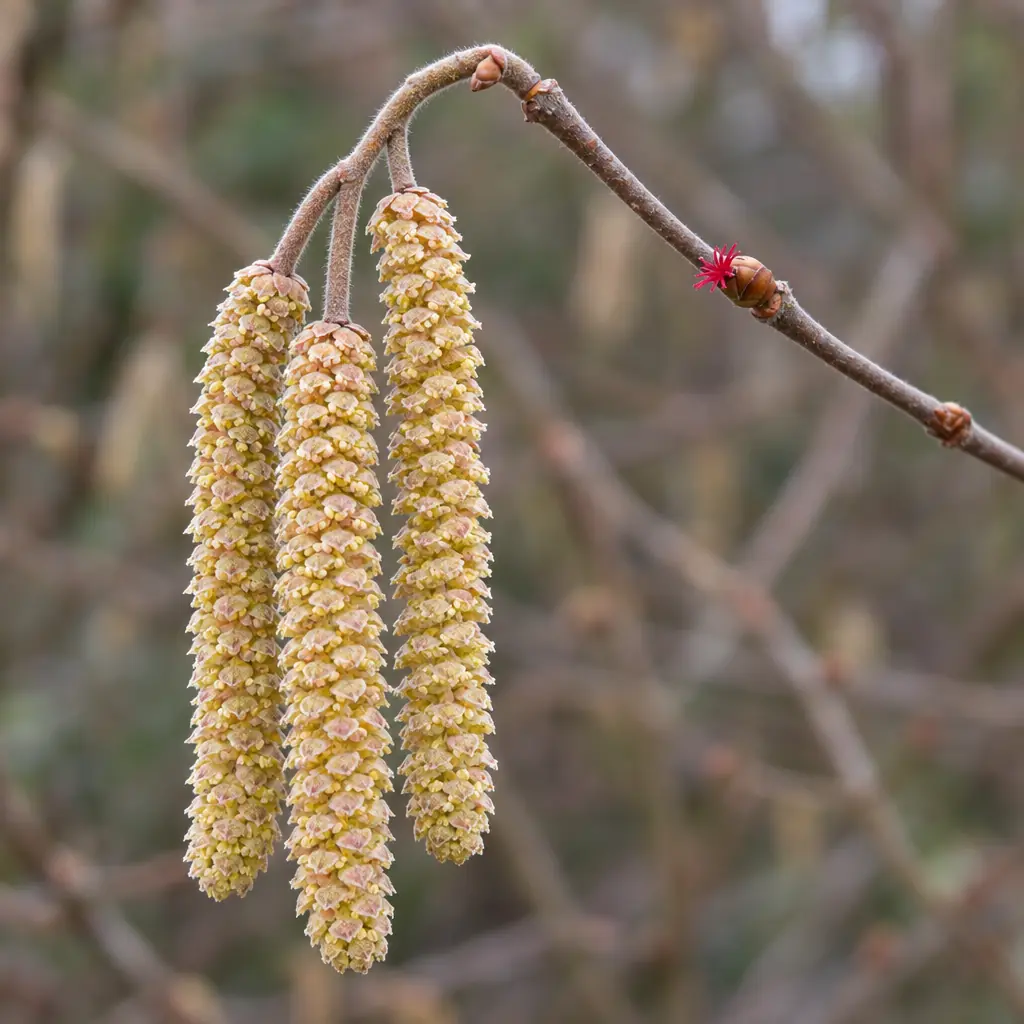
Flower 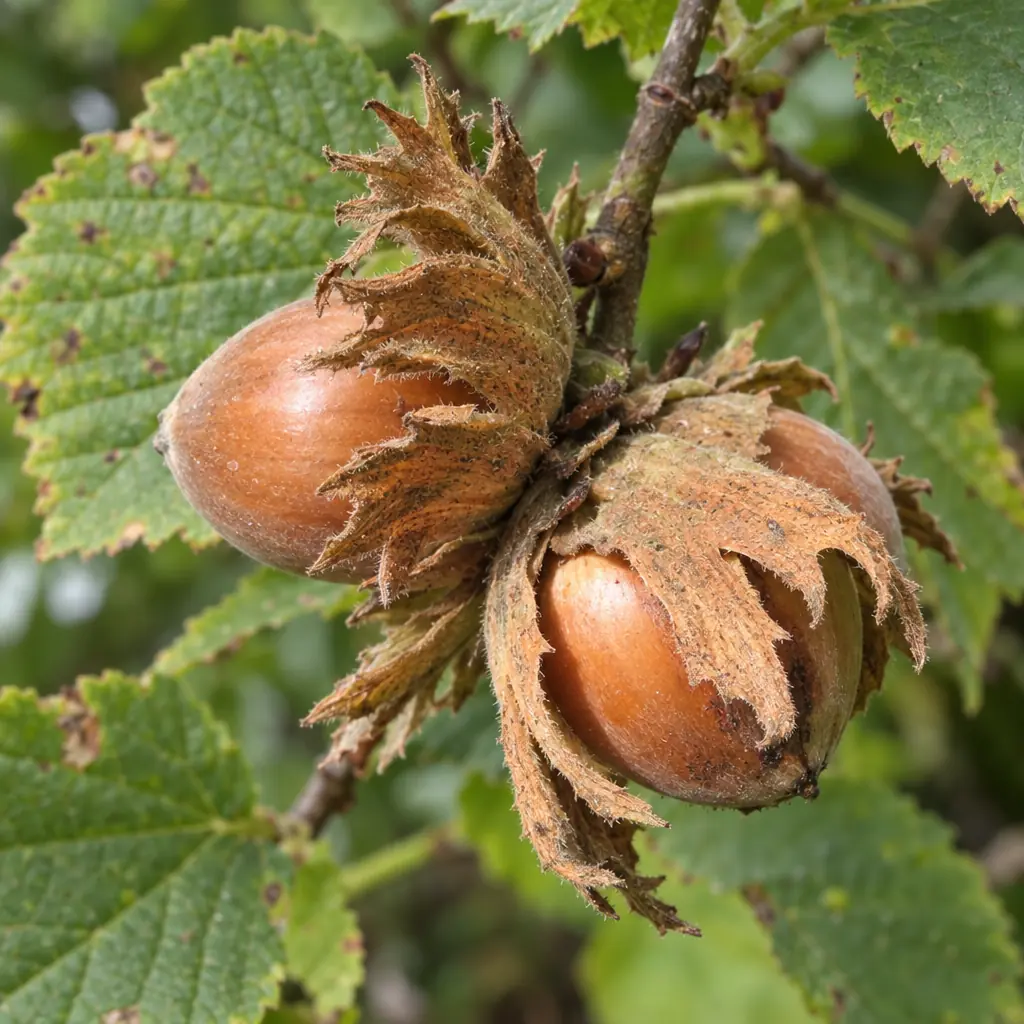
Fruit
How do I recognise common hazel?
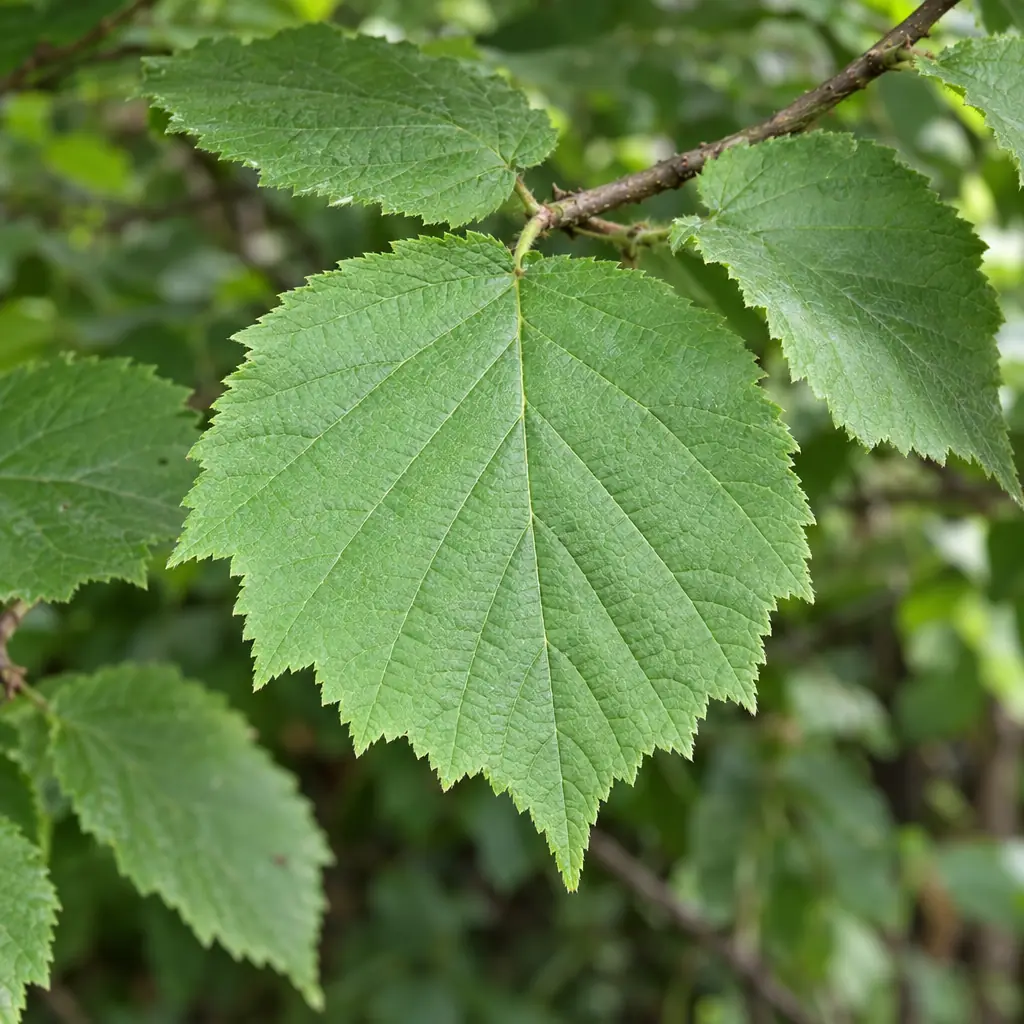
Start with the leaves. A hazel leaf is almost round and measures 5 to 12 centimetres. It has a heart-shaped base and a short pointed tip. The edge is double-toothed: large teeth with smaller teeth on them. Young twigs feel bristly.
The male flowers are catkins: yellow, hanging tails 2 to 8 centimetres long. The female flower looks like a tiny bud. Only a tuft of red threads sticks out of it.
Then comes the hazelnut: brown, with a hard shell. A ragged little cup, the husk, holds the nut, and the nut sticks out above it.
Take note of the filbert (Corylus maxima), a related species often grown for its nuts. On a filbert the husk is much longer than the nut and hides it inside. Its Dutch name is lambertsnoot. Garden centres also sell the corkscrew hazel ('Contorta'), with strongly twisted branches. For the wild shrub, choose a hazel sold without a cultivar name.
Where does common hazel grow best?
Give common hazel at least 3 hours of direct sun a day around midsummer. For a good crop of nuts, a sunny spot is better. The soil can be rich in nutrients and must hold moisture. Loam, sand and chalky soil all suit it. In the wild the shrub grows at woodland edges, in hedges and in scrub.
In a garden, three spots cause trouble:
- A waterlogged corner. The roots want moisture, but not water that stays standing.
- Very acid soil. Hazel grows best on soil that is neutral or chalky.
- A narrow strip along the fence. Left unpruned, the shrub grows metres wide and reaches over the path.
In winter the hazel is bare. That is exactly when the branches are hung with yellow catkins, long before the leaves appear.
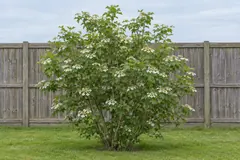
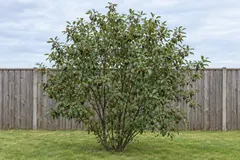
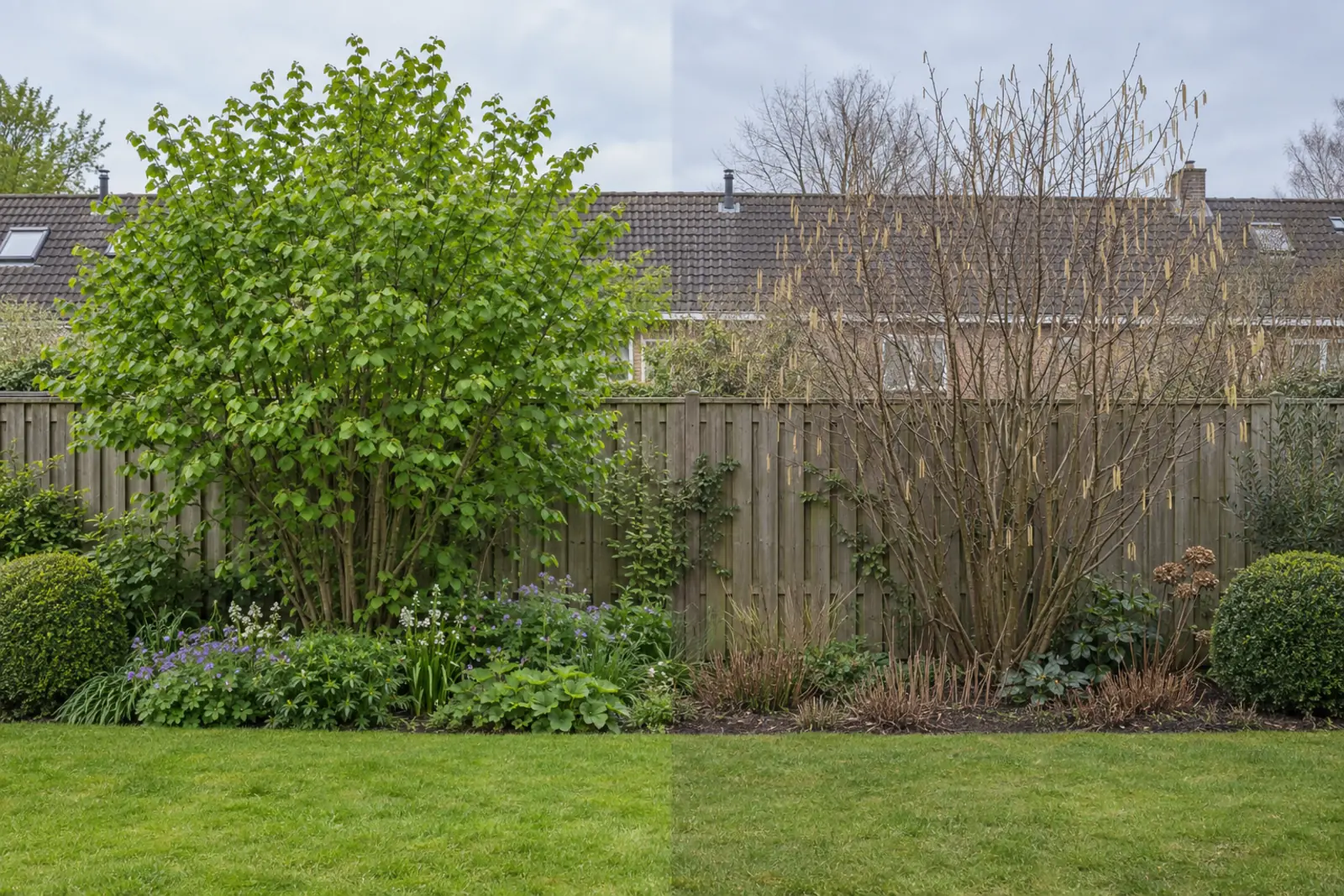 The same border in May and in January. This is a generated image, not a photograph.
The app shows whether your garden has room for a shrub that size, on a layout plan of your own plot. The plan is drawn to scale, with the buildings around it.
Planting and pruning common hazel
Plant a hazel between November and March, while the shrub is dormant. Young bare-root shrubs, sold without soil around the roots, are the cheapest way to buy one. Dutch nurseries list the plant as hazelaar.
Space two shrubs about 5 metres apart. On planting day that looks far too wide. After a few years each shrub fills the gap by itself. To work out spacings like this for the whole garden, see how to make a planting plan. In the first summers, water in dry weeks.
| When | What to do |
|---|---|
| Winter, when the shrub is bare | Saw off at most a third of the oldest or most crowded stems at the base |
| Winter, when it gets too big | Coppice: saw all the stems off at ground level, which keeps the shrub low |
The hazel needs no more pruning than that. The breeding season of many birds runs from March through July. Before a cut in March, look between the stems for a nest.
Common hazel problems and what to do
The nuts have small round holes in them. That is the nut weevil, a beetle with a long snout. Its larva eats the nut hollow from the inside, then spends the winter in the soil. Loosen the soil under the shrub in winter. That gets rid of some of the larvae.
Few nuts appear. A young shrub bears nuts only after three years or so. On top of that, a hazel pollinates itself poorly. A second hazel nearby gives you more nuts. Frost of minus 10 degrees Celsius or colder during flowering can also cost nuts.
The nuts are gone before you pick them. Squirrels can carry off the whole crop. So pick as soon as the husk around the nut starts to turn yellow, around late September.
Which birds and insects use common hazel?
The nuts are winter food. From October, jays, nuthatches and great spotted woodpeckers take them from the shrub. Squirrels and wood mice eat them too. With this shrub, a woodpecker may turn up in your garden.
The leaves feed caterpillars. The caterpillar of the nut-tree tussock, a moth, eats hazel leaves among other foods. The moth flies from early April to early September. The males come to light from dusk onwards.
The flowers need no insects: the wind carries the pollen.
Is common hazel poisonous or edible?
The nuts of the hazel are edible. Hazelnuts are a well-known cause of food allergy, though. Someone allergic to birch pollen can also be allergic to hazelnuts.
The photos on this page were made with AI, based on real photos and descriptions of this plant.
Frequently asked questions
How big does common hazel get?
A hazel grows 4 to 8 metres tall and about as wide. To keep it low, saw all the stems off at ground level in winter.
When should you prune common hazel?
In winter, when the shrub is bare. Saw off at most a third of the oldest stems at the base. From March onwards, check for a nest first.
Does common hazel cause hay fever?
Hazel pollen is strongly allergenic. The wind spreads it from January to March, while the shrub is in flower.
When are the nuts of common hazel ripe?
The first nuts are ripe in August. Pick them around late September, when the husk around the nut starts to turn yellow. From October, jays, nuthatches and squirrels come for the rest.
Is common hazel native to the Netherlands?
Yes, common hazel is native to the Netherlands. In the wild it grows at woodland edges, in hedges and in scrub.
Sources (29)
- Duistermaat, Sparrius & Denters, Standaardlijst van de Nederlandse flora 2020 (Gorteria 43)
- NDFF Verspreidingsatlas — Corylus avellana
- Flora van Nederland — Hazelaar
- RHS — Corylus avellana (hazel)
- RHS — Cobnuts and filberts
- RHS — Corylus avellana 'Contorta'
- Nederlands Soortenregister — Lambertsnoot (Corylus maxima)
- NDFF Verspreidingsatlas — Corylus maxima
- RHS — Shade gardening (definities zon en halfschaduw)
- Nature Today — Natuurkalender: hazelaar
- Nature Today — Natuur deze maand: april
- Nature Today — Natuur deze maand: augustus
- Nature Today — Natuur deze maand: november
- Imkerpedia — Drachtplanten
- LUMC — Bomenkompas voor allergeniciteit
- Vogelbescherming — Bloemen die 's winters bloeien
- Vogelbescherming — Plant een bessenstruik voor blije vogels
- Vogelbescherming — Snoeien in het broedseizoen, mag dat?
- De Vlinderstichting — Hazelaaruil
- Wikipedia — Hazelnootboorder
- Voedingscentrum — Voedselovergevoeligheid
- Garmundo — Hazelaar, kale wortel (prijs)
- Ten Hoven Bomen — Gewone hazelaar, bosplantsoen (prijs per bos)
- Planta — Corylus avellana 150-175 cm, met kluit (prijs)
- Planta — Corylus avellana 175-200 cm, met kluit (prijs)
- Yarinde — Gewone hazelaar (prijs per maat)
- Wikimedia Commons — Leaf: photo by AnRo0002 (CC0)
- Wikimedia Commons — Flower: photo by Nefronus (CC0)
- Wikimedia Commons — Fruit: photo by AnRo0002 (CC0)