5 min read
Guelder rose: where it grows, pruning and what it feeds
Viburnum opulus
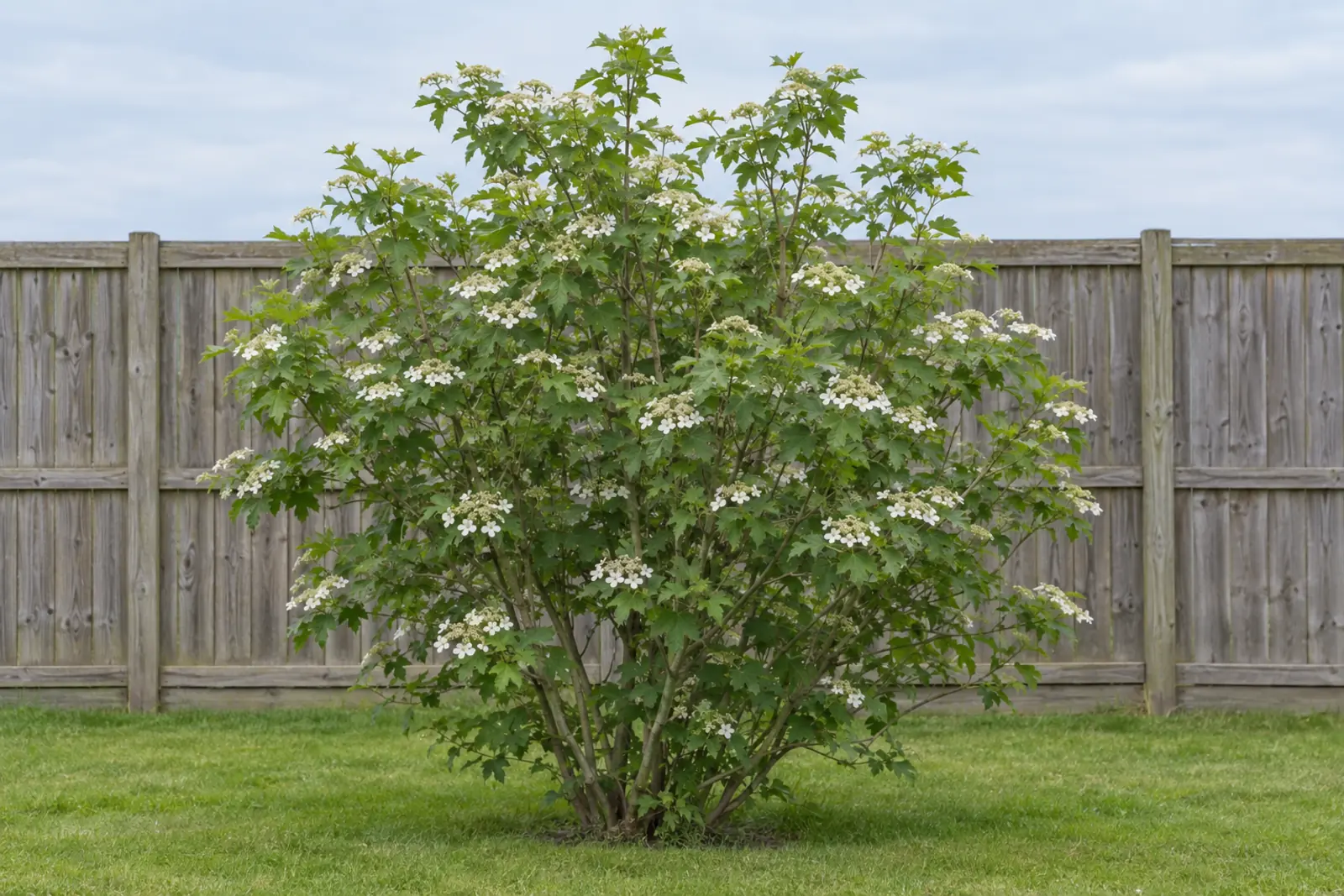
Guelder rose (Viburnum opulus) is a shrub native to the Netherlands that grows 1.5 to 3 metres tall. In May and June it carries flat white flower heads. Red berries follow and hang on into February. The shrub wants sun or partial shade and soil that stays moist.
Guelder rose at a glance
| Feature | Guelder rose |
|---|---|
| Height | 1.5 to 3 m |
| Spread | About 2.5 m |
| Full grown after | 4 to 6 years |
| Sun | Sun to partial shade |
| Soil | Moist, ideally loam or clay |
| Water | Plenty: its roots are shallow |
| Maintenance | Low: remove old stems now and then |
| Flowers | May and June, white |
| For bees | Little: some nectar and pollen in June |
| Hay fever | Not or weakly allergenic |
| Leaves | Drop in autumn |
| Hardy | Yes |
| Native | Yes |
| Poisonous | Mildly: do not eat the raw berries |
| Pricks or stings | No |
| Price, young | About €1.65 to €2.40 each, 40-100 cm, bare-root |
| Price, grown | About €38 to €81 each, 150-200 cm, with root ball or in a pot |
- Leaf
- April to October
- Flower
- May to June
- Fruit
- August to February
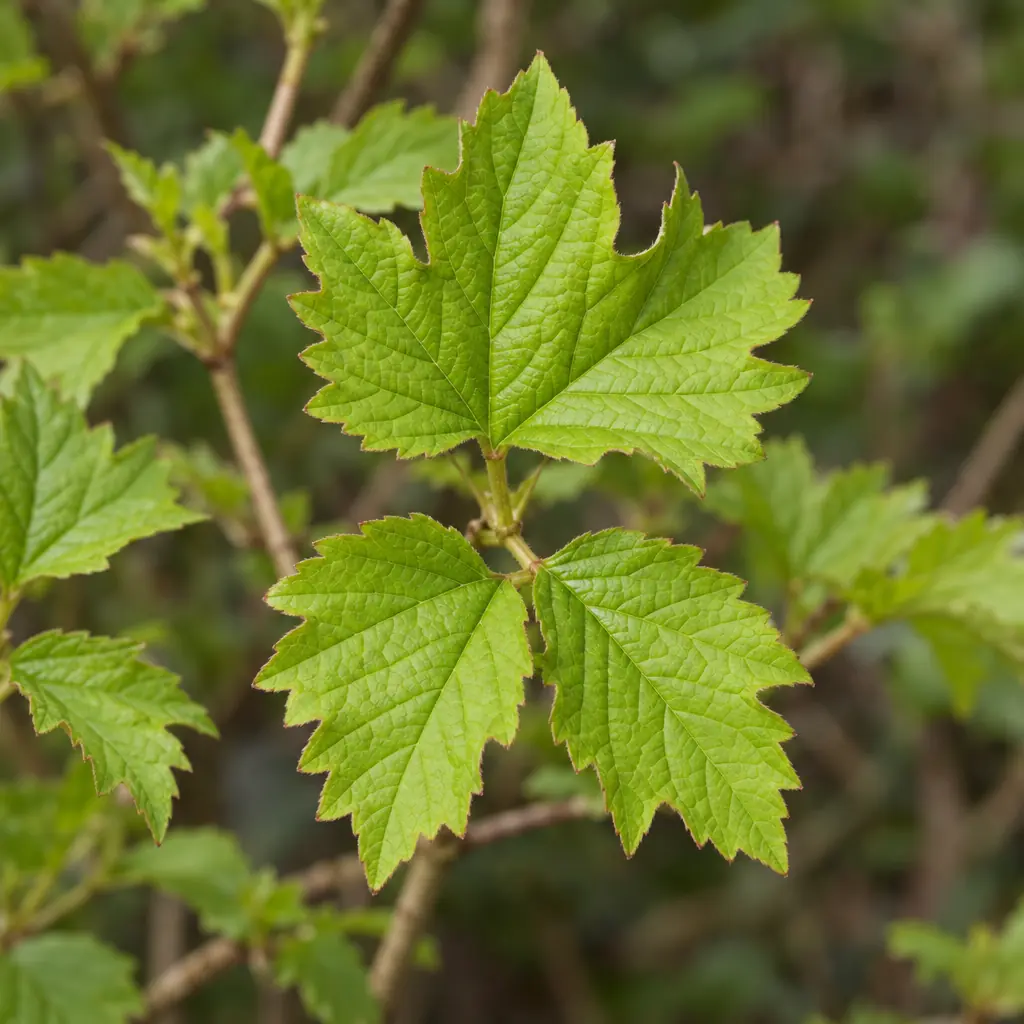
Leaf 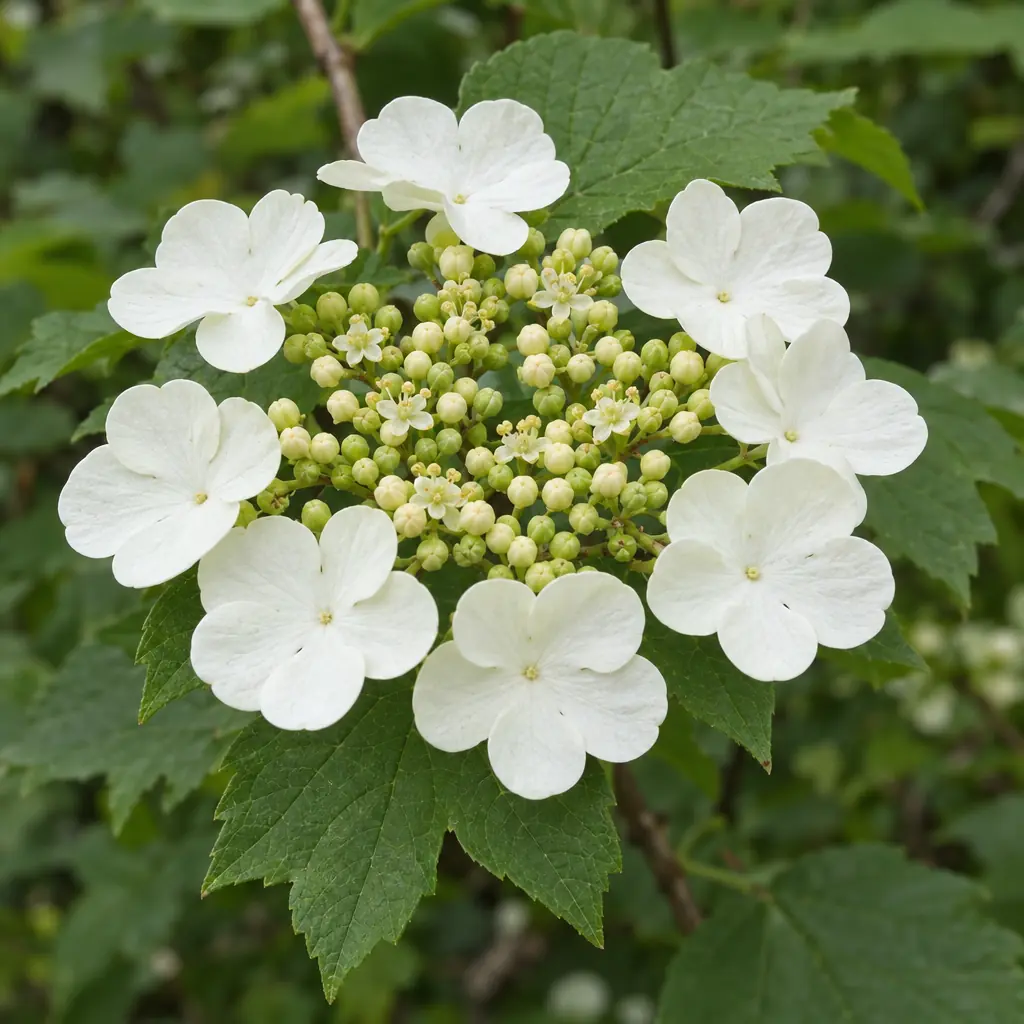
Flower 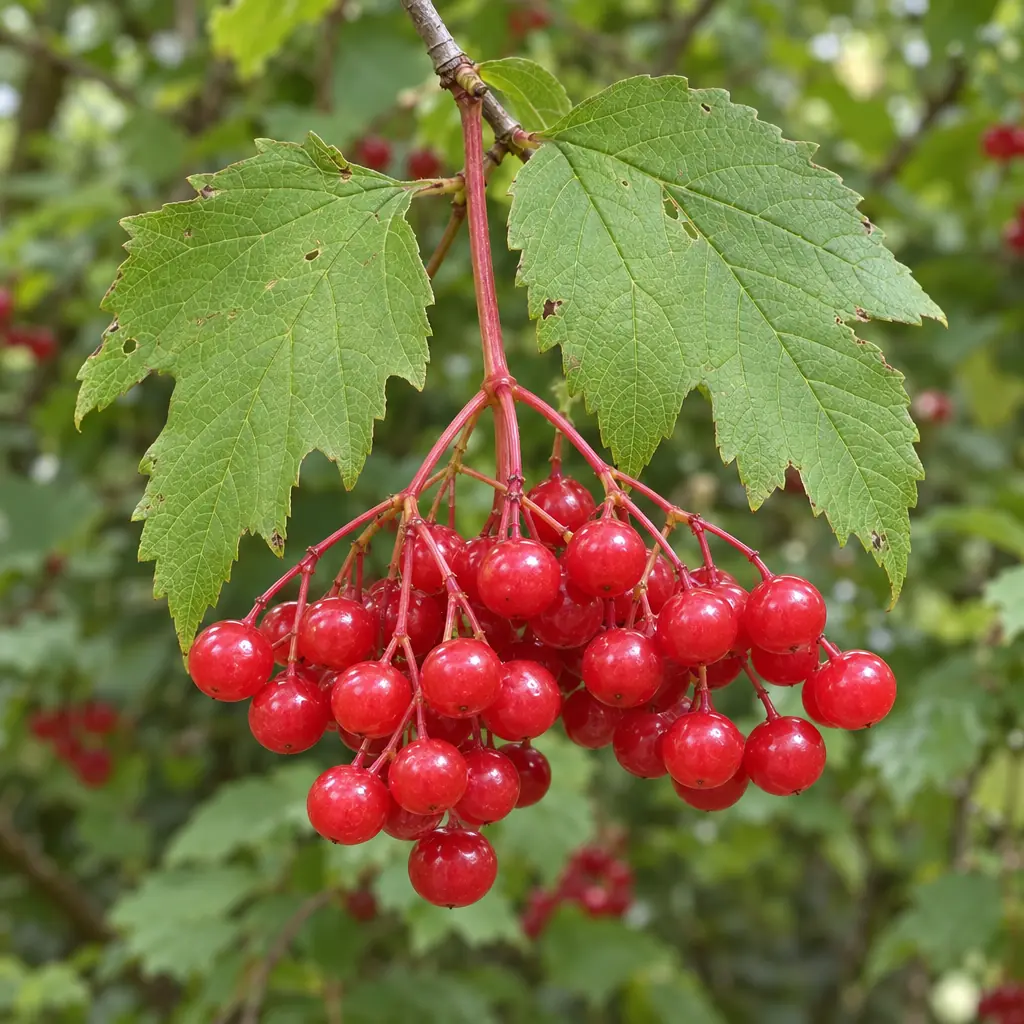
Fruit
How do I identify guelder rose?
Start with the leaves. Each has three to five lobes and a toothed edge, a bit like a maple leaf. A leaf grows to 12 centimetres. The branches are grey and hairless.
The flower head is a flat disc 5 to 10 centimetres across. Tiny flowers fill the middle. Around them runs a ring of larger white flowers. Those outer flowers set no seed. Their only job is to draw in insects.
Watch out for the snowball bush at the garden centre, sold as sneeuwbal. That is the same species, bred for round balls of flowers. The snowball flowers freely and never sets a single berry. If you want berries for the birds, buy the wild form.
Where to plant it
Give it sun or partial shade, with at least 3 hours of direct sun a day in summer. The soil counts for more than the light. In the wild the shrub grows along woodland edges and waterside banks, so it wants soil that stays moist. Loam and clay suit it. Sand works too, once you mix compost through it.
Three places suit this shrub badly:
- A front garden on dry sand. The roots are shallow and cannot reach the water.
- A narrow border along the fence. Guelder rose grows 2.5 metres wide. In a border one metre deep, it hangs over the path.
- Marine clay, pure peat or very acid soil. The shrub avoids all three. Choose a different shrub there.
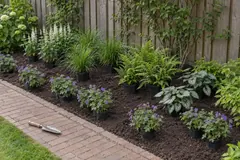
In winter the branches are bare, sometimes still hung with bunches of red berries. So put something evergreen in front of it.
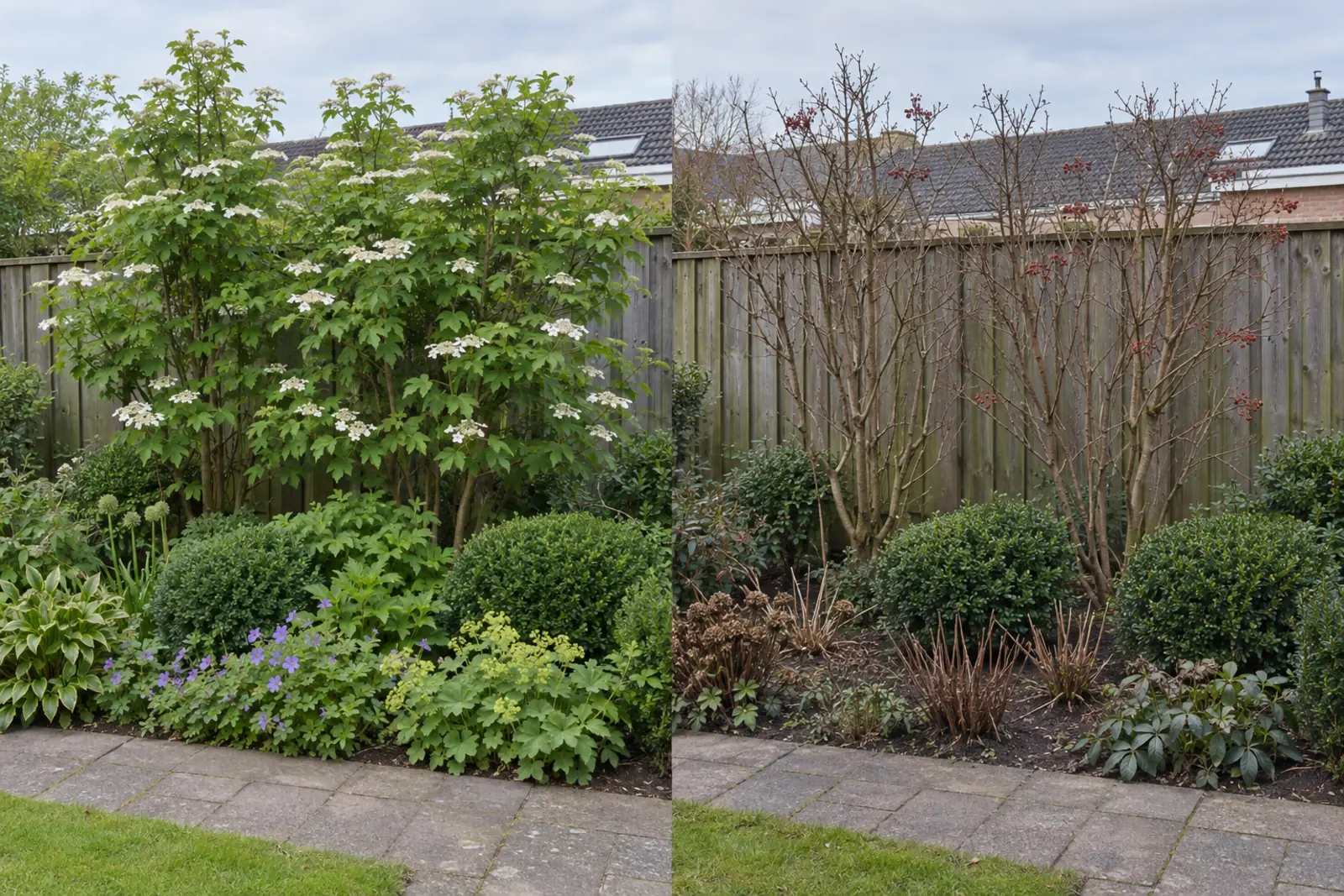 The same border in May and in January. This is a generated image, not a photo.
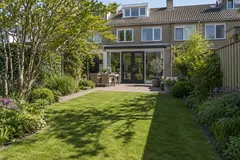
Guelder rose also fits into an informal hedge with other shrubs that flower and bear berries. Whether a shrub 2.5 metres wide fits your border only shows on a drawing of your own garden.
Planting, watering and pruning
Plant in autumn, as long as it is not freezing. The shrub then has time to root before spring. Young bare-root shrubs are the cheapest option. A shrub in a pot costs more, but you can plant it at any time of year.
Dig a generous planting hole and mix compost into the soil. Set single shrubs 2.5 metres apart. On planting day that looks far too wide. In a few years it will be exactly right. For a hedge, set 4 plants per metre. How to work out spacing like this for your whole garden is covered in how to make a planting plan.
Water in dry weeks during the first summers. A layer of compost or leaves over the roots keeps the soil moist. The shrub needs no fertiliser.
| When | What to do |
|---|---|
| March or early April | Remove dead and crossing wood |
| Right after flowering | Renew: cut 1 in 5 old stems at the base, and young ones grow in their place |
| Autumn and winter | Nothing: pruning in these months cuts off the berries |
Always check for a nest first. Many birds nest from March through July. If there is a nest, wait until the young have flown.
When something goes wrong
The leaves are full of holes. That is the viburnum leaf beetle, a small beetle that lives only on these shrubs. Its larvae eat the young leaves in April and May. Sometimes only the veins are left. From August the beetle lays its eggs in hollows in young twigs. The new larvae hatch from them in spring.
The leaves curl up at the shoot tips. That is aphid damage. The black bean aphid spends the winter on guelder rose. In April it flies off by itself to broad beans and other summer plants. Nothing needs doing.
It does not flower. Usually it has been pruned too hard. Cut every stem at once and you wait 2 years for new flowers. So prune a small part each year.
The leaves hang limp in summer. The soil is too dry. Give the shrub a good soaking and lay compost over the roots.
Which birds and insects use it?
The berries are winter food. In autumn they taste bitter, so birds leave them on the branch. After a hard frost, bullfinches, fieldfares, redwings and waxwings eat them after all. The waxwing is a rare winter visitor from the north. With this shrub, you stand a chance of an unusual guest.
The flowers draw hoverflies, beetles and butterflies, which find nectar and pollen there. Exactly which species visit is not well described for this shrub.
Is guelder rose poisonous?
Guelder rose is mildly poisonous. That goes for the berries, the bark and the leaves. The raw berries taste sour and bitter. In large amounts they are mildly poisonous.
The photos on this page were made with AI, based on real photos and descriptions of this plant.
Frequently asked questions
How much sun does guelder rose need?
Sun to partial shade. Count on at least 3 hours of direct sun a day in summer. The soil matters more than the light, because it has to stay moist.
How big does guelder rose get?
It grows 1.5 to 3 metres tall and about 2.5 metres wide. So plant single shrubs 2.5 metres apart.
Are guelder rose berries poisonous?
Yes, mildly. Raw berries are mildly poisonous if you eat a lot of them. The same goes for the bark and the leaves.
When should I prune guelder rose?
Pruning is usually limited to dead, diseased or crossing wood, in March or early April. To renew the shrub, cut about a fifth of the old stems at the base right after flowering. Always check for a nest first.
Which birds eat guelder rose berries?
Bullfinches, fieldfares, redwings and waxwings. They usually wait until after a hard frost, because in autumn the berries taste bitter.
Sources (23)
- Duistermaat, Sparrius & Denters, Standaardlijst van de Nederlandse flora 2020 (Gorteria 43)
- NDFF Verspreidingsatlas — Viburnum opulus
- Flora van Nederland — Gelderse roos
- Ecopedia — Gelderse roos
- Vogelbescherming — Tuintip: meer rood in de tuin
- Vogelbescherming — Pestvogel
- Vogelbescherming — Snoeien in het broedseizoen, mag dat?
- Bloemenpark Appeltern — Snoeien en groeien van Gelderse roos
- RHS — Shade gardening (definities zon en halfschaduw)
- Wikipedia — Gelderse roos
- Wikipedia — Sneeuwbalhaantje
- Wikipedia — Zwarte bonenluis
- Wikipedia — Wollige sneeuwbal
- Vogelbescherming — Opfrisbeurt voor de herfsttuin
- Imkerpedia — Drachtplanten (nectar- en pollenwaarde voor de honingbij)
- Heijnen Planten — Viburnum opulus (planten per meter)
- Yarinde — Gelderse roos (prijs per pot- en hoogtemaat)
- Ten Hoven Bomen — Gelderse roos (prijs per maat, kluit en pot)
- Directplant — Gelderse roos (prijs kale wortel 60/100 cm)
- Pollennieuws / Flora van Nederland — Aandachtspunten hooikoorts vriendelijke tuin
- Wikimedia Commons — Leaf: photo by Stephen James McWilliam (CC0)
- Wikimedia Commons — Flower: photo by AnRo0002 (CC0)
- Wikimedia Commons — Fruit: photo by AnRo0002 (CC0)