6 min read
Common dogwood: how to recognise, plant and care for it
Cornus sanguinea
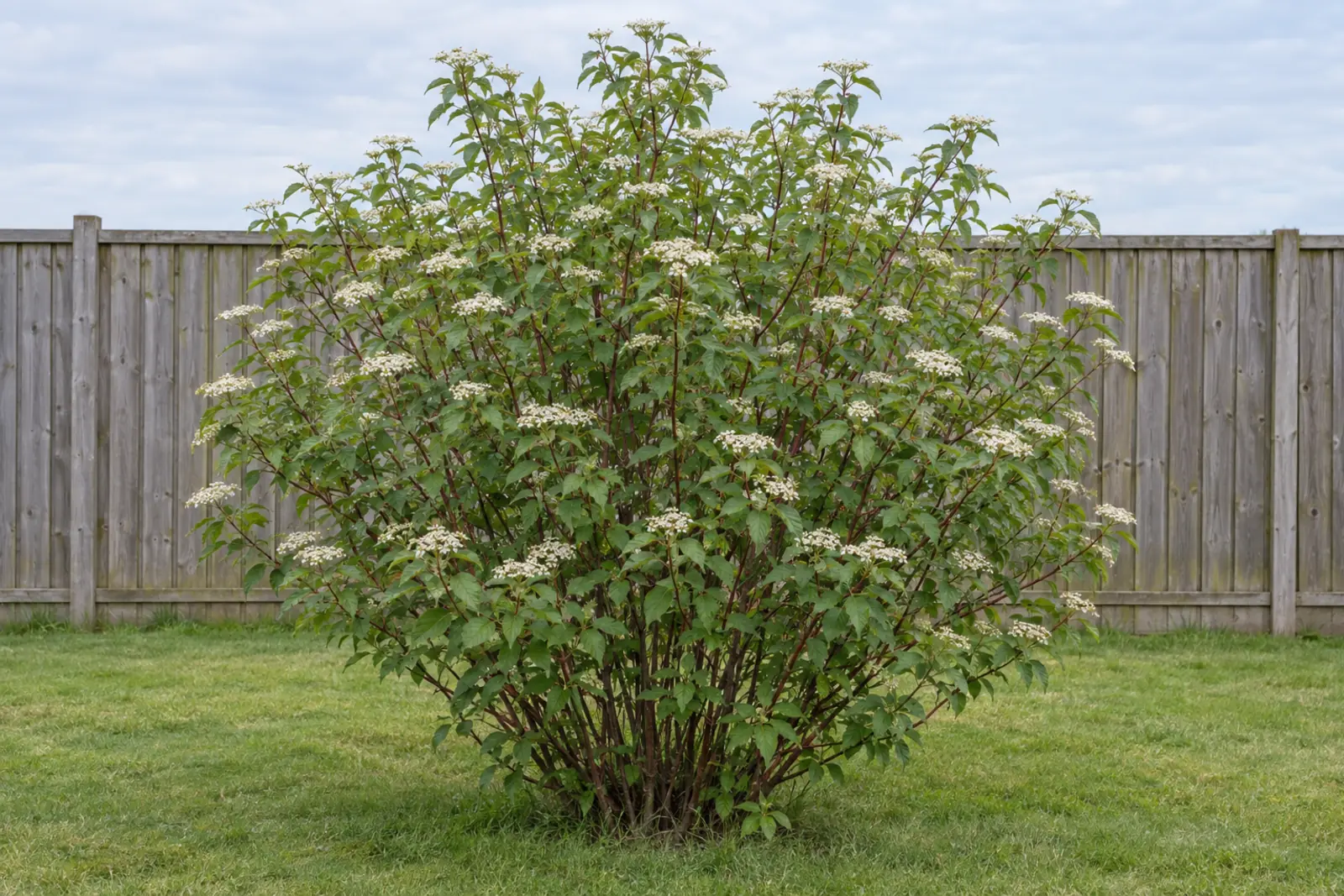
Common dogwood (Cornus sanguinea) is a native shrub, 1.5 to 3 metres tall. In May and June it bears flat clusters of small white flowers. Blue-black berries hang on the shrub in September, and in autumn the leaves turn deep red. The shrub grows in full sun or partial shade.
Common dogwood at a glance
| Feature | Common dogwood |
|---|---|
| Height | 1.5 to 3 m |
| Spread | 1.5 to 2.5 m |
| Full grown after | 5 to 10 years |
| Sun | Full sun to partial shade |
| Soil | Moist and nutrient-rich, preferably with lime |
| Water | Average: water in long dry spells |
| Maintenance | Low: keep the suckers in check |
| Flowers | May and June, dull white |
| For bees | Little: some nectar and pollen, June |
| Hay fever | Not or weakly allergenic |
| Leaves | Drop in autumn |
| Hardy | Yes |
| Native | Yes |
| Poisonous | Berries bitter, can cause vomiting |
| Pricks or stings | No |
| Price, young | About €1.50 to €2.10 each, 60-100 cm, bare-root, from 10 plants |
| Price, grown | About €43.06 to €106.71 each, 150-200 cm, with a root ball |
- Leaf
- April to October
- Flower
- May to June
- Fruit
- September to October
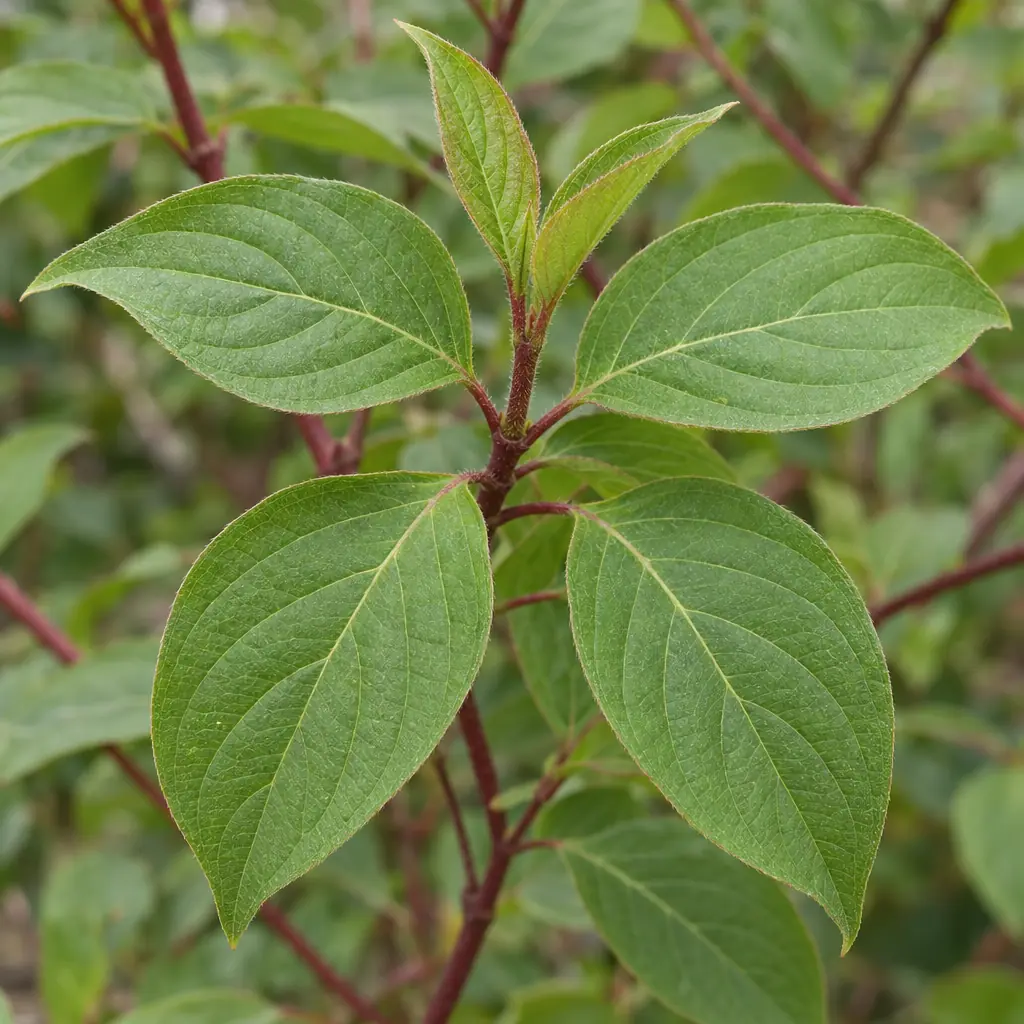
Leaf 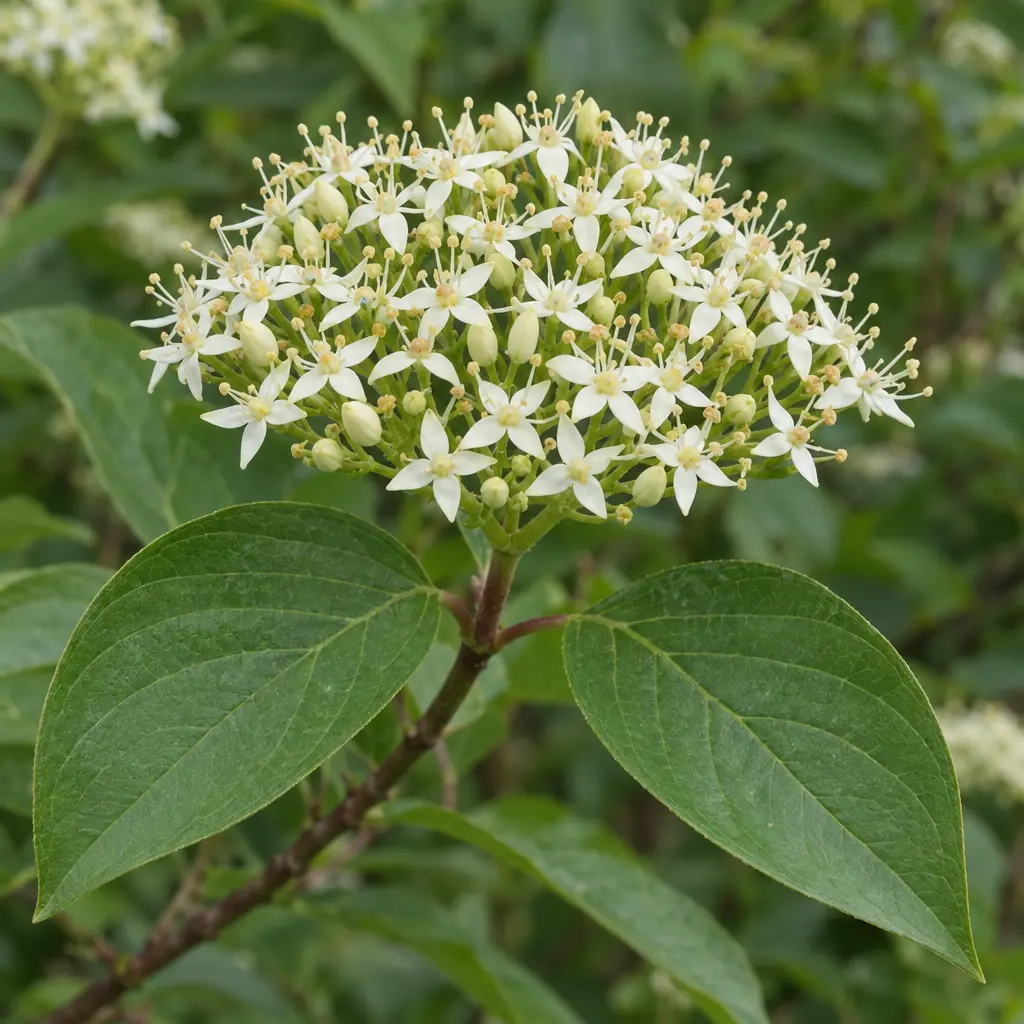
Flower 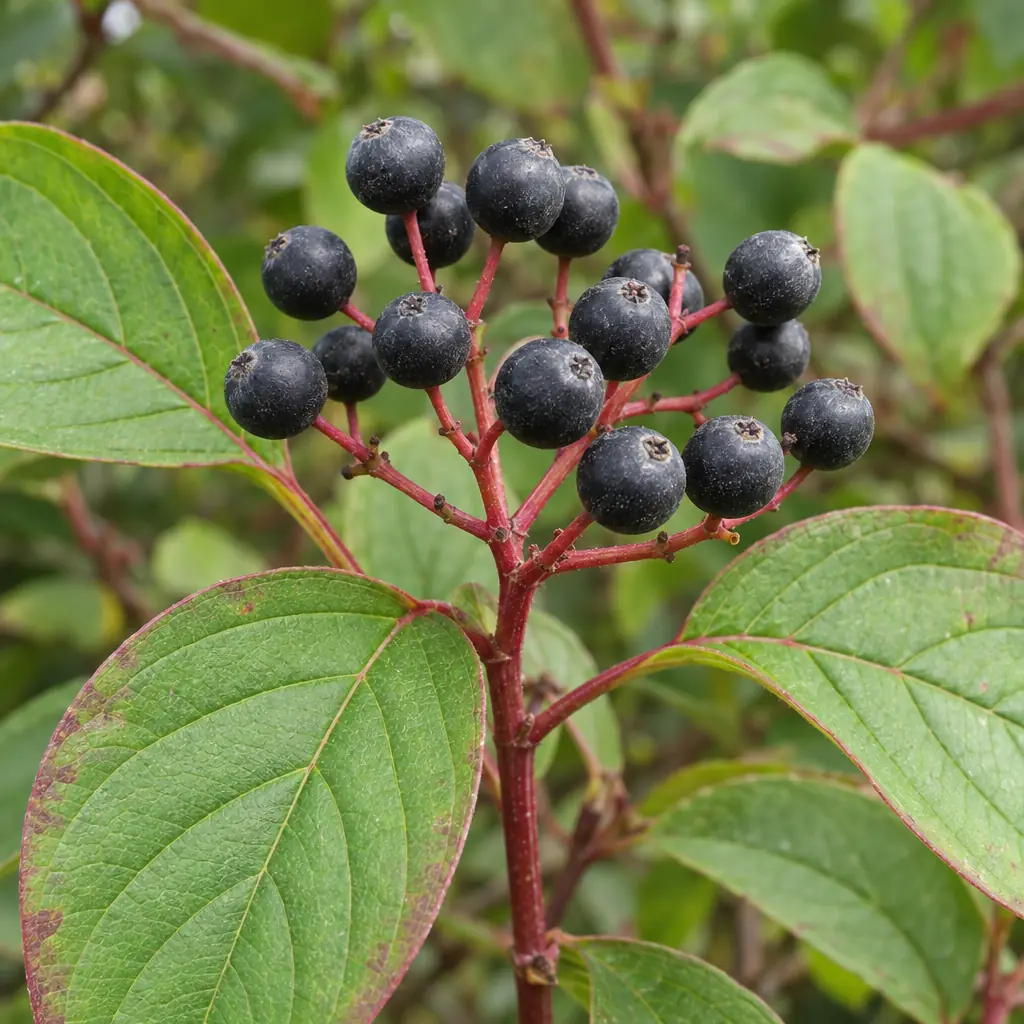
Fruit
How do I recognise common dogwood?
Start with the leaves. They grow in pairs, exactly opposite each other. Each leaf is oval with a pointed tip and 5 to 8 centimetres long. The edge is smooth, without teeth. Three to five pairs of veins curve towards the tip and never reach the edge.
The flowers are dull white and 0.8 to 1 centimetre across. Together they form a flat cluster on short side shoots. Their four petals drop soon after opening.
The berries are round and 6 to 8 millimetres across, with a hard stone inside. On this shrub the young twigs are red all year round.
Note the white dogwood (Cornus alba) sold in garden centres. That shrub has red stems in winter as well. You tell the two apart by the berries, which are white on white dogwood.
Where does common dogwood grow best?
Common dogwood grows in full sun or partial shade. Full sun is more than six hours of direct sun a day around midsummer, partial shade three to six hours. The shrub does best in moist, nutrient-rich soil. In the wild you often find it on soil that contains lime, such as marl, loam and light clay.
Common dogwood fits less well in these spots:
- Beside a lawn you keep neat. The roots send out suckers that come up in the grass, so one shrub soon turns into a dense thicket.
- A narrow strip along a path. A full-grown shrub is wider than such a strip and hangs over the paving.
In winter the shrub is bare. That is when the red stems stand out.
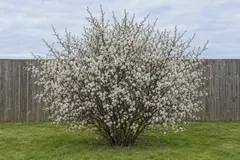
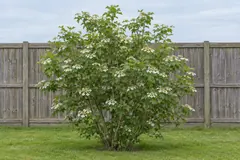
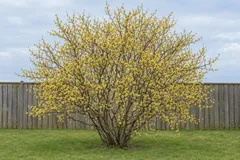
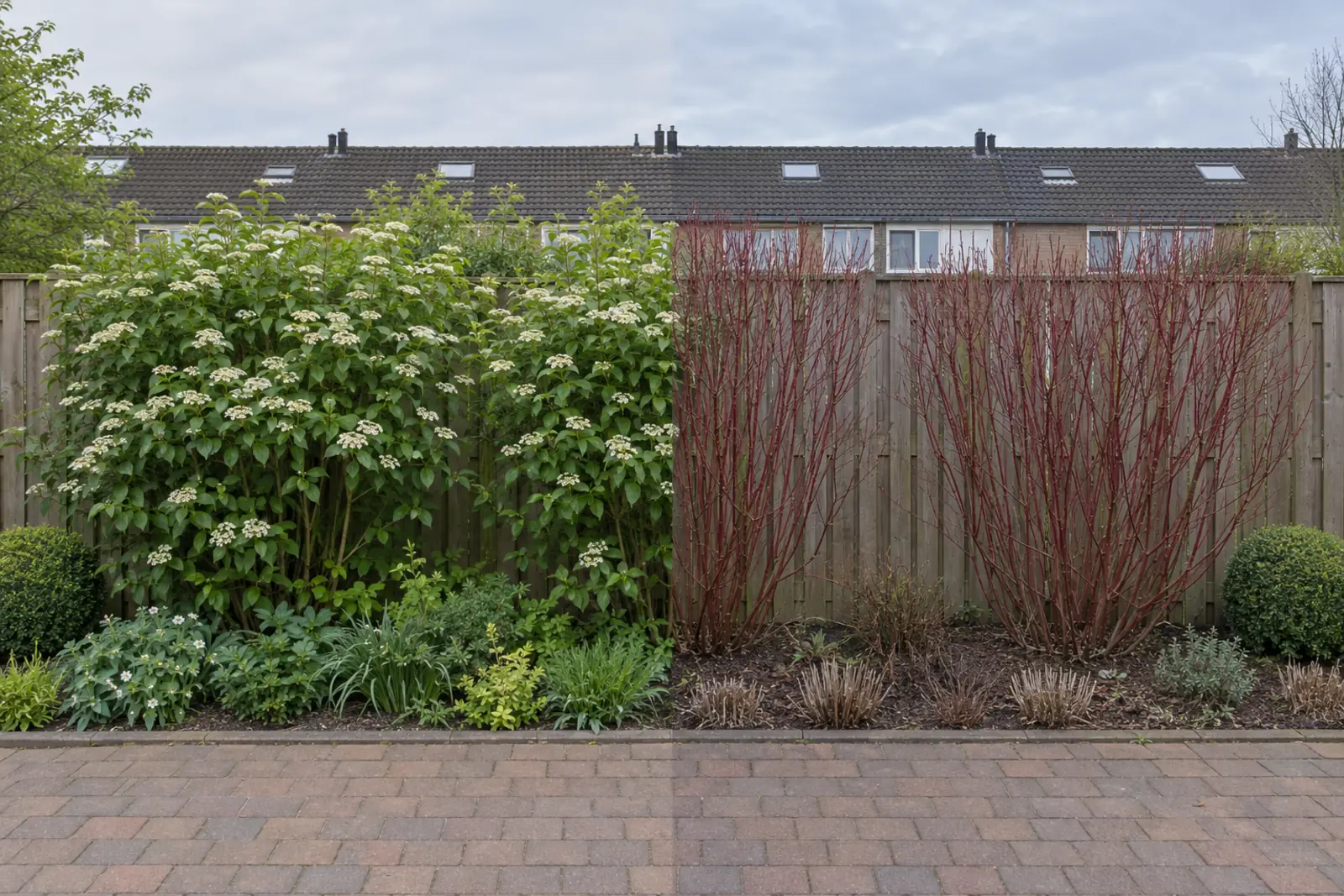 The same border in May and in January. This is a generated image, not a photo.
Planted beside the terrace, the shrub takes up far more room after a few years than the small plant from the nursery. On a layout plan of your plot with the houses around it, you can see whether that room is there. The app draws the plant on that plan at the width of a full-grown shrub, not at pot size.
Planting and caring for common dogwood
Autumn is the best time to plant common dogwood. Over winter the roots settle in, so the plant needs less water in its first summer. Nurseries deliver bare-root stock, with no soil on the roots, between November and late March. Potted plants can be planted all year.
Plant this shrub 1.5 to 2.5 metres from the next one, because a full-grown plant becomes that wide. On planting day that looks like an empty patch, but the gap fills by itself. Water a young plant when the summer stays dry for a long time. An established shrub needs water only in long dry spells.
| When | What to do |
|---|---|
| All year | Dig out suckers that come up in the grass or the path |
| End of winter, if you want | Cut the shrub back low for lots of young red stems, not in the first two years |
Cutting back low costs you that year's flowers, and with them the berries. To keep both, let the shrub grow as it likes. Many birds breed from March to the end of July. In those months, check for a nest before you cut.
Common dogwood problems and what to do
Young shoots come up all over the lawn. Those are suckers from the roots. Dig them out, or mow the grass beside the shrub regularly.
The shrub does not flower. A low prune in spring removes the flowers. Let the shrub grow for a year without pruning.
White circles appear on the branches. In early summer you sometimes see white egg masses of 5 to 6 millimetres on the bark. They come from horse chestnut scale, a small insect that sucks sap. The shrub copes well with it, so you do not have to do anything.
The leaves hang limp in a dry summer. The soil has become too dry. Water the shrub well a few times until the drought is over.
Which birds and insects use common dogwood?
Common dogwood is a host plant of the holly blue, a common butterfly that also lives in gardens. A host plant is a plant that caterpillars feed on. The green hairstreak uses the shrub as a host plant too. That butterfly is fairly scarce and occurs locally on sandy soils.
The leaves also feed the caterpillars of Antispila petryi, a small moth called rode-kornoeljegaatjesmaker in Dutch. From August into November its caterpillars live inside the leaf. In the Netherlands the species is known only from South Limburg.
In summer the shrub is dense with leaves. Chiffchaffs, blackbirds, robins and wrens then find a sheltered hiding place in it.
Is common dogwood poisonous?
The berries taste bitter and can cause vomiting. In people with sensitive skin, the leaves can cause irritation.
The photos on this page were made with AI, based on real photos and descriptions of this plant.
Frequently asked questions
How big does common dogwood grow?
Common dogwood grows 1.5 to 3 metres tall and 1.5 to 2.5 metres wide. If you leave the suckers that come up from the roots, the shrub spreads into a dense thicket.
When should you prune common dogwood?
Pruning is not needed. For lots of young red stems, cut the shrub back low at the end of winter. The shrub then does not flower that year.
Is common dogwood poisonous?
The berries taste bitter and can cause vomiting. The leaves can irritate sensitive skin.
What is the difference between common dogwood and white dogwood?
Both shrubs have red stems in winter. Common dogwood bears blue-black berries, while white dogwood (Cornus alba) bears white ones.
How much sun does common dogwood need?
Common dogwood grows in full sun to partial shade. Partial shade is three to six hours of direct sun a day around midsummer.
Sources (24)
- Duistermaat, Sparrius & Denters, Standaardlijst van de Nederlandse flora 2020 (Gorteria 43)
- NDFF Verspreidingsatlas — Cornus sanguinea
- Flora van Nederland — Rode kornoelje
- RHS — Cornus sanguinea (common dogwood)
- RHS — Cornus alba
- RHS — Shade gardening (definities zon en halfschaduw)
- RHS — Pruning groups
- RHS — Winter stem colour dogwoods growing guide
- RHS — Horse chestnut scale
- PFAF — Cornus sanguinea
- Imkerpedia — Drachtplanten
- Pollennieuws — Aandachtspunten hooikoorts vriendelijke tuin
- De Vlinderstichting — Boomblauwtje
- De Vlinderstichting — Groentje
- De Vlinderstichting — De bladmineerders van rode en gele kornoelje zijn verschillende soorten
- Vogelbescherming — Tuintip: meer rood in de tuin
- Vogelbescherming — Snoeien in het broedseizoen, mag dat?
- Directplant — Rode kornoelje (prijs per maat)
- Puur van 't Veld — Rode kornoelje 60-90 cm, blote wortel (prijs)
- Planta — Cornus sanguinea 150-175 cm, met kluit (prijs)
- Den Mulder Boomteelt — Cornus sanguinea meerstammig / struik (prijs)
- Wikimedia Commons — Leaf: photo by AnRo0002 (CC0)
- Wikimedia Commons — Flower: photo by AnRo0002 (CC0)
- Wikimedia Commons — Fruit: photo by AnRo0002 (CC0)