6 min read
Common foxglove: planting, care and poisonous parts
Digitalis purpurea
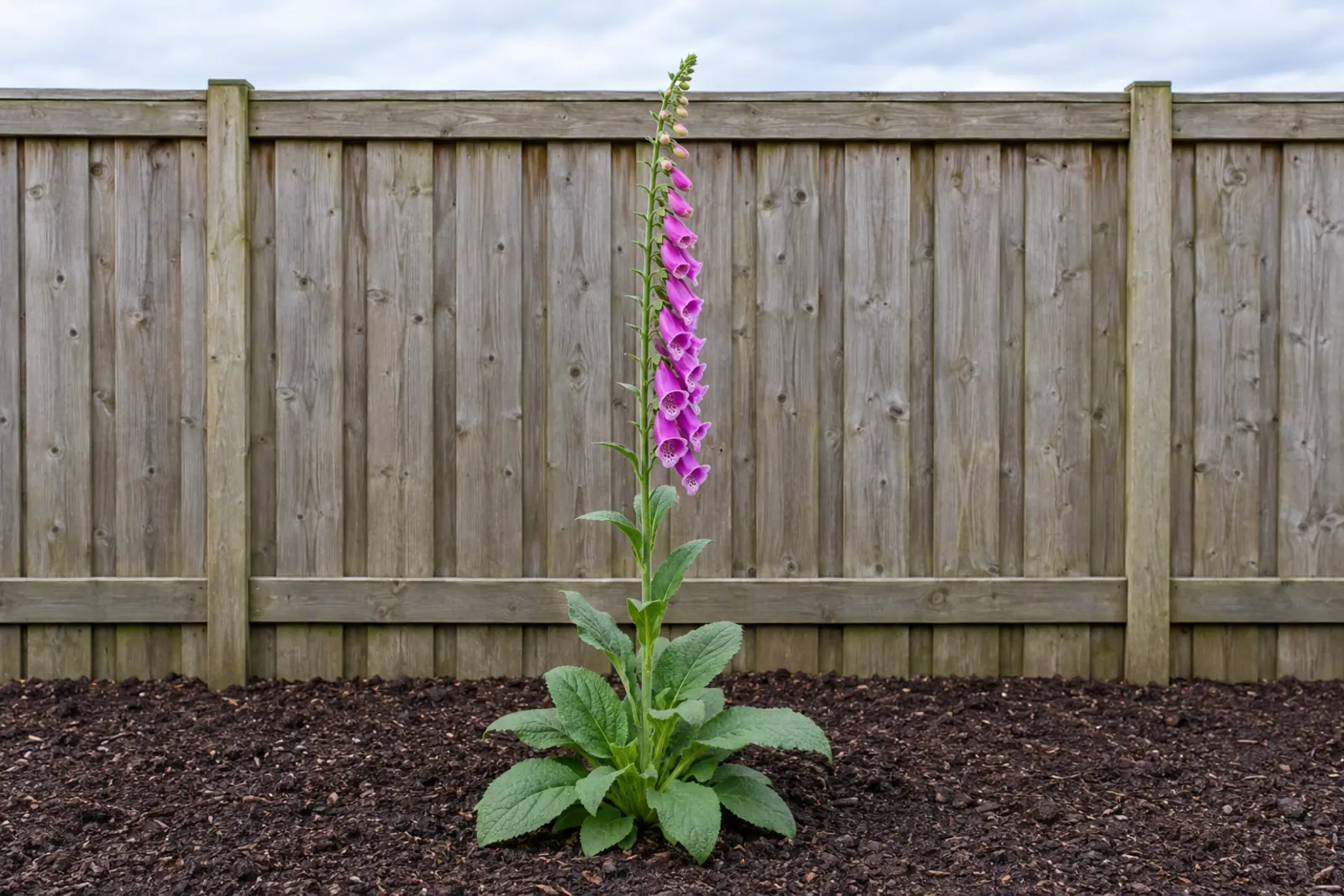
Common foxglove (Digitalis purpurea) is a native biennial. In the first year only a rosette of large, soft leaves grows. After that comes an upright stem with drooping, reddish-purple bells along one side, flowering from May to October. The plant wants partial shade and soil that is not too wet. Every part is poisonous.
Common foxglove at a glance
| Feature | Common foxglove |
|---|---|
| Height | 0.3 to 1.5 m, in a garden up to 2 m |
| Spread | 10 to 50 cm |
| Full grown after | 1 to 2 years |
| Sun | Partial shade to full sun |
| Soil | Not too wet, ideally rich in humus |
| Water | Average: not waterlogged, not bone-dry |
| Maintenance | Low: cut off the spent stem |
| Flowers | May to October, reddish purple |
| For bees | Yes: nectar and pollen for bumblebees, May to October |
| Hay fever | Not or weakly allergenic |
| Leaves | Stay green: the rosette overwinters |
| Hardy | Yes |
| Native | Yes |
| Poisonous | Yes: all parts, above all the leaves and seeds |
| Pricks or stings | No |
| Price, young | About €2.45 to €2.50 each, 5-10 cm, in a pot |
| Price, grown | About €9 each, 10-15 cm, in a larger pot |
- Leaf
- all year
- Flower
- May to October
- Fruit
- July to October
Leaf 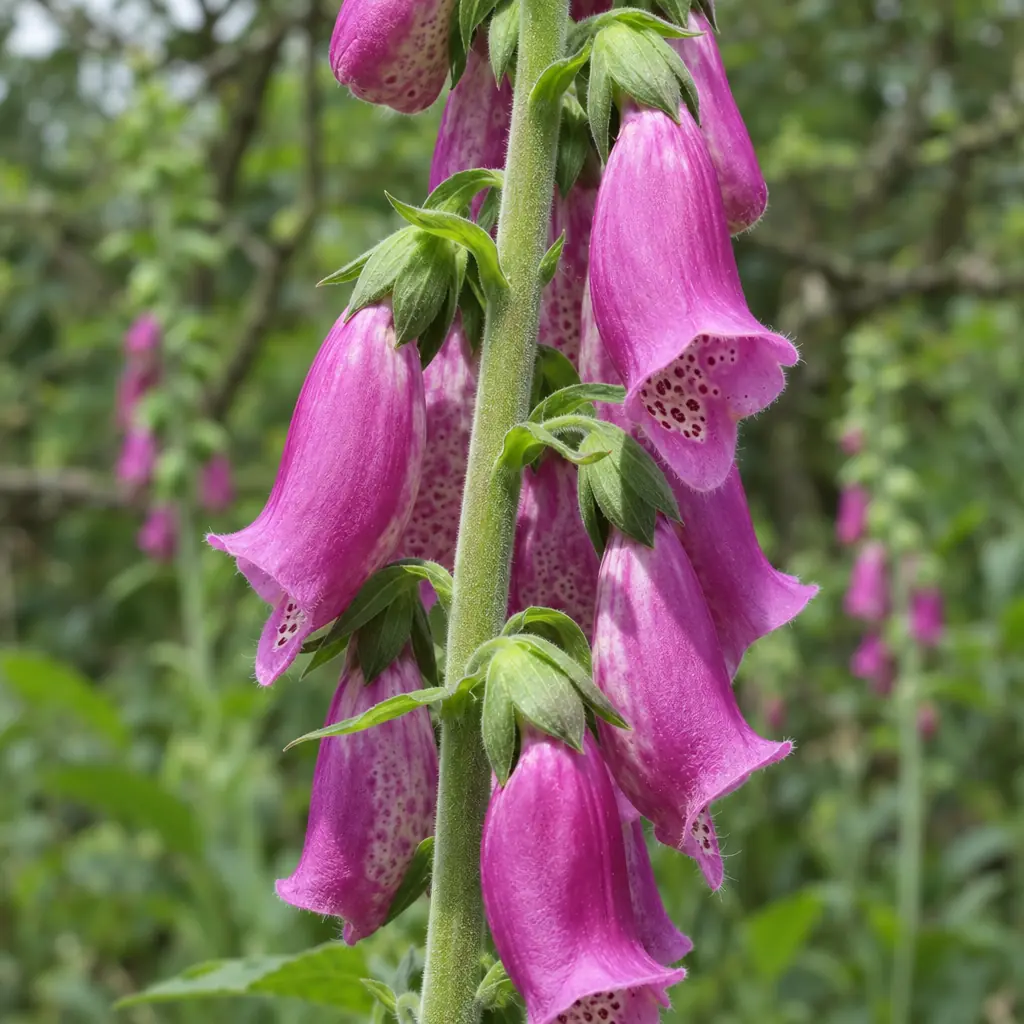
Flower 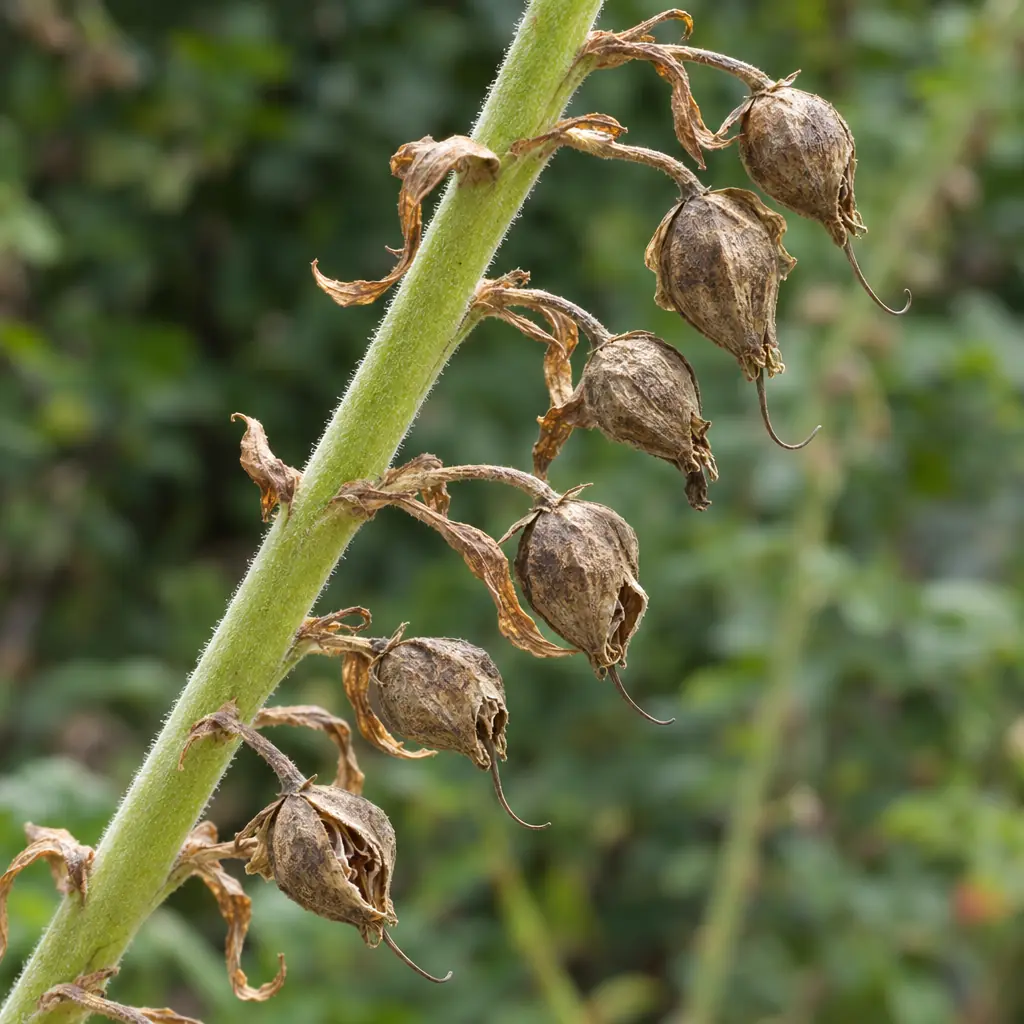
Fruit
How do I recognise common foxglove?
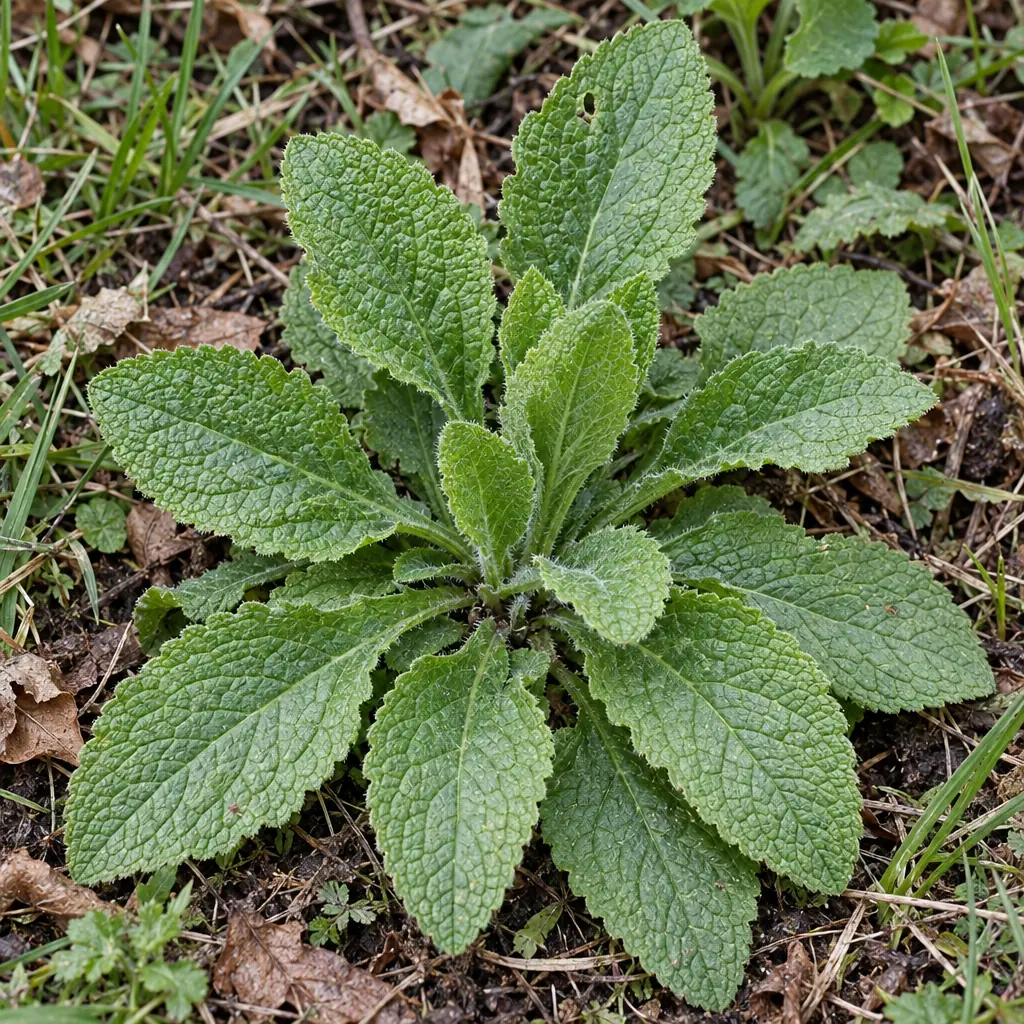
Start with the leaves. The lowest ones grow up to 40 centimetres long. Their shape is oval to oblong, narrowing towards the leaf stalk. The edge is toothed. Underneath, the leaf is grey with hairs and feels soft.
The flower stem is upright and unbranched, apart from sometimes at the base. Short, soft hairs cover it. A long spike of bells hangs from the top, all turned to one side. Sometimes a single spike holds as many as a hundred flowers. Each flower measures 4 to 5 centimetres. Inside are dark red spots with a white rim, and a few hairs. The odd plant flowers pure white.
Dry, round fruits follow the flowers and burst open. They release a great many small brown seeds.
Take note of the garden forms sold in garden centres. Some, such as the Excelsior hybrids, flower pink, white or yellow, with the flowers held horizontally all round the stem. On the wild plant the bells hang down, on one side only.
Where does common foxglove grow best?
Common foxglove prefers partial shade: three to six hours of direct sunlight a day around midsummer. The plant also grows in full sun. The soil can be moist to dry, ideally rich in humus. In the wild, foxglove grows in open spots in deciduous woods, along woodland edges and in scrub.
Keep it out of these two spots:
- A low patch that stays waterlogged in winter. The rosette sits in wet soil there all winter, and the plant copes badly with that.
- A sandy strip in full sun that dries out in summer. Foxglove copes badly with bone-dry soil as well.
In winter the rosette of a young plant stays green. A plant that has already flowered leaves only its dead stem by then.
On a plan of your own plot you can see where a group fits, to scale and with the houses around it. The app draws every plant at a grown plant's width, not at pot size.
Planting and caring for common foxglove
Sow foxglove in late spring, straight into the spot where it will grow. A young plant from a nursery works too. Space the plants 35 to 45 centimetres apart, which comes to 5 to 8 per square metre. On planting day that looks too wide. Yet a grown plant reaches up to 50 centimetres across. In dry weeks, water until the plant is well established. Wear gloves when you handle the plant.
A single plant is short-lived, but a group stays. The seeds fall around the old plant and come up there by themselves.
| When | What to do |
|---|---|
| After flowering, if you want no seedlings | Cut off the spent stem |
| After flowering, if you want flowers every year | Leave one or two stems until the fruits burst open |
From March to July, many bird species are sitting on nests. Species with a second brood carry on into August. So look in the border first before you cut anything in those months.
What goes wrong with common foxglove?
No flowers appear in the first year. That is normal. The rosette must first survive one or two winters and build up reserves. Only then does the flower stem come.
The plant dies after flowering. That is what a biennial does. Sometimes a new rosette has already grown at the foot of the stem. When that rosette lands on the ground, it can take root and live on.
A white film covers the leaves. That is powdery mildew, a fungus. Downy mildew and leaf spot also occur. Cut away the worst leaves.
There are small holes in the outside of the flowers. Bumblebees with a short tongue made them. The deep nectar is out of their reach, so they bite a hole in the flower. Nothing needs doing.
Which insects and birds use common foxglove?
Common foxglove is the host plant of the foxglove pug (vingerhoedskruiddwergspanner), a small moth. Its caterpillar lives on the flowers from June to September. The adult moth flies from late April to mid August. In the Netherlands the species is fairly rare. Until the start of this century it was found mainly in South Limburg, on open clearings in woodland.
Which birds benefit from common foxglove has not been well described.
Is common foxglove poisonous?
Common foxglove is a very poisonous plant. The poisonous substances are in all parts, most of all in the leaves and the seeds. They are cardiac glycosides, which act strongly on the heart. After someone eats the plant, stomach and bowel complaints come first. A slow, sometimes irregular pulse is typical. A severe poisoning can stop the heart, but such cases are exceptional. Drying or cooking does not make the plant any less poisonous. On contact the plant can irritate the skin. The plant is poisonous to pets as well. No edible part is known.
The photos on this page were made with AI, based on real photos and descriptions of this plant.
Frequently asked questions
Is common foxglove poisonous?
Yes, very poisonous. All parts contain substances that act strongly on the heart, above all the leaves and the seeds. Drying or cooking does not make the plant any less poisonous.
Does common foxglove come back every year?
The plant itself does not: common foxglove is a biennial and dies after flowering. If you let a stem set seed, the plant sows itself around. That way there are new plants every year.
How much sun does common foxglove need?
Common foxglove prefers partial shade: three to six hours of direct sunlight a day around midsummer. The plant also grows in full sun, as long as the soil does not dry out.
Why is my common foxglove not flowering?
In its first year the plant makes only a rosette of leaves. That rosette has to survive one or two winters first. Then the flower stem comes.
Is common foxglove native to the Netherlands?
Yes. Common foxglove belongs to the original flora of the Netherlands. Here it is a common species of open spots in woods and of woodland edges.
Sources (18)
- Duistermaat, Sparrius & Denters, Standaardlijst van de Nederlandse flora 2020 (Gorteria 43)
- NDFF Verspreidingsatlas — Digitalis purpurea
- Flora van Nederland — Vingerhoedskruid
- RHS — Digitalis purpurea (common foxglove)
- RHS — Shade gardening (definities zon en schaduw)
- University of Wisconsin Extension — Common foxglove, Digitalis purpurea
- Nature Today — Natuurjournaal 18 mei 2024
- Pollennieuws / Flora van Nederland — Aandachtspunten hooikoorts vriendelijke tuin
- PFAF — Digitalis purpurea
- Antigifcentrum — Vingerhoedskruid (Digitalis purpurea)
- De Vlinderstichting — Vingerhoedskruiddwergspanner
- Vogelbescherming — Snoeien in het broedseizoen, mag dat?
- Heijnen Planten — Digitalis purpurea (prijs)
- Yarinde — Gewoon vingerhoedskruid (prijs, plantdichtheid)
- Maréchal — Digitalis purpurea (plantdichtheid)
- Wikimedia Commons — Leaf: photo by Stephen James McWilliam (CC BY 4.0)
- Wikimedia Commons — Flower: photo by AnRo0002 (CC0)
- Wikimedia Commons — Fruit: photo by AnRo0002 (CC0)