5 min read
Wild parsnip in the garden: identify, sow and care
Pastinaca sativa
Wild parsnip (Pastinaca sativa) is a native biennial of the carrot family. In its first year the plant makes only leaves and a long taproot. The second year brings a stem 60 centimetres to 1.2 metres tall. Flat heads of yellow flowers open on it from July to September. The species wants sun and moist, lime-rich soil.
Wild parsnip at a glance
| Feature | Wild parsnip |
|---|---|
| Height | 0.6 to 1.2 m |
| Spread | 10 to 50 cm |
| Full grown after | 2 years: flowers in the second year |
| Sun | Full sun to partial shade |
| Soil | Moist and rich in lime, little or no fertiliser |
| Water | Average |
| Maintenance | Low: no pruning needed |
| Flowers | July to September, yellow |
| For bees | Yes: nectar and pollen, July to September |
| Hay fever | Not or weakly allergenic |
| Leaves | Drop in autumn |
| Hardy | Yes |
| Native | Yes |
| Poisonous | Mildly: the sap makes skin sensitive to sunlight |
| Pricks or stings | No |
| Price, young | About €0.58 to €4.09 per young plant, from 3-5 cm |
| Price, grown | Not for sale |
- Leaf
- March to October
- Flower
- July to September
- Fruit
- August to October
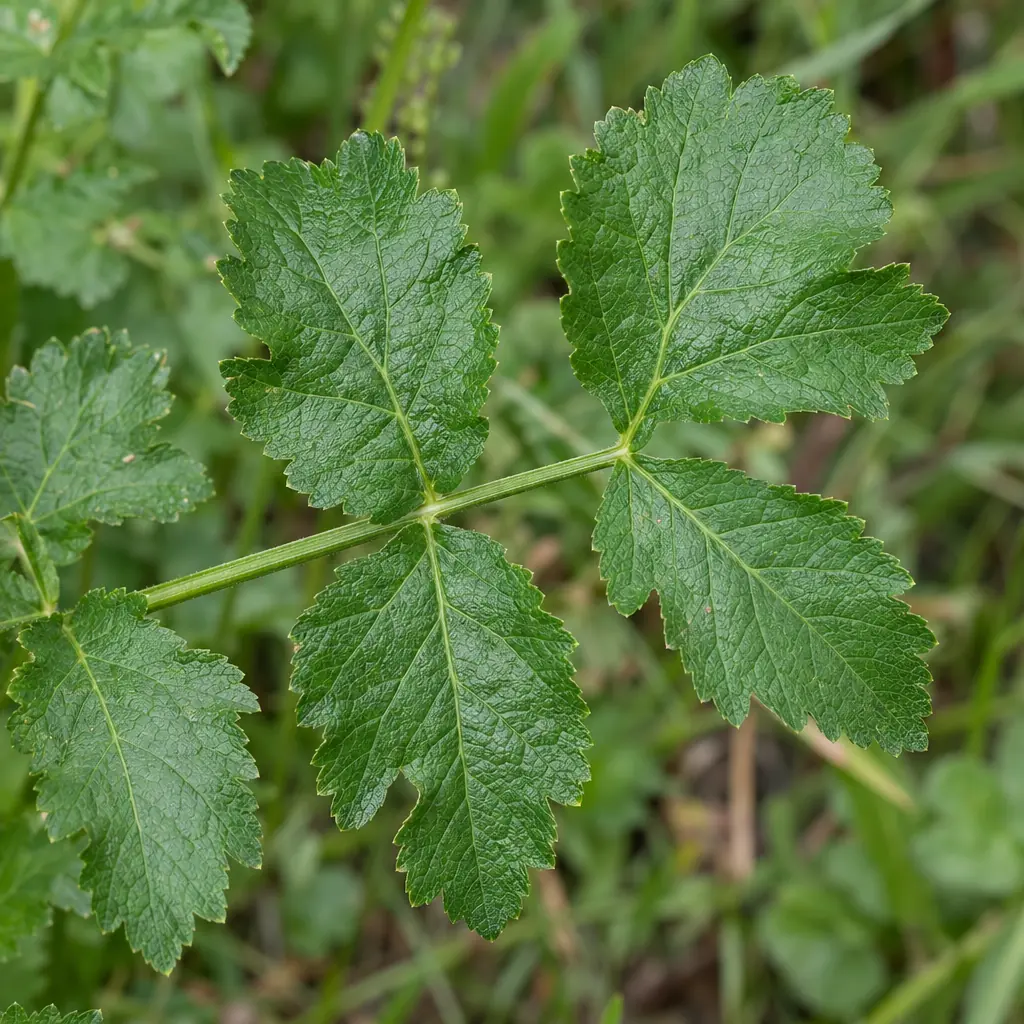
Leaf 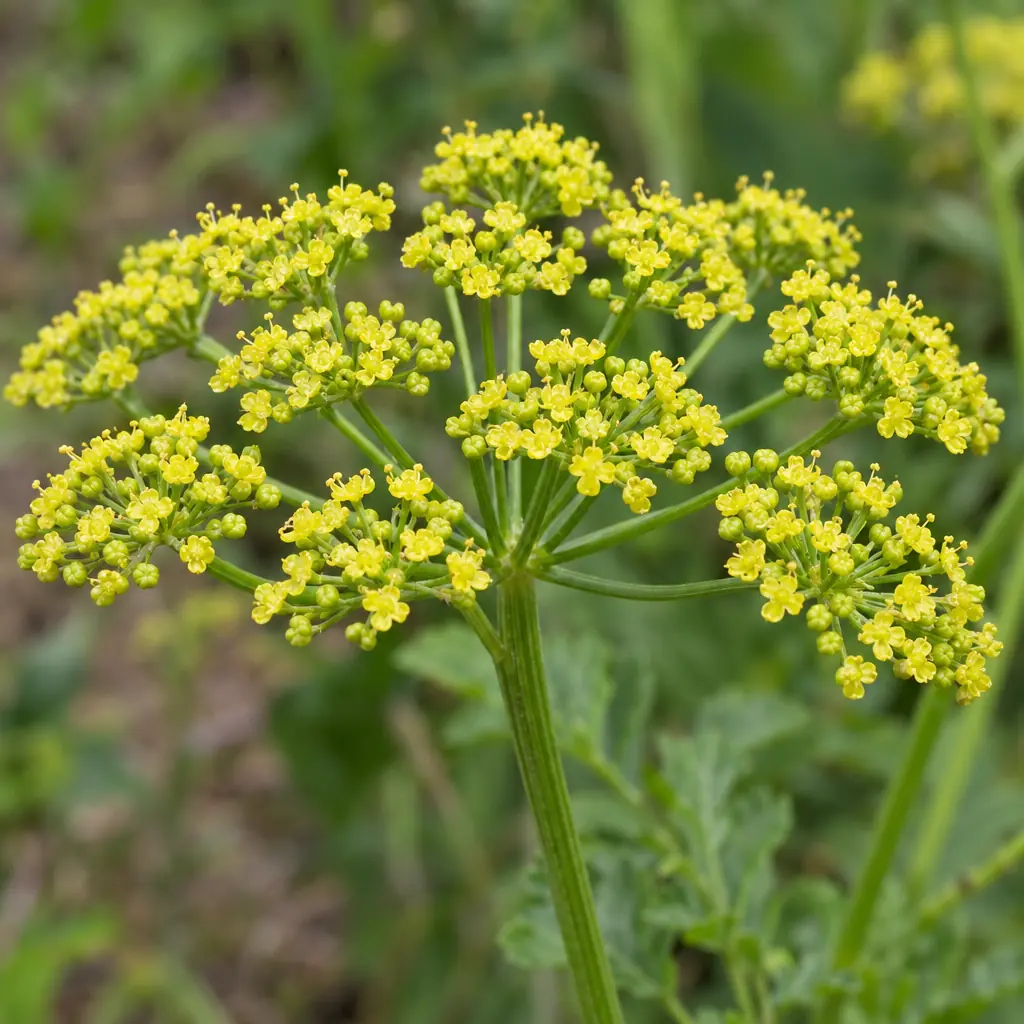
Flower 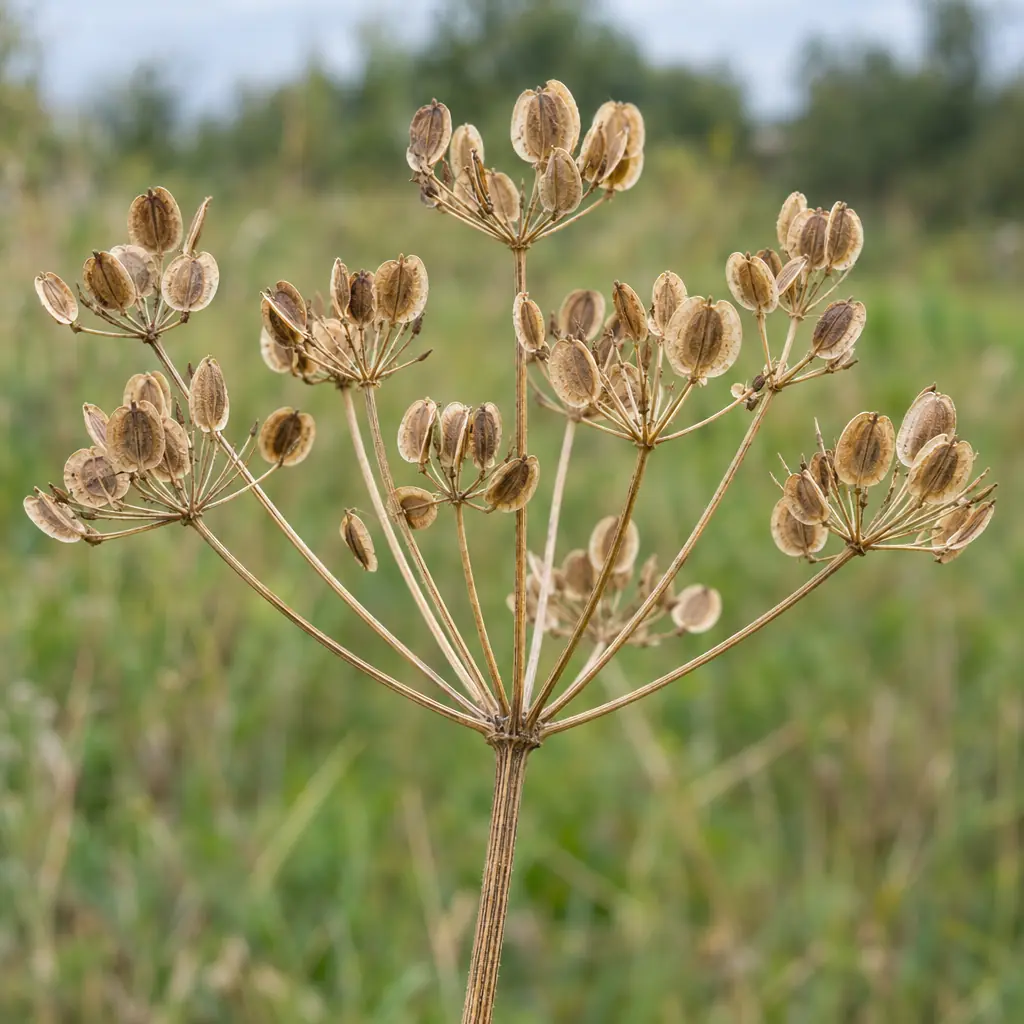
Fruit
How do I recognise wild parsnip?
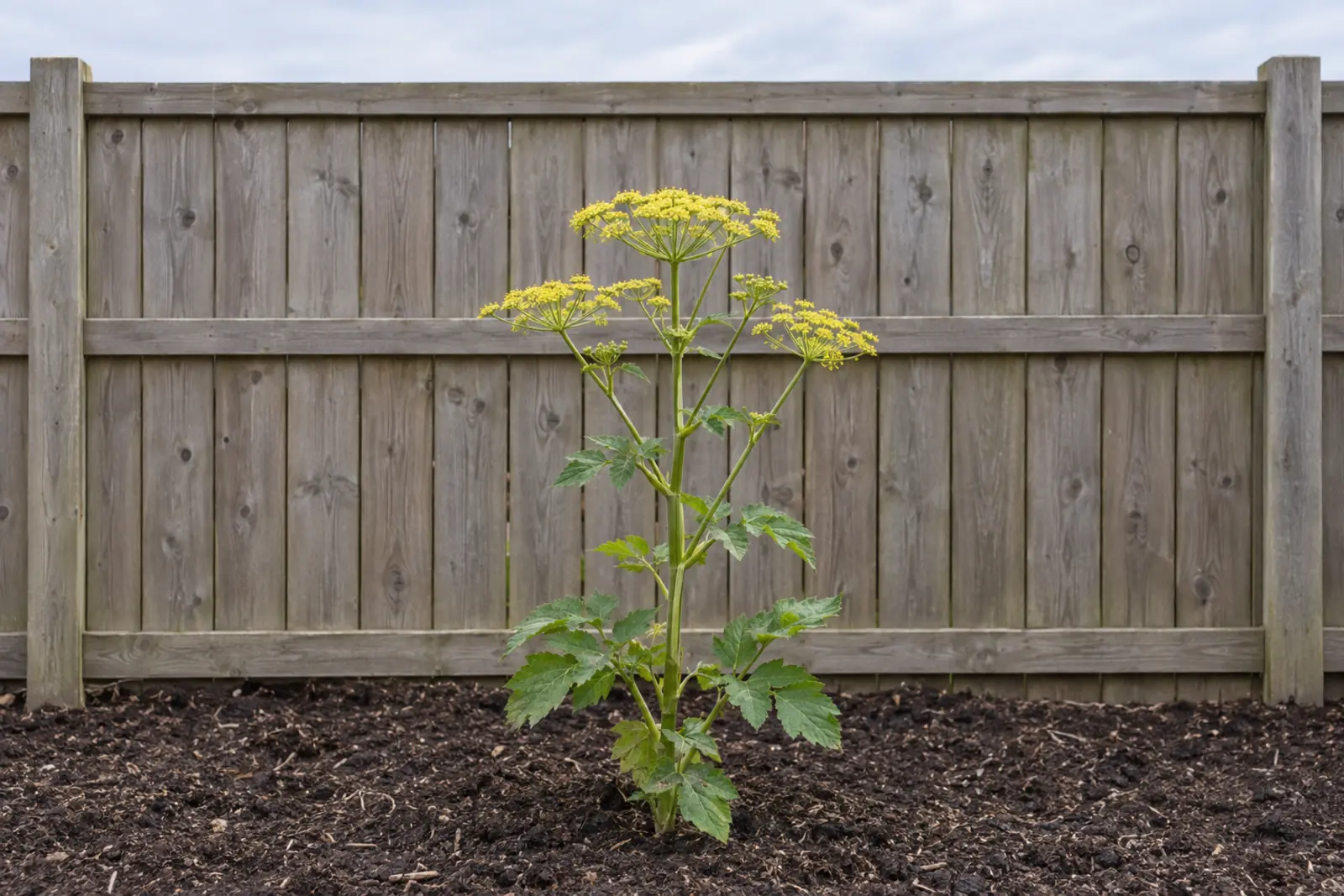
Start with the leaves. They are yellow-green, and each leaf is divided once, or sometimes twice, into leaflets along one stalk. A single stalk carries 5 to 11 oval leaflets, lobed and coarsely toothed. The upper side is often glossy.
The flowering stem grows upright. Its surface is angular, grooved and covered in short hairs. The whole plant has a distinct smell of its own.
At the top sit flat flower heads, called umbels, on 5 to 20 stalks. The yellow flowers are only one and a half millimetres across. Their petals curl inward at the tip. Flat, egg-shaped fruits of 5 to 8 millimetres follow, each with a narrow wing.
Take note of fennel, which also has yellow flower heads. Fennel leaves are very fine, as thin as thread. Wild parsnip has broad, toothed leaflets. On waste ground you may sometimes find a subspecies, Pastinaca sativa subsp. urens. Its stem is barely grooved near the base, or not at all.
Where does wild parsnip grow best?
Wild parsnip does best in full sun: more than six hours of direct sun a day around midsummer. With three to six hours, partial shade, the plant still manages. In the wild it grows on road verges, on dikes, in rough vegetation and in damp hay meadows.
Three spots in a garden work badly:
- A border you have just manured. Fresh manure or compost makes the taproot fork.
- Heavy, compacted soil full of stones. The long taproot struggles to get through. Loosen the soil first.
- Right beside a narrow path. Walk past in summer with bare arms or legs, and the sap can end up on your skin.
In January, after flowering, only a dry, straw-coloured stem with empty flower heads remains.
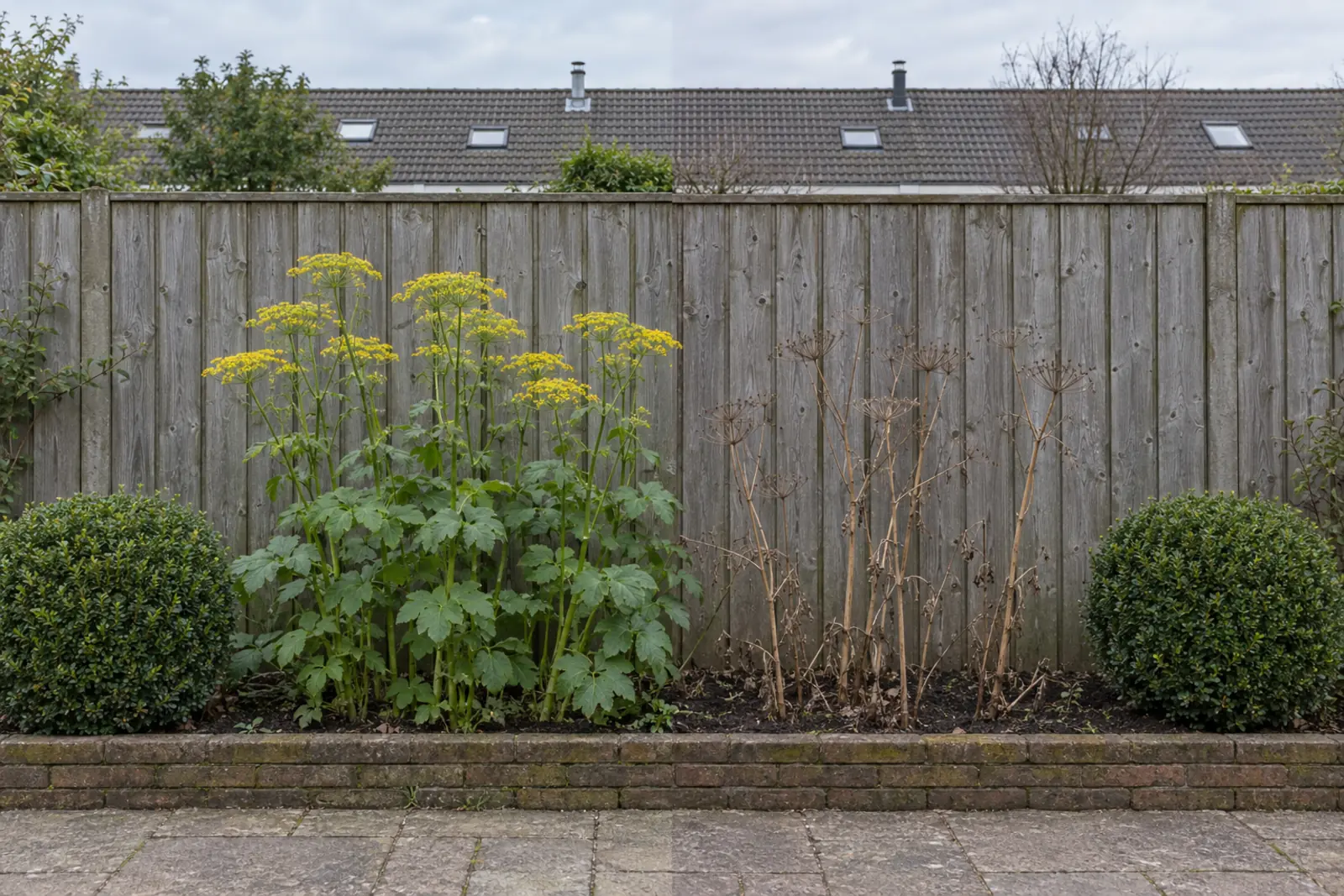 The same border in July and in January. This is a generated image, not a photograph.
In the app you can look for a spot away from the path, on a plan of your own plot. That parcel comes to scale from the Kadaster, the Dutch cadastre, with the neighbouring houses drawn in.
Planting and care
Sow wild parsnip in March, April or early May, one centimetre deep, straight into its final spot. A young plant from a nursery works too. Leave about 50 centimetres between two plants, because a single plant can grow that wide. On sowing day that looks like empty ground. The flowering stem needs the space in its second year. Water in dry weeks until the young plants are established.
| When | What to do |
|---|---|
| August and September, after flowering | Leave the flower heads: caterpillars feed on the flowers and the fruits |
| Winter or early spring | Cut off the dead stem |
Beyond that, wild parsnip needs no pruning. Do wear gloves when you work on the plant, especially on a sunny day.
Many bird species nest from March through July. Many have more than one brood and carry on into August. In those months, look around first before you remove a stem.
Common problems with wild parsnip
No flowers appear. In the first year that is normal. For flowers every summer, sow again every year.
The plant dies after flowering. That is part of its life, not a disease. Leave the dead stem until winter.
Nothing comes up after sowing. Wild parsnip is slow to germinate: the seedlings appear only after 14 to 30 days. Old seed germinates poorly, so buy fresh seed every year.
The root has tunnels or brown patches. Those are carrot fly maggots, or parsnip canker, a disease of the root. This matters mostly in a vegetable garden, because there you harvest the root.
Which insects and birds use wild parsnip?
Wild parsnip is a food plant of the swallowtail (Papilio machaon), a butterfly. Its caterpillar feeds mainly on carrot and on other plants of the carrot family. The swallowtail flies in two generations, from late April to mid-September. In the Netherlands the butterfly is fairly scarce and is seen mostly in the southern half.
The white-spotted pug (Eupithecia tripunctaria), a moth, also lives on wild parsnip. Its caterpillar feeds on the flowers and the fruits from mid-May to October. This moth is fairly common, spread across the whole country.
Which birds benefit from wild parsnip has not been well described.
Is wild parsnip poisonous?
Wild parsnip is mildly poisonous, to the skin. The sap makes skin sensitive to sunlight. If sap gets on your skin and the sun then shines on it, the skin can become inflamed. Not everyone reacts this way.
The photos on this page were made with AI, based on real photos and descriptions of this plant.
Frequently asked questions
How tall does wild parsnip grow?
The flowering stem grows 60 centimetres to 1.2 metres tall. That stem only appears in the second year. In the first year the plant makes nothing but leaves.
Is wild parsnip poisonous?
Mildly, to the skin. The sap makes skin sensitive to sunlight, and the skin can then become inflamed. Not everyone reacts this way.
When does wild parsnip flower?
From July to September, in the second year after sowing. After flowering the plant sets seed and dies.
When do you sow wild parsnip?
In March, April or early May, one centimetre deep, straight into its final spot. Use fresh seed: old seed germinates poorly.
Is wild parsnip native to the Netherlands?
Yes. Wild parsnip belongs to the original flora of the Netherlands. You find it on road verges, on dikes and in rough grassland.
Sources (20)
- Duistermaat, Sparrius & Denters, Standaardlijst van de Nederlandse flora 2020 (Gorteria 43)
- NDFF Verspreidingsatlas — Pastinaca sativa subsp. sativa
- Flora van Nederland — Pastinaak
- Flora van Nederland — Venkel
- RHS — Pastinaca sativa (parsnip)
- RHS — How to grow parsnips
- RHS — Shade gardening (definities zon en schaduw)
- Imkerpedia — Drachtplanten
- Pollennieuws / Flora van Nederland — Aandachtspunten hooikoorts vriendelijke tuin
- PFAF — Pastinaca sativa
- De Vlinderstichting — Pastinaak
- De Vlinderstichting — Koninginnenpage
- De Vlinderstichting — Schermbloemdwergspanner
- Vogelbescherming — Snoeien in het broedseizoen, mag dat?
- RIVM, Nationaal Vergiftigingen Informatie Centrum — Seizoengebonden vergiftigingen
- De Cruydt-Hoeck — Pastinaak (prijs)
- Yarinde — Pastinaak (prijs)
- Wikimedia Commons — Leaf: photo by NY State IPM Program at Cornell University from New York, USA (CC BY 2.0)
- Wikimedia Commons — Flower: photo by AnRo0002 (CC0)
- Wikimedia Commons — Fruit: photo by AnRo0002 (CC0)