6 min read
Wild garlic: where it grows, how to plant and recognise it
Allium ursinum
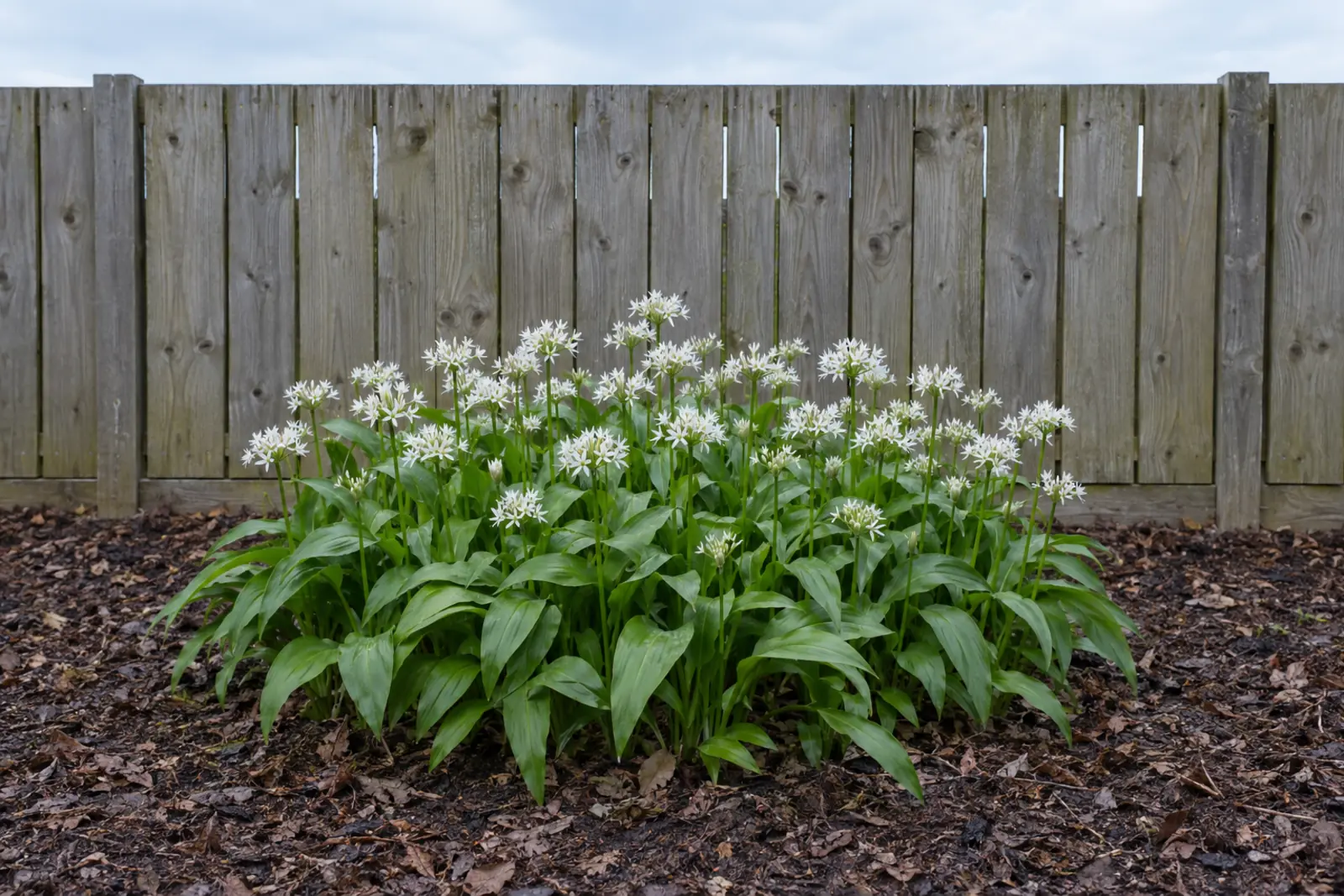
Wild garlic (Allium ursinum) is a native bulbous plant, 20 to 40 centimetres tall. In spring it forms a carpet of broad green leaves that smell of garlic. White star-shaped flowers rise above them from April to June. Wild garlic needs moist soil rich in humus, in partial shade or shade.
Wild garlic at a glance
| Feature | Wild garlic |
|---|---|
| Height | 20 to 40 cm |
| Spread | About 30 cm per full-grown plant |
| Full grown after | 2 to 5 years |
| Sun | Partial shade to shade |
| Soil | Moist and rich in humus, often loam or clay |
| Water | Average: keep the soil moist in spring |
| Maintenance | Low |
| Flowers | April to June, white |
| For bees | Yes: nectar and pollen, April and May |
| Hay fever | Not or weakly allergenic |
| Leaves | Drop in summer |
| Hardy | Yes |
| Native | Yes |
| Poisonous | Mildly: for dogs and cats |
| Pricks or stings | No |
| Price, young | About €4.75 to €5 per 10 bulbs |
| Price, grown | About €6.50 per plant, in a larger pot |
- Leaf
- February to June
- Flower
- April to June
- Fruit
- June
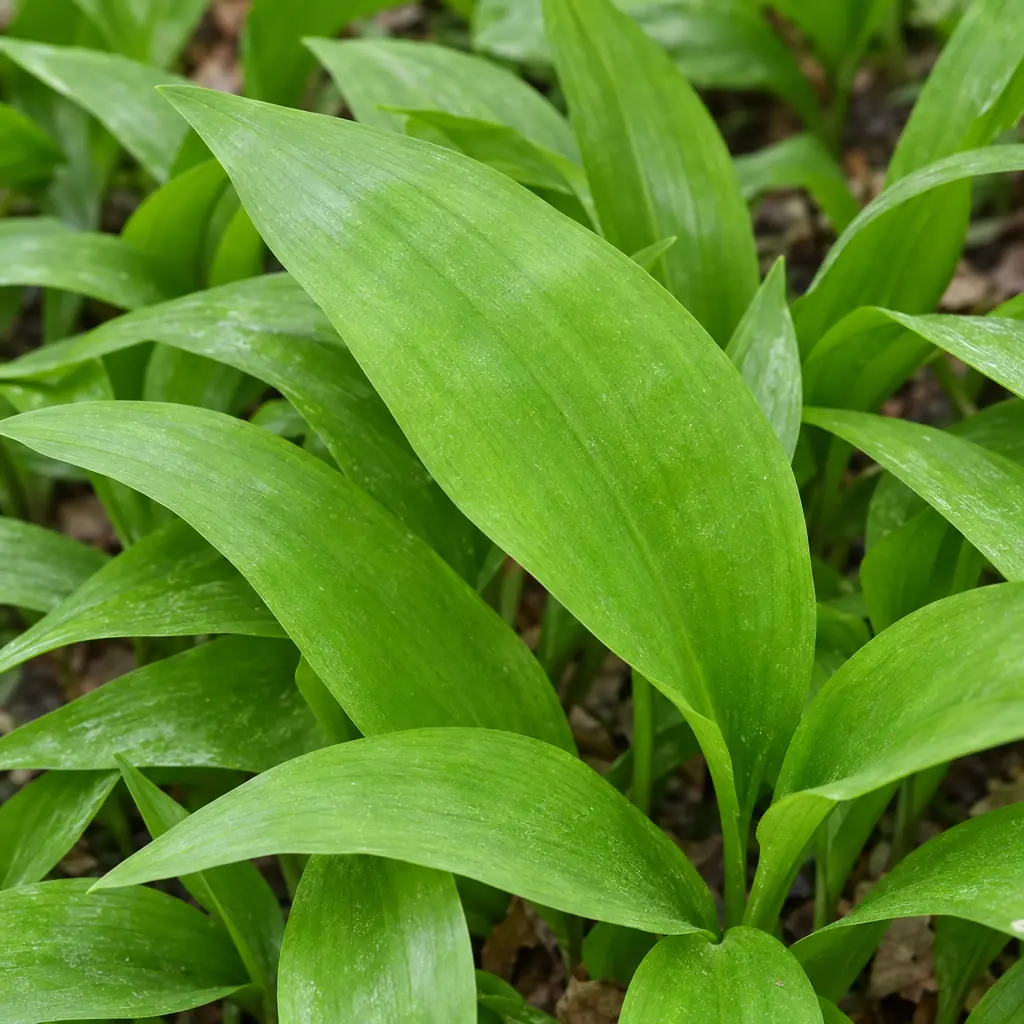
Leaf 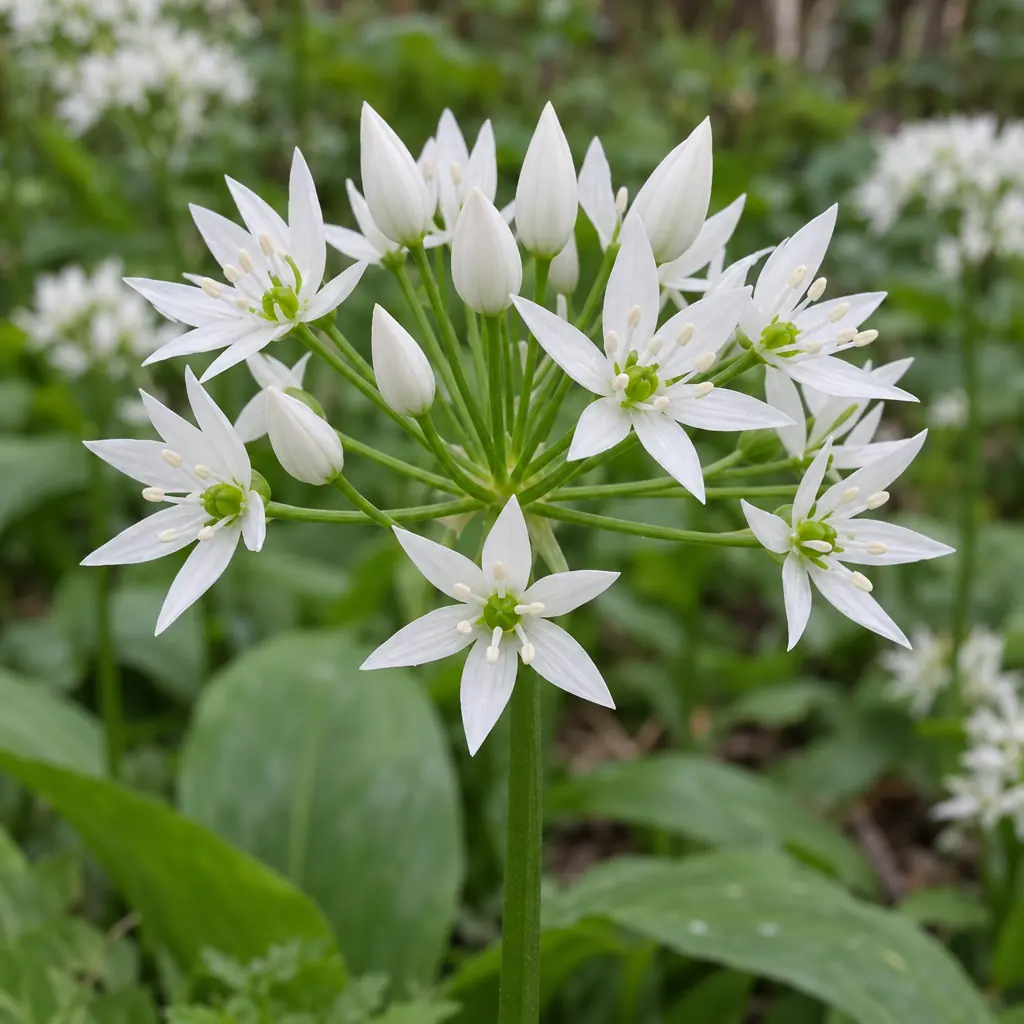
Flower 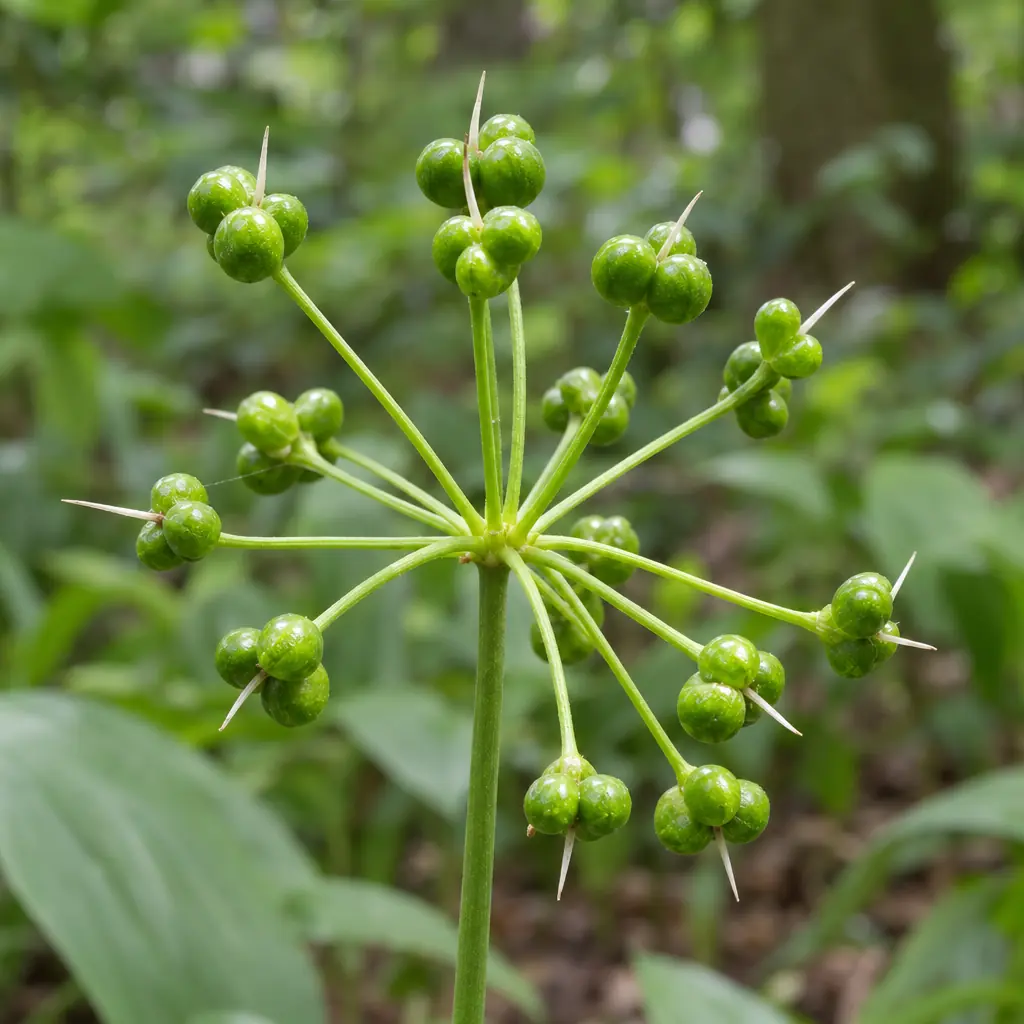
Fruit
How do I recognise wild garlic?
Look at the leaves first. A plant usually has two of them, rising straight from the ground. Each leaf is a long oval, 3 to 5 centimetres wide, with a pointed tip. The veins run side by side along its length. Every leaf has a stalk of its own, 5 to 15 centimetres long. A crushed leaf smells clearly of garlic.
The flowers sit on a leafless stem with three sides, sometimes half round. At the top is a loose, rounded cluster of small white stars. Each flower has six white petals and is 1.2 to 2 centimetres across. Seed capsules with black-brown seeds follow.
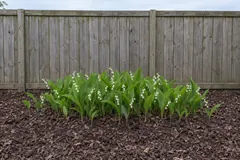
Take note of lily of the valley (Convallaria majalis) and meadow saffron (Colchicum autumnale). At first sight their leaves look very like those of wild garlic, and both plants are poisonous. The smell helps, but on its own it cannot settle a doubt. So look at the base of the leaf as well. On wild garlic each leaf grows separately, on its own stalk. Lily of the valley has two leaf stalks wrapped around each other, so they look like one stem. Meadow saffron holds its leaves around one thick stem, a little like a leek. In spring its seed capsule comes up together with those leaves. Flowers show the difference too: lily of the valley has bells, wild garlic open stars.
Where does wild garlic grow best?
Wild garlic likes a shady spot, for example under trees or at the foot of a hedge. Partial shade means the sun reaches the spot for 3 to 6 hours a day around midsummer. The soil should be moist to fairly wet and rich in humus. In the wild the plant grows in deciduous woodland, scrub and hedges, mostly on loam or clay.
Wild garlic does poorly in these places:
- On dry sand. Wild garlic needs soil that stays moist and holds plenty of humus. Dry sand does not keep that moisture.
- Among perennials in a border. Wild garlic spreads by seed and by small bulbs underground. Ants carry the seed off, so young plants come up all over the border.
- Beside the terrace, where you want green all summer. By summer the leaves turn yellow and die back.
In winter wild garlic shows nothing above ground. The plant is then a bulb in the soil. The first leaves appear in February or March.
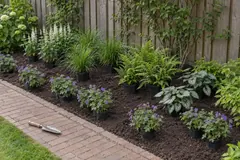
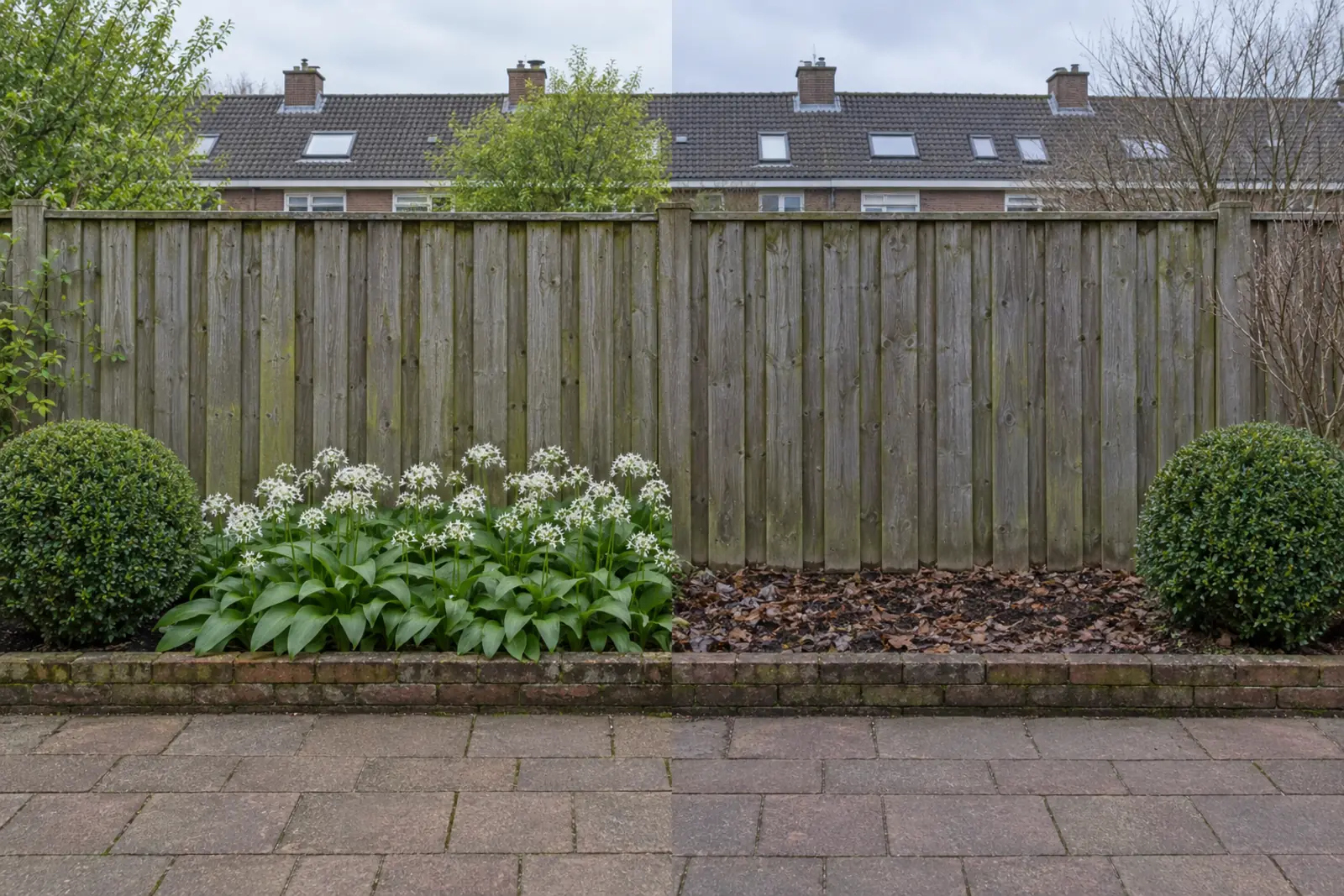 The same border in May and in January. This is a generated image, not a photograph.
Put the plant on the drawing of your own garden in the app to see whether wild garlic has room under your shrubs. The app draws the plant at a grown plant's width, not at pot size.
Planting and care
You can buy wild garlic as loose bulbs or as small plants in a pot. Bulbs are the cheapest, but they dry out fast. So plant them as soon as possible. Autumn is the time, from August to December. February and March work too, once the plant already has leaves.
A loose bulb is not yet full-grown and first makes a small plant. That is why the bulbs go in close together: about 6 centimetres deep and 10 centimetres apart. Plants from a pot get more room, 9 to 12 per square metre. On planting day that looks bare. Wild garlic spreads quickly, so the gaps close by themselves. Keep the soil moist in spring, especially in a dry month.
Sowing is possible as well, but it takes patience. The seed needs a warm spell first and then a cold one before it germinates.
No pruning is needed.
Wild garlic problems and what to do
Nothing comes up. Loose bulbs are sensitive to drying out. Buy them fresh and plant them straight away. After sowing, wait: the seed germinates only after one to two years, sometimes later.
The leaves turn yellow and collapse in June. That is normal: the plant is withdrawing into its bulb. There is nothing you need to do.
Small tunnels run through the leaves. These are mines made by the larvae of a small hoverfly, Cheilosia fasciata. The mines show best in late April and early May. There is no need to control them.
Wild garlic pops up everywhere. Lift young plants with a hand fork, small bulbs and all. Most bulbs sit in the top 20 centimetres of soil. Dig out a large clump whole.
Which insects and birds use wild garlic?
Two hoverflies depend on wild garlic: Cheilosia fasciata and the ramsons hoverfly (Portevinia maculata), named after ramsons, another English name for the plant. Both are fairly inconspicuous black flies. The larvae of the ramsons hoverfly live hidden in the small bulbs underground. Those of Cheilosia fasciata live in the leaves.
No fixed link between wild garlic and any particular bird species has been described.
Is wild garlic poisonous or edible?
Wild garlic is mildly poisonous to dogs and cats. Allium species contain sulphur compounds that can cause anaemia in these animals. That happens mainly after they eat large amounts.
For people the young leaf is edible. People have long used it in soup and salad. The long, oval bulbs sometimes serve as a substitute for garlic. Lily of the valley and meadow saffron have similar leaves, and those two are poisonous.
The photos on this page were made with AI, based on real photos and descriptions of this plant.
Frequently asked questions
How do I recognise wild garlic?
By its broad, oval leaves, each on a stalk of its own straight from the ground, which smell of garlic when you crush them. Lily of the valley has two leaf stalks wrapped around each other, and meadow saffron holds its leaves around a thick stem with a seed capsule. From April to June white star flowers rise above the leaves, not bells.
Is wild garlic poisonous?
Wild garlic is mildly poisonous to dogs and cats, mainly in large amounts. People have long used the young leaves in soup and salad. Those leaves do look like the leaves of lily of the valley and meadow saffron, and both of those plants are poisonous.
When do you plant wild garlic?
Plant the bulbs in autumn, from August to December. February and March also work, once the plant has leaves. Loose bulbs dry out quickly, so plant them straight away.
Where does wild garlic grow best?
In partial shade or shade, on moist soil that is rich in humus. A spot under trees or at the foot of a hedge suits wild garlic well.
Is wild garlic native to the Netherlands?
Yes. Wild garlic is native to the Netherlands. In the wild the plant grows in deciduous woodland, scrub and hedges.
Sources (24)
- Duistermaat, Sparrius & Denters, Standaardlijst van de Nederlandse flora 2020 (Gorteria 43)
- NDFF Verspreidingsatlas — Allium ursinum
- Flora van Nederland — Daslook
- Leefmilieu Brussel — Daslook (Allium ursinum)
- RHS — Allium ursinum (ramsons)
- RHS — Wild garlic and crow garlic
- RHS — Shade gardening (definities zon en schaduw)
- Imkerpedia — Drachtplanten
- Pollennieuws / Flora van Nederland — Aandachtspunten hooikoorts vriendelijke tuin
- PFAF — Allium ursinum
- Merck Veterinary Manual — Garlic and Onion (Allium spp) Toxicosis in Animals
- NVIC — Daslook en giftige look-alikes
- Flora van Nederland — Herfsttijloos
- Flora van Nederland — Lelietje-van-dalen
- Natuurmonumenten — Voorjaarsbloeiers
- EIS Kenniscentrum Insecten (Nature Today) — Gitjes van daslook
- De Cruydt-Hoeck — Daslook (zaaien)
- Sterkebollen — Daslook (prijs en planttijd)
- Flower Happiness — Daslook (prijs, plantdiepte en plantafstand)
- Puur van 't Veld — Daslook (prijs)
- Tuinplantenloods — Daslook (planten per m²)
- Wikimedia Commons — Leaf: photo by Membeth (CC0)
- Wikimedia Commons — Flower: photo by AnRo0002 (CC0)
- Wikimedia Commons — Fruit: photo by AnRo0002 (CC0)