5 min read
Royal fern: where it grows, planting and care
Osmunda regalis
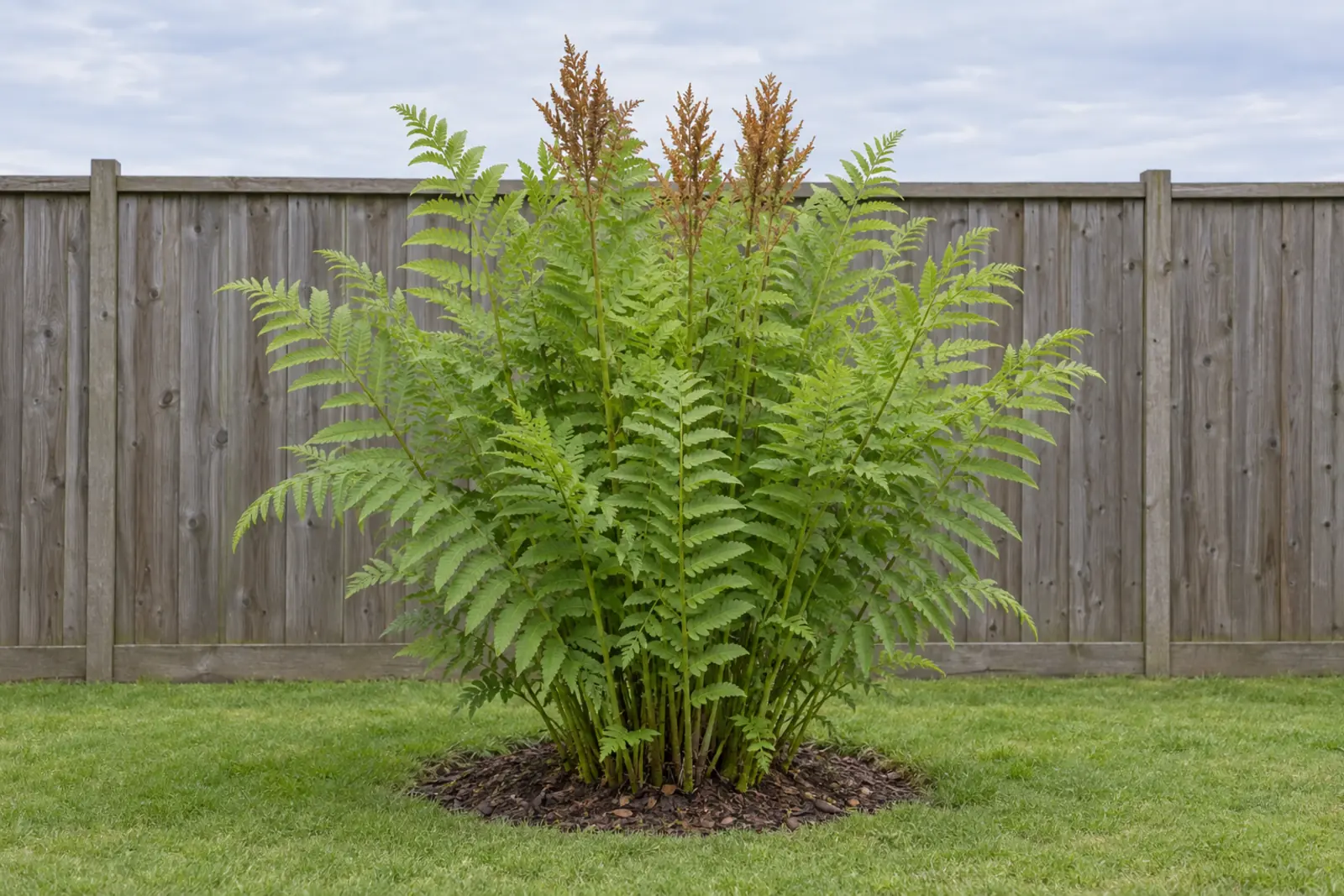
The royal fern (Osmunda regalis) is a large native fern for a wet spot in partial shade. In a garden the clump grows 1 to 2.5 metres tall. The light green fronds are twice divided, with large, separate leaflets. In summer, some fronds carry a rusty-brown plume of spores at the tip.
Royal fern at a glance
| Feature | Royal fern |
|---|---|
| Height | 1 to 2.5 m |
| Spread | 0.5 to 1 m |
| Full grown after | 5 to 10 years |
| Sun | Partial shade |
| Soil | Moist to wet, rich in humus, ideally acid |
| Water | Plenty: the soil must not dry out |
| Maintenance | Low: remove dead fronds in spring |
| Flowers | Does not flower: a fern makes spores |
| For bees | No: a fern has no flowers |
| Hay fever | No pollen |
| Leaves | Drop in autumn |
| Hardy | Yes |
| Native | Yes |
| Poisonous | No, as far as is known |
| Pricks or stings | No |
| Price, young | About €3.35 to €4 each, 5-10 cm, in a small pot |
| Price, grown | About €7.99 to €9.75 each, in a large pot |
- Leaf
- April to October
- Flower
- no showy flowers
- Fruit
- no noticeable fruit
Leaf
How do I recognise a royal fern?
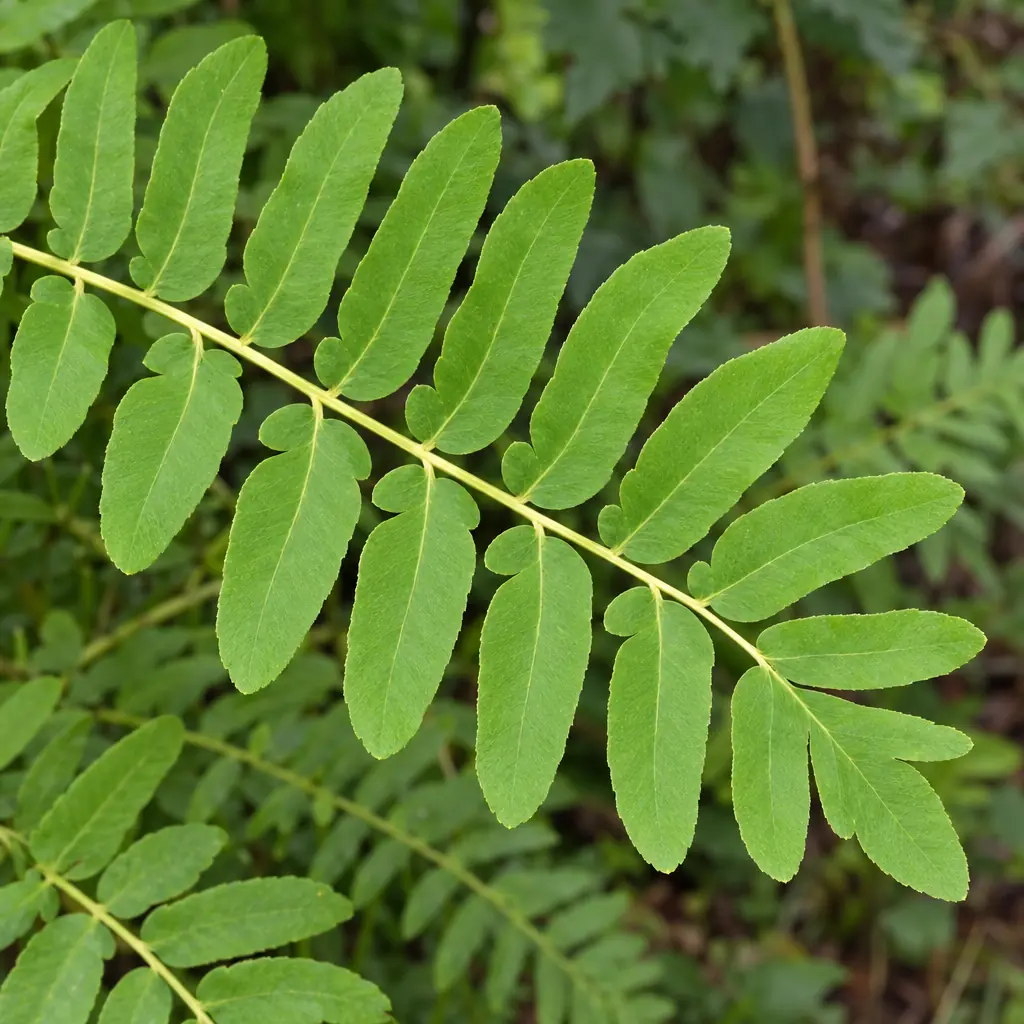
Start with the fronds. Side branches grow along the stalk, and each side branch carries two rows of leaflets. These leaflets are fairly large and oblong, with a blunt tip. The edge is very finely toothed, with a small lobe at the base. In spring a young frond takes a long time to unroll, curled like the scroll of a violin.
Some fronds carry no green leaflets at the tip. A rusty-brown plume full of spores grows there instead. Florists once prized those plumes. At the base of the clump, the rhizome sometimes rises above the soil like a short, almost woody trunk.
There is also a cultivar, 'Purpurascens'. Its young fronds are red to purple, and the stalks stay purple. If you want the wild fern, choose a royal fern sold without a cultivar name. Most other large ferns have small brown scales on the stalk and thin covers over the spores. The royal fern has neither.
Where does royal fern grow best?
Royal fern prefers partial shade: 3 to 6 hours of direct sun a day around midsummer. The soil should be moist to wet, rich in humus and ideally acid. Sand, loam and peat all suit it. In the wild the fern grows in wet woods, along shaded ditch banks and in peat bogs.
Two garden spots are a poor match for this fern:
- A front garden on sand that dries out in summer. The roots need soil that stays moist all the time.
- A sunny spot you do not water in dry weeks. This fern copes with full sun only in soil that stays wet.
In winter the fronds die back above ground. Until you cut them away in spring, a brown heap of dead fronds covers the base.
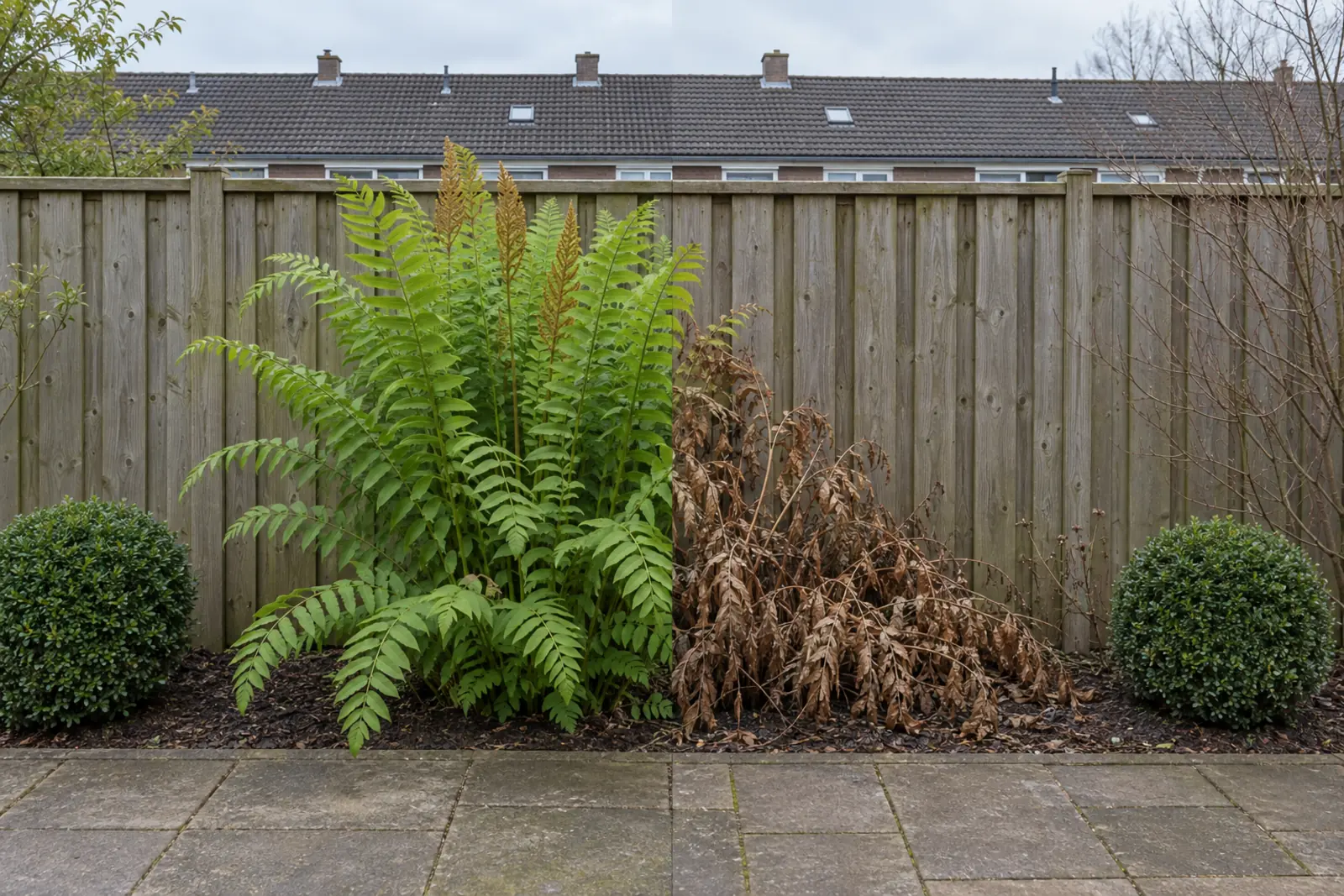 The same border in July and in January. This is a generated image, not a photograph.
In the app you can see, on a plan of your own plot, whether your border has room for a clump this size. The app draws the plant at a grown plant's width, not at pot size.
Planting and caring for royal fern
Nurseries sell royal fern in a pot. Plant it in autumn or in spring, because a fern settles in best then. Water regularly in the first year. Aim the watering can at the roots, not at the fronds or the heart of the clump.
Keep about a metre between two plants. On planting day that looks far too roomy, because the young plant from the pot is still small. A full-grown clump does fill that space.
| When | What to do |
|---|---|
| Early spring, before the new fronds unroll | Cut last year's dead fronds off at the base |
| All year, when a frond snaps or gets damaged | Cut that one frond off at the base |
From March through July many bird species breed, and some continue into August. Before you cut in those months, check between the fronds for a nest.
Royal fern problems and what to do
The frond edges turn brown and dry. The soil is too dry. Water at the roots, and spread a layer of compost around the base in spring.
No flowers appear. That is normal: a fern makes spores, not seed. So a royal fern never flowers, not even in a sunny spot.
In autumn all the fronds turn red-brown. That is normal for this fern and not a disease. Leave them until early spring.
The plant stays small for the first few years. Royal fern grows slowly. Above all, make sure the soil never dries out.
Which birds and insects use royal fern?
Royal fern has no nectar or pollen for bees and butterflies. Near Bleskensgraaf, a village in South Holland, two caterpillars of the garden tiger (Arctia caja), a moth, were once found on royal fern. The garden tiger caterpillar eats many different plants.
No bird species is described as depending on royal fern.
Is royal fern poisonous or edible?
No poisonings from royal fern have been reported. Some other ferns do contain substances that are harmful when eaten. No use as food is known for the royal fern.
The photos on this page were made with AI, based on real photos and descriptions of this plant.
Frequently asked questions
How big does a royal fern get?
In a garden a royal fern grows 1 to 2.5 metres tall and half a metre to a metre wide. The fern only reaches that size after 5 to 10 years.
Can royal fern grow in full sun?
Yes, but only if the soil always stays wet. Royal fern prefers partial shade: 3 to 6 hours of direct sun a day around midsummer.
When do you cut back a royal fern?
In early spring, before the new fronds unroll. Cut last year's dead fronds off at the base then.
Is royal fern poisonous?
No poisonings from royal fern have been reported. That does not make the plant edible: no use as food is known.
Is royal fern native to the Netherlands?
Yes. Royal fern has always grown wild in the Netherlands, in wet woods, along shaded ditch banks and in peat bogs.
Sources (16)
- Duistermaat, Sparrius & Denters, Standaardlijst van de Nederlandse flora 2020 (Gorteria 43)
- NDFF Verspreidingsatlas — Osmunda regalis
- Flora van Nederland — Koningsvaren
- RHS — Osmunda regalis (royal fern)
- RHS — Osmunda regalis 'Purpurascens'
- RHS — Ferns: growing guide
- RHS — Shade gardening (definities zon en halfschaduw)
- Nederlandse Varenvereniging, Wat zijn varens
- De Vlinderstichting — Pas op! De beer gaat los
- Vogelbescherming — Snoeien in het broedseizoen, mag dat?
- Plants For A Future — Osmunda regalis
- Heijnen Planten — Koningsvaren, 5-10 cm (prijs)
- KwaliteitsPlanten — Osmunda regalis (prijs en plantafstand)
- Plantentuin Esveld — Osmunda regalis (prijs per maat)
- Tuinplantenloods — Koningsvaren in een grote pot (prijs)
- Wikimedia Commons — Leaf: photo by Ettore Balocchi (CC BY 2.0)