5 min read
Lily of the valley: planting, care and poisonous berries
Convallaria majalis
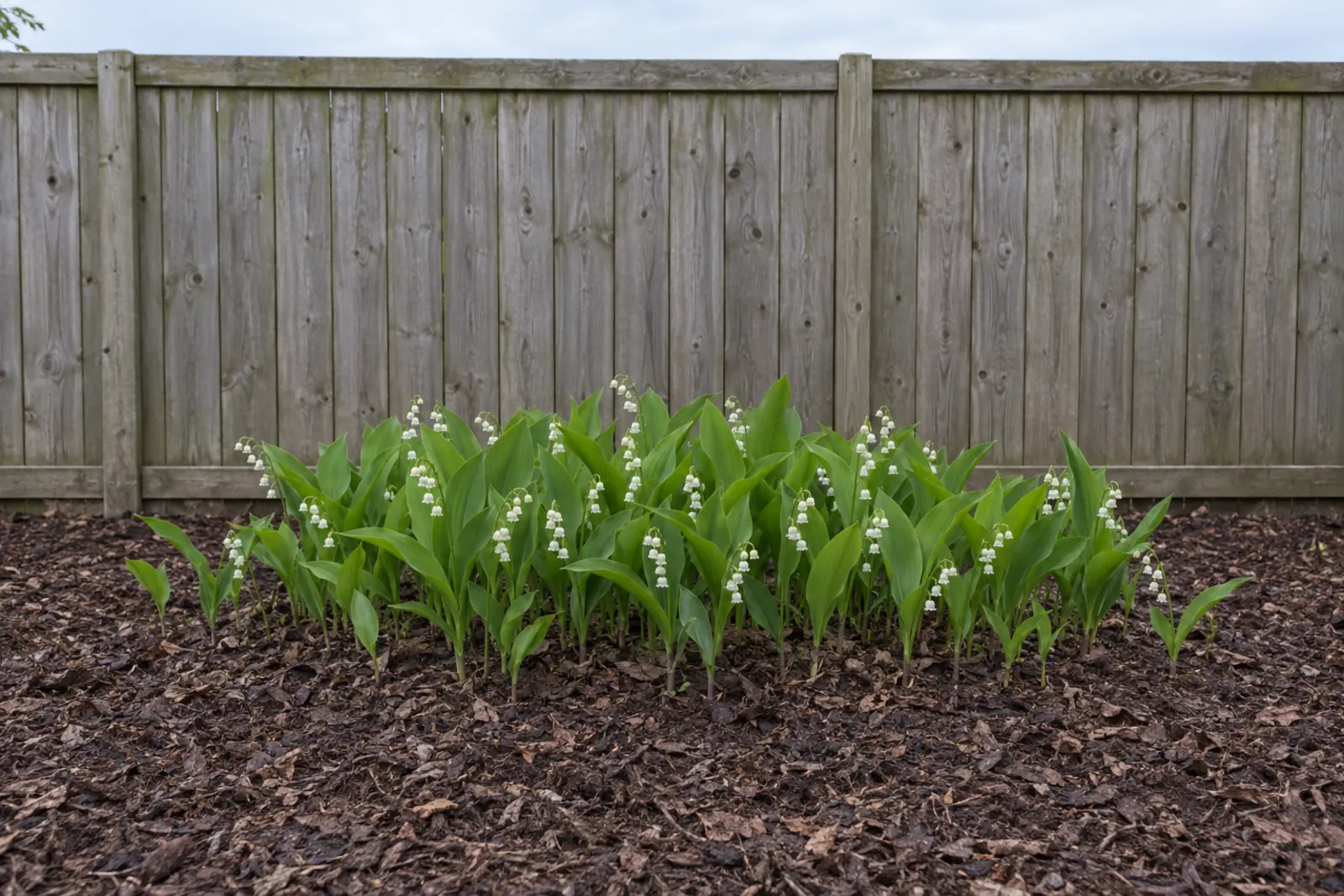
Lily of the valley (Convallaria majalis) is a native perennial 15 to 30 centimetres tall. Thin rhizomes creep under the soil, and that is how a mat grows. In May and June, white scented bells hang from each flower stalk. The plant wants partial shade or shade and moist soil rich in humus. Every part is poisonous.
Lily of the valley at a glance
| Feature | Lily of the valley |
|---|---|
| Height | 15 to 30 cm |
| Spread | 10 to 50 cm per plant; the mat keeps spreading |
| Full grown after | 2 to 5 years |
| Sun | Partial shade to full shade |
| Soil | Moist, rich in humus |
| Water | Average: the soil must not dry out |
| Maintenance | Low: no pruning needed |
| Flowers | May and June, white |
| For bees | Yes: nectar and pollen, May and June |
| Hay fever | Not or weakly allergenic |
| Leaves | Drop in autumn |
| Hardy | Yes |
| Native | Yes |
| Poisonous | Yes: all parts, including the berries |
| Pricks or stings | No |
| Price, young | About €0.60 to €1.10 each, as a bare rhizome |
| Price, grown | About €2.25 to €4.45 each, 5-10 cm, in a pot |
- Leaf
- April to September
- Flower
- May to June
- Fruit
- September to October
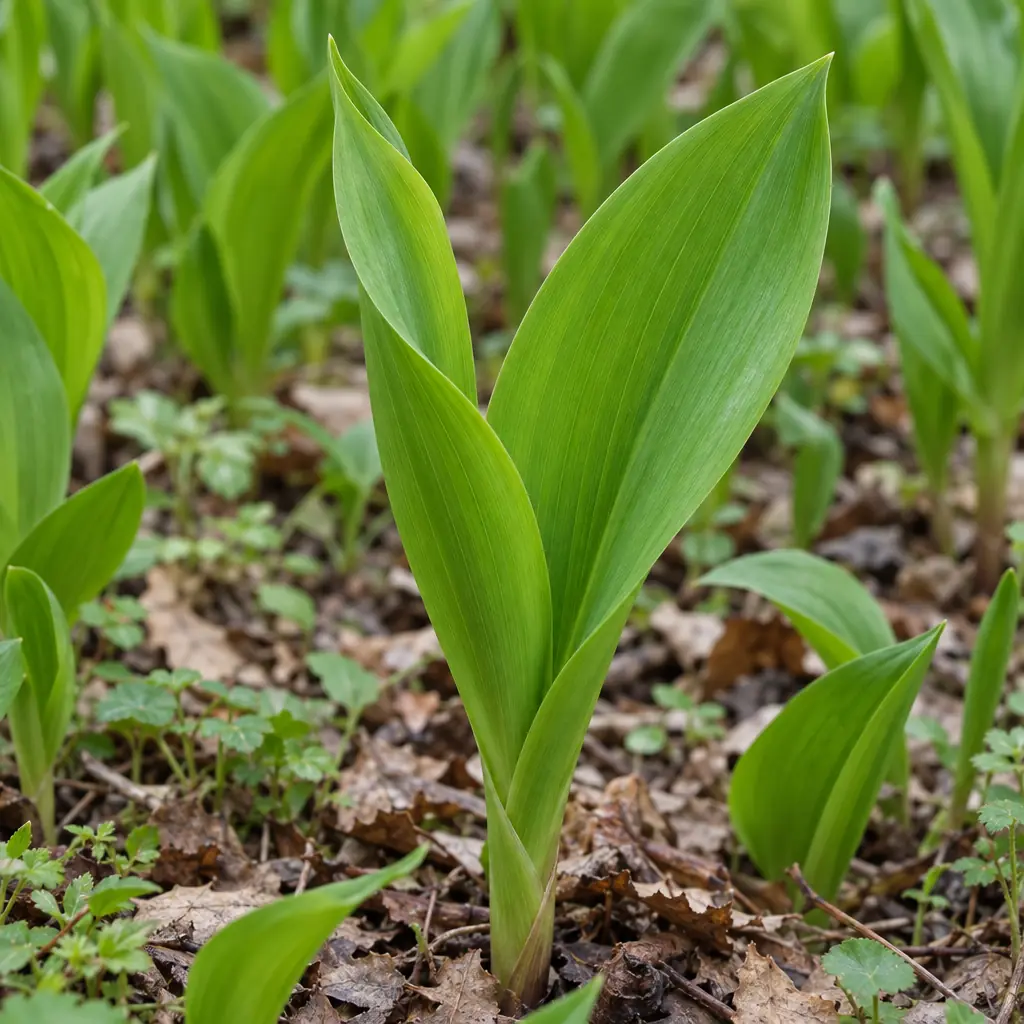
Leaf 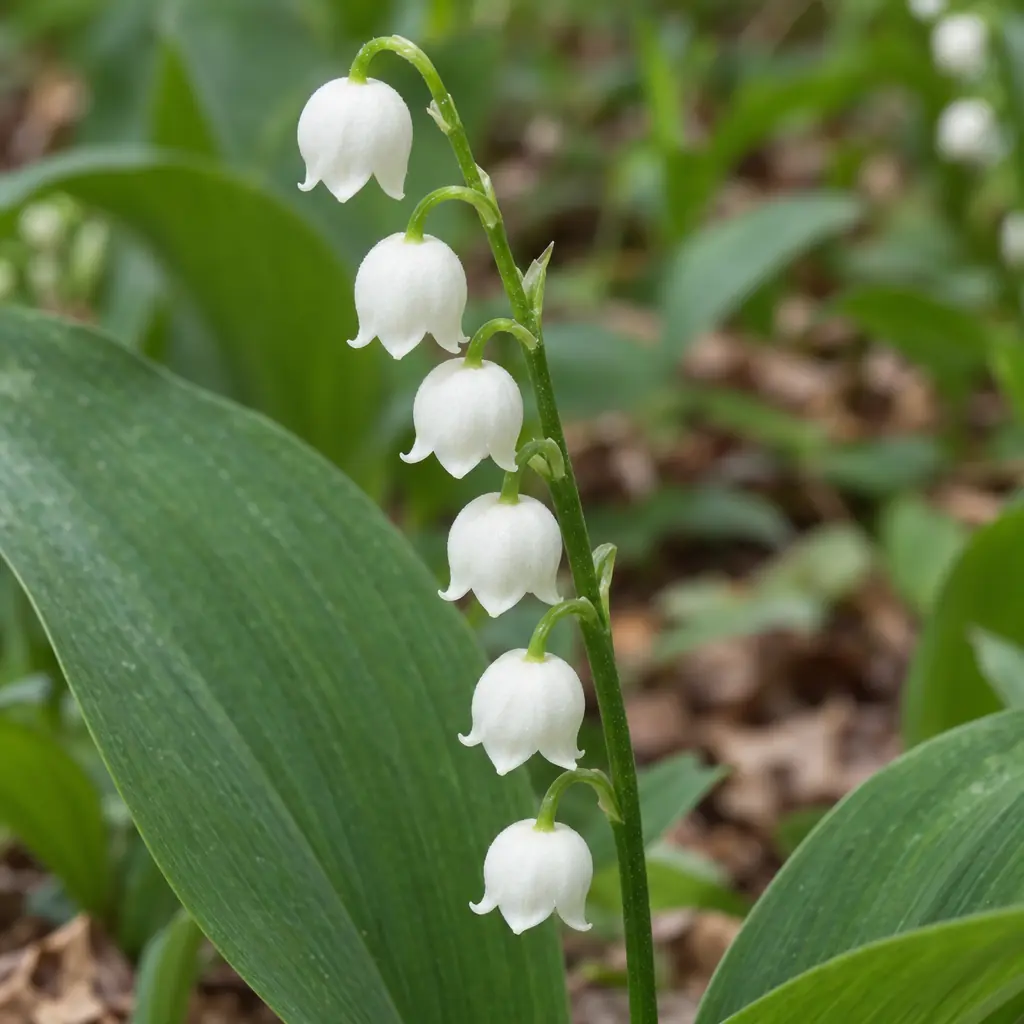
Flower 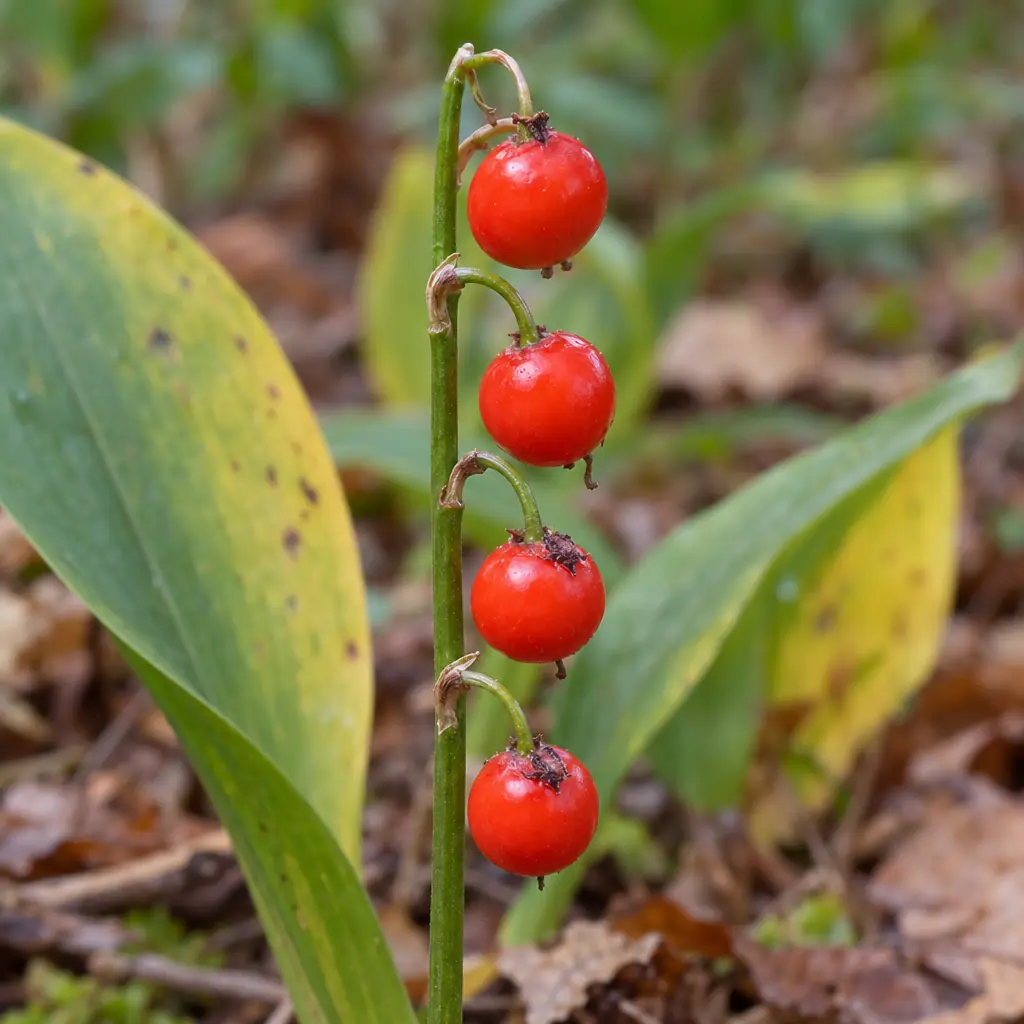
Fruit
How do I recognise lily of the valley?
Start with the leaves. Each plant usually has two leaves, oval to oblong and pointed. The edge is smooth, and the green has a bluish sheen. The stalk of one leaf wraps around the stalk of the other. That makes the pair look like a single stem.
Beside the leaves stands a bare, three-angled flower stalk. A spray of four to nine white bells hangs from it, all on one side. Each bell is 0.8 to 1 centimetre long and hangs from a curved stalk. At the rim, six small tips curl outward. The flowers have a pleasant scent. Round red berries follow in autumn, each with two bluish seeds.
Wild garlic (Allium ursinum) is the look-alike to know. Before flowering, its leaves look very much like those of lily of the valley. Crush a leaf between your fingers, and wild garlic smells strongly of onion and garlic. In flower the difference shows as well. Wild garlic carries white stars in a loose, rounded head, never hanging bells.
Where does lily of the valley grow best?
A spot in partial shade, with three to six hours of direct sunlight a day around midsummer, is enough for this plant. A spot with even less sun is fine too. The soil can be moderately dry to moderately moist, ideally rich in humus. In the wild, lily of the valley grows in deciduous woods, dune woodland, scrub and broad wooded banks.
The plant struggles in these spots:
- A hot, dry strip in full sun. Heat and drought can scorch the leaves, and parts of the mat may die off.
- Hard, trodden soil, such as beside a path you use a lot. On compacted, dry soil the plant does poorly.
- Right next to low perennials you want to keep. The rhizomes creep underground and crowd them out.
In winter, nothing of lily of the valley shows above ground. The leaves come up again in early spring, while the trees are still bare.
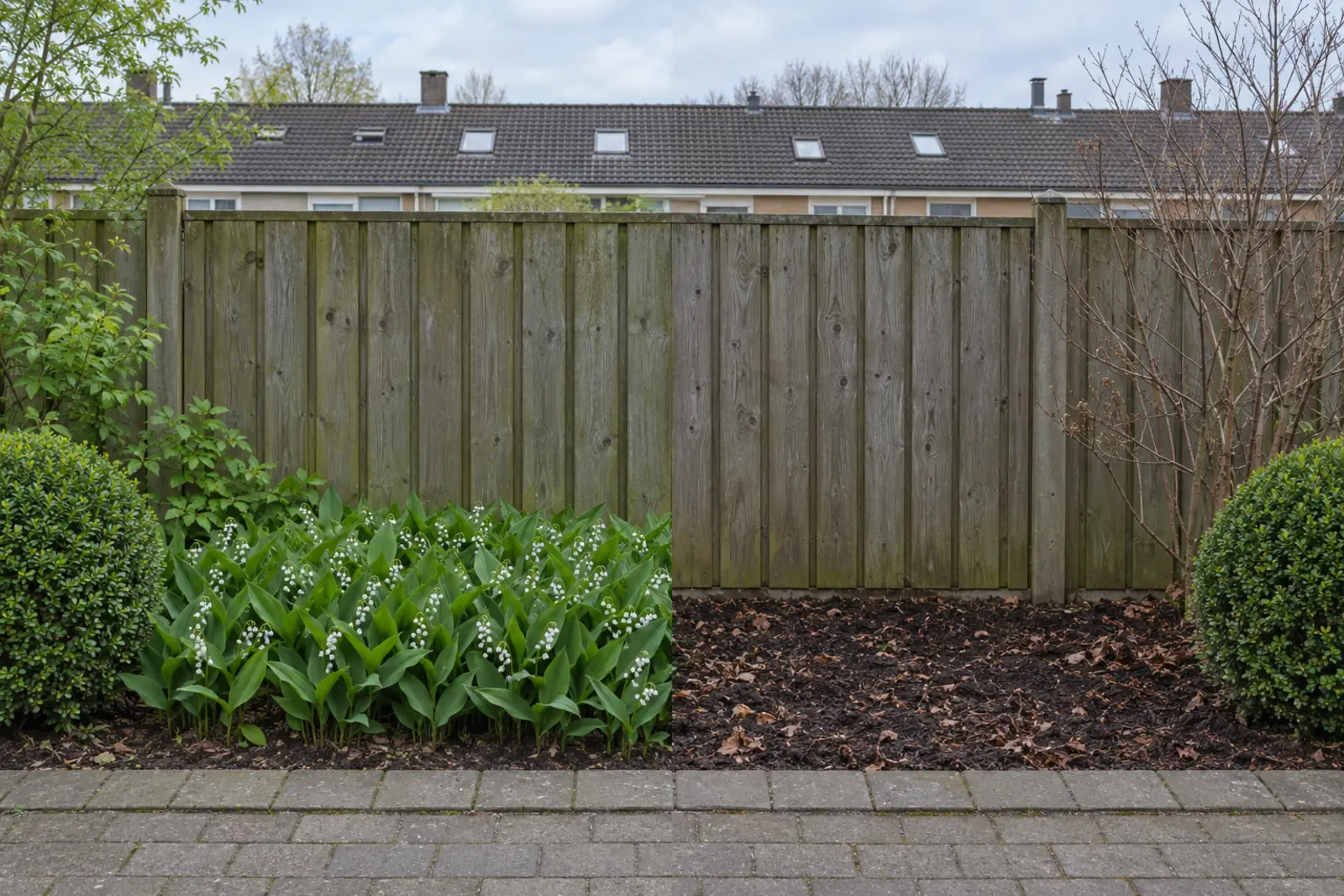 The same border in May and in January. This is a generated image, not a photograph.
On a plan of your own plot, drawn to scale with the buildings around it, you can see where a mat like this has room in your garden.
Planting and caring for lily of the valley
Nurseries sell lily of the valley as a bare rhizome or as a plant in a pot. A bare rhizome is a piece of root with no soil, with a growing point on it. That is the cheapest way to buy the plant. Plant rhizomes from August to December, or in February and March. Lay them flat in the soil, about 3 centimetres deep. A plant in a pot can also go into the ground outside those months.
Space the plants about 30 centimetres apart, which comes to 11 to 12 per square metre. On planting day you mostly see bare soil. Each year the rhizomes creep further, and the mat closes by itself. In the first summer, water during long dry spells.
No pruning is needed. Do spread a thin layer of leaf mould over the mat in autumn. For more plants, cut a piece off the mat in autumn and replant it somewhere else.
What goes wrong with lily of the valley?
The leaves get brown spots. That is leaf spot or grey mould, two fungal diseases. Remove the worst leaves.
The leaves scorch in summer. The spot is too hot or too dry. Water, and work compost into the soil so that it holds more moisture. When the mat has struggled for years, move it to a shadier spot.
The leaves turn yellow in late summer. That is normal. By the time the berries ripen, the leaves are usually already withering.
No red berries appear. That is normal too. Far from every plant forms fruit. Berries mostly come where genetically different plants grow close together.
The mat spreads into the border. The rhizomes can crowd out other plants. In spring, cut off the runners with a sharp spade.
Which insects and birds use lily of the valley?
No fixed link between this plant and a named bee, butterfly or bird has been well described. What the flowers offer is nectar and pollen.
Mice and other rodents do eat the berries, with a preference for the seeds. Under a hedge planted for birds, lily of the valley is one of the recommended ground covers.
Is lily of the valley poisonous?
Lily of the valley is a very poisonous plant. All parts contain substances that irritate the stomach and act on the heart. These are some twenty cardiac glycosides. When someone eats it, vomiting, diarrhoea and stomach pain are the most common effects. A large amount can slow the pulse and lower blood pressure. The plant is harmful to pets too. No part of it is edible.
The photos on this page were made with AI, based on real photos and descriptions of this plant.
Frequently asked questions
Is lily of the valley poisonous?
Yes, the whole plant is very poisonous, the red berries included. Every part contains substances that irritate the stomach and act on the heart. Eating it usually causes vomiting, diarrhoea and stomach pain.
Does lily of the valley spread?
In a moist, shady spot with soil rich in humus, yes. The rhizomes creep underground and can crowd out other low plants. Cut off the runners where the mat must not go any further.
When should I plant lily of the valley?
Plant bare rhizomes from August to December, or in February and March. Lay them flat, about 3 centimetres deep. A plant in a pot can also go into the ground outside those months.
How much sun does lily of the valley need?
Not much. The plant grows in partial shade and in full shade. Partial shade covers spots with three to six hours of direct sunlight a day around midsummer.
Is lily of the valley native to the Netherlands?
Yes. Lily of the valley has always grown wild in the Netherlands. Here it is a common species of deciduous woods, dune woodland and broad wooded banks.
Sources (24)
- Duistermaat, Sparrius & Denters, Standaardlijst van de Nederlandse flora 2020 (Gorteria 43)
- NDFF Verspreidingsatlas — Convallaria majalis
- Flora van Nederland — Lelietje-van-dalen
- Wilde planten in Nederland en België — Lelietje-van-dalen
- Flora van Nederland — Daslook
- NVIC (UMC Utrecht) — Daslook of toch iets anders?
- RHS — Convallaria majalis (lily of the valley)
- RHS — Shade gardening (definities zon en schaduw)
- Purdue University, Indiana Yard and Garden — Lily-of-the-valley
- NC State Extension — Convallaria majalis
- Nature Today — Natuurjournaal 17 september 2025
- Imkerpedia — Drachtplanten
- Pollennieuws / Flora van Nederland — Aandachtspunten hooikoorts vriendelijke tuin
- PFAF — Convallaria majalis
- Antigifcentrum — Meiklokje (Convallaria majalis)
- Vogelbescherming — Help vogels met een heg: de beste adviezen
- Sterkebollen — Lelietje der dalen (wortelstokken, planttijd en plantdiepte)
- Tuincentrum Koeman — Lelietje van Dalen (wortelstokken, prijs)
- Heijnen Planten — Lelietje-van-Dalen (prijs)
- Kwekerij Online — Lelietje van dalen (prijs)
- Directplant — Lelietje der dalen (aantal per m²)
- Wikimedia Commons — Leaf: photo by Ivabalk (CC0)
- Wikimedia Commons — Flower: photo by AnRo0002 (CC0)
- Wikimedia Commons — Fruit: photo by Borealis55 (CC0)