5 min read
Crested dog's-tail: where it grows, sowing and care
Cynosurus cristatus
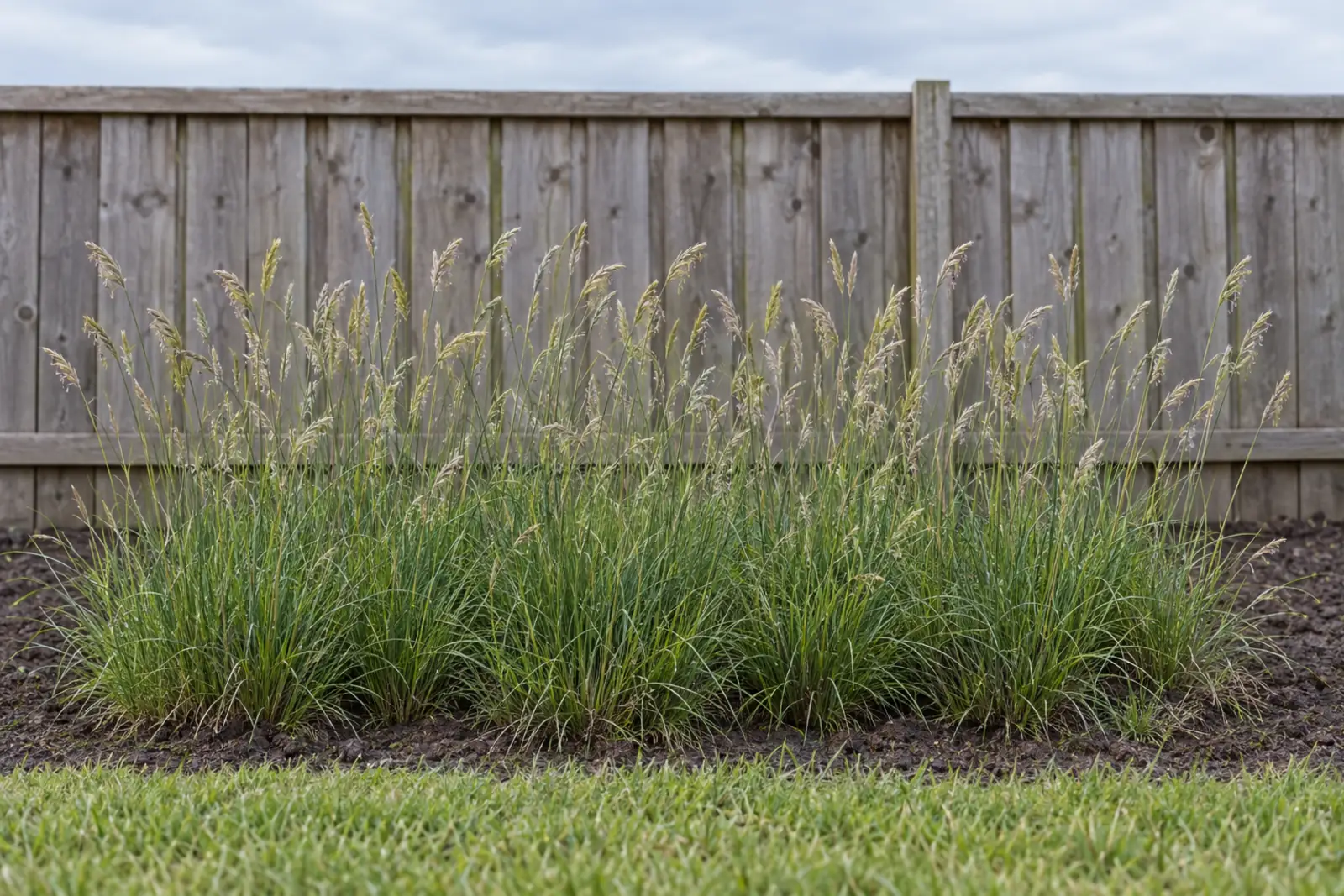
Crested dog's-tail (Cynosurus cristatus) is a native grass that grows in small, dense tufts. The grass reaches 20 to 60 centimetres. In June and July a slim spike appears, with all its spikelets turned to one side like a small comb. Crested dog's-tail wants sun and soil that drains well.
Crested dog's-tail at a glance
| Feature | Crested dog's-tail |
|---|---|
| Height | 20 to 60 cm |
| Spread | 10 to 50 cm per tuft |
| Full grown after | 2 to 5 years |
| Sun | Full sun |
| Soil | Moderately moist to fairly dry, well-drained |
| Water | Average |
| Maintenance | Low: mowing after flowering is fine |
| Flowers | June and July, green with purple anthers |
| For bees | No: crested dog's-tail is pollinated by the wind |
| Hay fever | Very strongly allergenic, June and July |
| Leaves | Stay green |
| Hardy | Yes |
| Native | Yes |
| Poisonous | No, as far as is known |
| Pricks or stings | No |
| Price, young | Seed only: about €4.36 to €12.95 per packet |
| Price, grown | Not for sale |
- Leaf
- all year
- Flower
- June to July
- Fruit
- no noticeable fruit
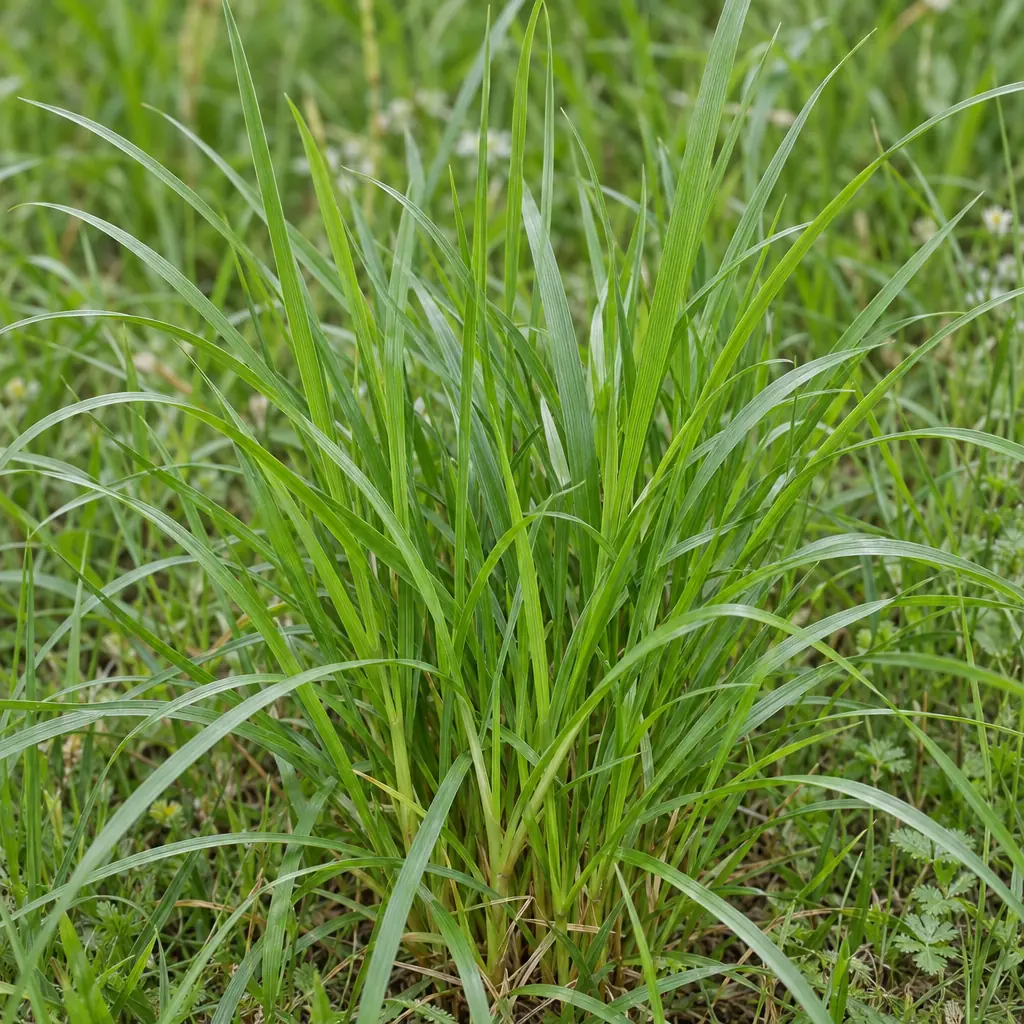
Leaf 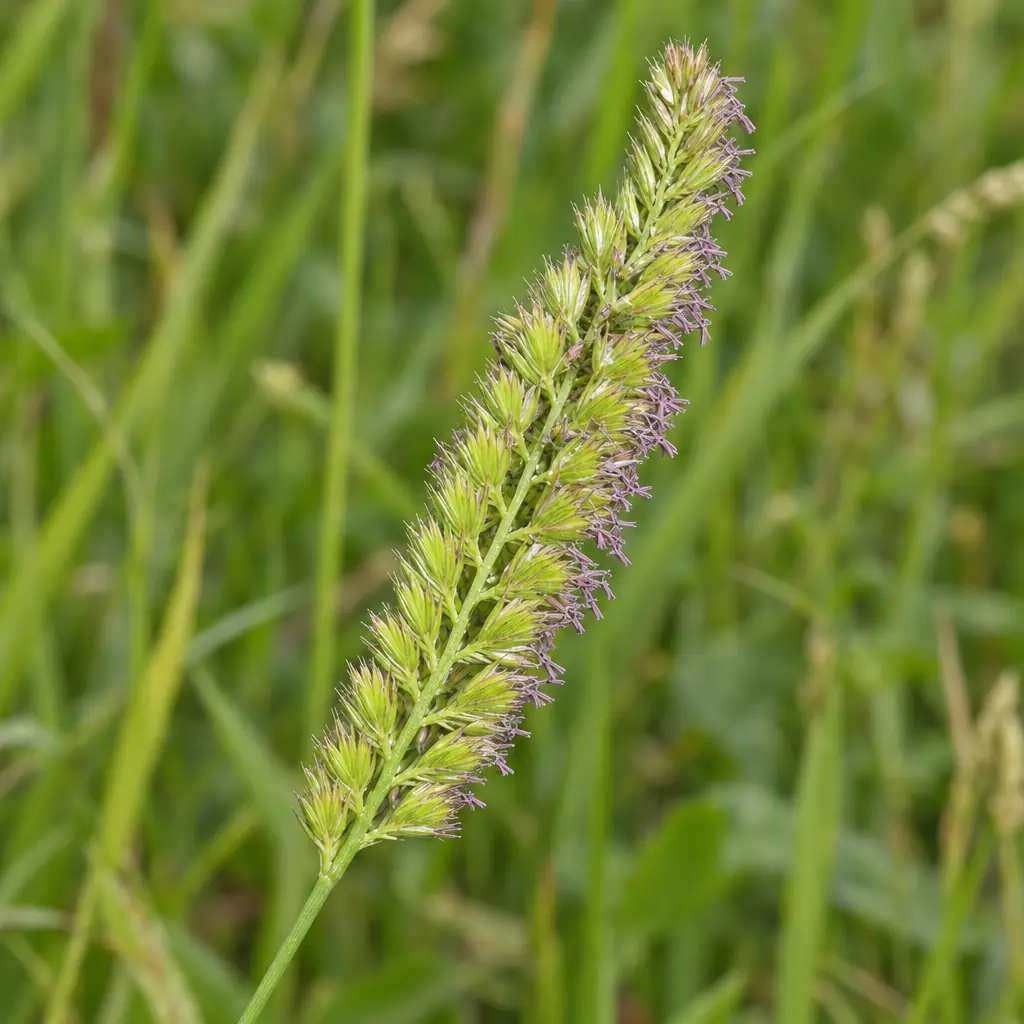
Flower
How do I recognise crested dog's-tail?
Start at the bottom. Crested dog's-tail forms small, dense tufts of narrow leaves. Each leaf is 2 to 3 millimetres wide and finely grooved. Clear ribs show on the upper side. At the base, the shoot is white or yellowish brown.
Then the spike, which is the easiest way to tell this grass apart. A spike is the flowering part at the top of the stem. The spike is made up of many spikelets: small groups of tiny flowers packed close together. On crested dog's-tail the spike is slim and 4 to 10 centimetres long. All the spikelets point to one side of the stem. At the base of each fertile spikelet sits a sterile spikelet shaped like a small comb. During flowering, purple anthers hang out. The seed is a small grain.
Take note of perennial ryegrass (Lolium perenne), which often grows in the same pasture. Its spike is flat, and the spikelets sit pressed firmly against the stem. A ryegrass spike feels flat when you run a finger along it.
Where does crested dog's-tail grow best?
Crested dog's-tail belongs in full sun: more than six hours of direct sun a day around midsummer. The soil can be moderately moist to fairly dry, and lime-rich to fairly acid. In the wild the grass grows in grazed grassland, on road verges and on dikes.
Two spots in a garden suit crested dog's-tail badly:
- A wet spot with standing water. The grass needs soil that drains well.
- A lawn you mow every week. Weekly mowing takes off the flower stems before they can flower in June.
In winter a low, green tuft remains. By then the old flower stems are hard, unless you cut them off after flowering.
In the app you mark where a strip of crested dog's-tail goes, on a plan of your own plot. That plan is to scale, with the houses around it.
Sowing and care
Dutch nurseries sell crested dog's-tail mainly as seed, not as a plant in a pot. Sow it in spring or in autumn. Allow 2 to 3 grams of seed per square metre. A packet of 10 grams then covers about 5 square metres. Keep the soil moist until the first blades come up.
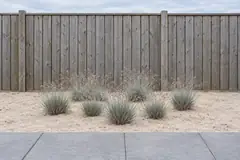
If you already have a tuft, you can divide it. Plant each piece about 50 centimetres from its neighbours: one tuft can grow that wide. On planting day that looks like a lot of bare soil. Within a few years the gaps close.
| When | What to do |
|---|---|
| July or August, after flowering | Cut or mow the flower stems, if you do not want to keep them |
| Mid-April to early June | Dig up a tuft that has grown too big and divide it |
A bird may nest in a tuft of grass. Many species nest from March through July, and some carry on into August. So look carefully before you cut or mow in those months.
Common problems and what to do
No spikes appear. Mowing in June or July removes the flower stems. Leave the tuft alone in those months. Crested dog's-tail also needs full sun; otherwise move it to a sunnier spot.
The tuft goes limp or turns yellow. Look at the soil first. Standing water means the soil is too wet for crested dog's-tail. If the soil is bone dry, give it a thorough soaking a few times.
Hard, stiff stems are left after flowering. That is normal: the stems harden once flowering is over. Cut them off if you do not like the look. There is no need to.
The leaves have spots or small bugs on them. Crested dog's-tail rarely suffers from pests or diseases. Control is almost never needed.
Which insects and birds use crested dog's-tail?
Crested dog's-tail is a host plant of the marbled white (Melanargia galathea), a butterfly. The caterpillars feed on grasses, including fescues, bromes, cock's-foot and crested dog's-tail. The marbled white flies from mid-June to late August.
In the Netherlands the marbled white is very rare. The butterfly turns up almost only on chalk grassland in the south of the country. In an ordinary garden a visit is therefore unlikely.
No fixed link between crested dog's-tail and any particular bird species has been described.
Is crested dog's-tail poisonous or edible?
Crested dog's-tail is not known to be poisonous. Livestock eat it readily: it is a good fodder grass. That does not mean the grass is edible for people.
The photos on this page were made with AI, based on real photos and descriptions of this plant.
Frequently asked questions
How tall does crested dog's-tail grow?
Crested dog's-tail grows 20 to 60 centimetres tall. The thin flower stems rise above the low tuft of leaves.
When does crested dog's-tail flower?
In June and July. Slim spikes then stand above the low tuft of leaves.
Can you buy crested dog's-tail as a plant?
Dutch nurseries sell crested dog's-tail mainly as seed, not as a plant in a pot. Allow 2 to 3 grams of seed per square metre.
Is crested dog's-tail bad for hay fever?
The pollen of crested dog's-tail is very strongly allergenic, like the pollen of all grasses. The grass releases that pollen into the air in June and July, when it flowers.
Is crested dog's-tail native to the Netherlands?
Yes. Crested dog's-tail has long grown in the Netherlands: in pastures, on road verges and on dikes.
Sources (13)
- Duistermaat, Sparrius & Denters, Standaardlijst van de Nederlandse flora 2020 (Gorteria 43)
- NDFF Verspreidingsatlas — Cynosurus cristatus
- Flora van Nederland — Kamgras
- Flora van Nederland — Engels raaigras
- RHS — Cynosurus cristatus (crested dog's tail)
- RHS — Shade gardening (definities zon en schaduw)
- Pollennieuws / Flora van Nederland — Aandachtspunten hooikoorts vriendelijke tuin
- De Vlinderstichting — Dambordje
- Vogelbescherming — Snoeien in het broedseizoen, mag dat?
- De Cruydt-Hoeck — Kamgras (prijs)
- Graszaaddirect — Kamgras zaden (prijs en zaaidichtheid)
- Wikimedia Commons — Leaf: photo by Daderot (Public domain)
- Wikimedia Commons — Flower: photo by Stephen James McWilliam (CC BY 4.0)