5 min read
Common holly: where it grows, pruning and berries
Ilex aquifolium
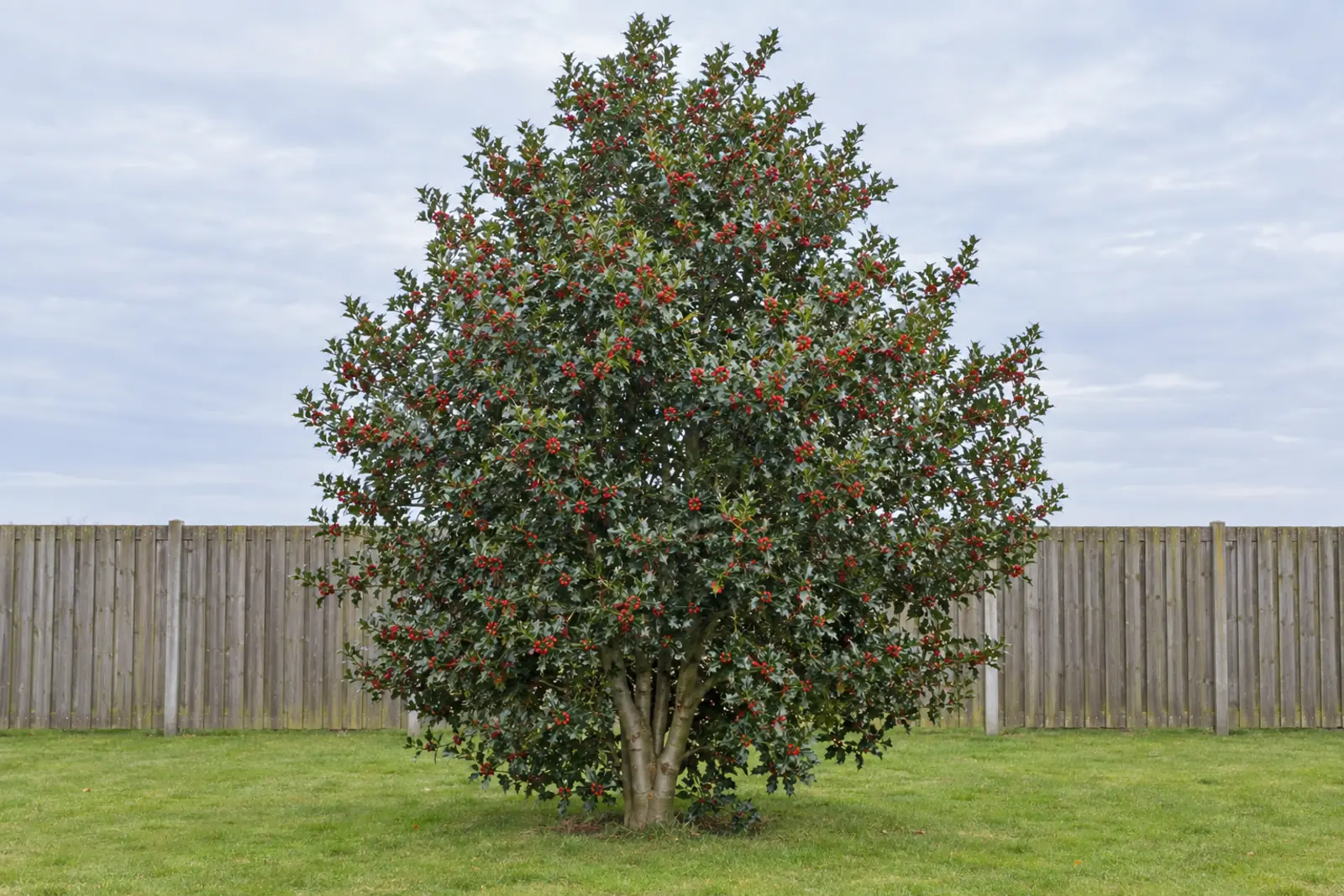
Common holly (Ilex aquifolium) is a native shrub or small tree that stays green all year. It grows slowly to 10 metres, usually less. The glossy leaves have spiny teeth. Small white flowers open in May and June. Only a female plant then bears red berries. Holly grows in full sun to full shade, but not in wet soil.
Common holly at a glance
| Feature | Common holly |
|---|---|
| Height | Up to 10 m, usually less |
| Spread | 4 to 8 m |
| Full grown after | 20 to 50 years |
| Sun | Full sun to full shade |
| Soil | Humus-rich sand or loam, not wet |
| Water | Average |
| Maintenance | Low |
| Flowers | May and June, white |
| For bees | Yes: plenty of nectar and pollen, May and June |
| Hay fever | Not or weakly allergenic |
| Leaves | Stay green |
| Hardy | Yes |
| Native | Yes |
| Poisonous | Yes: berries and leaves |
| Pricks or stings | Yes: spiny leaves |
| Price, young | About €10 to €14 each, 60-80 cm, in a pot or with a root ball |
| Price, grown | About €58 to €75 each, 150-200 cm, with a root ball |
- Leaf
- all year
- Flower
- May to June
- Fruit
- September to February
Leaf 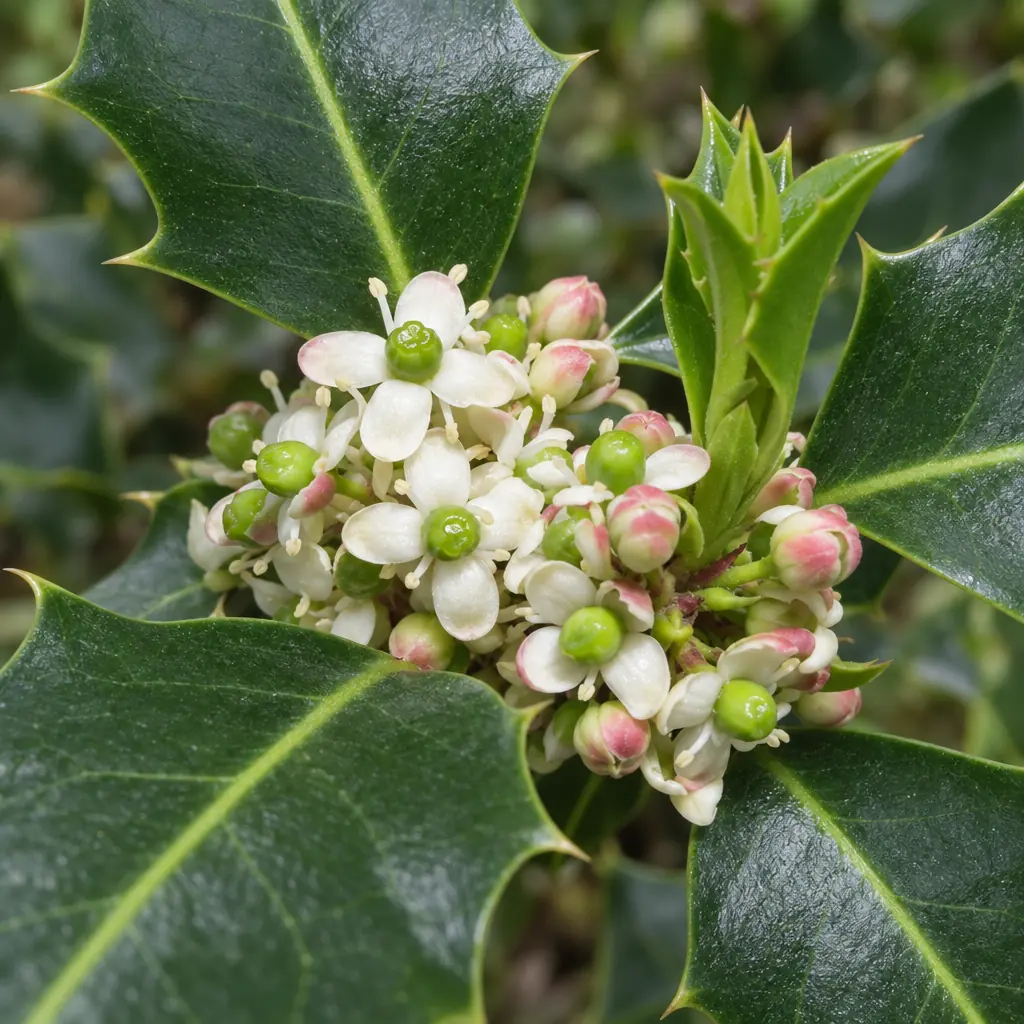
Flower 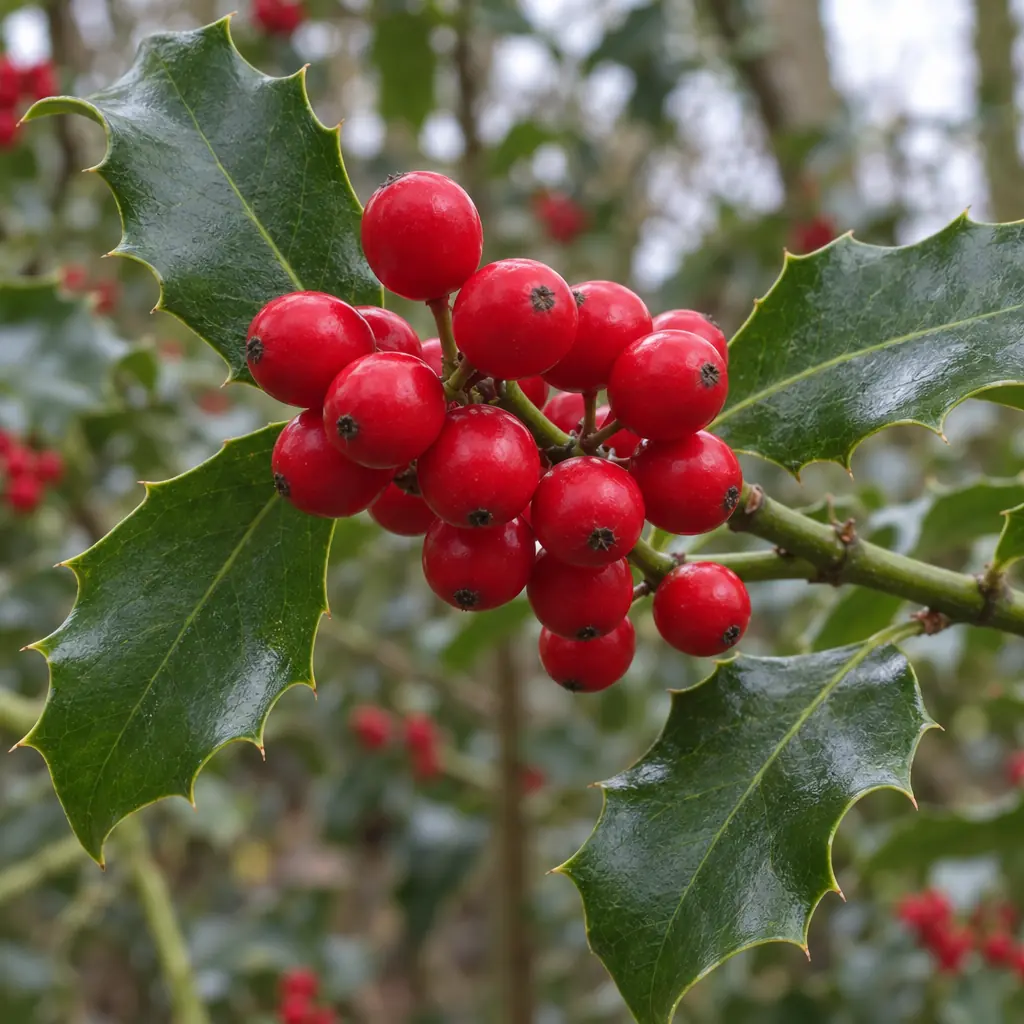
Fruit
How do I recognise common holly?
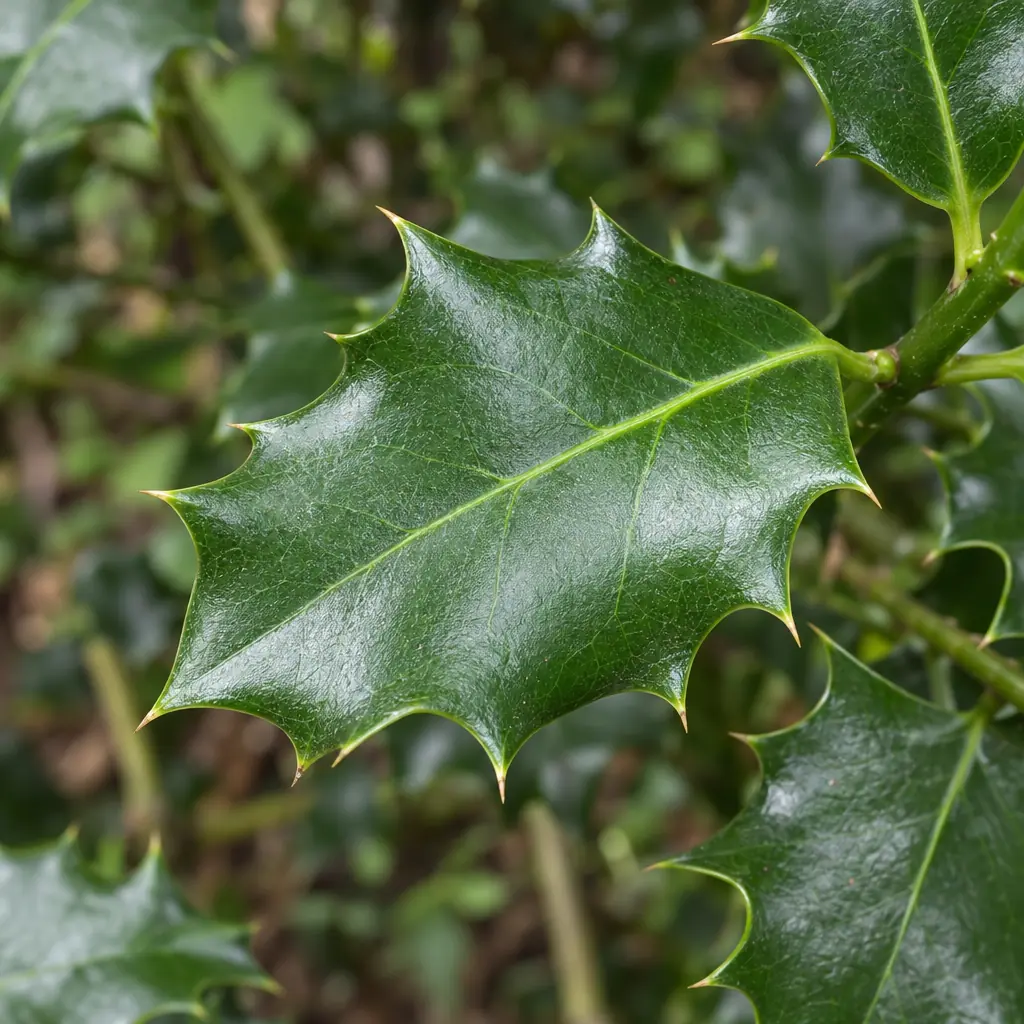
Start with the leaves. Each leaf is 3 to 8 centimetres long, oval, thick and leathery. The upper side is a glossy dark green, the underside pale green and dull. The wavy edge carries sharp, spiny teeth. On older plants, more and more leaves have a smooth edge without spines.
The flowers grow in small, dense clusters in the leaf axils. Each flower is white, 6 to 7 millimetres across, and usually has four petals. Male and female flowers grow on separate plants. The berries are red, rarely yellow, and 0.6 to 1 centimetre across. The bark is thin and smooth.
A variegated holly such as 'Silver Queen' has a broad cream margin around the leaf. The wild holly is plain dark green.
Where does common holly grow best?
Holly does well in full sun and in partial shade. The plain green wild holly also tolerates full shade. A variegated holly is better in the sun, where the leaves colour best. In the wild the plant grows in broadleaf woods, at woodland edges, on wooded banks and in hedges. Humus-rich sand or loam suits it.
Three spots in a garden suit holly badly:
- Wet ground with standing water. Too much water in the soil damages the roots.
- Soil that turns bone dry every summer. Holly struggles there too, especially in its first years.
- Right beside a narrow path or a play area. The spiny leaves prick anyone who brushes past.
In the app you see your own plot to scale, with the neighbouring houses around it. On that plan you look for the spot where a holly can keep growing for years.
Planting and caring for common holly
A holly in a pot can go in at any time of year. Autumn and spring are best, because the soil is then moist and warm enough for new roots. A plant with a root ball, its roots and soil wrapped in cloth, goes in between autumn and early spring. The plant is dormant then.
Plant a free-standing holly 2 to 4 metres from the fence: half the spread of a full-grown plant. On planting day that looks far too roomy. Holly grows so slowly, though, that the space only fills after many years. For the first two years, water when spring or summer is dry. Wear sturdy gloves for every job.
| When | What to do |
|---|---|
| July or August | On a free-standing holly, shorten competing tops so one main stem remains |
| Late August | Clip a holly hedge into shape |
| July or August, when it is too big | Cut back at most a third; spread anything more over two or three years |
A dense holly can hide a nest. Many bird species breed from March through July, and some carry on into August. So look between the branches for a nest first.
Common holly problems and what to do
No berries appear. Only a female holly bears berries. A female plant also needs a male plant within 20 to 50 metres. If there is none nearby, plant one.
The leaves have yellowish-white or purplish blotches. That is a leaf miner, a small larva that feeds inside the leaf. The plant hardly suffers from it. Leave it be.
A black deposit covers the leaves. That deposit points to scale insects, small insects that suck sap from the plant. A healthy plant copes well with a few of them. If you see the insects or their eggs in spring or summer, remove them.
The plant drops a lot of leaves and branches die back. That can be a leaf disease. Where branches die back, also check the roots for honey fungus.
Which birds and insects use common holly?
Blackbirds, song thrushes, fieldfares and redwings like to eat holly berries. The dense, spiny leaves also give birds good cover and a place to escape to.
The holly blue, a butterfly, lays its spring eggs mainly on alder buckthorn and holly. The eggs go on the flower buds or the young fruit. The young caterpillars eat those buds and fruit. In summer the butterfly mostly chooses common ivy. The holly blue flies from mid-March to early October, in two or three generations.
Is common holly poisonous or edible?
The leaves and berries of holly are poisonous. Eating a lot of berries causes violent vomiting and diarrhoea, sometimes drowsiness too. Eating two berries is fairly harmless. The berries are not for eating, and neither is the rest of the plant.
The photos on this page were made with AI, based on real photos and descriptions of this plant.
Frequently asked questions
How big does common holly get?
Common holly grows up to 10 metres tall and 4 to 8 metres wide. Most plants stay lower, and a holly is only full grown after 20 to 50 years.
Why does my holly have no berries?
Only a female holly bears berries. A female plant also needs a male holly nearby, within 20 to 50 metres.
When should you prune common holly?
In July or August. Take off at most a third a year, and look between the branches for a nest first. Sturdy gloves help, because the leaves prick.
Is common holly poisonous?
Yes. The leaves and the berries are poisonous. Eating a lot of berries causes violent vomiting and diarrhoea, sometimes drowsiness too.
Can common holly grow in shade?
Yes. The plain green wild holly also tolerates full shade, but grows best in full sun or partial shade. A variegated holly is better in the sun, where its leaves colour well.
Sources (22)
- Duistermaat, Sparrius & Denters, Standaardlijst van de Nederlandse flora 2020 (Gorteria 43)
- NDFF Verspreidingsatlas — Ilex aquifolium
- Flora van Nederland — Hulst
- Wilde planten in Nederland en België — Hulst
- RHS — Ilex aquifolium (common holly)
- RHS — How to grow hollies
- RHS — Ilex aquifolium 'Silver Queen'
- RHS — Holly leaf miner
- RHS — Cushion scale
- LUMC — Bomenkompas voor allergeniciteit
- Imkerpedia — Drachtplanten (nectar- en pollenwaarde voor de honingbij)
- De Vlinderstichting — Boomblauwtje
- Vogelbescherming — Uw tuin een vogeltuin (vogelvriendelijk tuinadvies)
- Vogelbescherming — Snoeien in het broedseizoen, mag dat?
- Antigifcentrum — Brochure planten
- Heijnen Planten — Hulst 60-80 cm met kluit (prijs)
- Heijnen Planten — Hulst 150-175 cm met kluit (prijs)
- Heijnen Planten — Hulst 175-200 cm met kluit (prijs)
- Yarinde — Groene hulst (prijs)
- Wikimedia Commons — Leaf: photo by AnRo0002 (CC0)
- Wikimedia Commons — Flower: photo by AnRo0002 (CC0)
- Wikimedia Commons — Fruit: photo by AnRo0002 (CC0)