5 min read
Chives plant: where it grows, care, flowers and price
Allium schoenoprasum
Chives (Allium schoenoprasum) are a native perennial plant and a well-known kitchen herb. A clump grows 15 to 50 centimetres tall, with round, hollow leaves. From May to July, round pink to pale purple flower heads appear. Chives grow in sun or partial shade, on soil where rainwater drains away well.
Chives at a glance
| Feature | Chives |
|---|---|
| Height | 15 to 50 cm |
| Spread | About 30 cm per clump |
| Full grown after | 2 to 5 years |
| Sun | Full sun to partial shade |
| Soil | Well-drained: sand, clay or loam |
| Water | Average: water in dry spells the first summer |
| Maintenance | Low: cutting back after flowering is optional |
| Flowers | May to July, pink to pale purple |
| For bees | Yes: nectar, May to July |
| Hay fever | Not or weakly allergenic |
| Leaves | Drop in autumn |
| Hardy | Yes |
| Native | Yes |
| Poisonous | Mildly: to dogs and cats |
| Pricks or stings | No |
| Price, young | About €1.90 to €3.40 each, in a small pot |
| Price, grown | About €4.25 to €6.50 each, in a larger pot |
- Leaf
- March to October
- Flower
- May to July
- Fruit
- no noticeable fruit
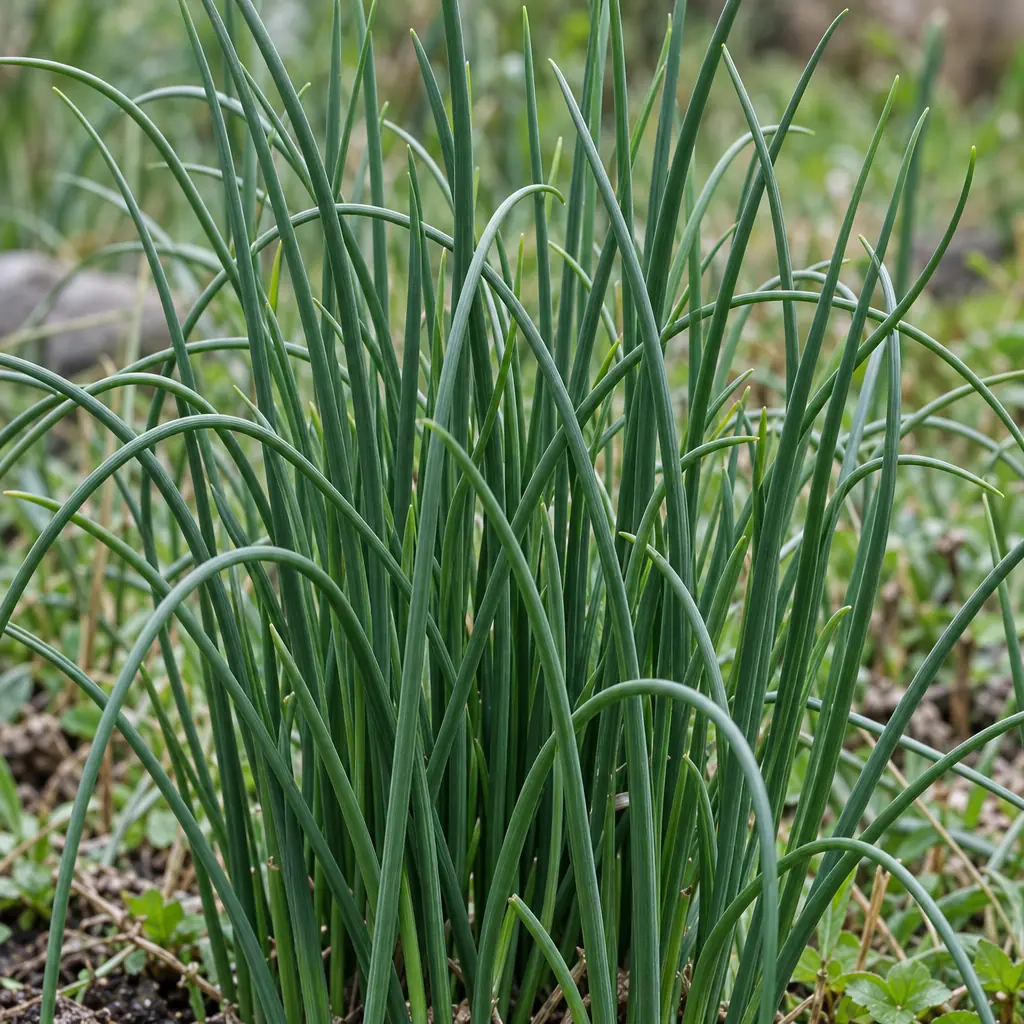
Leaf 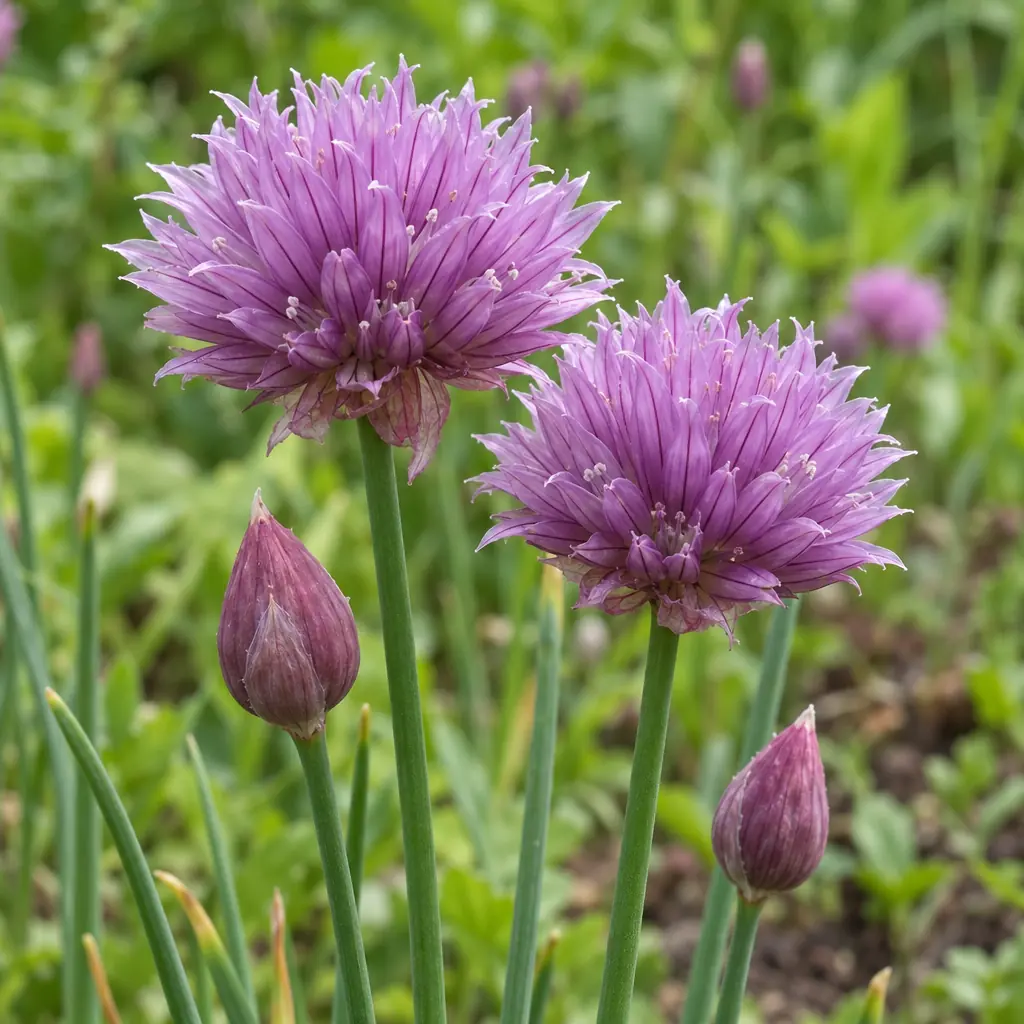
Flower
How do I recognise chives?
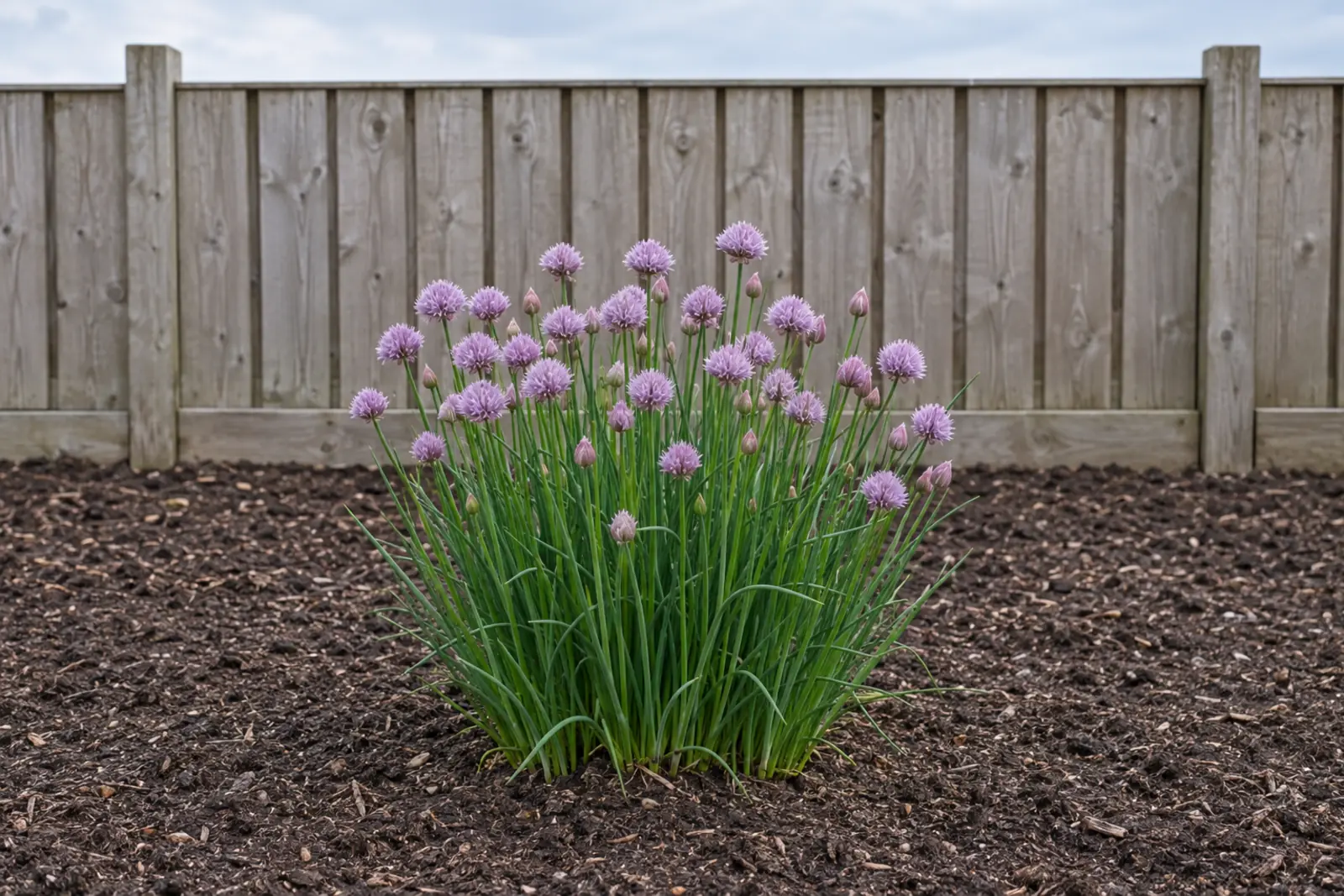
Look at the leaves first. From a distance, a clump of chives looks like a dense tuft of grass. Up close, the difference is clear: each leaf is round and hollow, like a thin drinking straw. The colour is grey-green, with a sheen. The leaves smell and taste of onion.
The flower stems stand straight up. Those are round and hollow too, with no leaves on them. At the top sits one dense, globe-shaped head of narrow little bells. Each bell is 7 and sometimes up to 15 millimetres long. The colour runs from white through pink to blue-purple.
Do not mix chives up with garlic chives, also called Chinese chives. That relative has flat leaves instead of round ones. Garlic chives have white, star-shaped flowers, and their leaves taste of garlic.
Where do chives grow best?
Chives grow well in full sun: more than six hours of direct sun a day around midsummer. Partial shade, three to six hours, works just as well. Sand, clay and loam all suit, as long as rainwater drains away. On heavy clay, mix some grit, which is fine gravel, into the planting soil.
In a garden, two spots work less well:
- A hollow where water stands after rain. Chives want moisture, but the water has to drain away.
- Crowded in among other plants. The air around the leaves stays damp there, which gives rust more of a chance.
In autumn the leaves die back. From November through February, nothing of the chives shows above ground.
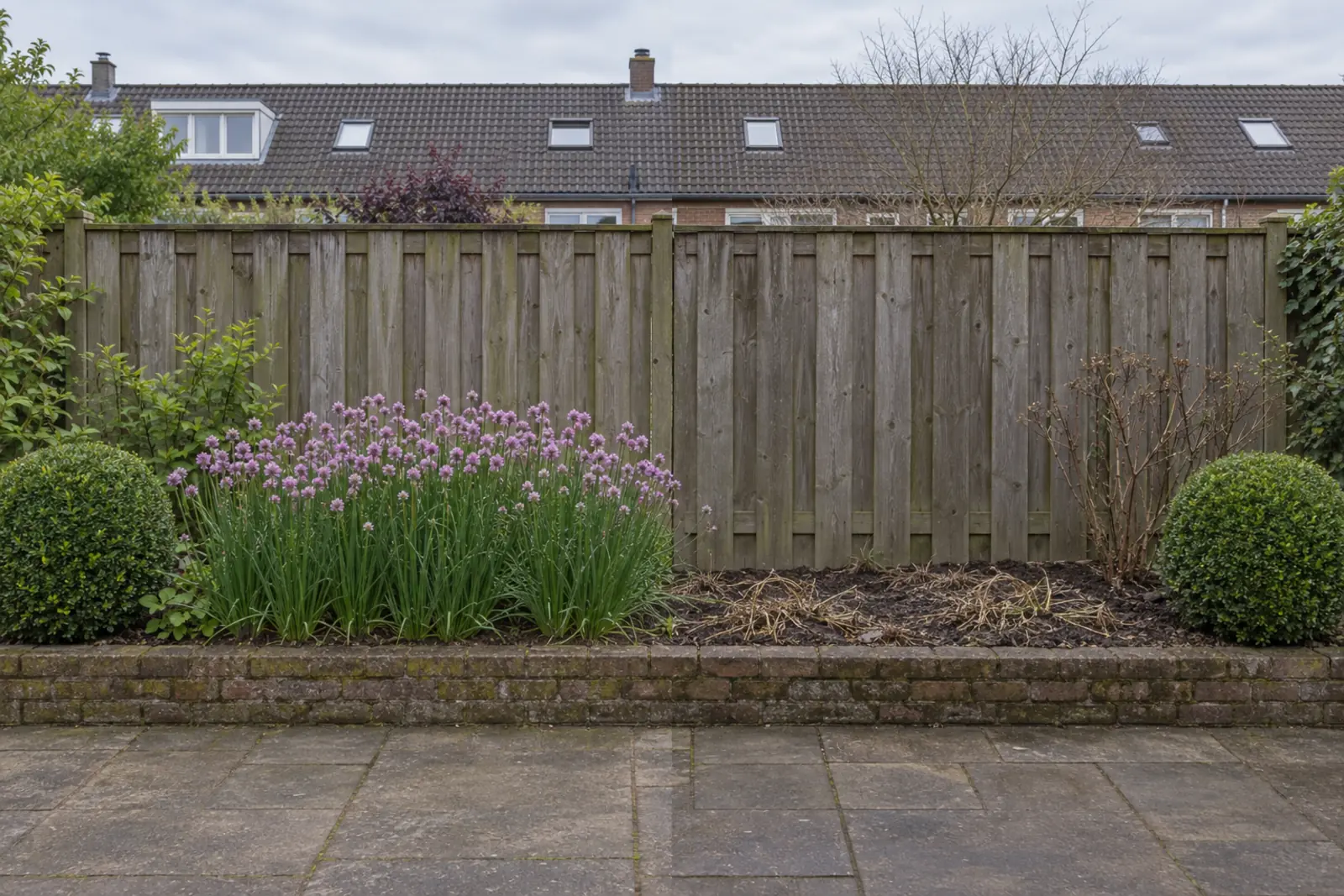 The same border in May and in January. This is a generated image, not a photograph.
In the app you can see how wide that strip of chives grows along your own fence: place the clumps on the drawing of your garden. The app draws the plant at a grown plant's width, not at pot size.
Planting and caring for chives
Chives are usually sold as a young plant in a small pot; Dutch nurseries label them bieslook. Planting works all year round, though spring is the best moment. Sowing is possible too, early in spring, indoors in a tray.
Keep about 30 centimetres between two clumps. That fits 9 to 11 on a square metre. Around a fresh clump, a lot of bare soil shows at first. In two to five years the clumps grow into each other.
Water in the first summer when a dry spell goes on. Once a clump has settled, it copes on its own, except in a very long drought.
| When | What to do |
|---|---|
| Late spring to autumn | Harvest leaves: cut them just above the ground |
| After flowering | Cut the whole clump back to 5 cm above the ground |
| Every three or four years, in spring or autumn | Lift the clump and divide it into smaller clumps |
Many bird species nest from March through July. Plenty of species carry on into August as well, so look around carefully before any hard cutting in those months.
What goes wrong with chives?
The leaves get bright orange spots. That is rust, a fungal disease that also hits leeks and garlic. At the end of the season, clear away all the old leaves. Go easy on fertiliser: rust strikes harder on soil rich in nitrogen.
Clusters of small aphids sit on the stems. A few aphids belong in a healthy garden. Leave them: ladybirds, earwigs and hoverflies keep them in check.
No flowers appear. Harvesting the whole clump every time cuts off the young flower stems as well. Spare part of the clump if you want to see flowers.
Small chive seedlings come up all over the border. Chives self-seed readily. After flowering, cut the tough flower stems off at the base. Then only the clump you already have remains.
Which insects and birds use chives?
Chives give nectar. The bees, butterflies, moths and birds that visit the plant regularly have not been well described for this species. Letting part of the clump flower keeps that nectar in your garden.
Are chives poisonous or edible?
Chive leaves have long been a kitchen herb with a fresh onion flavour. The flowers are edible too.
For dogs and cats, chives are poisonous, like onion and garlic. Substances in the plant damage the red blood cells of these animals. That can cause vomiting and anaemia, especially after a large amount. Cats are the most sensitive, followed by dogs.
The photos on this page were made with AI, based on real photos and descriptions of this plant.
Frequently asked questions
How tall do chives grow?
Chives grow 15 to 50 centimetres tall. Plant the clumps about 30 centimetres apart.
When do chives flower?
From May to July. The round flower heads are pink to pale purple, sometimes white.
Should you cut chives back after flowering?
You can, but you do not have to. If you want to, cut the whole clump back to 5 centimetres above the ground. When you harvest leaves all season, young leaves keep growing back.
Are chives poisonous to dogs and cats?
Yes, like onion and garlic, and especially after a large amount. Cats are the most sensitive, followed by dogs.
Are chives native to the Netherlands?
Yes. Chives belong to the Dutch flora by nature and are originally native here.
Sources (20)
- Duistermaat, Sparrius & Denters, Standaardlijst van de Nederlandse flora 2020 (Gorteria 43)
- NDFF Verspreidingsatlas — Allium schoenoprasum
- Flora van Nederland — Bieslook
- RHS — Allium schoenoprasum (chives)
- RHS — How to grow chives
- RHS — Shade gardening (definities zon en schaduw)
- RHS — Leek rust
- RHS — Aphids
- Imkerpedia — Drachtplanten
- Pollennieuws / Flora van Nederland — Aandachtspunten hooikoorts vriendelijke tuin
- PFAF — Allium schoenoprasum
- ASPCA — Chives
- Merck Veterinary Manual — Garlic and Onion (Allium spp) Toxicosis in Animals
- Vogelbescherming — Snoeien in het broedseizoen, mag dat?
- Tuinplantenbezorgd — Bieslook (prijs en planten per m²)
- KwaliteitsPlanten — Allium schoenoprasum (prijs en plantafstand)
- Roovershof — Bieslook (prijs)
- Puur van 't Veld — Bieslook (prijs)
- Wikimedia Commons — Leaf: photo by AnRo0002 (CC0)
- Wikimedia Commons — Flower: photo by AnRo0002 (CC0)