5 min read
Common ivy: where it grows, pruning and what it feeds
Hedera helix
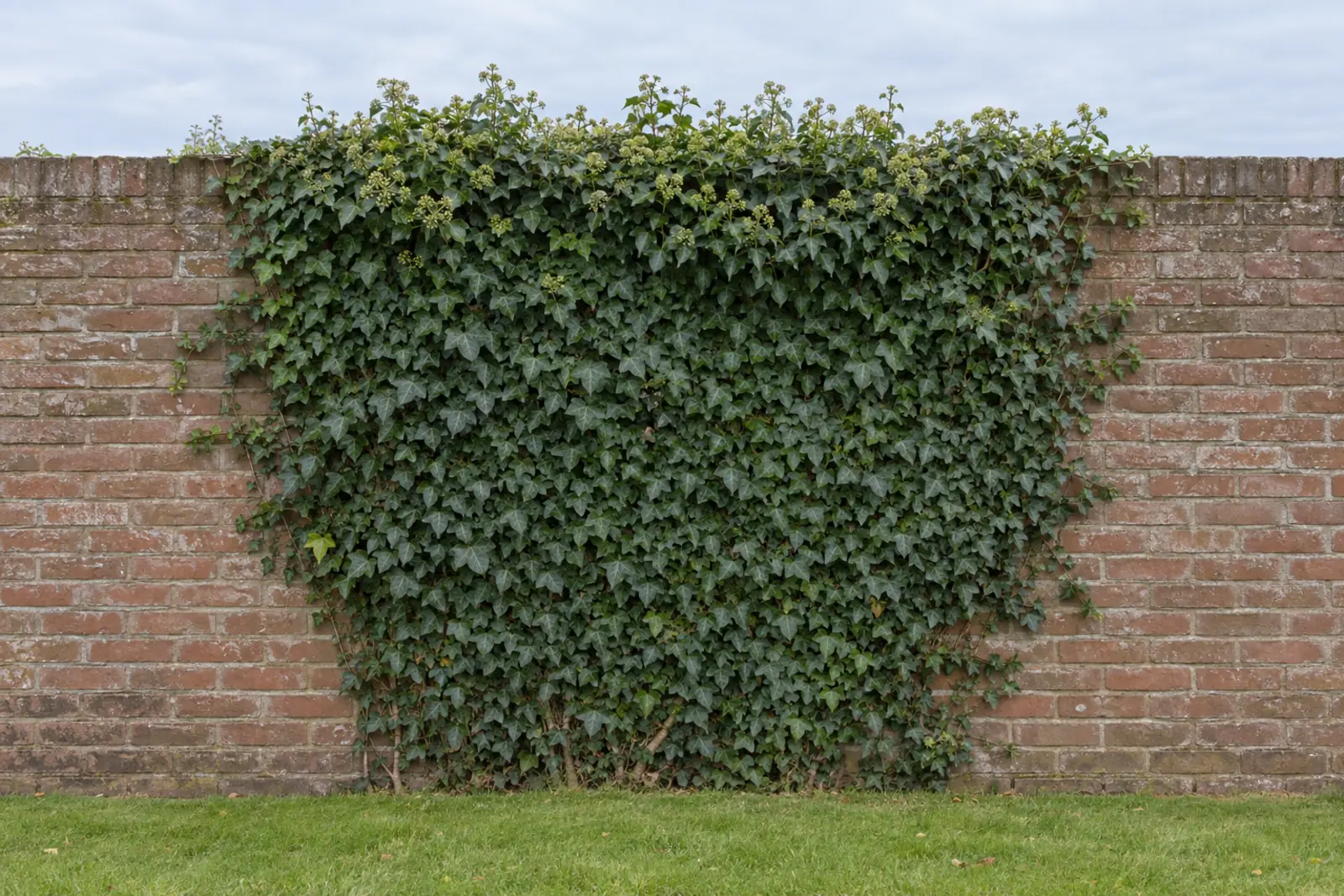
Common ivy (Hedera helix) is a climber native to the Netherlands that stays green all year. It climbs walls, fences and trees with short clinging roots. On a tall tree or wall it reaches more than 20 metres. Sun or deep shade, it grows in both. In autumn it flowers, and in late February its black berries feed birds.
Common ivy at a glance
| Feature | Common ivy |
|---|---|
| Height | As tall as its support, up to more than 20 m |
| Spread | As wide as its support |
| Full grown after | 3 to 5 years |
| Sun | Sun to deep shade |
| Soil | Almost any soil, not too wet |
| Water | Little: it also grows in dry shade |
| Maintenance | Average: one pruning a year |
| Flowers | September and October, inconspicuous |
| For bees | Yes: plenty of nectar and pollen, September to November |
| Hay fever | Not or weakly allergenic |
| Leaves | Stay green |
| Hardy | Yes |
| Native | Yes |
| Poisonous | Yes: do not eat the leaves or the berries |
| Pricks or stings | No |
| Price, young | About €1.79 to €1.85 each |
| Price, grown | About €7.70 to €13.10 each, 150-200 cm, in a pot |
- Leaf
- all year
- Flower
- September to October
- Fruit
- February to March
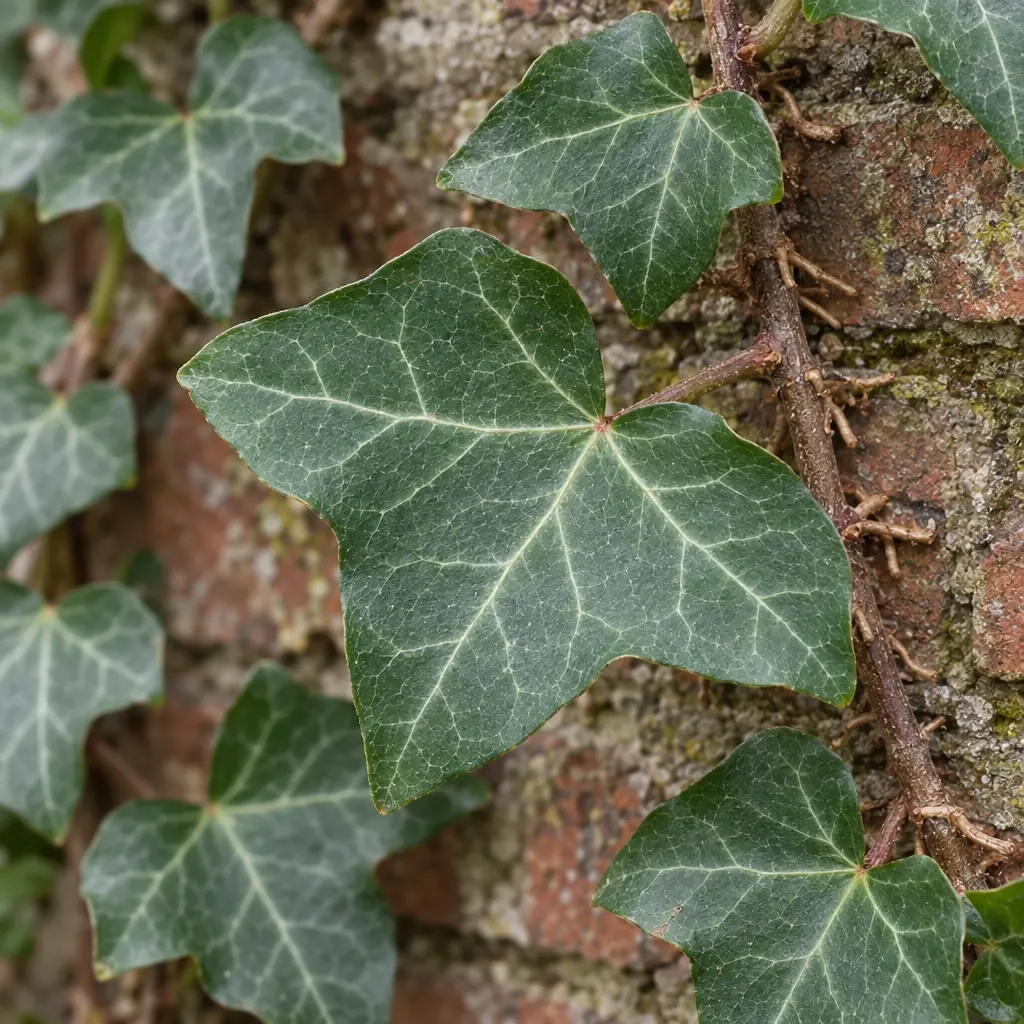
Leaf 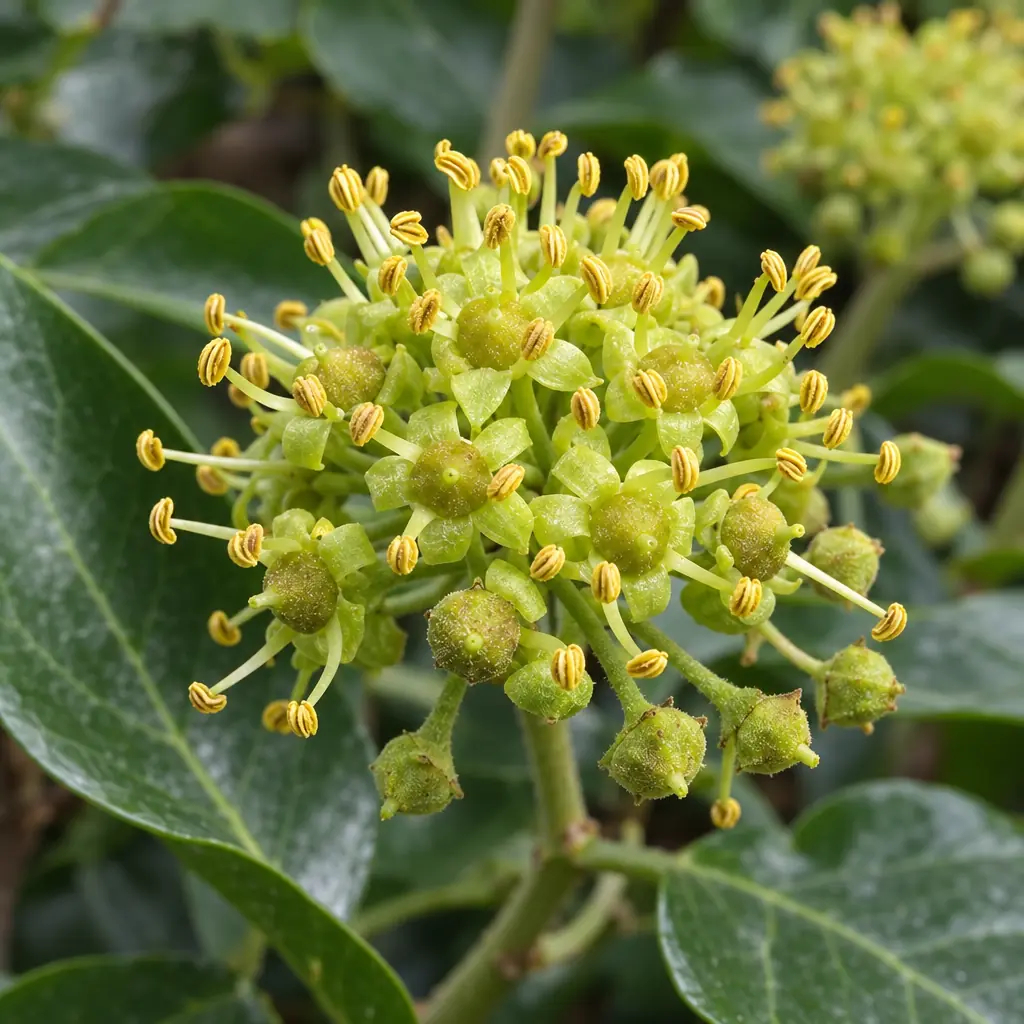
Flower 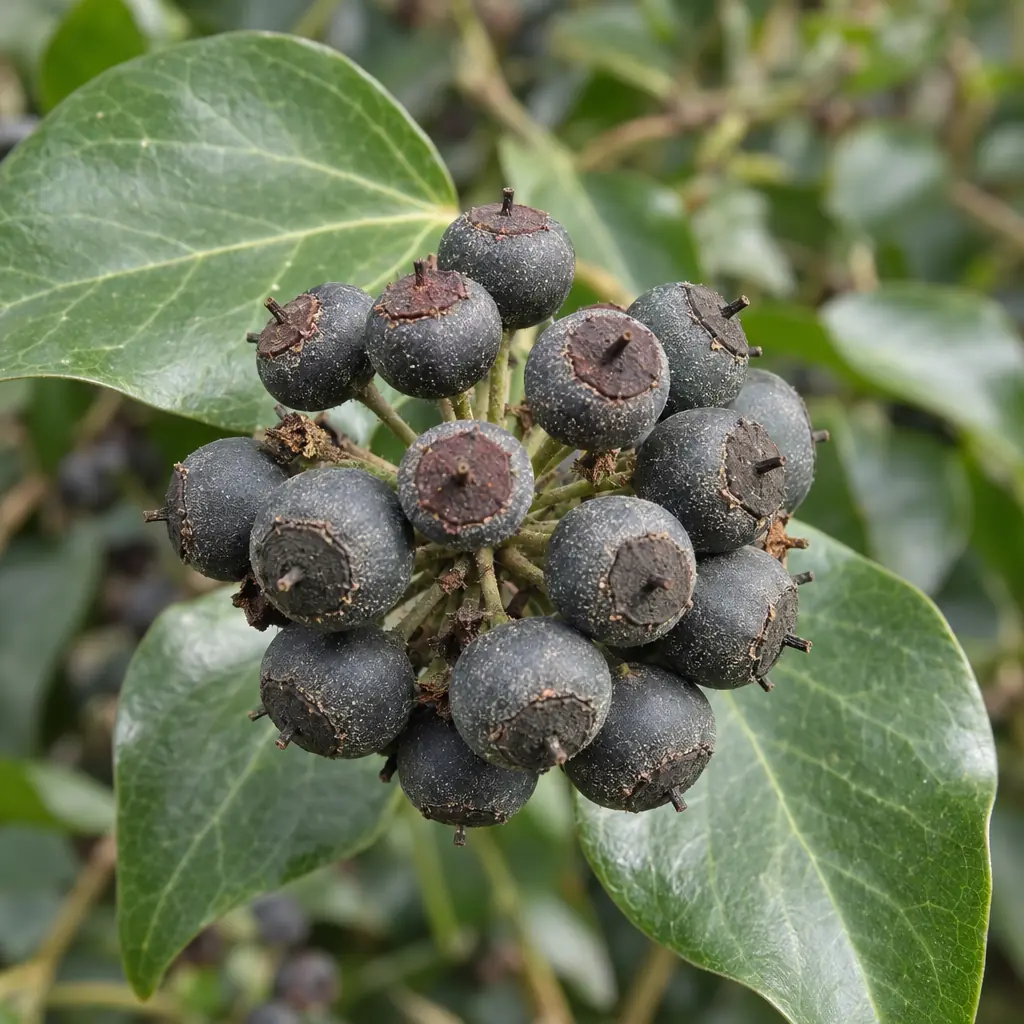
Fruit
How do I identify common ivy?
Start with the leaves. They are leathery, glossy and dark green. On the climbing shoots each leaf has three to five lobes, a little like a star.
Higher up, the plant changes. Where it cannot climb any further, it grows sturdy branches that stick out from the wall. Their leaves are egg-shaped, with no lobes. Only these branches flower. The flowers are small yellow-green balls. The berries that follow turn almost black.
Watch out for the large-leaved ivy at the garden centre, sold as grootbladige klimop. That is Atlantic ivy, a different species that does not occur here naturally. Its leaves are bigger and less deeply cut. For the native species, buy small-leaved ivy, sold as kleinbladige klimop. A variegated ivy, with yellow or white in the leaf, is a cultivar.
Where does ivy grow best?
Ivy grows almost anywhere. It does well in full sun, and in deep shade too, with less than 2 hours of direct sun a day. The soil matters little, as long as it does not stay wet.
In three places ivy does damage, or struggles itself:
- A wall with poor mortar joints. The clinging roots creep into existing cracks and widen them.
- A fence of loose boards. The stems grow between the boards. As they thicken, they push the fence apart.
- Soil that stays wet. Ivy does badly there.
In winter it stays green while the shrubs beside it stand bare.
A drawing of your own plot shows where ivy does most for your garden. On it you place the ivy along the fence where it will grow, as a green strip 2 metres long.
Planting and care
Ivy is sold in pots, so you can plant it at any time of year. For a dense green fence, plant 5 per metre. In time one plant covers metres of fence, but that takes years. At 5 per metre the fence closes sooner.
If the first summer turns out dry, water it. From the second year ivy looks after itself, and it needs no fertiliser.
| When | What to do |
|---|---|
| Late February | Cut long shoots back. Spare the tops with berries |
| Autumn | Leave the flowering tops for the insects |
Many birds nest from March through July, and some into August. Dense ivy gives birds a safe place, so always check for a nest first.
Common ivy problems and what to do
The leaves have black spots. That is a bacterial leaf spot disease. The spots are dark, often with a yellow edge. Splashing water spreads it. So water the soil, not the leaves.
It does not flower. Either it is still young, or the top keeps being cut off. Ivy only flowers once it cannot climb any higher. That takes years. For flowers sooner, buy shrub ivy, sold as struikklimop: a form that is already adult and no longer climbs.
It grows over the top of the fence. Cut it back in late February. Once a year is usually enough. Never pull it hard off a wall. That is exactly when loose mortar and paint come away with it.
It grows up a tree. A healthy tree is usually not harmed by it. Ivy clings to the bark but does not bore into it.
Which birds and insects use ivy?
The berries ripen in late February or early March. By then there is hardly any other food. Blackbirds, starlings, woodpigeons and house sparrows eat them readily. Now and then a blackcap turns up for them. In winter a long-eared owl sometimes roosts in a tree full of ivy.
The flowers come late, when almost everything else has finished. That is when the ivy bee flies. Its larvae eat nothing but ivy pollen. The red admiral drinks the nectar before its long migration south. The holly blue lays its eggs on the flower buds. The brimstone and the comma spend the winter among the leaves.
Is ivy poisonous?
Yes. That goes for the leaves, and above all for the berries. The berries taste very bitter. Large amounts cause considerable stomach and gut upset. The sap can also cause an itchy rash on the skin. So wear gloves when you prune.
The photos on this page were made with AI, based on real photos and descriptions of this plant.
Frequently asked questions
How tall does ivy grow?
As tall as its support. On a tree or a high wall it climbs to more than 20 metres. On a fence, one pruning a year keeps it to size.
Is ivy poisonous?
Yes. The leaves and above all the berries are poisonous. Large amounts cause considerable stomach and gut upset, and the sap can cause an itchy skin rash.
When should I prune ivy?
In late February, before the birds start nesting. Many birds nest from March through July, and some into August. Cutting it once a year is usually enough.
Does ivy damage walls?
Not if the brickwork is sound. The clinging roots cannot bore into good bricks or mortar joints. They do creep into cracks that are already there, and pulling ivy off hard can take loose mortar with it.
Does ivy grow in shade?
Yes. It grows in full sun and also in deep shade, with less than 2 hours of direct sun a day. Dry soil there is no problem either.
Sources (26)
- Duistermaat, Sparrius & Denters, Standaardlijst van de Nederlandse flora 2020 (Gorteria 43)
- NDFF Verspreidingsatlas — Hedera helix
- NDFF Verspreidingsatlas — Atlantische klimop
- Wikipedia — Klimop
- Antigifcentrum — Brochure planten
- Vogelbescherming — Klimop: vergeten en onderschat
- Vogelbescherming — 6 eersteklas klimplanten voor vogels
- Vogelbescherming — Snoeien in het broedseizoen, mag dat?
- De Vlinderstichting — Klimop en insecten: ze hebben elkaar nodig
- De Vlinderstichting — Kies voor klimop (Vlinders 3, 2017)
- EIS Kenniscentrum Insecten — Klimopbij bij klimop
- RHS — Ivy growing guide
- RHS — Ivy on buildings and fences
- RHS — Shade gardening (definities zon en schaduw)
- AHDB — Bacterial leaf spot of ivy
- Imkerpedia — Drachtplanten (nectar- en pollenwaarde voor de honingbij)
- Directplant — Kleinbladige klimop (prijs en planten per meter)
- HaagEnzo — Klimop 150/175 cm in pot (prijs)
- HaagEnzo — Klimop 175/200 cm in pot (prijs)
- Heijnen Planten — Klimop 175-200 cm in pot (prijs)
- Pollennieuws / Flora van Nederland — Aandachtspunten hooikoorts vriendelijke tuin
- Flora van Nederland — Klimop
- EIS Kenniscentrum Insecten — Klimopbij: in zo'n twee decennia het land door
- Wikimedia Commons — Leaf: photo by AnRo0002 (CC0)
- Wikimedia Commons — Flower: photo by AnRo0002 (CC0)
- Wikimedia Commons — Fruit: photo by AnRo0002 (CC0)