6 min read
Woody nightshade: identify, plant and prune bittersweet
Solanum dulcamara
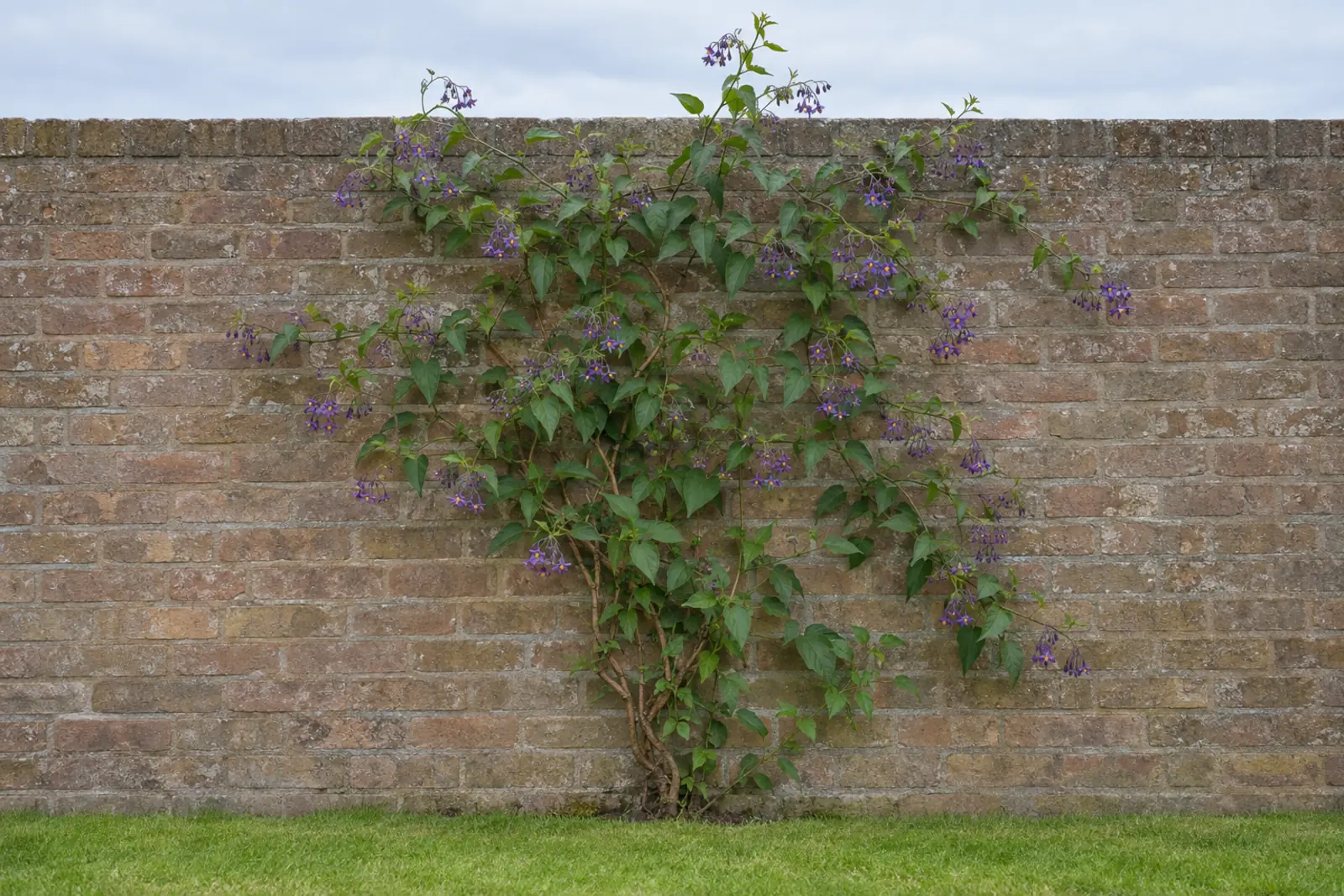
Woody nightshade, or bittersweet (Solanum dulcamara), is a native climber with a woody base. Its stems grow 1.5 to 2.5 metres long. From June to September it carries purple star-shaped flowers with a yellow centre, followed by glossy red berries, which are poisonous. The plant wants moist soil and climbs a fence or through shrubs.
Woody nightshade at a glance
| Feature | Woody nightshade |
|---|---|
| Height | 1.5 to 2.5 m |
| Spread | 0.5 to 1 m |
| Full grown after | 1 to 2 years |
| Sun | Full sun to partial shade |
| Soil | Moist and fertile |
| Water | Plenty: likes moist soil |
| Maintenance | Low: remove a dead stem now and then |
| Flowers | June to September, purple with yellow |
| For bees | Yes: plenty of nectar and pollen, June to September |
| Hay fever | Not or weakly allergenic |
| Leaves | Drop in autumn |
| Hardy | Yes |
| Native | Yes |
| Poisonous | All parts, above all the unripe berries |
| Pricks or stings | No |
| Price, young | About €3 to €4 each, in a pot |
| Price, grown | Not for sale |
- Leaf
- April to October
- Flower
- June to September
- Fruit
- August to November
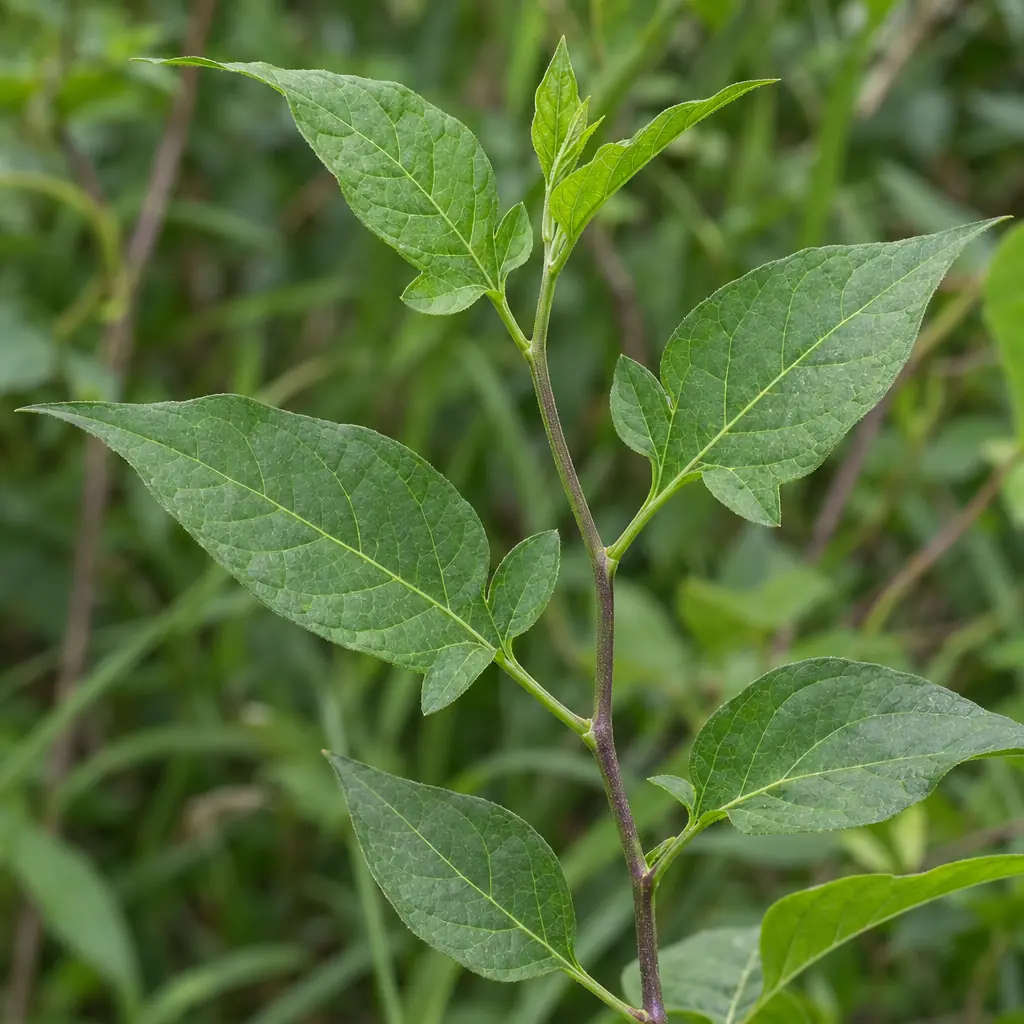
Leaf 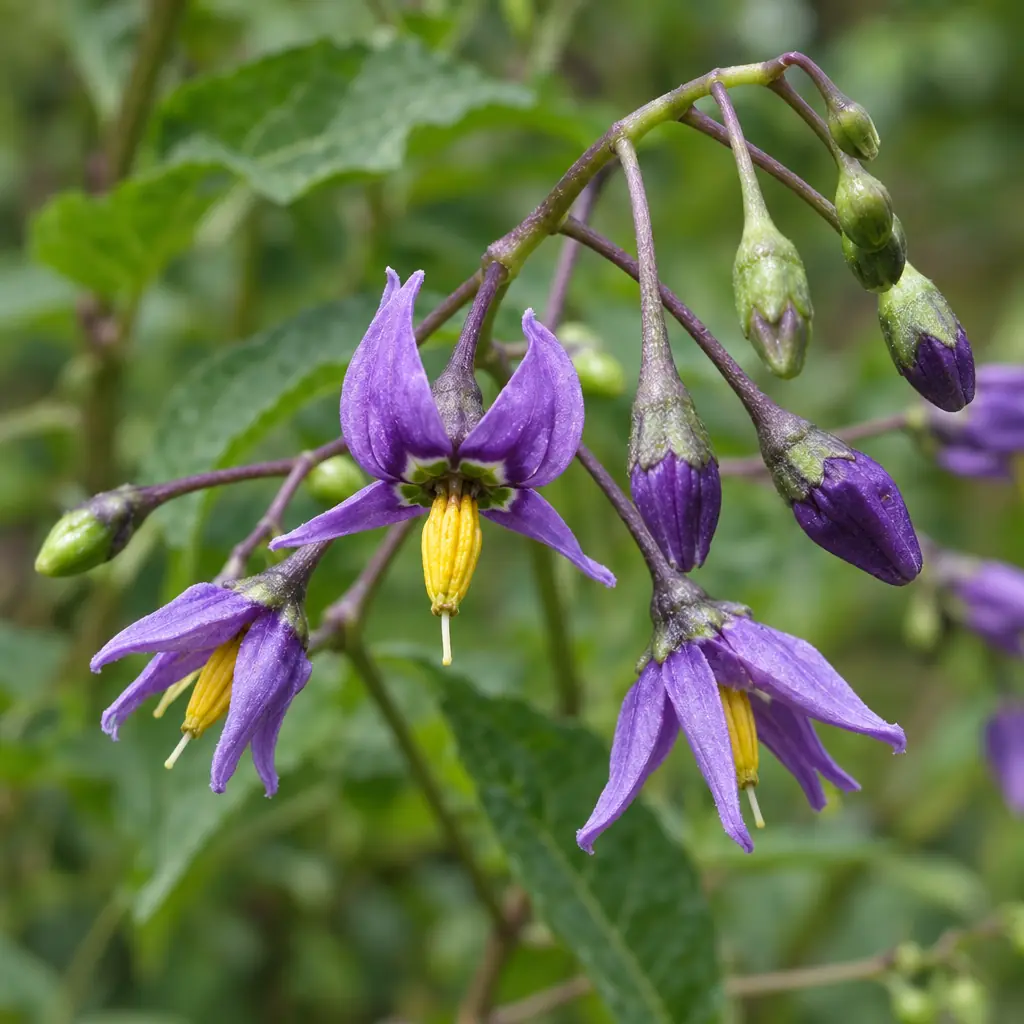
Flower 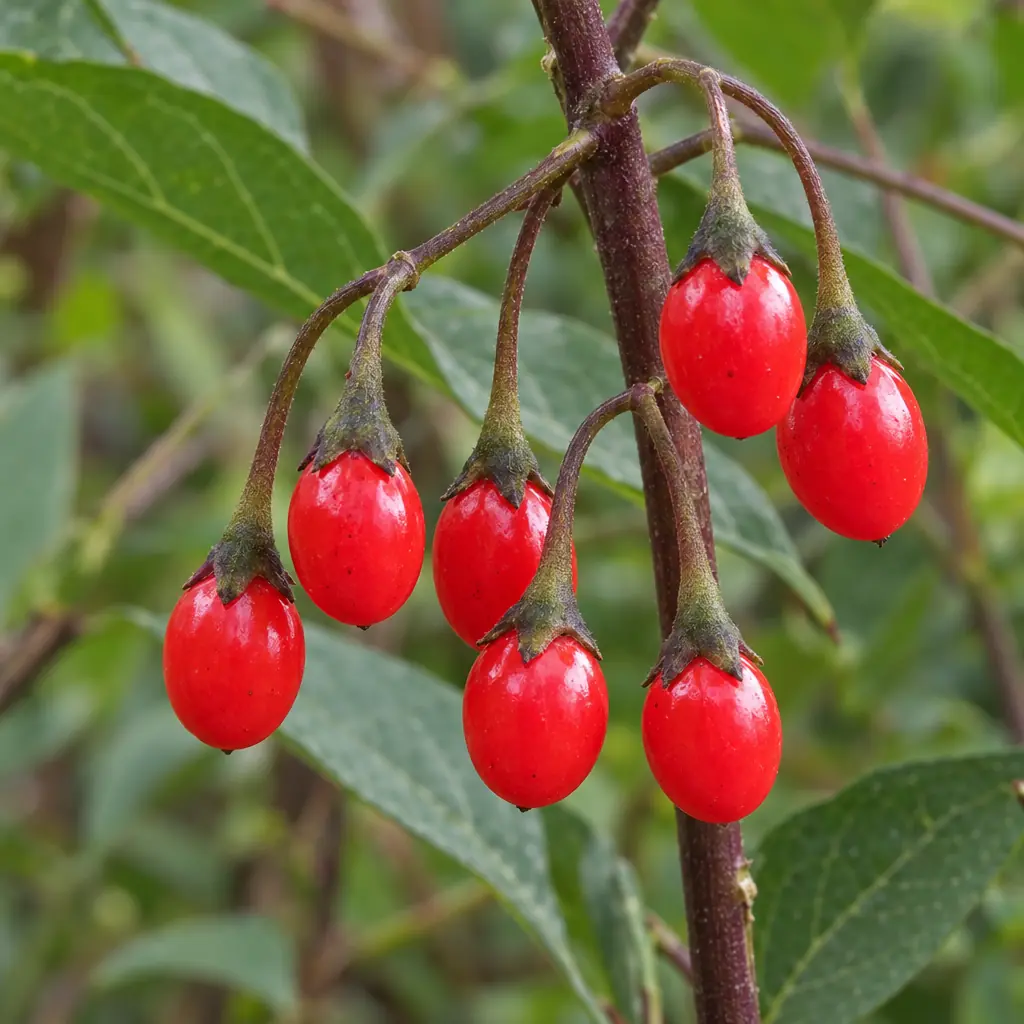
Fruit
How do I identify woody nightshade?
Start at the bottom. Just above the ground the stem is brown and woody, and higher up it is thin and green. The stems climb, twine or lie on the ground.
The leaves are dark green and often tinged with purple. Their shape varies a lot. Many are oblong to oval, with a pointed tip and a smooth edge. Near the top of the stem they often have one or two small lobes at the base.
The flowers hang in loose clusters of 10 to 25. Each flower has five purple petals that bend backwards. From the middle, a bright yellow cone of anthers points forward. At the base of each petal sit two green spots with a white edge.
The berries are oval and glossy, green at first and later scarlet. In August and September one plant sometimes carries flowers and red berries at the same time.
Black nightshade (Solanum nigrum) looks similar, but has white flowers and black berries. That species lives for only one year and stays low. Deadly nightshade (Atropa belladonna) bears black berries too, with bells instead of stars.
Where does woody nightshade grow best?
Woody nightshade grows in full sun, and also in a spot with three to six hours of direct sun on a midsummer day. Moist, fertile soil suits it best, such as along a ditch, in a hedge or at a woodland edge.
Two spots are better avoided:
- By the ditch next to your vegetable patch. Woody nightshade is a host plant of the brown rot bacterium. An infected plant can carry that bacterium into the ditch water. The same bacterium attacks potato and tomato.
- In the middle of the lawn, with no support. Without a fence or a shrub to climb into, the stems lie flat on the ground.
After autumn, only a bare woody base with a few brown stems is left. That base usually survives the winter.
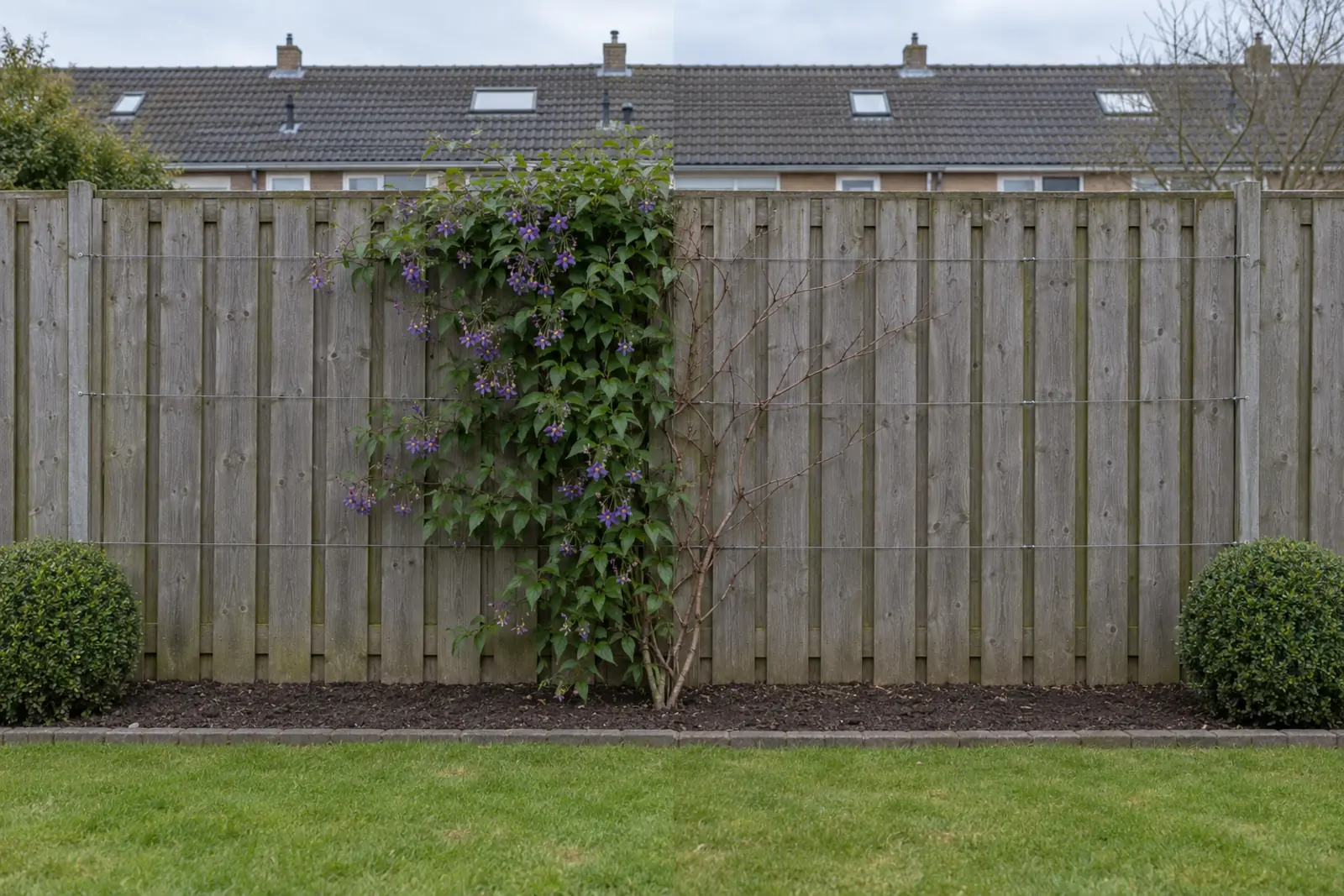 The same border in July and in January. This is a generated image, not a photo.
A climber like this takes up little ground, but it does claim a stretch of fence or wall. On the plan of your own plot, place it against the property line where you want it to climb. The app draws the plant at a grown plant's width, not at pot size.
Planting and caring for woody nightshade
Woody nightshade is mostly sold as a young plant in a pot, and as seed. Plant it in spring or autumn if you can, when the weather is cool and damp. Put it at the foot of a fence or a shrub, so the stems have something to climb straight away.
For a row along the fence, space the plants about a metre apart. That is the width one plant fills in the end. So on planting day you mostly see bare boards between two thin shoots. Keep the soil moist in the first year, especially in dry summer weeks.
| When | What to do |
|---|---|
| Late winter or early spring | Cut out dead, damaged or crossing stems, wearing gloves |
This climber needs no more pruning than that. Cutting it back hard is more likely to spoil its shape than to help.
That light pruning falls just before or at the start of the nesting season. Many birds breed between March and the end of July, and a few species start in February. So look carefully for a nest among the stems first.
Woody nightshade problems and what to do
The leaves are eaten bare and larvae crawl over the plant. These may be larvae of the Colorado potato beetle, known from potatoes. The larvae eat leaves and flowers. In 2011 large numbers were found on woody nightshade, with no potatoes nearby. Other pests rarely turn up on this plant.
Few flowers appear. No fixed cause has been described. If you cut the plant back hard, leave it alone for a year.
The plant droops in summer. The soil is too dry for a species of ditch banks and wet hedges. Water in dry weeks. If the problem keeps coming back, move the plant to a moister spot.
Which birds and insects use woody nightshade?
The bullfinch eats the berries, mainly for the seeds inside. This bird also eats the berries of hawthorn, privet and bramble.
Woody nightshade feeds the caterpillars of two moths, among others. The caterpillar of the splendid brocade (Lacanobia splendens) lives mainly on marsh fern and woody nightshade. This rare moth lives in marshes and low-lying peat areas, mostly in the west of the country. The moth Scopula corrivalaria uses woody nightshade too. That species is very rare: after a period of absence, one was seen in Gelderland in 1986.
Is woody nightshade poisonous?
Woody nightshade is poisonous. All parts contain toxins, including solanine, and the unripe green berries most of all. Eating the plant causes nausea, vomiting, diarrhoea and dilated pupils. No part of it is known to be edible.
The photos on this page were made with AI, based on real photos and descriptions of this plant.
Frequently asked questions
How tall does woody nightshade grow?
In a garden, woody nightshade climbs 1.5 to 2.5 metres high. One plant spreads 0.5 to 1 metre. Without a fence or a shrub to climb into, the stems lie down on the ground.
Is woody nightshade poisonous?
Yes. All parts of woody nightshade contain toxins, and the unripe green berries most of all. Eating them causes nausea, vomiting and diarrhoea. No part of the plant is known to be edible.
When should you prune woody nightshade?
In late winter or early spring, and only lightly. Cut out just the dead, damaged or crossing stems. Hard pruning is not needed and is more likely to harm the plant.
Is woody nightshade native to the Netherlands?
Yes, woody nightshade originally belongs in the Netherlands. In the wild it grows along woodland edges, in hedges and scrub, and by water.
Sources (26)
- Duistermaat, Sparrius & Denters, Standaardlijst van de Nederlandse flora 2020 (Gorteria 43)
- NDFF Verspreidingsatlas — Solanum dulcamara
- Flora van Nederland — Bitterzoet
- Wilde planten in Nederland en België — Bitterzoet
- BSBI Fermanagh — Solanum dulcamara
- NDFF Verspreidingsatlas — Zwarte nachtschade
- Flora van Nederland — Wolfskers
- RHS — Solanum dulcamara (bittersweet)
- RHS — Shade gardening (definities zon en halfschaduw)
- RHS — Light pruning for trees and shrubs (snoeigroep 1)
- PFAF — Solanum dulcamara
- Imkerpedia — Drachtplanten
- Pollennieuws — Aandachtspunten hooikoortsvriendelijke tuin
- Antigifcentrum — Brochure planten
- NVWA — Wat is bruinrot?
- Naturalis, De Nederlandse Goudhaantjes — Coloradokever
- De Vlinderstichting — Moeras-w-uil
- De Vlinderstichting — Moerasstipspanner
- Vogelbescherming — Goudvink
- Vogelbescherming — Snoeien in het broedseizoen, mag dat?
- RHS — How to plant a climber
- Vijverplanten online — Solanum dulcamara (prijs)
- Cruydt-Hoeck — Bitterzoet (plant in pot en zaad, prijs)
- Wikimedia Commons — Leaf: photo by AnRo0002 (CC0)
- Wikimedia Commons — Flower: photo by AnRo0002 (CC0)
- Wikimedia Commons — Fruit: photo by AnRo0002 (CC0)