5 min read
Wood meadow grass: where it grows, planting and care
Poa nemoralis
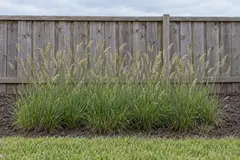
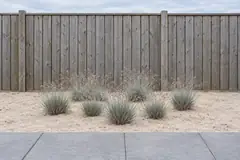
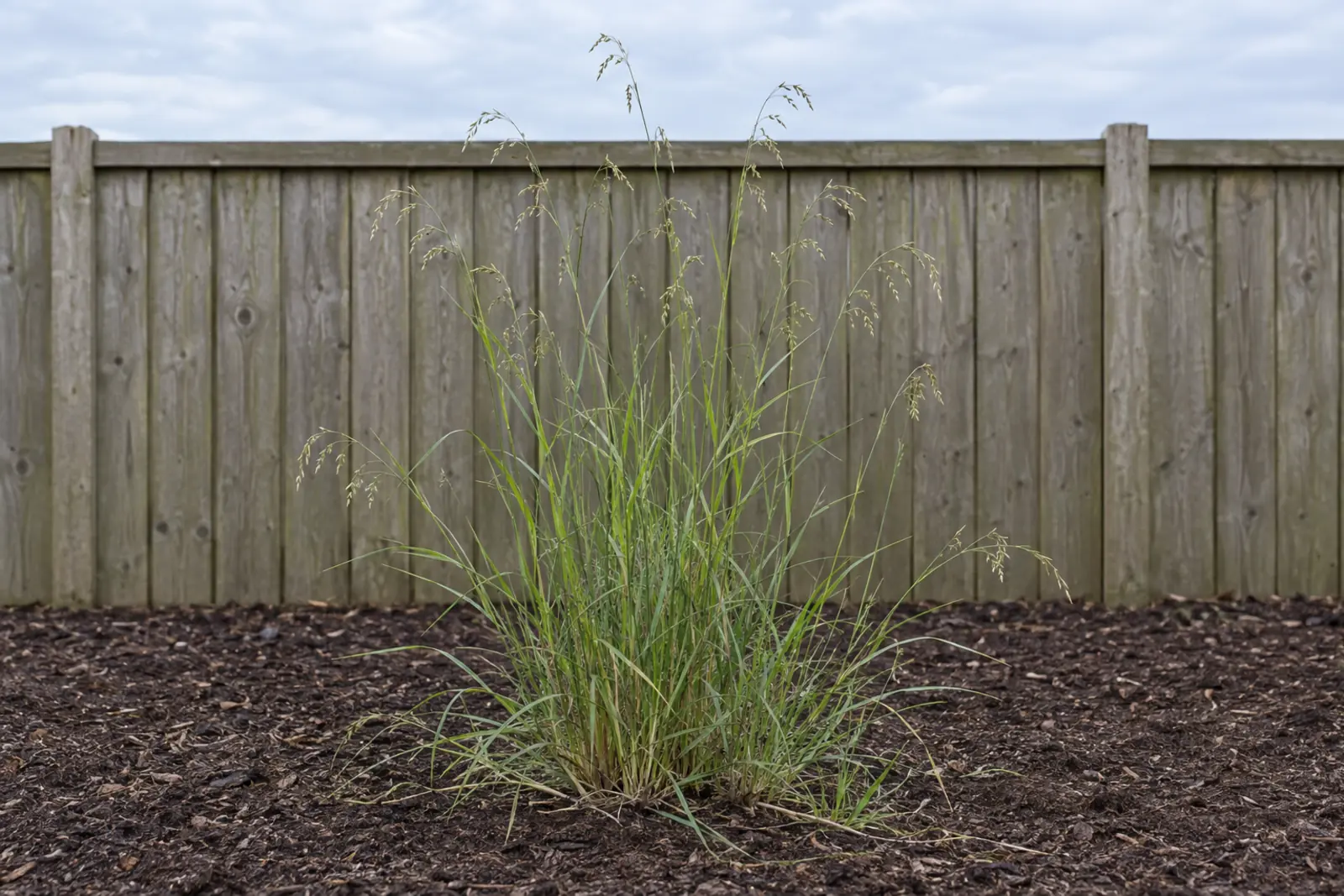
Wood meadow grass (Poa nemoralis) is a native grass that grows in loose tufts, mostly in partial shade under trees and shrubs. The stems grow 30 to 90 centimetres tall. From June to September, airy, drooping panicles hang from them. The leaves are narrow and dull green, and some of them last through the winter.
Wood meadow grass at a glance
| Feature | Wood meadow grass |
|---|---|
| Height | 0.3 to 0.9 m |
| Spread | 20 to 30 cm per tuft |
| Full grown after | 1 to 2 years |
| Sun | Partial shade to shade |
| Soil | Loose and moisture-retentive, moderately rich |
| Water | Average: never dry, never too wet |
| Maintenance | Low: comb out the dead leaves in spring |
| Flowers | June to September, greenish and inconspicuous |
| For bees | No: the wind pollinates the flowers |
| Hay fever | Very strongly allergenic, June to September |
| Leaves | Stay green, in part |
| Hardy | Yes |
| Native | Yes |
| Poisonous | No, not known to be poisonous |
| Pricks or stings | No |
| Price, young | About €3.90 per plant |
| Price, grown | Not for sale |
- Leaf
- all year
- Flower
- June to September
- Fruit
- no noticeable fruit
Leaf 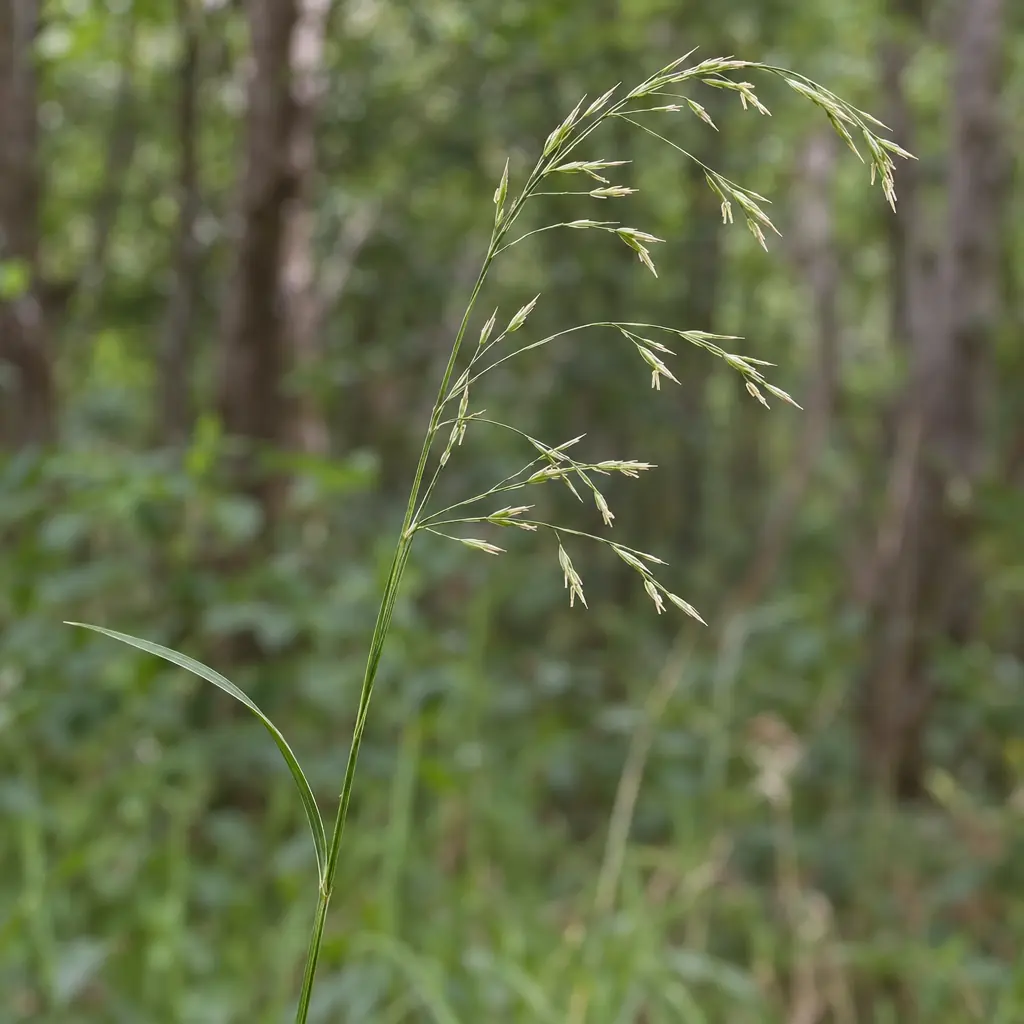
Flower
How do you recognise wood meadow grass?
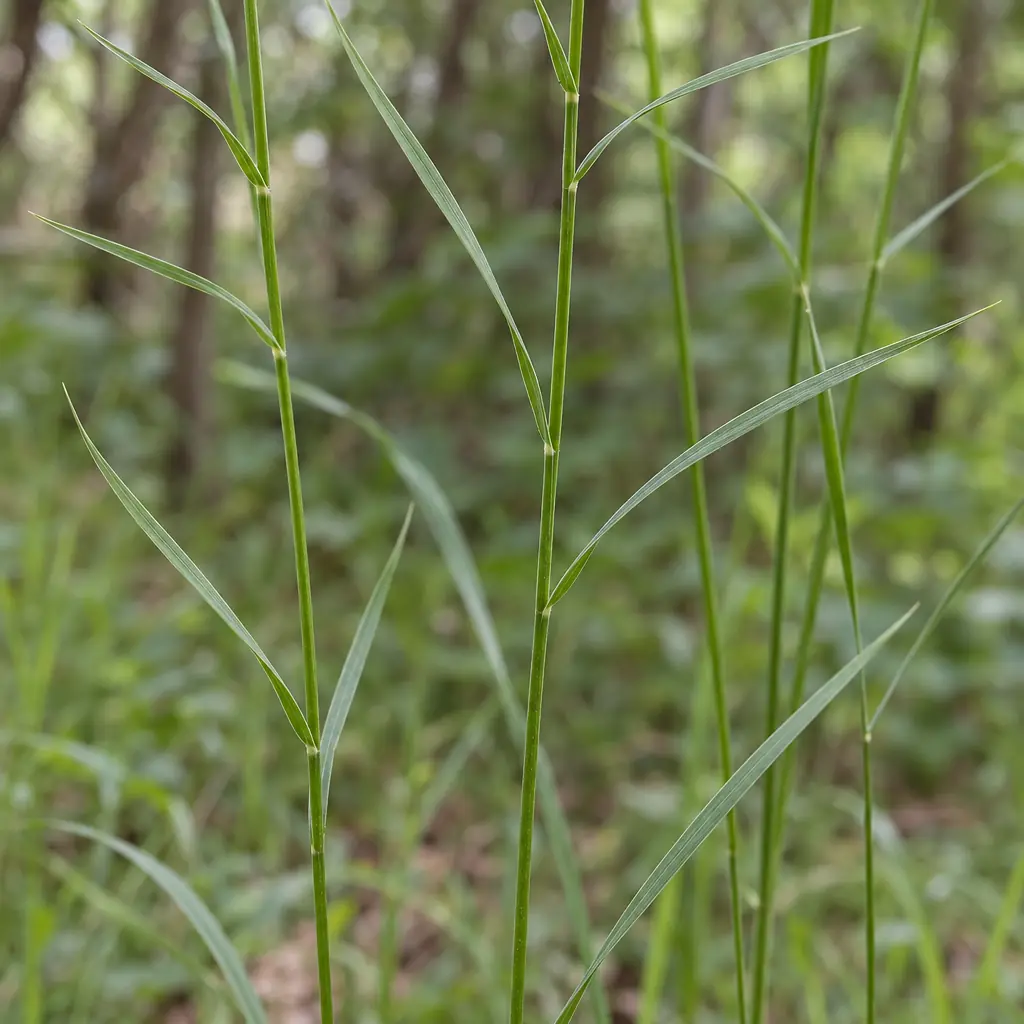
Begin with a leaf. Each blade is narrow, at most 2.5 to 3 millimetres wide, and tapers to a point. The colour is dull green. The upper leaves angle away from the stem, often at about 60 degrees. A stem then looks a little like a signpost with small arms.
Next, the panicle: the loose, branched flower head at the top of the stem. On this grass the panicle is 5 to 10 centimetres long, open and airy, with few small flowers. Usually the tip droops. After flowering, the panicle can draw in again a little.
Rough meadow grass (Poa trivialis) often grows in the same places. The ligule tells them apart: the small, thin tongue where the leaf bends away from the stem. On wood meadow grass that tongue is very short, or missing. On the flowering stems of rough meadow grass it is half a centimetre to a whole centimetre long. Its panicle is also wider and more upright.
Where does wood meadow grass grow best?
Wood meadow grass does best in partial shade. That is a spot where the sun falls directly for three to six hours a day in summer. Under deciduous trees and along shrubs the grass is at home too. The soil can be moderately dry to moist, and ideally loose and moderately rich.
Three spots where it goes wrong:
- Full sun on dry soil. Wood meadow grass copes badly with drought, and in full sun the top layer of soil dries out fast.
- Under a thick layer of fallen leaves. The grass grows best where not too many leaves stay on the ground.
- A lawn you mow often. The grass tolerates frequent mowing poorly.
A border with a strip of wood meadow grass is not completely bare in winter.
In the app, draw the strip of wood meadow grass as a border on the plan of your own plot. The app draws the plant at a grown plant's width, not at pot size.
Planting and caring for wood meadow grass
Plant wood meadow grass from March to early May, or from late September to late October. The soil is moist in those months. Space the plants 30 to 40 centimetres apart. On planting day that leaves a lot of bare soil, because a young plant is still small. The tuft only reaches its full size in the first or second year. Even then the tufts stay loose, usually with some soil between them.
Water well after planting, even when the soil is already moist. Through the first year, keep the soil moist but not wet.
| When | What to do |
|---|---|
| Early to mid-spring | Comb dead leaves and old flower stems out of the tuft with your fingers or a rake |
| Autumn, when the trees drop their leaves | Rake a thick layer of fallen leaves off the tufts |
From March through July many birds are breeding, and some species carry on into August. In those months, check a dense border carefully before you start work in it.
What goes wrong with wood meadow grass?
No panicles appear. Mowing the tufts in summer removes the flower stems. Leave the grass unmown all summer.
The grass hangs limp and turns brown. The soil is too dry. Water thoroughly a few times, especially in the first year. If the plant sits in full sun, move it to a shadier spot in spring or autumn.
Which insects and birds use wood meadow grass?
The caterpillars of two moths feed on wood meadow grass. The caterpillar of the feathered ear (Pachetra sagittigera) eats various grasses, among them wood meadow grass, purple moor-grass and annual meadow grass. This moth is fairly common on inland sandy soils. Even so, the Dutch Red List ranks it as endangered.
The caterpillar of the slender brindle (Apamea scolopacina) also feeds on grasses, such as wood melick and wood meadow grass. Those caterpillars can be found from August to May. The adult moth flies from mid-June to mid-August along grassy woodland edges. On the provisional Red List, the slender brindle is ranked as vulnerable.
Among birds, the sources name none that makes use of wood meadow grass.
Is wood meadow grass poisonous or edible?
Wood meadow grass is not known to be poisonous. No part of the plant is described as harmful: not the leaves, not the panicle and not the seed. That does not make the grass edible, because no edible use is known.
The photos on this page were made with AI, based on real photos and descriptions of this plant.
Frequently asked questions
How tall does wood meadow grass grow?
Wood meadow grass grows 30 to 90 centimetres tall. The leaves stay low in a loose tuft, and the thin flower stems rise above them.
Does wood meadow grass really grow in shade?
Yes. The grass does best in partial shade, on a spot the sun reaches directly for three to six hours a day in summer. Under deciduous trees and along shrubs it also does well.
Can you use wood meadow grass as a lawn?
Yes, for a shady patch of grass. Mow it rarely or not at all, because wood meadow grass copes badly with frequent mowing.
Is wood meadow grass bad for hay fever?
Yes. The pollen of wood meadow grass is very strongly allergenic, like the pollen of all grasses. The grass flowers from June to September, and that is when the pollen is in the air.
Is wood meadow grass native to the Netherlands?
Yes. Wood meadow grass is native to the Netherlands. In the wild it grows in deciduous woods, along woodland edges, in hedgerows and in parks.
Sources (19)
- Duistermaat, Sparrius & Denters, Standaardlijst van de Nederlandse flora 2020 (Gorteria 43)
- NDFF Verspreidingsatlas — Poa nemoralis
- NDFF Verspreidingsatlas — Poa trivialis
- Flora van Nederland — Schaduwgras
- Wilde planten in Nederland en België — Schaduwgras
- RHS — Poa nemoralis (wood meadow grass)
- RHS — Shade gardening (definities zon en schaduw)
- RHS — Planting perennials
- RHS — Cutting back and tidying ornamental grasses
- Shoot — Poa nemoralis (wood meadow lawn grass)
- NaturaDB — Hain-Rispengras (breedte)
- ReNature Wildpflanzen — Poa nemoralis (prijs en plantafstand)
- Pollennieuws / Flora van Nederland — Aandachtspunten hooikoorts vriendelijke tuin
- Imkerpedia — Drachtplanten
- Wageningen UR — Stuifmeel
- De Vlinderstichting — Gevlekte pijluil
- De Vlinderstichting — Bosgrasuil
- Vogelbescherming — Snoeien in het broedseizoen, mag dat?
- Wikimedia Commons — Leaf: photo by Alneathey (CC0)