5 min read
Grey hair-grass: planting and care on dry sand
Corynephorus canescens
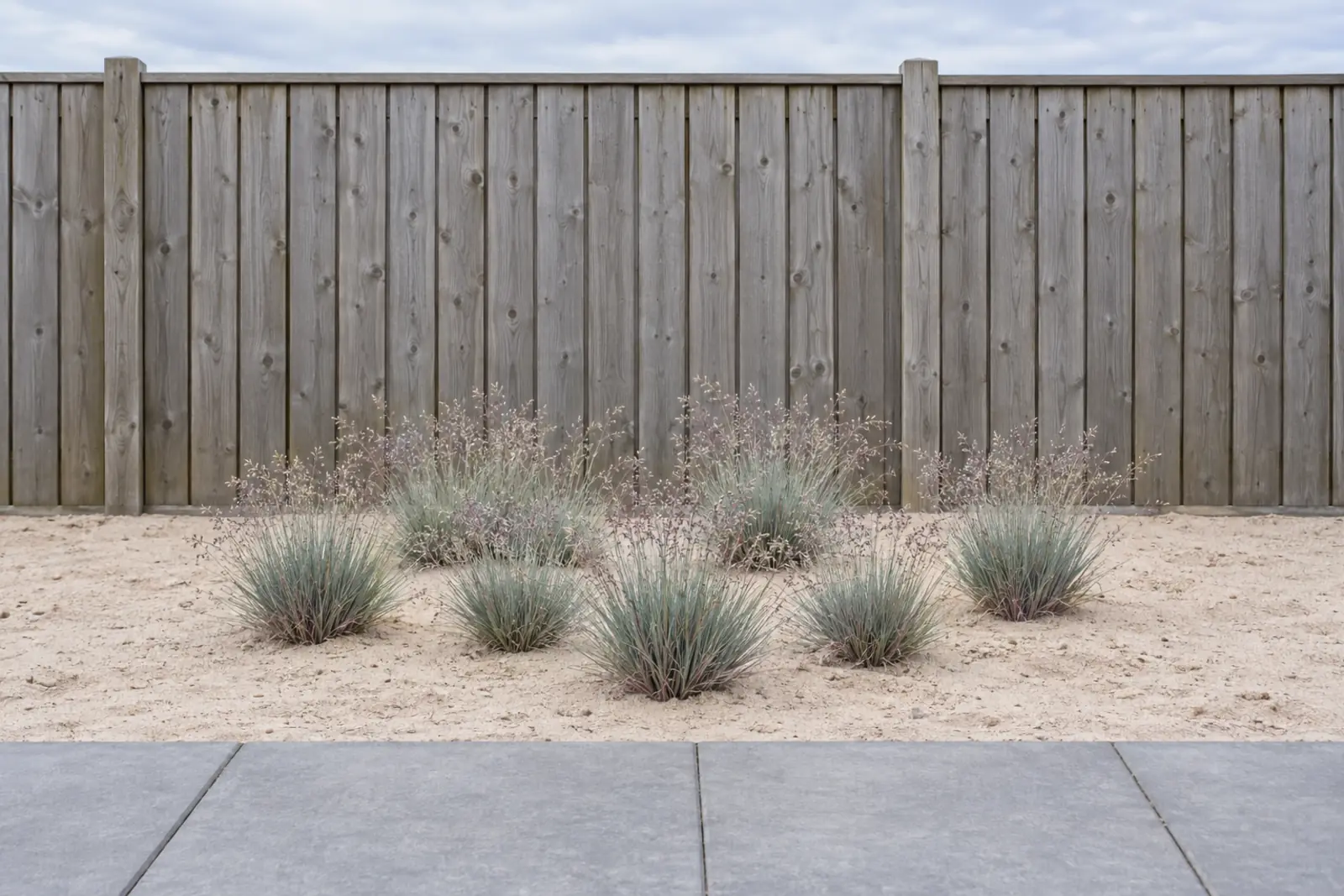
Grey hair-grass (Corynephorus canescens) is a native grass of dry drift sand. It forms low, rounded tufts of stiff, blue-grey leaves. In summer, fine silver-grey plumes appear above them. If you want to plant grey hair-grass, give it full sun and poor, dry sand.
Grey hair-grass at a glance
| Feature | Grey hair-grass |
|---|---|
| Height | 0.1 to 0.35 m |
| Spread | 20 to 30 cm per tuft |
| Full grown after | 2 to 5 years |
| Sun | Full sun |
| Soil | Dry, poor and acid sand |
| Water | Little: copes well with drought |
| Maintenance | Low: one cut in spring at most |
| Flowers | June and July, silver-grey |
| For bees | No: grasses are pollinated by the wind |
| Hay fever | Very strongly allergenic, June and July |
| Leaves | Drop in autumn: the old tuft remains |
| Hardy | Yes |
| Native | Yes |
| Poisonous | No, as far as is known |
| Pricks or stings | No |
| Price, young | About €3.25 to €4.09 each, as a small plant |
| Price, grown | Not for sale |
- Leaf
- April to October
- Flower
- June to July
- Fruit
- no noticeable fruit
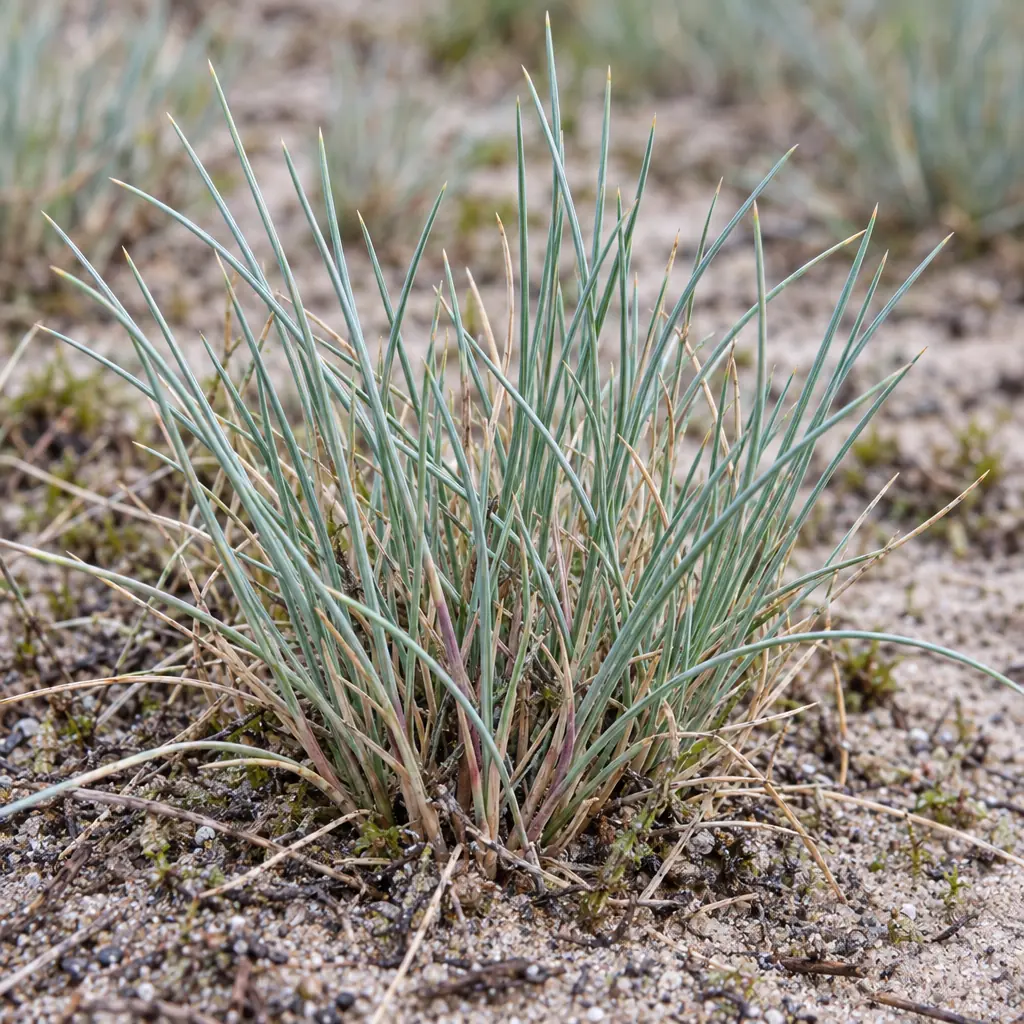
Leaf 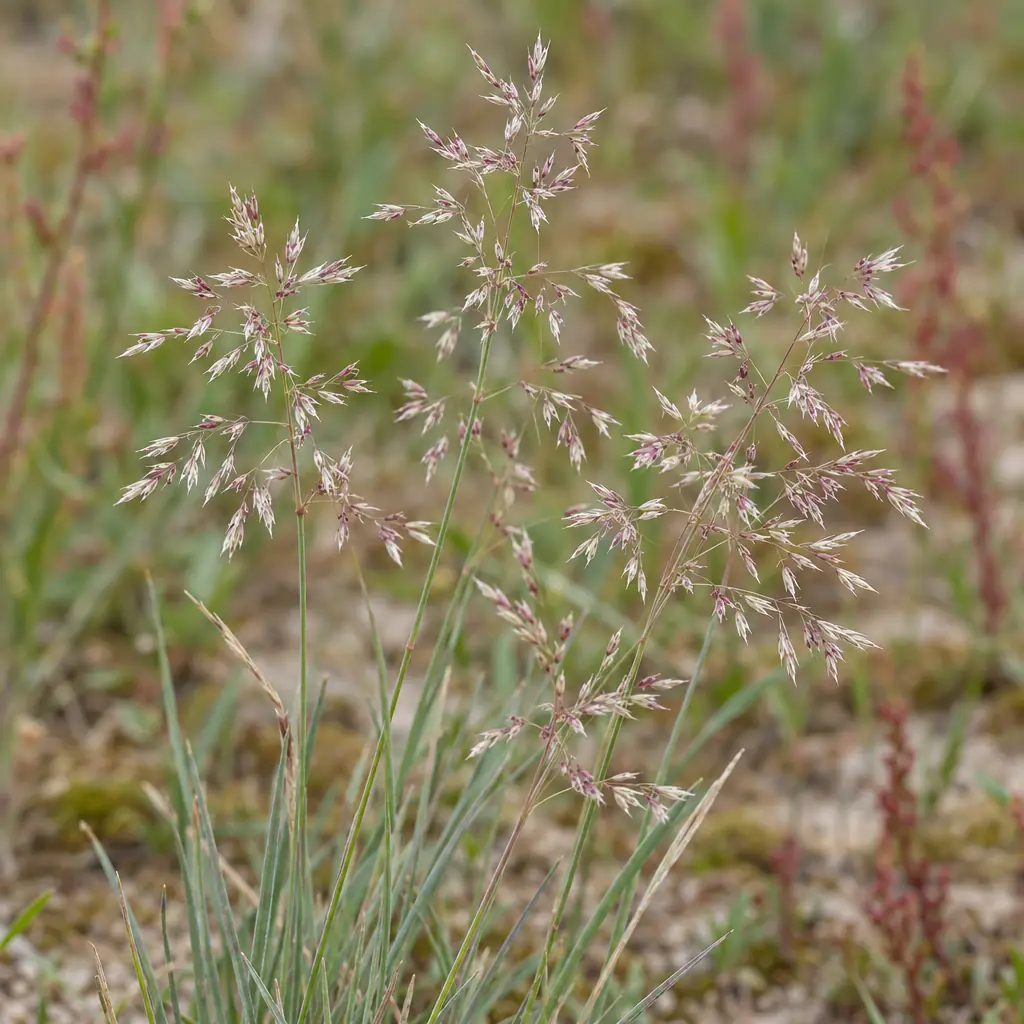
Flower
How do I recognise grey hair-grass?
Look at the leaves first. Each leaf stands stiffly upright and is rolled into a thin bristle. Tiny teeth make the leaf rough, and the tip ends in a sharp point. The colour is blue-grey to grey-green, often with a red tinge. Towards the base the stems turn purple or pink.
Then the plume, which is silver-grey and finely branched. At first the plume is closed. During flowering it opens, and afterwards it draws together again. Once flowering is over, the plume often turns red. Each spikelet, a small group of two tiny flowers, is only 3 to 4 millimetres long.
Sometimes the tufts grow neatly in a row. That hints at a creeping rootstock underground, but grey hair-grass has none.
Fine-leaved sheep's-fescue (Festuca filiformis) grows in the same dry places and also has grey-green leaves. To tell the two apart, look at the plume. On the fescue it stays narrow and closed, with upright side branches. The fescue's spikelets are larger: 4 to 7 millimetres.
Where does grey hair-grass grow best?
Grey hair-grass belongs in full sun: more than six hours of direct sun a day around midsummer. The soil should be dry, poor and acid, preferably loose sand. In the wild the grass grows on drift sands, in dunes, on heathland and on sandy road verges. Heat and drought do it little harm.
Grey hair-grass will not last in these places:
- A border with compost or manure. Grey hair-grass is one of the first plants on bare sand, and that sand is poor in nutrients.
- Wet or heavy clay soil. The roots want sand that lets water drain away at once.
In autumn the leaves die back. The old tuft remains all winter, until you cut it short in spring.
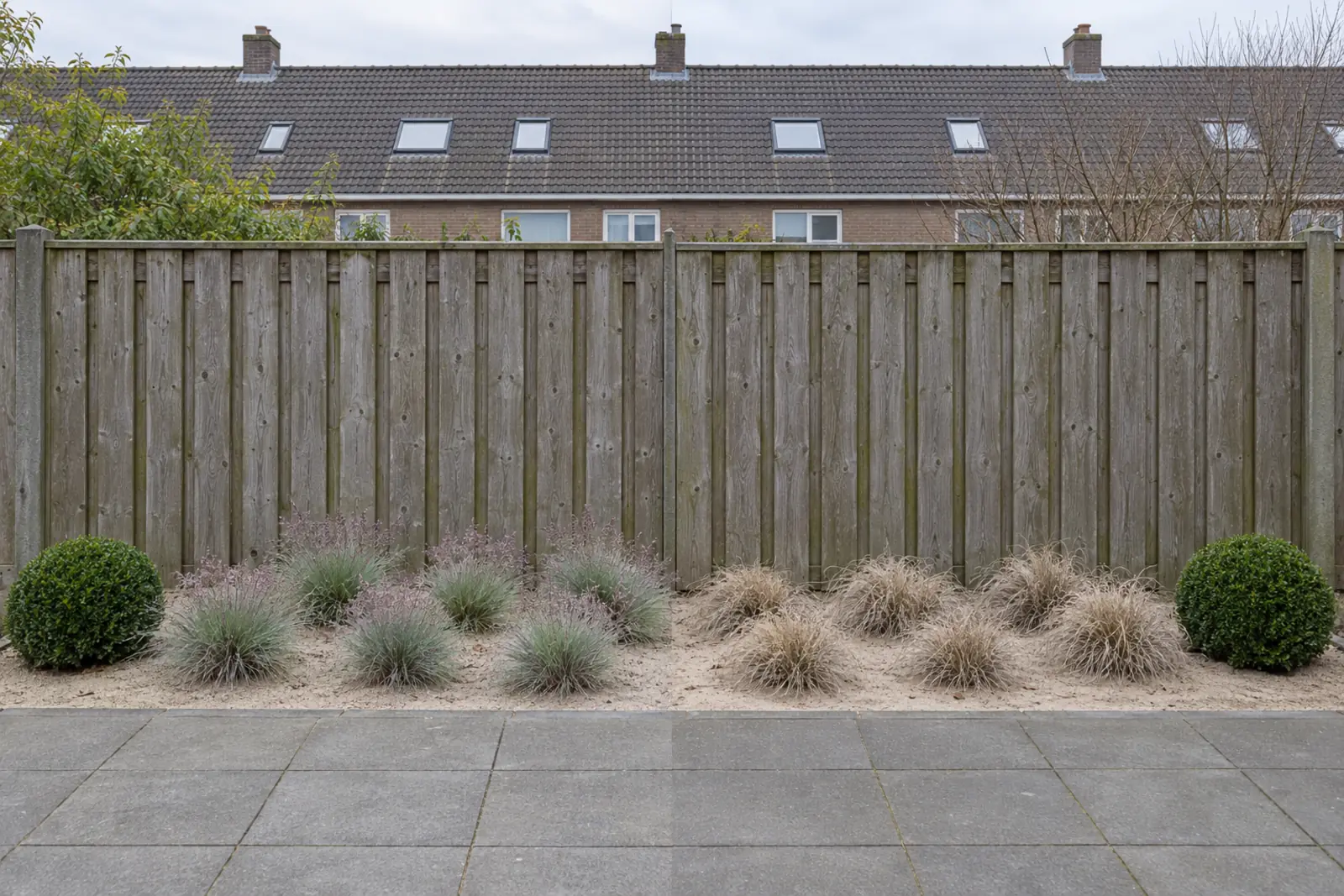 The same border in June and in January. This is a generated image, not a photo.
Picture a strip of loose sand along the terrace, with a few tufts in it. A plan of your own plot shows you how wide that strip needs to be. The app draws the plant at a grown plant's width, not at pot size.
Planting and caring for grey hair-grass
Plant grey hair-grass between March and October. Nurseries sell it as a small plant. Sowing works too: in warm weather the seed usually germinates quickly.
Dig a small hole in the sand and place the tuft in it. Do not mix in compost or potting soil. Space the plants about 25 centimetres apart, roughly the width of a full-grown tuft. On planting day that looks bare, because grey hair-grass grows very slowly. Water until the young plants have rooted.
| When | What to do |
|---|---|
| Early spring | Cut last year's old tuft short, if you want to |
Nothing else needs cutting. That one cut sometimes falls in March, and many bird species nest from March through July. So check the tufts for a nest first.
Problems with grey hair-grass
The tufts dry out after flowering. In the wild that often happens too, from a lack of water. Leave the tuft and cut it short in spring.
Moss or other grass grows between the tufts. Grey hair-grass grows best on bare sand. In nature, moss, heather and finally woodland take over after it. Keep the sand around the tufts open and pull out other grass.
No plumes appear. Cutting or mowing in June or July takes off the flowering stems. Let the tufts grow untouched through those months.
Something is on the leaves. Pests and diseases hardly ever affect grey hair-grass. There is nothing you need to do.
Which insects and birds use grey hair-grass?
Grey hair-grass is a host plant: caterpillars of butterflies and moths feed on it. The caterpillar of the feathered footman, a moth, eats various grasses, grey hair-grass among them. The caterpillar of the speckled footman eats it too. This moth lives mainly in dunes and on heathland. The grayling, a butterfly, also uses grey hair-grass as a host plant.
No bird that uses grey hair-grass has been described by name.
Is grey hair-grass poisonous or edible?
Grey hair-grass is not known to be poisonous. No edible part is known either. Even sheep leave it alone: the grass is that tasteless.
The photos on this page were made with AI, based on real photos and descriptions of this plant.
Frequently asked questions
How tall does grey hair-grass grow?
Grey hair-grass grows 10 to 35 centimetres tall. Its fine plumes sit on thin stems above the low tuft.
When does grey hair-grass flower?
In June and July. Fine, silver-grey plumes then appear on the tufts, and after flowering they often turn red.
Does grey hair-grass cause hay fever?
The pollen is very strongly allergenic, like the pollen of every grass. Grey hair-grass releases that pollen in June and July, when it flowers.
What soil does grey hair-grass need?
Dry, poor and acid sand that drains well. Compost and manure are not needed. Grey hair-grass is one of the first plants to grow on bare sand.
Is grey hair-grass native to the Netherlands?
Yes, grey hair-grass is native to the Netherlands. In the wild it grows in dunes, on drift sands, on heathland and on sandy road verges.
Sources (20)
- Duistermaat, Sparrius & Denters, Standaardlijst van de Nederlandse flora 2020 (Gorteria 43)
- NDFF Verspreidingsatlas — Corynephorus canescens
- NDFF Verspreidingsatlas — Fijn schapengras
- Flora van Nederland — Buntgras
- Wilde planten in Nederland en België — Buntgras
- RHS — Corynephorus canescens (grey hair-grass)
- RHS — Shade gardening (definitie volle zon)
- Gärtnerei Strickler — Corynephorus canescens (breedte en plantafstand)
- Wageningen UR — Stuifmeel, in de serie over bijenproducten
- Wageningen UR — De spagaat van de stuifzandbeheerder
- Pollennieuws / Flora van Nederland — Aandachtspunten hooikoorts vriendelijke tuin
- De Vlinderstichting — Buntgras (waardplant)
- De Vlinderstichting — Kleine heivlinder
- De Vlinderstichting — Grasbeertje
- De Vlinderstichting — Geel grasbeertje
- Vogelbescherming — Snoeien in het broedseizoen, mag dat?
- Bloemerij — Buntgras (prijs)
- De Cruydt-Hoeck — Buntgras (prijs en zaad)
- Wikimedia Commons — Leaf: photo by AnRo0002 (CC0)
- Wikimedia Commons — Flower: photo by Alexis (CC BY 4.0)