5 min read
How to grow garlic mustard: a native plant for shade
Alliaria petiolata
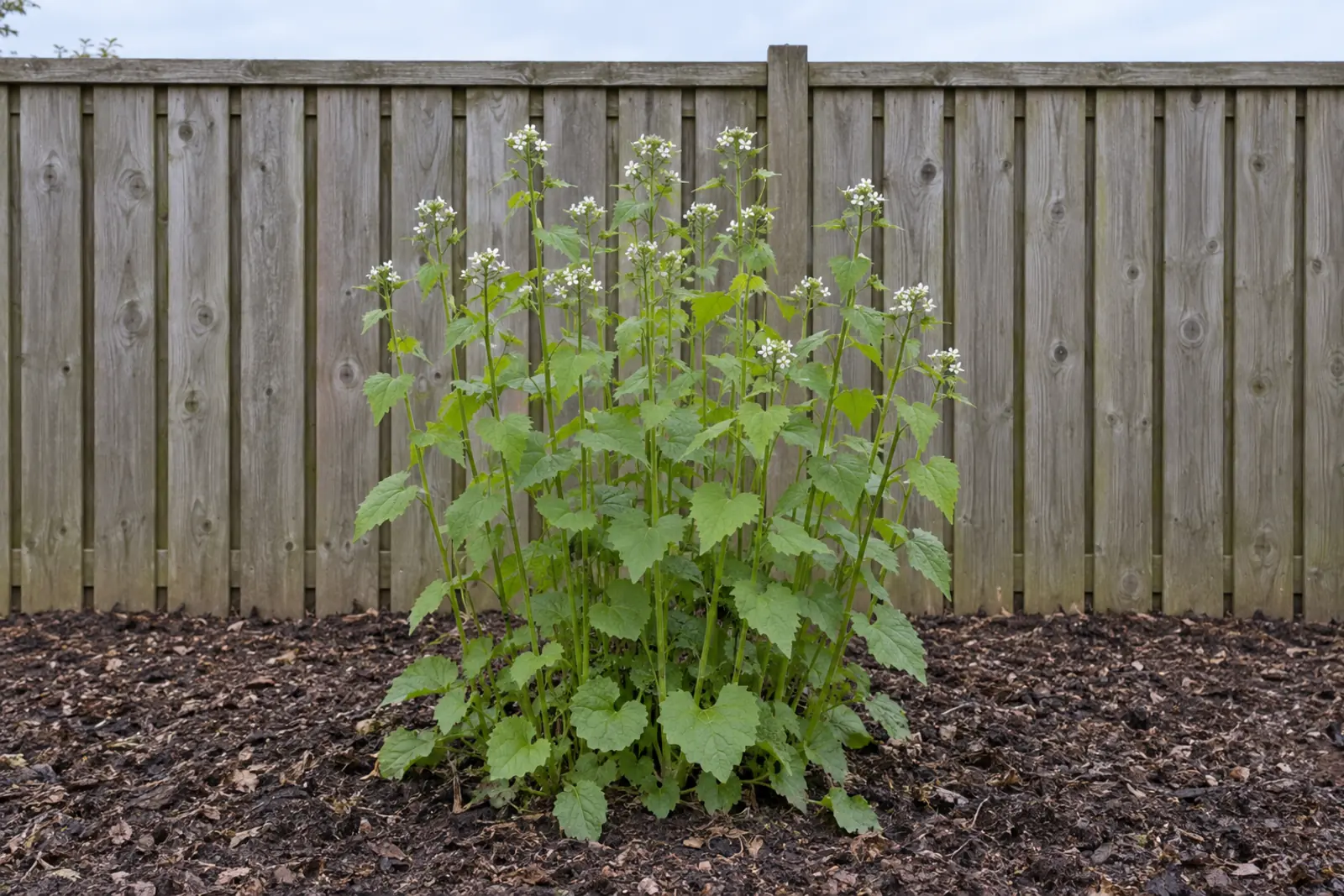
Garlic mustard (Alliaria petiolata) is a native biennial, 15 to 90 centimetres tall. In its first year it makes only a rosette of round leaves. Upright stems with clusters of small white flowers follow in the second spring, from April to June. A crushed leaf smells of garlic. To grow garlic mustard, give it light shade and moist soil.
Garlic mustard at a glance
| Feature | Garlic mustard |
|---|---|
| Height | 0.15 to 0.9 m |
| Spread | About 40 cm |
| Full grown after | 1 to 2 years |
| Sun | Partial shade to shade |
| Soil | Moist and fertile, often with lime |
| Water | Average: keep the soil moist |
| Maintenance | Low: no pruning needed |
| Flowers | April to June, white |
| For bees | Yes: nectar and pollen, April to June |
| Hay fever | Not or weakly allergenic |
| Leaves | Stay green: the rosette overwinters |
| Hardy | Yes |
| Native | Yes |
| Poisonous | No, as far as is known |
| Pricks or stings | No |
| Price, young | About €2.35 to €4.09 each, in a small pot |
| Price, grown | Not for sale |
- Leaf
- all year
- Flower
- April to June
- Fruit
- June to August
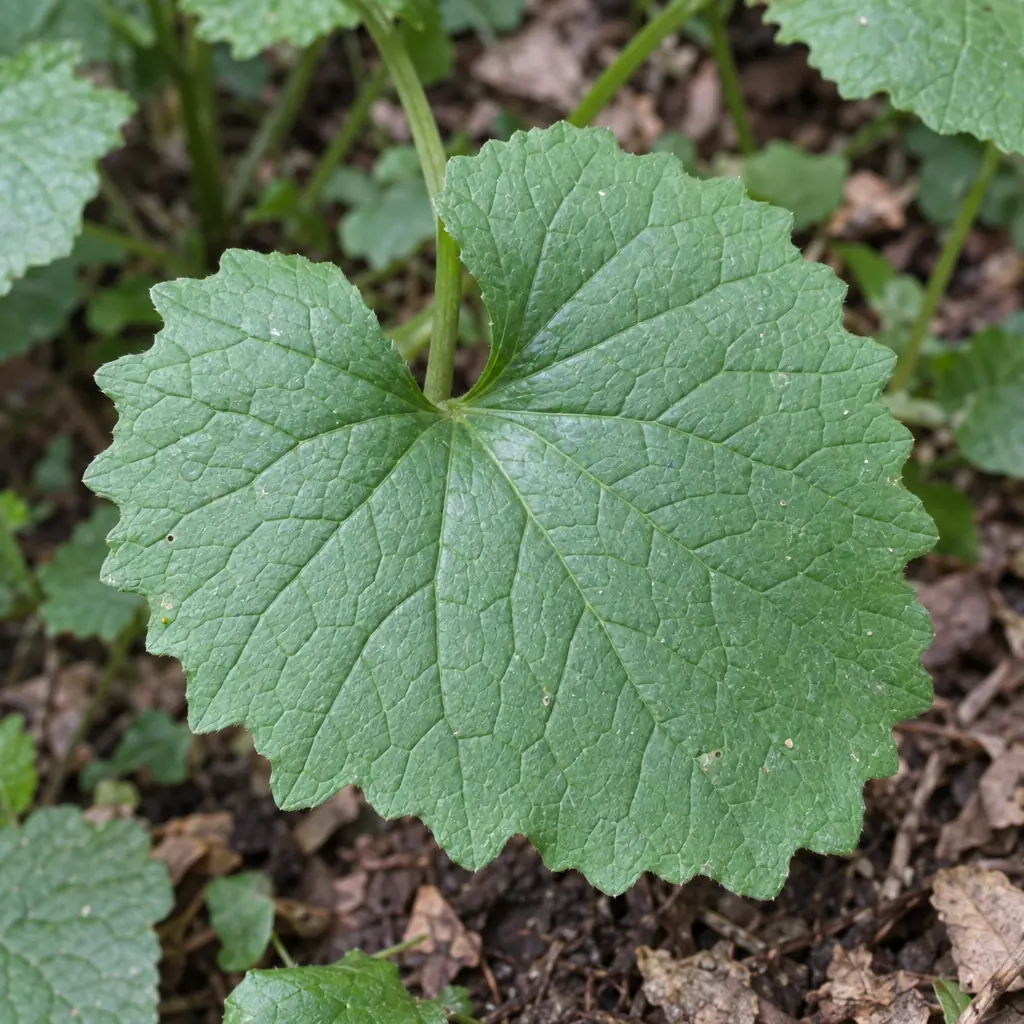
Leaf 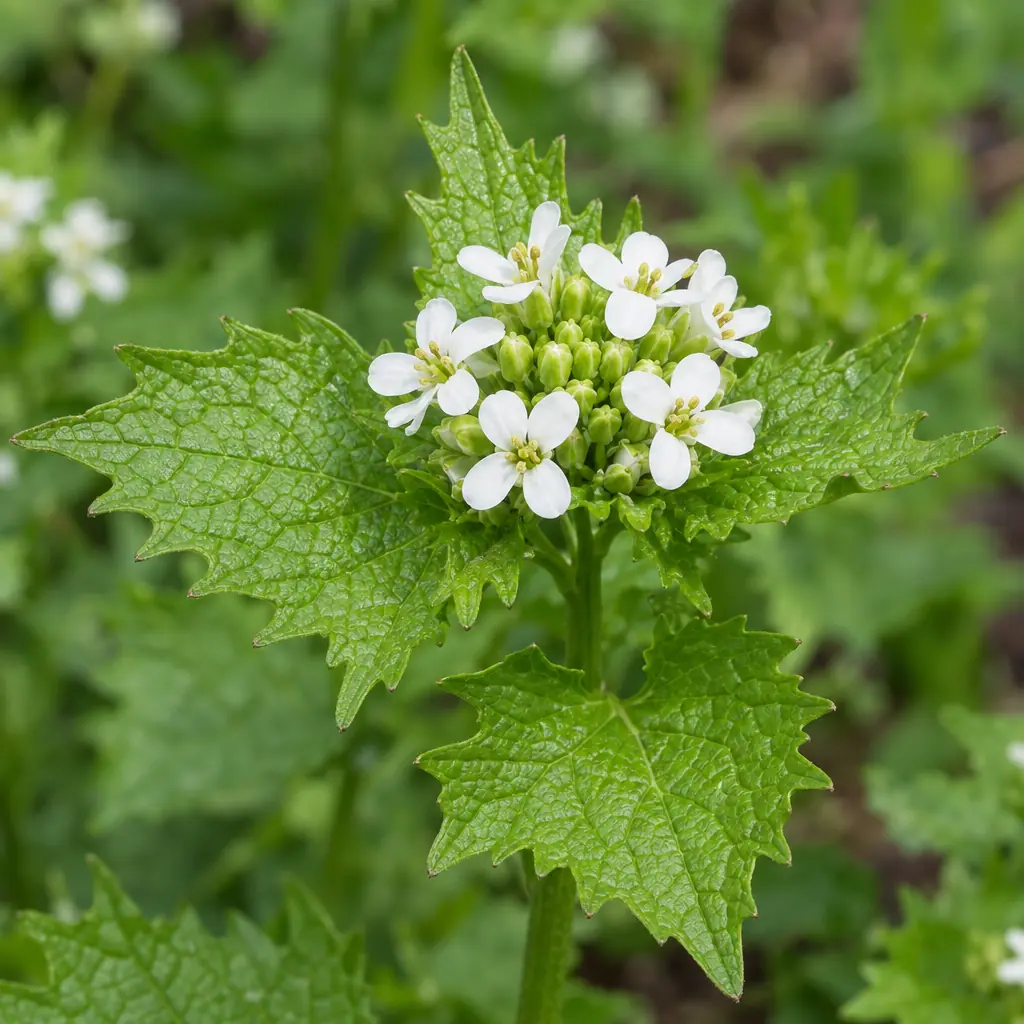
Flower 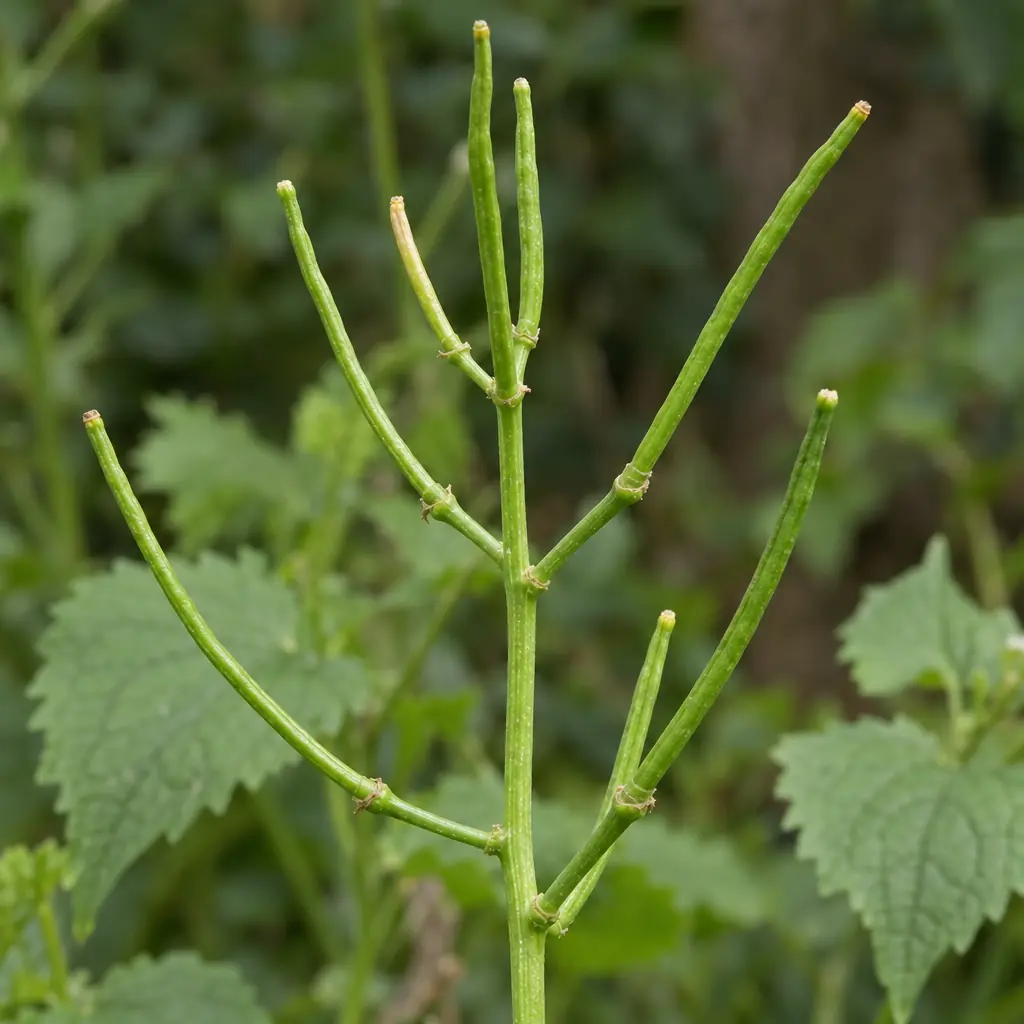
Fruit
How do I recognise garlic mustard?
In the first year you see only a low ring of leaves close to the ground. These leaves are kidney-shaped, with a rounded tip and a long stalk. A leaf rubbed between your fingers smells of garlic or onion.
In the second year upright stems grow from the rosette, mostly without side branches. The leaves on the stem are heart-shaped and pointed, with a wavy, coarsely toothed edge. That leaf looks a little like a nettle leaf, but it is smooth and hairless.
Clusters of white flowers, 3 to 6 millimetres across, sit at the top of the stem. Each flower has four petals in the shape of a cross. The pods come next: thin fruits 2 to 7 centimetres long. They angle upwards on short stalks.
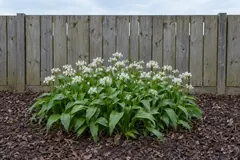
The smell is close to that of wild garlic, but the flower tells the two apart at once. Wild garlic has six white petals in a star, gathered in a round head on a leafless stem. Its leaf is long, oval and pointed.
Where does garlic mustard grow best?
Garlic mustard does best in partial shade or shade. Partial shade means the sun shines directly on the spot for 3 to 6 hours a day around midsummer. The plant likes moist soil that is rich in nutrients, nitrogen above all, and that often contains lime. In the wild it grows along hedges, on woodland edges and beside paths in deciduous woods.
Garlic mustard struggles in these spots:
- A sunny bed on dry sand. The plant prefers light shade and soil that stays moist.
- Poor soil with no manure or fallen leaves. Garlic mustard depends on soil full of nutrients and nitrogen.
In winter the leaves of the young rosettes stay green.
On planting day a plant from a small pot looks tiny. Place a group along the hedge on a plan of your own plot, with the neighbouring houses to scale beside it. The app draws the plant at a grown plant's width, not at pot size.
Planting and caring for garlic mustard
Garlic mustard is sold as seed or as a young plant in a small pot. Sow the seed outdoors, where the plants are to grow. Autumn is the best time for it, because the seed needs the cold of winter before it germinates.
Keep about 40 centimetres between plants, the spread of a grown plant. For the first few weeks the group looks a little thin as a result. In the first spring, water when the weather stays dry for a while.
Pruning is not needed. After flowering, you choose what happens to the stems:
| When | What to do |
|---|---|
| End of June, if you want no seedlings | Cut off the spent stems before the pods split open |
| Summer and autumn, if you do want seedlings | Leave the stems until the seed falls out |
Many birds nest from March until the end of July. If you find a nest in the hedge behind the plants while cutting, leave that spot alone until the young have fledged.
Garlic mustard problems and what to do
The first year brings no flowers. A biennial works that way: garlic mustard flowers only in its second spring.
The plant dies in its second year. Garlic mustard lives for just two years. If you leave the stems, new rosettes come up from their seed.
There are holes in the leaves or the pods. Caterpillars have been feeding. On this plant they can be caterpillars of white butterflies, such as the green-veined white. If you want those butterflies in your garden, let the caterpillars be.
The leaves droop. The soil has dried out too far. Give the plants water, above all in a dry summer.
Garlic mustard turns up all over the garden. The plant seeds itself easily. Pull up young rosettes where you do not want them. Alternatively, cut off the stems before the pods split open. Seed in the soil stays viable for one to five years.
Which insects and birds use garlic mustard?
The orange tip (Anthocharis cardamines) and the green-veined white (Pieris napi) are butterflies that use garlic mustard as a host plant. The orange tip lays its eggs on it and drinks nectar from the flowers. Its caterpillar eats the flowers first and then the young pods, from mid-May to mid-June. For the green-veined white, garlic mustard and cuckooflower are the main host plants.
Caterpillars of the large white, the small white and the garden carpet, a moth, can also live on the plant. No bird that uses garlic mustard has been described by name.
Is garlic mustard poisonous or edible?
As far as is known, garlic mustard is not poisonous. The leaves have long been used in salads and to flavour meat or fish.
The photos on this page were made with AI, based on real photos and descriptions of this plant.
Frequently asked questions
Is garlic mustard poisonous?
No, as far as is known garlic mustard is not poisonous. The young leaves are used in salads and to flavour meat or fish.
How tall does garlic mustard grow?
In the second year the flowering stems reach 15 to 90 centimetres. In the first year the plant stays low, with only a rosette of round leaves.
Does garlic mustard come back every year?
A single plant lives for two years and dies after flowering. If you leave the stems, garlic mustard seeds itself. New rosettes grow from that seed.
How much sun does garlic mustard need?
Not much. Partial shade is enough: the sun shines directly on the spot for 3 to 6 hours a day around midsummer. The plant also grows in the shade under trees.
Is garlic mustard good for butterflies?
Yes. The orange tip and the green-veined white use the plant as a host: their caterpillars feed on it. The orange tip also drinks nectar from the flowers.
Sources (21)
- Duistermaat, Sparrius & Denters, Standaardlijst van de Nederlandse flora 2020 (Gorteria 43)
- NDFF Verspreidingsatlas — Alliaria petiolata
- NDFF Verspreidingsatlas — Allium ursinum (daslook)
- Flora van Nederland — Look-zonder-look
- RHS — Alliaria petiolata (garlic mustard)
- RHS — Shade gardening (definities zon en schaduw)
- PFAF — Alliaria petiolata
- The Wildlife Trusts — Garlic mustard
- Imkerpedia — Drachtplanten
- Pollennieuws / Flora van Nederland — Aandachtspunten hooikoorts vriendelijke tuin
- De Vlinderstichting — Look-zonder-look (waardplant)
- De Vlinderstichting — Oranjetipje
- De Vlinderstichting — Klein geaderd witje
- Vogelbescherming — Snoeien in het broedseizoen, mag dat?
- Minnesota Department of Natural Resources — Garlic mustard
- Tuincentrum Soontiëns — Alliaria petiolata (prijs)
- Ecoflora — Alliaria petiolata (prijs)
- Cruydt-Hoeck — Look-zonder-look (prijs)
- Wikimedia Commons — Leaf: photo by AnRo0002 (CC0)
- Wikimedia Commons — Flower: photo by AnRo0002 (CC0)
- Wikimedia Commons — Fruit: photo by AnRo0002 (CC0)