5 min read
Reed sweet grass: planting and care at the pond edge
Glyceria maxima
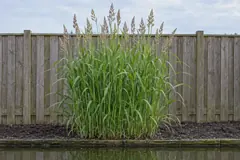
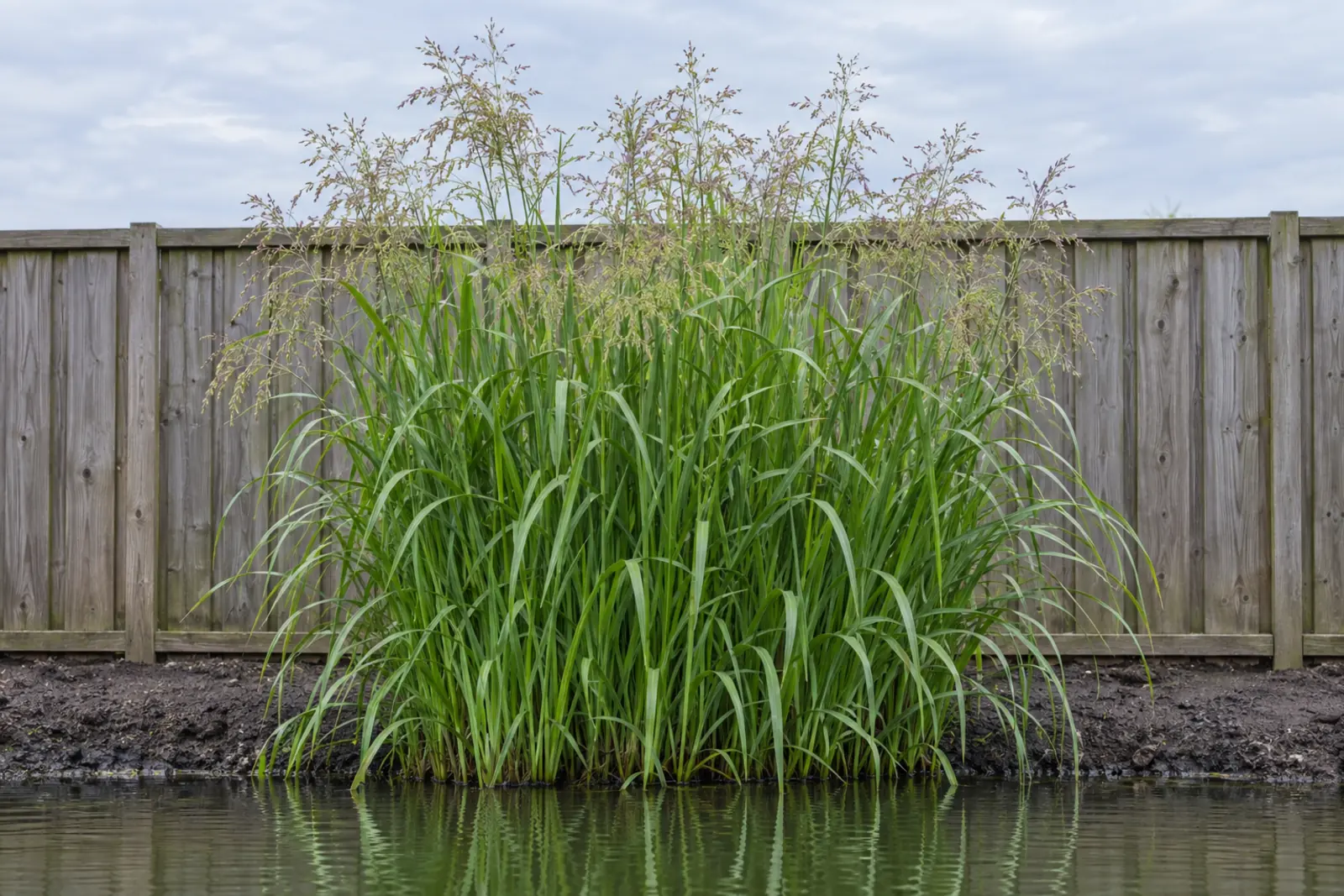
Reed sweet grass (Glyceria maxima) is a sturdy native grass of ditch banks and pond edges. The grass grows 0.9 to 2 metres tall. In July and August, wide flower heads rise above the glossy leaves, golden yellow with some purple. Below ground, thick rhizomes creep for metres. It suits wet soil or shallow water in full sun.
Reed sweet grass at a glance
| Feature | Reed sweet grass |
|---|---|
| Height | 0.9 to 2 m |
| Spread | 1.5 to 2.5 m, and after that it keeps creeping |
| Full grown after | 2 to 5 years |
| Sun | Full sun, sometimes lightly shaded |
| Soil | Wet and rich in nutrients, or shallow water |
| Water | Plenty: the base can stand in water |
| Maintenance | Average: keep it in check and cut it back in autumn |
| Flowers | July and August, golden yellow with some purple |
| For bees | Little: pollinated by the wind, not a known bee plant |
| Hay fever | Very strongly allergenic, July and August |
| Leaves | Drop in autumn: they die back in late autumn |
| Hardy | Yes |
| Native | Yes |
| Poisonous | No: not known to be poisonous |
| Pricks or stings | No |
| Price, young | About €3 to €5 each, loose (sold in tens) or in a small pot |
| Price, grown | Not for sale |
- Leaf
- April to October
- Flower
- July to August
- Fruit
- no noticeable fruit
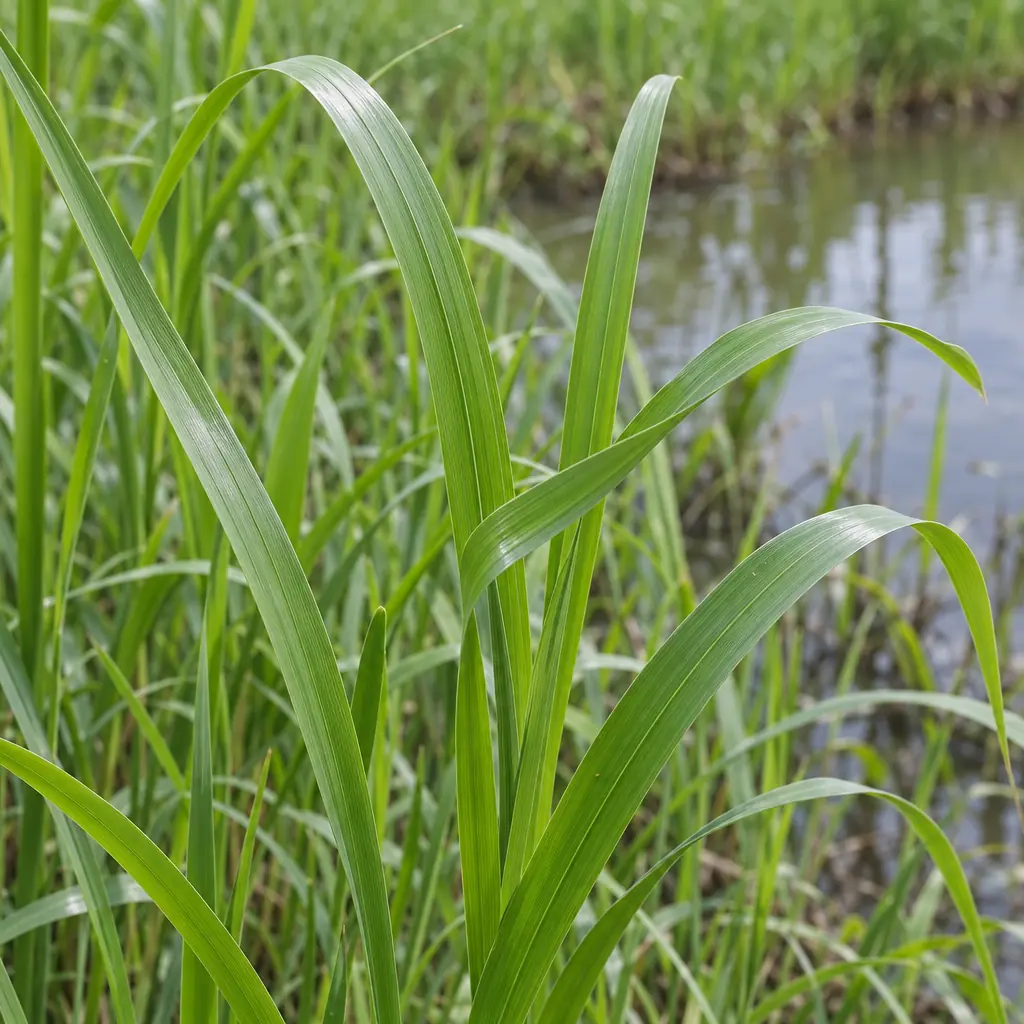
Leaf 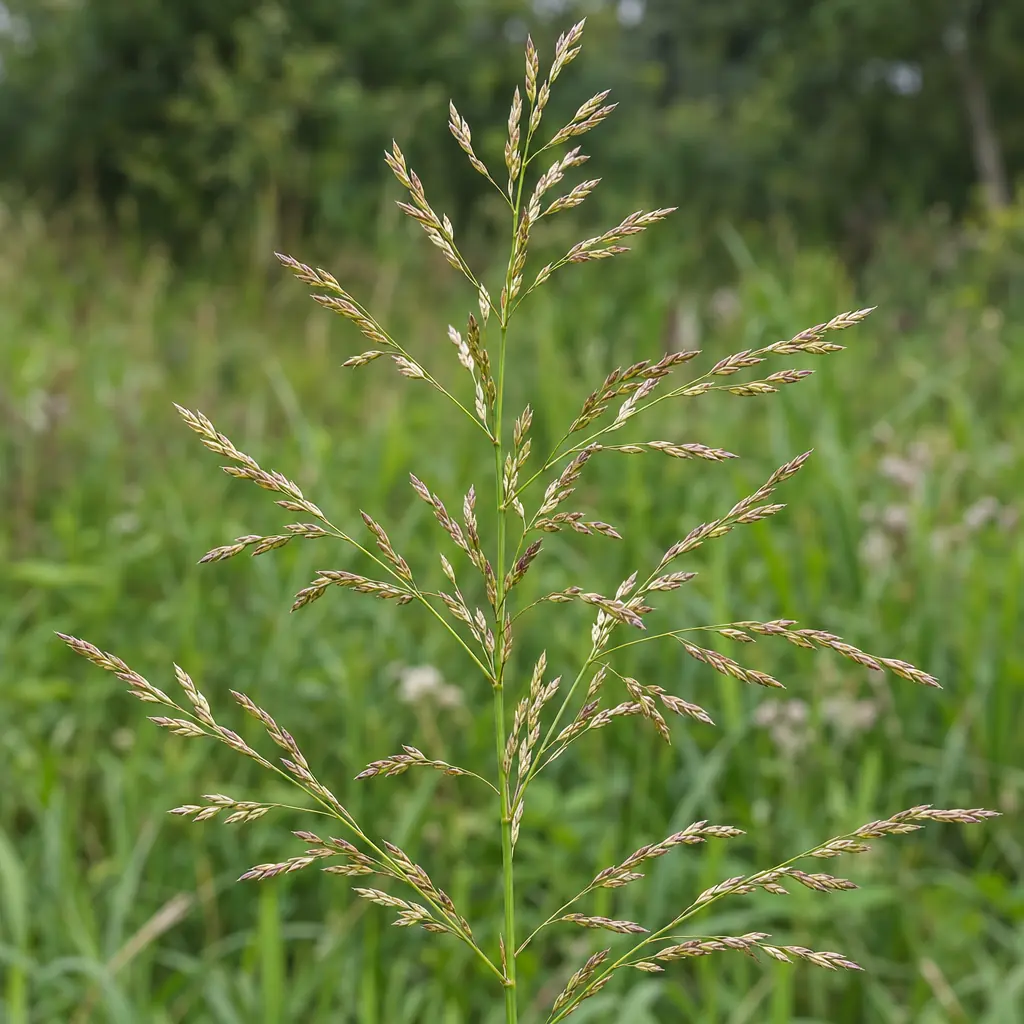
Flower
How do you recognise reed sweet grass?
Start with a leaf. Each blade is 25 to 60 centimetres long and 0.7 to 2 centimetres wide. The tip is shaped like a small hood. On both sides of the midrib runs a sunken strip.
The stems stand firmly upright. Between the nodes, each stem is hollow.
In summer a flower head of 20 to 40 centimetres tops the stem. That head spreads wide open and carries many flowers. Its spikelets hang on thin stalks, with five to seven tiny flowers in each.
Reed canary grass grows along the same ditch banks. Its flower head is narrow and cone-shaped. Take care when you buy: some online shops sell the cultivar 'Variegata' under the Dutch name liesgras. That cultivar has cream-striped leaves, while the wild grass is plain green.
Where does reed sweet grass grow best?
Plant reed sweet grass in full sun: a spot that gets more than six hours of direct sunlight around midsummer. A lightly shaded spot works too. The soil can be wet and rich in nutrients. In a pond, the base can stand in water up to 15 centimetres deep. In the wild the grass grows along ditches, ponds and streams, and in marshes.
Two spots cause trouble:
- A small pond without a basket. The hollow rhizomes grow metres long. Before long the whole edge is full of reed sweet grass.
- An ordinary border. Reed sweet grass needs soil that stays moist all year. A border dries out in summer.
In late autumn the leaves die off. If you do not cut the clump then, dry, straw-coloured stems remain until spring.
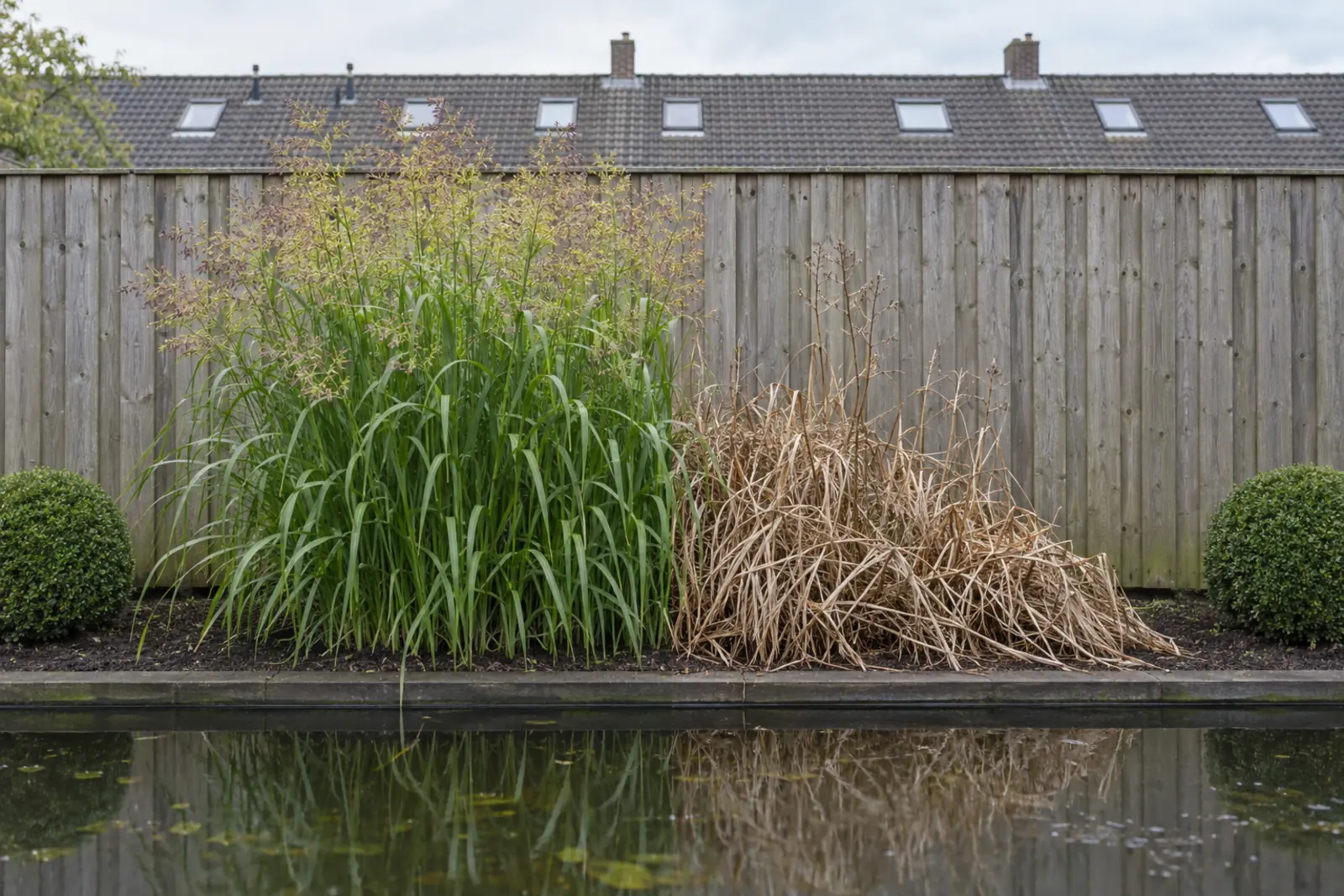 The same pond edge in July and in January, if you leave the clump uncut in autumn. This is a generated image, not a photograph.
In the app you can measure the length of the pond edge on your own plot. That plot comes from the Kadaster, the Dutch cadastre, and appears to scale with the surrounding buildings.
Planting and caring for reed sweet grass
Nurseries sell reed sweet grass as loose plants in tens, or singly in a small pot. One nursery allows 9 plants per square metre. On planting day that looks thin, but the rhizomes fill the gaps. To limit the spread, plant in a pond basket or in a planting area with a fixed edge.
| When | What to do |
|---|---|
| Late autumn | Cut off the dead leaves and stems |
| Every few years, in spring | Divide the clump so it does not get too crowded |
Dividing often falls in the breeding season. Many bird species breed from March through July. So look for a nest in the clump before you dig.
What goes wrong with reed sweet grass?
Reed sweet grass is taking over the pond edge. The rhizomes keep creeping further. Divide the clump in spring and put back only one piece.
The leaves turn brown and dry in summer. The soil has dried out. Move the plant closer to the water, or into a shallow layer of water.
The clump goes brown in November. That is normal, and it is the time to cut.
There are spots or bite marks on the leaves. Pests and diseases rarely touch reed sweet grass. Treatment is almost never needed.
Which insects and birds use reed sweet grass?
Reed sweet grass is a host plant of the double lobed (Apamea ophiogramma). This moth is common and also turns up in gardens. Its other host plant is reed canary grass. From September to May the caterpillar lives inside the stem. The adult moths fly from early June to mid-August.
The caterpillar of another moth, Phragmatiphila nexa, also eats reed sweet grass, besides sedges and floating sweet-grass. That moth is considered to have disappeared from the Netherlands.
No bird has been described by name as using reed sweet grass in a garden.
Is reed sweet grass poisonous or edible?
Reed sweet grass is not on record as poisonous to people. An edible part of this grass has not been described either.
The photos on this page were made with AI, based on real photos and descriptions of this plant.
Frequently asked questions
How tall does reed sweet grass grow?
Reed sweet grass grows 0.9 to 2 metres tall. The flower heads sit at the top of the stems, above the leaves.
How do you stop reed sweet grass taking over a pond?
Plant it in a pond basket or in a planting area with a fixed edge. Divide the clump every few years in spring, so it does not get too crowded.
When do you cut back reed sweet grass?
In late autumn, once the leaves have died off. Cut off the dry leaves and stems at that point.
What is the difference between reed sweet grass and the variegated form?
Variegated reed sweet grass is the cultivar 'Variegata', whose leaves carry cream stripes. Wild reed sweet grass has plain, glossy green leaves.
Is reed sweet grass a problem for hay fever?
Reed sweet grass pollen is very strongly allergenic, as is the pollen of every grass. The pollen is in the air while the grass flowers, in July and August.
Sources (23)
- Duistermaat, Sparrius & Denters, Standaardlijst van de Nederlandse flora 2020 (Gorteria 43)
- NDFF Verspreidingsatlas — Glyceria maxima
- Wilde planten in Nederland en België — Liesgras
- Flora van Nederland — Liesgras
- Wilde planten in Nederland en België — Rietgras
- RHS — Glyceria maxima (reed sweet grass)
- RHS — Glyceria maxima var. variegata
- RHS — Ornamental grasses: cutting back
- RHS — Shade gardening (definities zon en halfschaduw)
- Imkerpedia — Drachtplanten
- Wageningen UR — Stuifmeel, in de serie over bijenproducten
- Pollennieuws / Flora van Nederland — Aandachtspunten hooikoorts vriendelijke tuin
- De Vlinderstichting — Liesgras (waardplant)
- De Vlinderstichting — Moeras-grasuil
- De Vlinderstichting — Liesgrasboorder
- Vogelbescherming — Snoeien in het broedseizoen, mag dat?
- Biovijver — Liesgras
- Vijverkenner — Glyceria maxima (prijs en plantdichtheid)
- Vijverplanten webshop — Liesgras (prijs)
- Bakker — Liesgras (Glyceria maxima variegata)
- Directplant — Liesgras (Glyceria maxima 'Variegata')
- Wikimedia Commons — Leaf: photo by Harry Rose from South West Rocks, Australia (CC BY 2.0)
- Wikimedia Commons — Flower: photo by Harry Rose from South West Rocks, Australia (CC BY 2.0)