6 min read
Rosebay Willowherb: Planting, Care and Keeping It in Check
Chamaenerion angustifolium
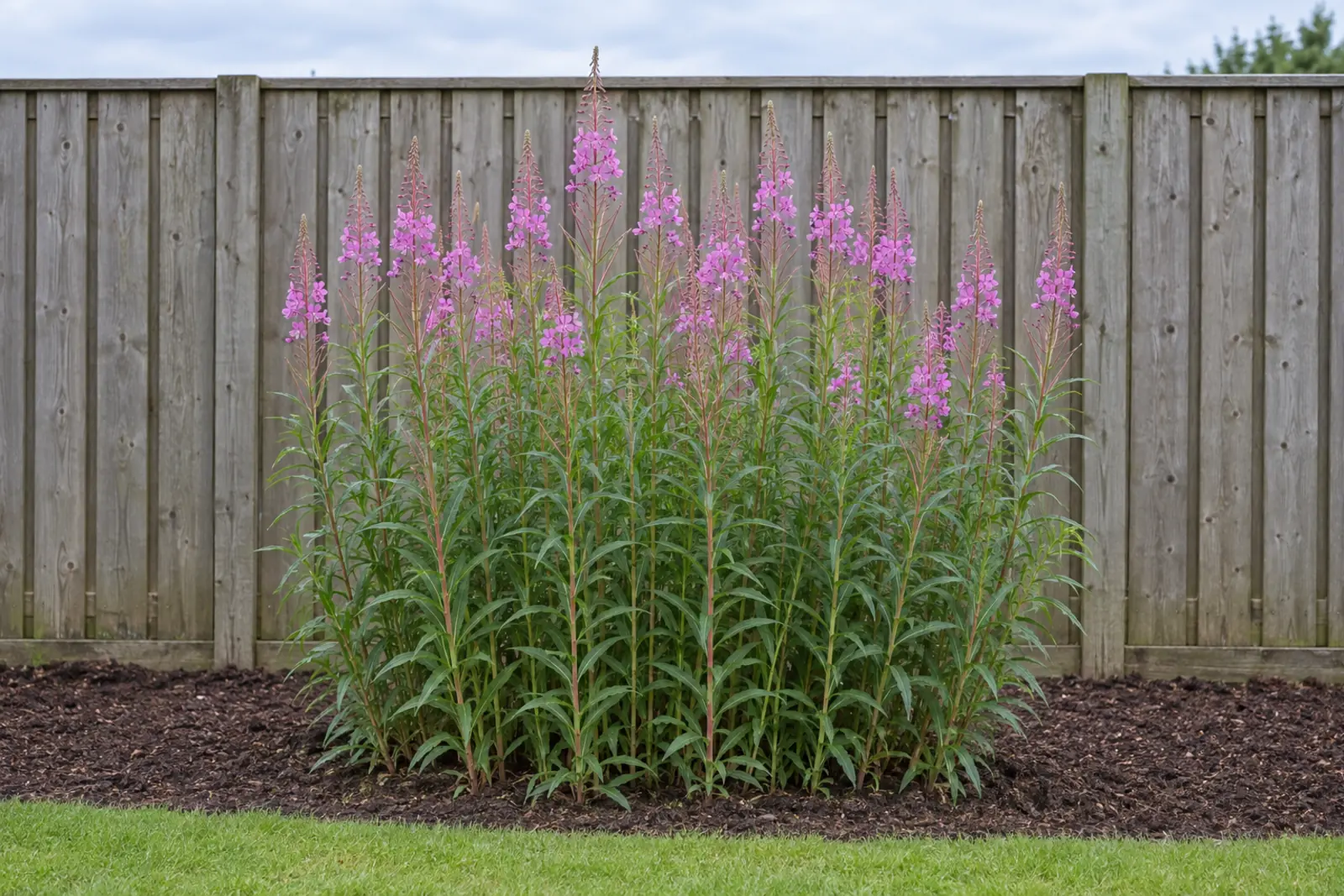
Rosebay willowherb (Chamaenerion angustifolium) is a native perennial that grows 30 centimetres to a metre and a half tall. From July to September it carries long spikes of pink to purplish-red flowers. The plant wants full sun or partial shade and an open spot. Underground roots turn one plant into a clump fast.
Rosebay willowherb at a glance
| Feature | Rosebay willowherb |
|---|---|
| Height | 0.3 to 1.5 m |
| Spread | 1.5 to 2.5 m, spreads |
| Full grown after | 2 to 5 years |
| Sun | Full sun to partial shade |
| Soil | Sand, loam or peat; dug-over ground is fine |
| Water | Average: not too dry, not too wet |
| Maintenance | Low: cut back spent spikes and dead stems |
| Flowers | July to September, pink to purplish red |
| For bees | Yes: plenty of nectar and pollen, July to September |
| Hay fever | Not or weakly allergenic |
| Leaves | Drop in autumn: the plant dies back above ground in winter |
| Hardy | Yes |
| Native | Yes |
| Poisonous | No: not known to be poisonous |
| Pricks or stings | No |
| Price, young | About €3.90 to €4.50 per plant, young in a small pot |
| Price, grown | Not for sale |
- Leaf
- April to October
- Flower
- July to September
- Fruit
- August to October
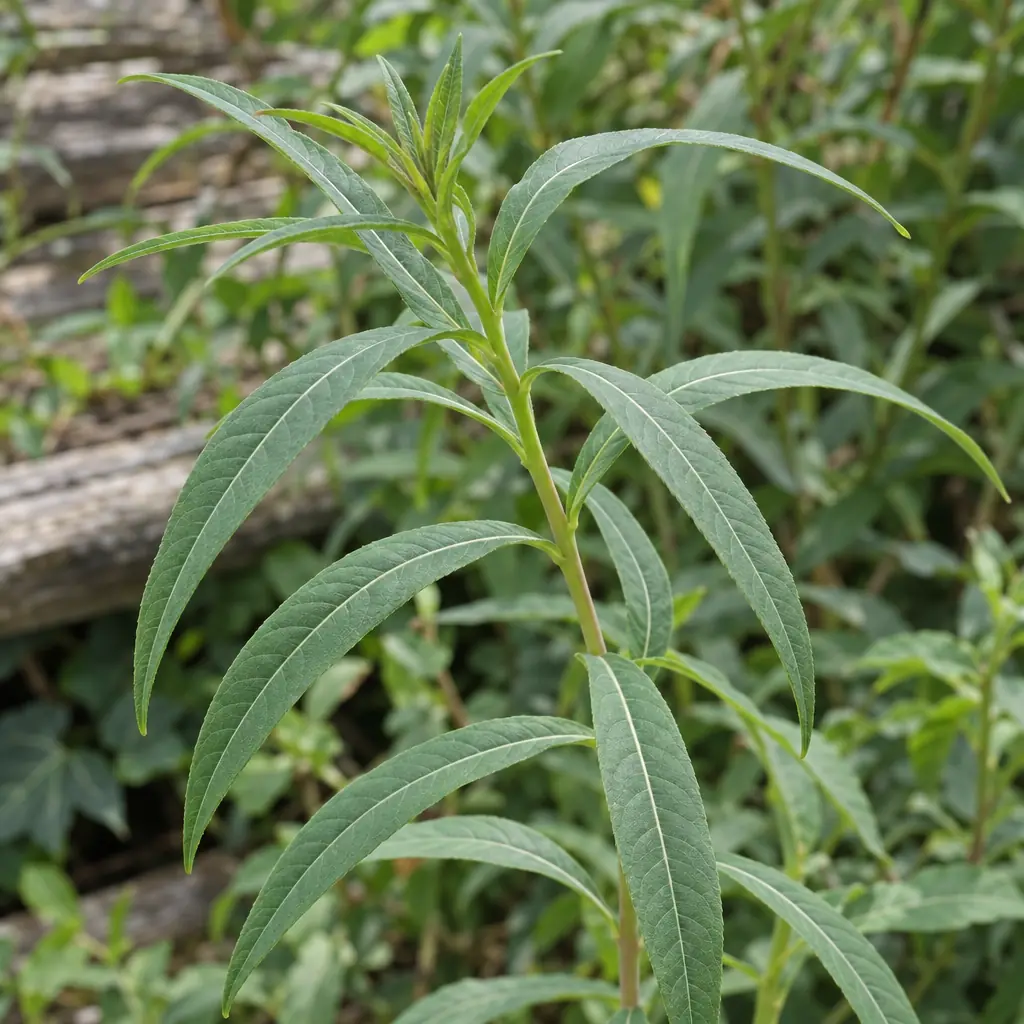
Leaf 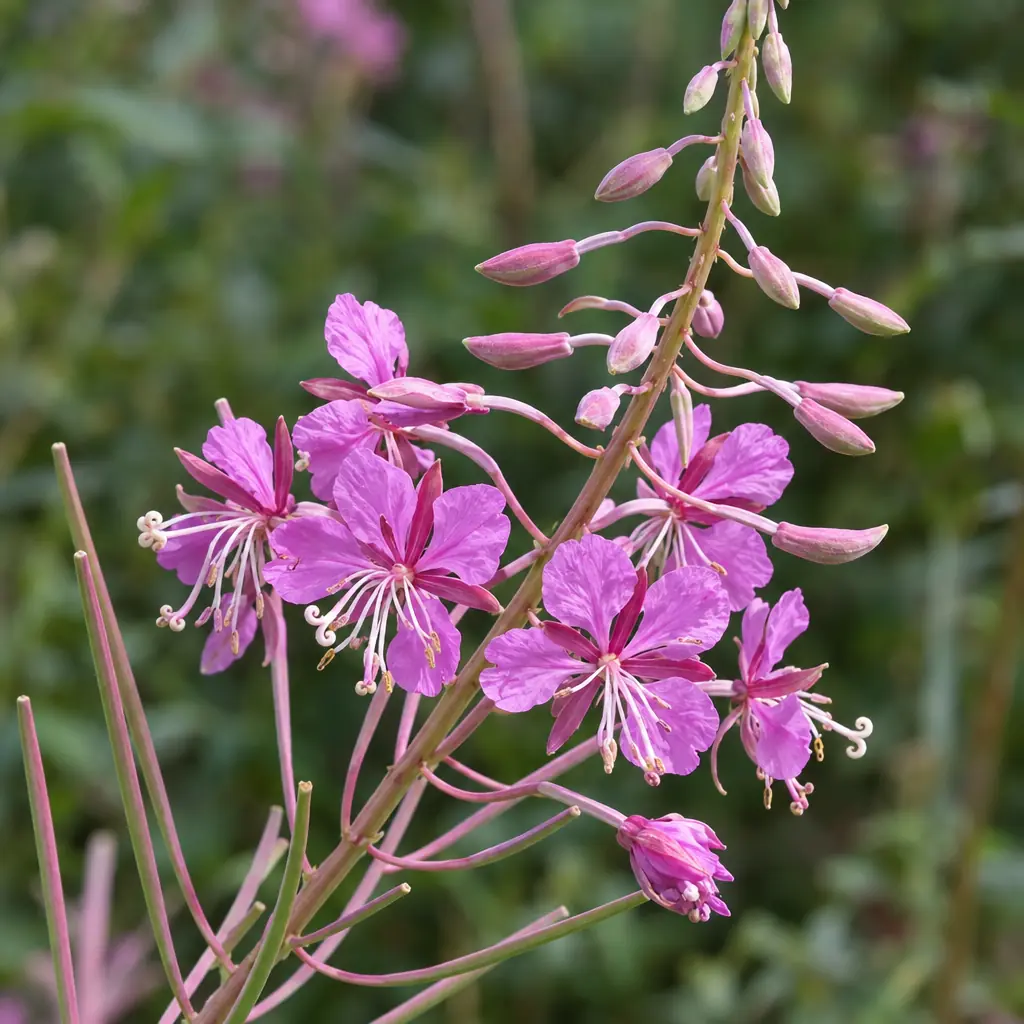
Flower 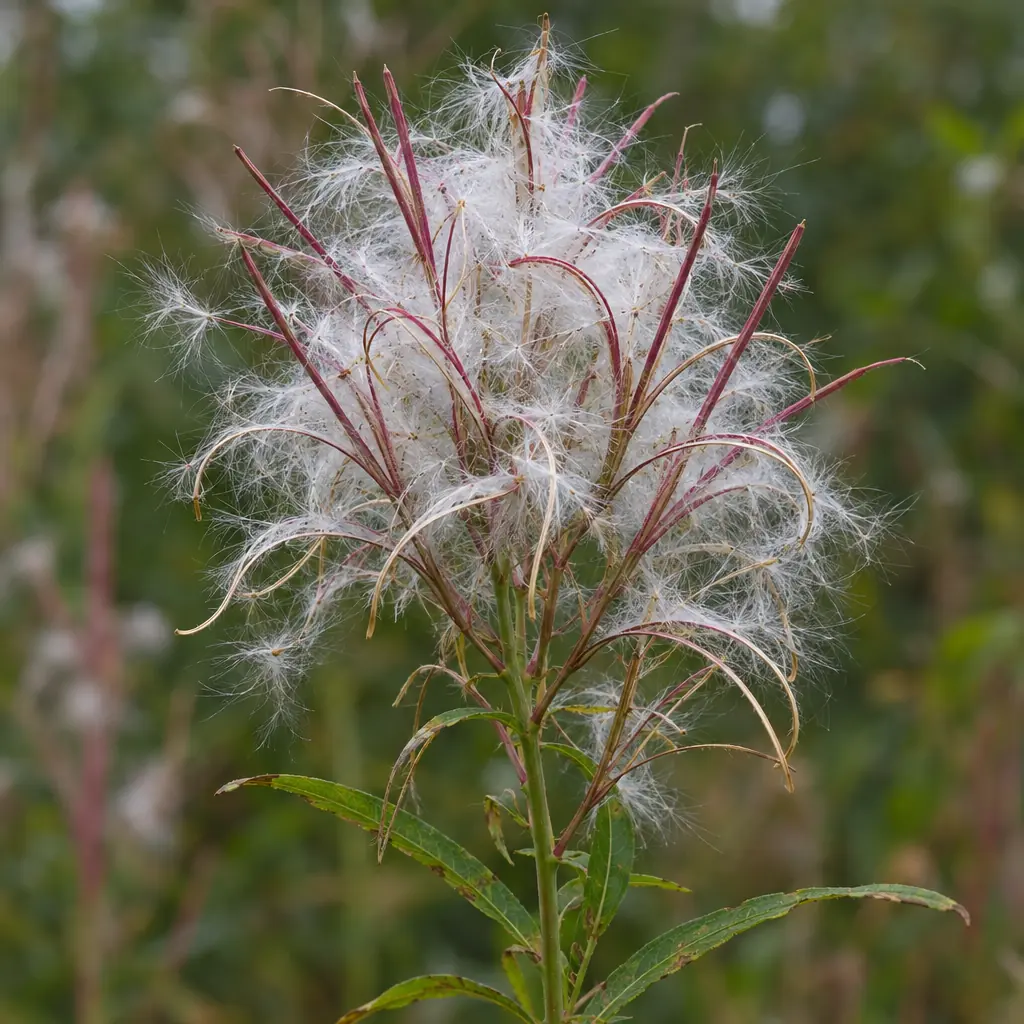
Fruit
How do you recognize rosebay willowherb?
Look at the leaves first. Each leaf is long and narrow and looks a lot like willow leaves. The leaves stand singly on the stem, in a spiral going up. The edge is smooth or very lightly toothed. The stems stand upright, are almost bare, and have blunt edges.
At the top of the stem sits a long spike that tapers to a point. The flowers open from the bottom up. Each flower is 2 to 3 centimetres across and has four petals. The top two have a different shape from the bottom two. During flowering the flower tilts sideways. A white flower occurs, but rarely.
After flowering, long, thin fruits grow. When these split open, the seed drifts away on white fluff.
Great willowherb looks similar, with purplish-red flowers of the same size. On that species the leaves stand in pairs, opposite each other. They are hairy and have an irregularly toothed edge. Its flowers sit in a spike with small leaves between them.
Where does rosebay willowherb grow best?
Full sun suits rosebay willowherb best: more than six sun hours a day around midsummer. Partial shade, with three to six sun hours, also works. The soil can be sand, loam or peat. The plant is fine with dug-over ground. In the wild, rosebay willowherb turns up along woodland edges, on clearings and on burnt ground.
Rather avoid rosebay willowherb in:
- A narrow border full of other perennials. The rhizome creeps between the other plants and forms dense clumps there.
- A spot next to the vegetable patch or a gravel path. The seed blows far on the slightest breeze and germinates fast on bare soil.
In autumn, rosebay willowherb dies back above ground. Cutting the dead stems away leaves bare soil until spring. Leaving them until March keeps height in the border through winter, and lets animals find food and shelter there.
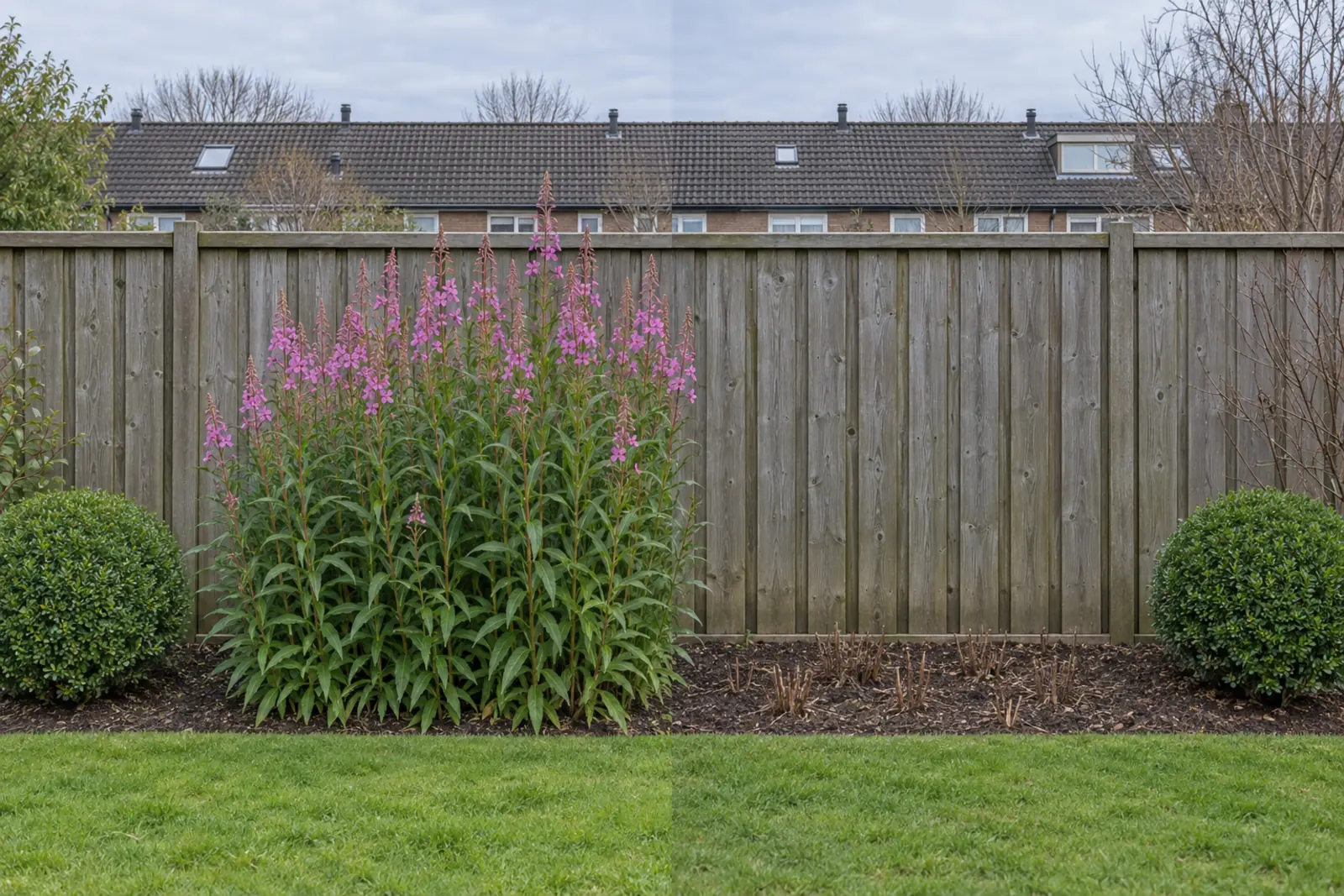 The same border in July and in January, with the dead stems cut back. This is a generated image, not a photo.
A clump soon becomes two metres wide. The app puts your own plot to scale, with the houses around it, so before you start digging you can see whether there is that much room free next to your terrace.
Planting and care
Plant in spring, from March to early May, or from late September through October. Nurseries sell rosebay willowherb as a young plant in a small pot, and as seed. A potted plant can go in the ground year round, except in frost or on waterlogged soil. Make the planting hole no deeper than the rootball, so only the roots end up below ground. Water in well straight away, even if rain is on the way. In the first year the plant needs regular water.
One plant is enough for a spot a metre and a half wide. On planting day that looks far too generous. Yet the rhizome often grows a metre in a single year.
| When | What you do |
|---|---|
| After flowering, before the fluff comes loose | Cut off spent flower spikes, so the plant self-seeds less |
| From March | Cut last year's dead stems back close to the ground |
The nesting season runs from March through July for many birds. Many species keep nesting into August. If there is a nest among the stems, wait before cutting.
What can go wrong?
Small plants pop up everywhere. That is seed that has blown away. Hoe out the seedlings just below their leaf rosette. The seed does not live long: after a year and a half it germinates much worse.
The clump creeps into the border. The roots sit shallow. With a spading fork you can dig out even an old clump fairly easily.
Few flowers appear. If the clump stands in partial shade, move part of it in spring or autumn to a spot in full sun.
The leaves are eaten. Many insects eat from the leaves, such as the caterpillars of moths. Beyond that, rosebay willowherb rarely suffers from pests or disease.
What do birds and insects get from it?
Rosebay willowherb is a host plant for nine species of moth, such as the bordered sallow and the white-banded carpet. For the caterpillars of the bedstraw hawk-moth it is the most important plant in the Netherlands.
The caterpillar of the elephant hawk-moth also feeds mainly on rosebay willowherb. You can see this caterpillar from June to October. It feeds at night, but on fine afternoons it sometimes rests on a stem, where it stands out well.
Among birds, the bullfinch eats, among other things, the seeds of rosebay willowherb.
Is it poisonous or edible?
No poisoning risk is known from rosebay willowherb. Whether you can eat part of it is a separate question. The young shoots are cooked and eaten, among other things, as a substitute for asparagus. The roots, older stems and older leaves contain compounds that taste sharp or peppery.
The photos on this page were made with AI, based on real photos and descriptions of this plant.
Frequently asked questions
How tall does rosebay willowherb grow?
Usually 30 centimetres to a metre and a half. A clump becomes a metre and a half to two and a half metres wide and can spread further after that.
Does rosebay willowherb take over a garden?
Yes, the plant spreads by its roots and by seed that blows far on the wind. Cut off the spent flower spikes before they turn fluffy, and fork out runners with a spading fork.
How much sun does rosebay willowherb need?
Full sun works best: more than six sun hours a day around midsummer. Partial shade, with three to six sun hours, also works.
Is rosebay willowherb poisonous?
No, rosebay willowherb is not known to be poisonous. Whether you can eat part of it is a separate question: among other things, the young shoots of this plant are cooked and eaten.
Which butterflies and moths visit rosebay willowherb?
Nine species of moth use the plant as a host plant. For the bedstraw hawk-moth it is the most important plant in the Netherlands, and the caterpillar of the elephant hawk-moth also feeds mainly on rosebay willowherb.
Sources (24)
- Duistermaat, Sparrius & Denters, Standaardlijst van de Nederlandse flora 2020 (Gorteria 43)
- NDFF Verspreidingsatlas — Wilgenroosje
- NDFF Verspreidingsatlas — Harig wilgenroosje
- Flora van Nederland — Wilgenroosje
- RHS — Chamaenerion angustifolium
- RHS — Willowherbs (rosebay willowherb)
- RHS — Shade gardening (definities zon en schaduw)
- RHS — Perennials: planting
- RHS — Perennials: cutting back
- PFAF — Chamaenerion angustifolium
- Pollennieuws / Flora van Nederland — Aandachtspunten hooikoorts vriendelijke tuin
- Imkerpedia — Drachtplanten
- Antigifcentrum — Weinig of niet giftige planten
- De Vlinderstichting — Wilgenroosje
- De Vlinderstichting — Walstropijlstaart
- De Vlinderstichting — Groot avondrood
- Vogelbescherming — Goudvink
- Vogelbescherming — Snoeien in het broedseizoen, mag dat?
- Kwekerieje — Wilgenroosje (prijs)
- De Cruydt-Hoeck — Wilgenroosje (prijs)
- Ecoflora — Wilgenroosje (prijs)
- Wikimedia Commons — Leaf: photo by AnRo0002 (CC0)
- Wikimedia Commons — Flower: photo by AnRo0002 (CC0)
- Wikimedia Commons — Fruit: photo by Karora (CC BY 4.0)