5 min read
Soft rush: identification, planting, care and price
Juncus effusus
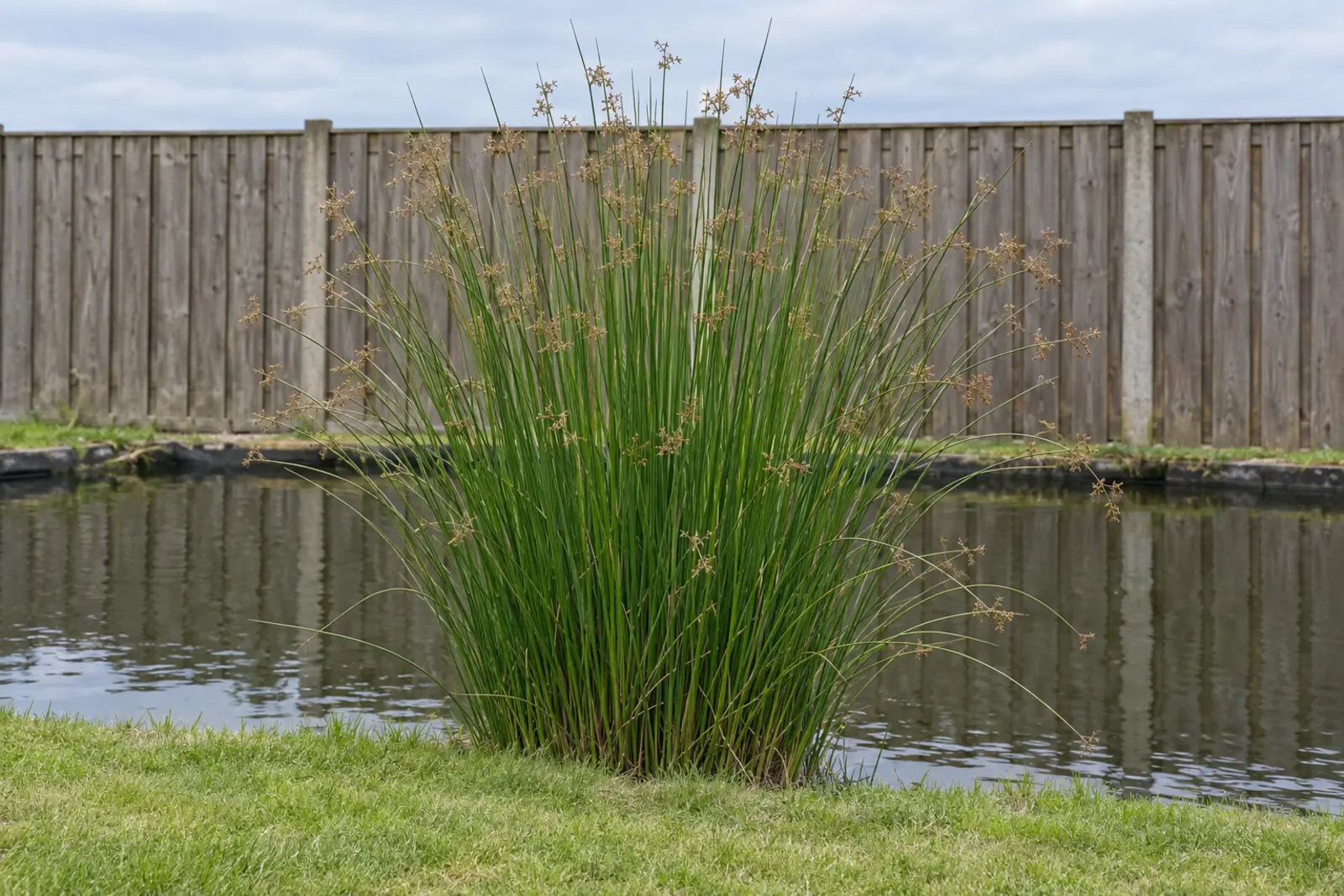
Soft rush (Juncus effusus) is a native rush, not a grass. It forms dense tufts of smooth, glossy green stems 20 centimetres to 1 metre tall. Small brown flowers appear on the side of the stems in summer. Plant soft rush in wet, acid soil, at the edge of a pond or in a waterlogged corner.
Soft rush at a glance
| Feature | Soft rush |
|---|---|
| Height | 0.2 to 1 m, sometimes 1.4 m |
| Spread | 0.5 to 1 m |
| Full grown after | 2 to 5 years |
| Sun | Full sun to partial shade |
| Soil | Wet to moist, preferably acid |
| Water | Plenty: the soil must not dry out |
| Maintenance | Low: remove old stems in spring |
| Flowers | June to August, brown, inconspicuous |
| For bees | Little: the wind pollinates the flowers, not a known bee plant |
| Hay fever | Unknown |
| Leaves | Stay green |
| Hardy | Yes |
| Native | Yes |
| Poisonous | No, as far as is known |
| Pricks or stings | No |
| Price, young | About €4.95 to €8.95 each, in a small pot |
| Price, grown | About €9 to €10 each, in a pond basket, from 3 plants |
- Leaf
- all year
- Flower
- June to August
- Fruit
- August to January
Leaf 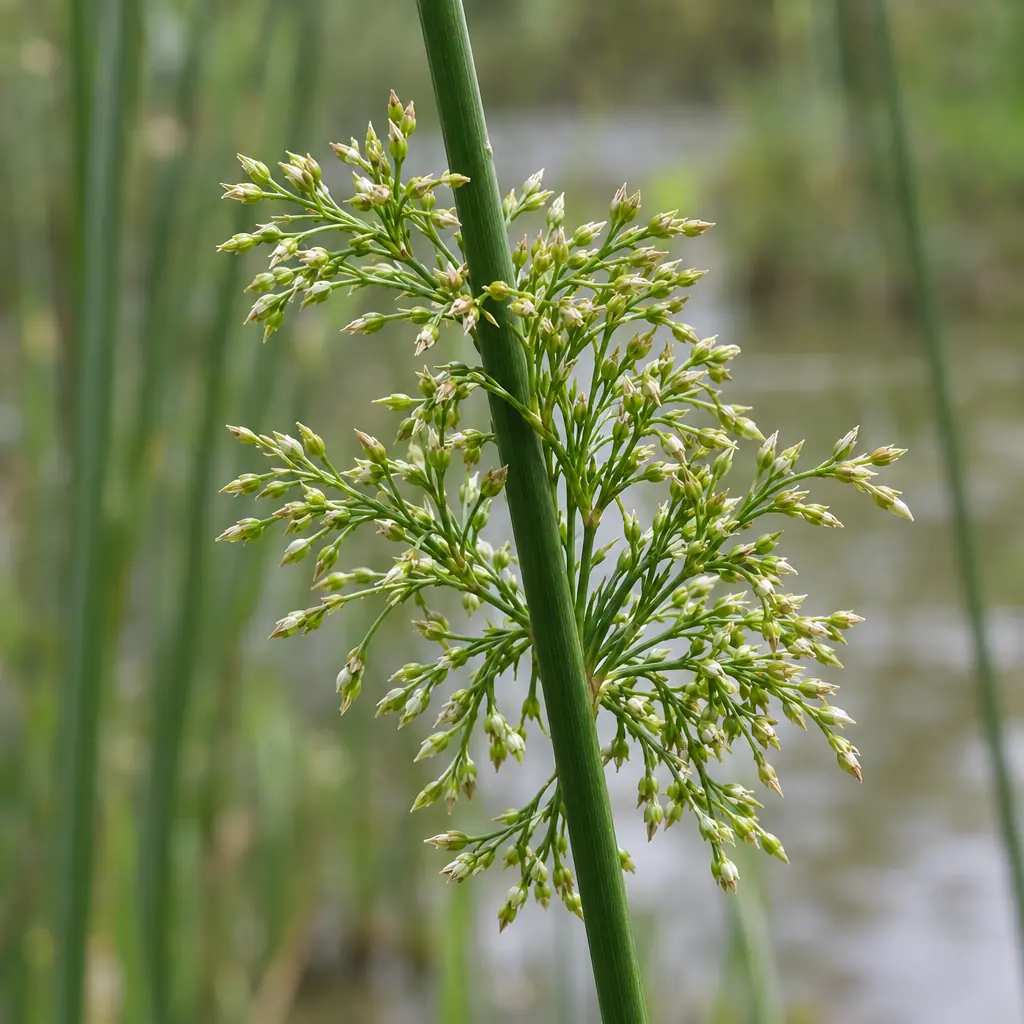
Flower 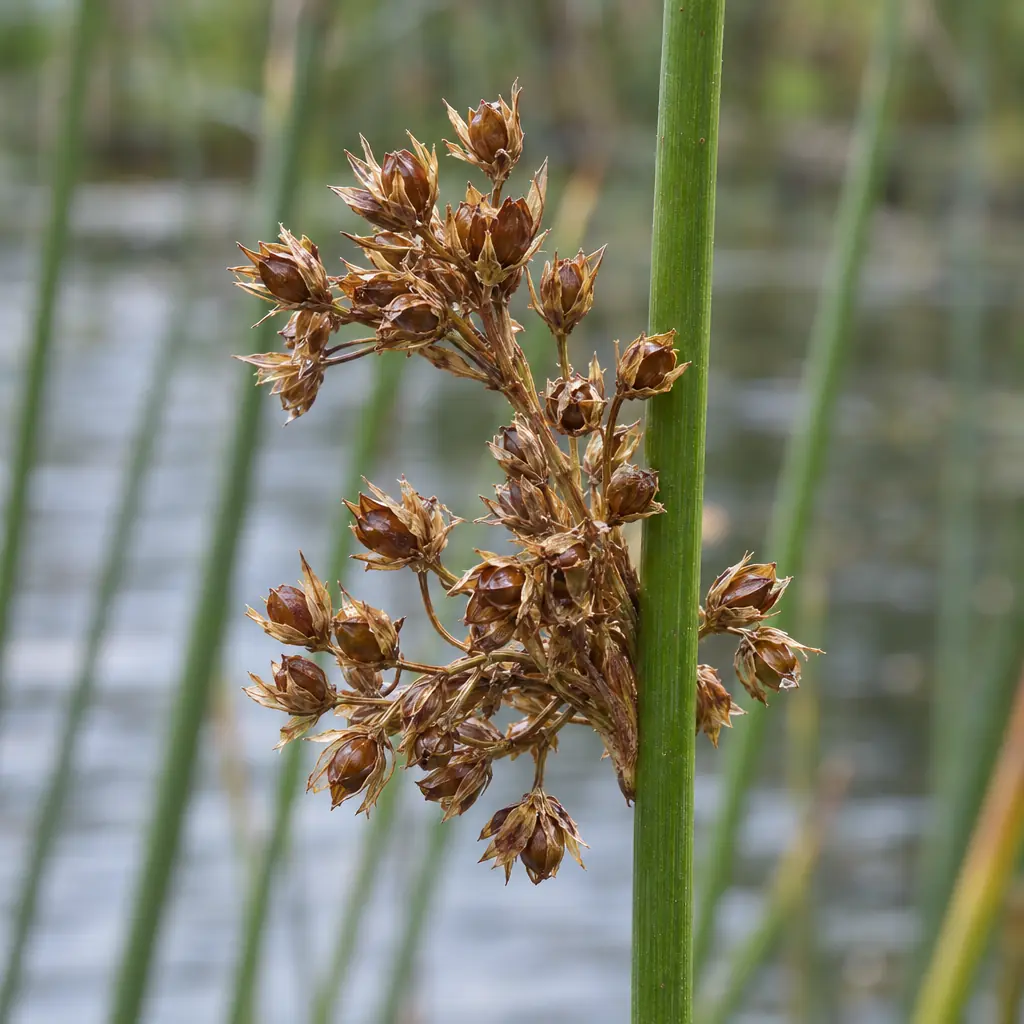
Fruit
How do you recognise soft rush?
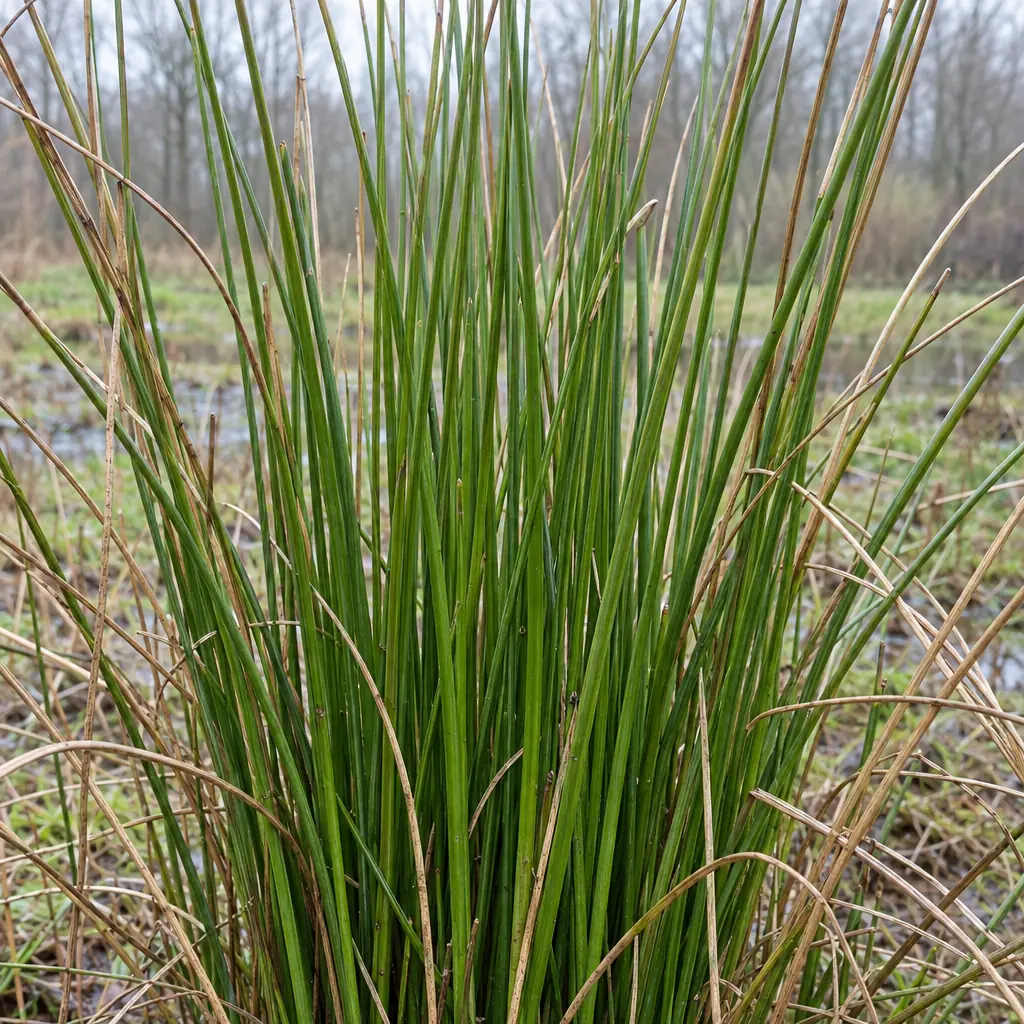
Look at the stems first. They are round, smooth and a glossy bright green. Pinch one open and you find white, spongy pith that runs through without a break. Soft rush usually has no leaf blade. At the base there are only red-brown to black-brown sheaths, small tubes wrapped around the stem.
The flowers are small, with six brown petals and usually three stamens. They sit in a loose cluster that seems to grow out of the side of the stem. The green part above it is a bract that carries on exactly like the stem. Small seed capsules follow the flowers, glossy brown to greenish.
Two plants look like it. Compact rush (Juncus conglomeratus) has grooved, dull blue-green stems, and you can feel the grooves with a fingernail. Its flowers sit in a tight little knob. Garden centres also sell corkscrew rush, a cultivated form with stems that twist like a corkscrew. Wild soft rush has straight stems.
Where does soft rush grow best?
Soft rush grows in full sun and in partial shade. Partial shade means three to six hours of direct sun a day around midsummer. The soil must stay moist at all times, preferably acid and fairly heavy, such as clay or loam. In the wild, soft rush grows along ditches, in marshes, in wet meadows and beside woodland paths. It also comes up in gardens and between paving stones.
Soft rush struggles in these places:
- A border that dries out in summer. The roots need to stay wet all the time, and a dry border does not hold on to that moisture.
- The deep middle of a pond. This rush belongs on the shallow edge, not in deep water.
Soft rush stays green through winter. In January a clump is still a green tuft at the water's edge.
The app puts your own plot on a plan to scale, with the buildings around it. On that plan you measure for yourself whether the pond edge has room for a clump a metre wide.
Planting and caring for soft rush
Nurseries sell soft rush as a young plant in a small pot, sometimes in a pond basket. Take off the nursery pot and plant the root ball as it is. Put it on the edge of the pond, with at most 10 centimetres of water above the roots, or in wet ground right beside it.
For separate clumps, leave half a metre to a metre between plants. That is how wide a full-grown clump gets. On planting day the gaps look bare, but the space fills in on its own. For a dense bank, nurseries plant nine per square metre. Keep the soil from drying out in the first summer.
| When | What to do |
|---|---|
| Spring | Remove dead stems and old flower stems |
| Mid-spring to early summer | Divide a clump that has grown too big |
Many bird species breed from March through July. Before you work on a clump in those months, check for a nest between the stems.
What goes wrong with soft rush?
The stems turn brown and limp. The soil has become too dry. Water thoroughly, or move the plant closer to the water.
Young soft rush plants come up everywhere. The plant seeds itself. Its seed travels on the wind, or sticks to animals like a burr. Pull out the seedlings young wherever you do not want them.
In winter part of the clump turns the colour of straw. Those are old stems. Cut them away in spring, and the green heart stays.
You see hardly any flowers. The flowers are small and inconspicuous. That is normal for soft rush, and nothing needs doing.
There are spots or small creatures on it. Soft rush rarely suffers from pests or diseases. Usually you can leave it alone.
Which insects and birds use soft rush?
The caterpillar of the red sword-grass (Xylena vetusta), a moth, feeds on soft rush among other plants. Its other food plants include bog myrtle, yellow iris and heather. This moth is rare in the Netherlands and only turns up now and then. The provisional Dutch Red List classes it as critically endangered. Which birds and other insects use soft rush is not well described for this species.
Is soft rush poisonous or edible?
Soft rush is not known to be poisonous. That does not mean the plant is edible.
The photos on this page were made with AI, based on real photos and descriptions of this plant.
Frequently asked questions
How tall does soft rush grow?
Soft rush usually grows 20 centimetres to 1 metre tall, sometimes 1.4 metres. A full-grown clump is half a metre to a metre wide.
How deep do you plant soft rush in a pond?
On the shallow edge, with at most 10 centimetres of water above the roots. Wet ground right beside the pond works too.
When do you cut back soft rush?
In spring. Remove the dead stems and the old flower stems then, and leave the green heart of the clump.
Does soft rush spread?
Soft rush can spread, mainly by seed. Watch for young seedlings and pull them out where you do not want them.
Is soft rush poisonous?
Soft rush is not known to be poisonous. That does not mean the plant is edible.
Sources (20)
- Duistermaat, Sparrius & Denters, Standaardlijst van de Nederlandse flora 2020 (Gorteria 43)
- NDFF Verspreidingsatlas — Juncus effusus
- Heukels' Flora van Nederland (Naturalis) — Juncus effusus
- Flora van Nederland — Pitrus
- Flora van Nederland — Biezenknoppen
- Wilde planten in Nederland en België — Pitrus
- RHS — Juncus effusus (common rush)
- RHS — Juncus effusus f. spiralis (corkscrew rush)
- RHS — Shade gardening (definities zon en halfschaduw)
- Imkerpedia — Drachtplanten
- De Vlinderstichting — Houtkleurige vlinder
- Vogelbescherming — Snoeien in het broedseizoen, mag dat?
- Antigifcentrum — Lijst van weinig of niet giftige planten
- Vijverkenner — Juncus effusus (prijs, plantdiepte)
- Bakker — Pitrus (prijs)
- Directplant — Pitrus (prijs)
- Biovijver — Pitrus (planten)
- Wikimedia Commons — Leaf: photo by AnRo0002 (CC0)
- Wikimedia Commons — Flower: photo by AnRo0002 (CC0)
- Wikimedia Commons — Fruit: photo by AnRo0002 (CC0)