5 min read
Sweet briar: the wild rose with apple-scented leaves
Rosa rubiginosa
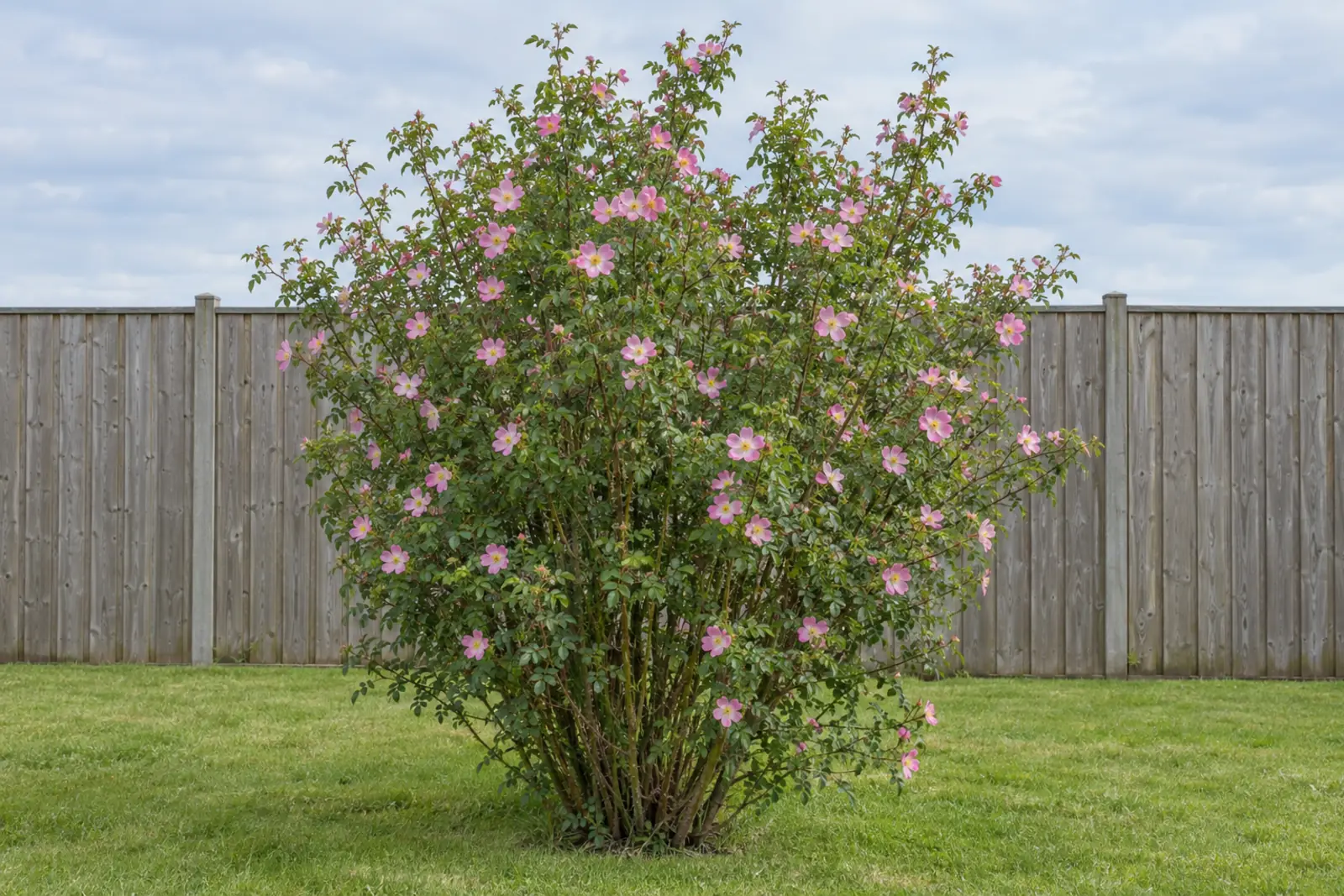
Sweet briar (Rosa rubiginosa) is a wild rose native to the Netherlands that grows up to 3 metres tall. From June to August the shrub flowers pink, with five petals per flower. Red hips follow and last into winter. Rub a leaf and you smell apple. Sweet briar wants sun and dry soil, ideally rich in lime.
Sweet briar at a glance
| Feature | Sweet briar |
|---|---|
| Height | Up to 3 m |
| Spread | 1.5 to 2.5 m |
| Full grown after | 5 to 10 years |
| Sun | Full sun to partial shade |
| Soil | Dry to moist, preferably with lime |
| Water | Little: copes with dry soil |
| Maintenance | Low: take out an old branch now and then |
| Flowers | June to August, pink |
| For bees | Yes: plenty of pollen, June to August |
| Hay fever | Not or weakly allergenic |
| Leaves | Drop in autumn |
| Hardy | Yes |
| Native | Yes |
| Poisonous | No |
| Pricks or stings | Yes: prickles |
| Price, young | About €1.84 (buying 10) to €3.20 each, 60-100 cm, bare-root |
| Price, grown | Not for sale |
- Leaf
- April to November
- Flower
- June to August
- Fruit
- August to February
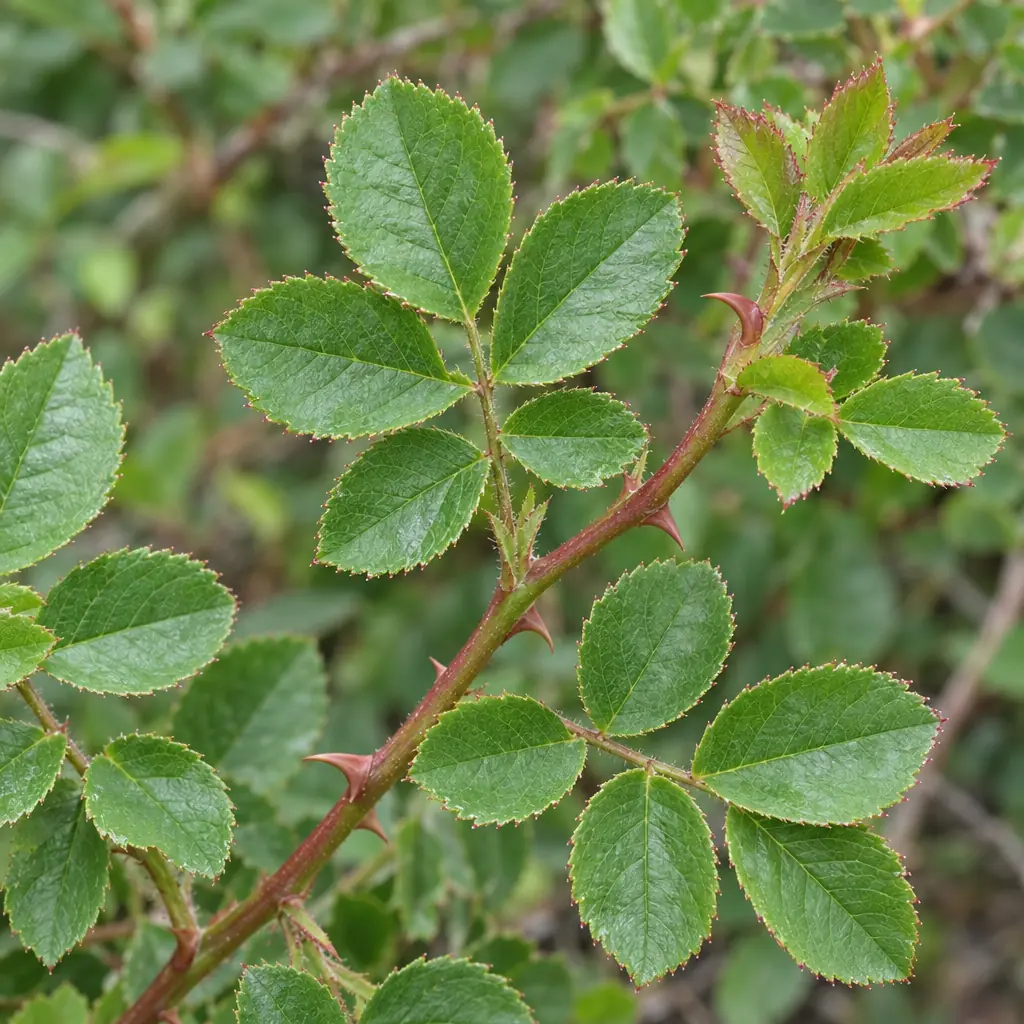
Leaf 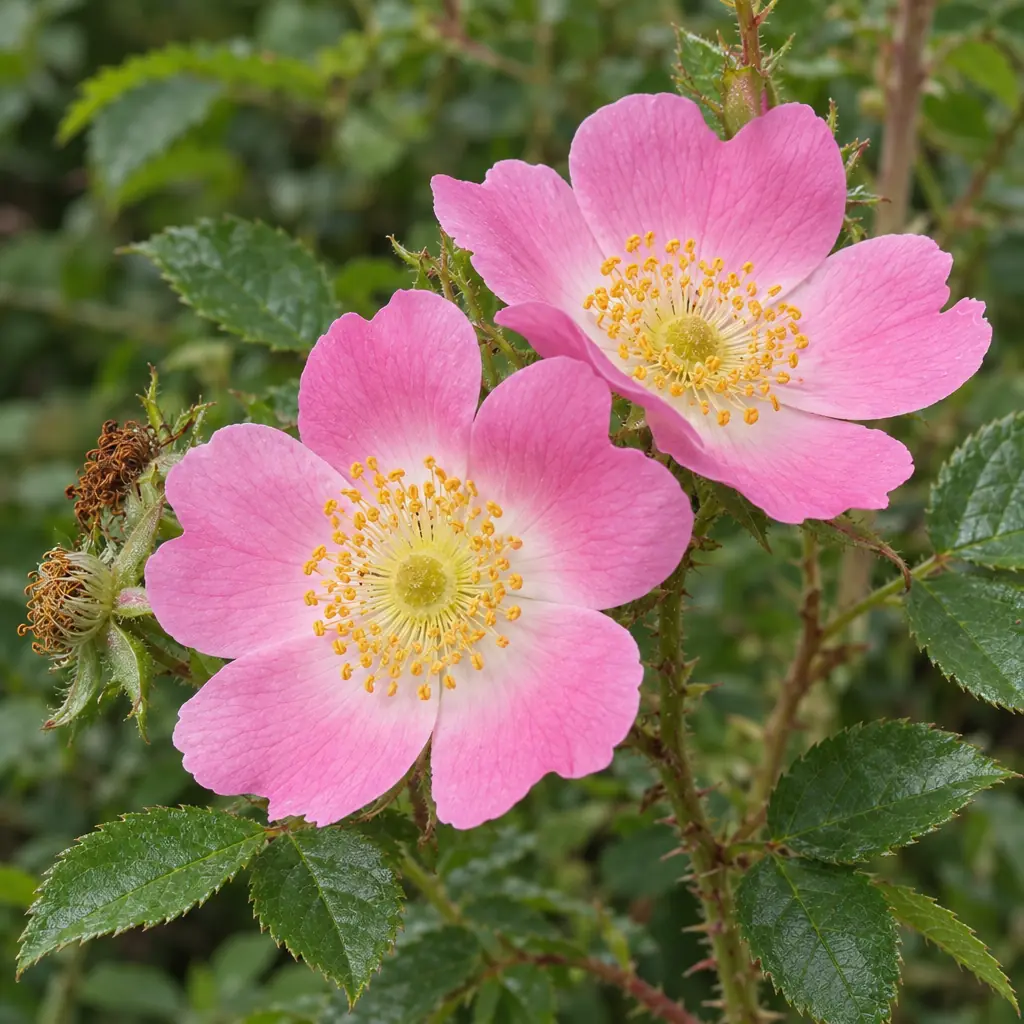
Flower 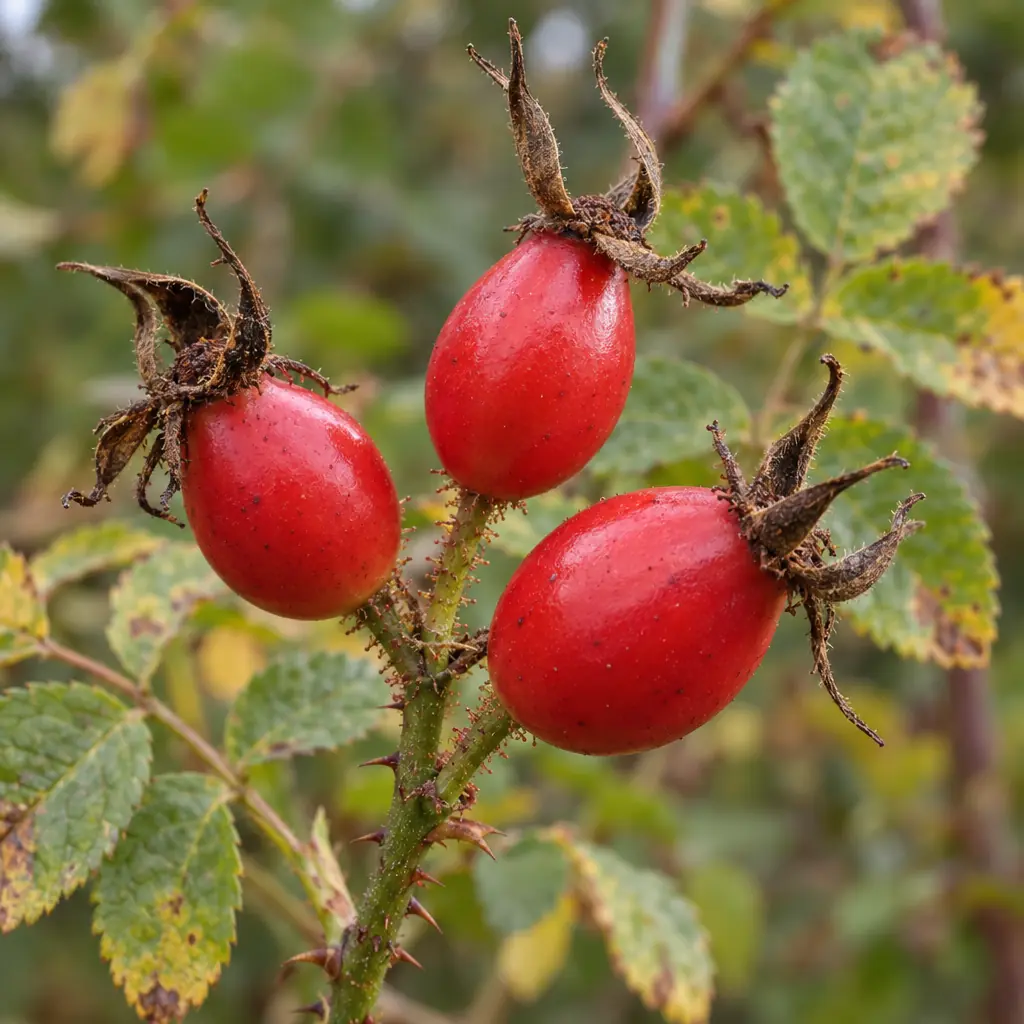
Fruit
How do you recognise sweet briar?
Rub a leaf first. Sweet briar then gives off a sweet and sour smell of apple. The scent comes from tiny glands on the underside of the leaf. Each leaf has five or seven small leaflets, oval to round, with a toothed edge. The upper side is glossy.
The flowers are clear pink with an almost white centre, 3 to 4 centimetres across. Along the stems sit prickles with a broad base, curved like a hook. Thin, needle-like prickles sometimes grow between them.
The hip is egg-shaped and turns from green to red. Small glands often cover it. The sepals on top stand upright or spread wide, and they stay on for a long time.
The dog rose (Rosa canina) looks very similar. Its leaves are hairless and have no glands, so they do not smell of apple. On a dog rose hip the sepals fold back, and they drop off early.
Where does sweet briar grow best?
Sweet briar does best in full sun: more than six hours of direct sun a day around midsummer. The shrub also copes with partial shade, with the sun on it for three to six hours. In the wild it grows on dry, limy soil in dunes, hedges and woodland edges. In a garden, sand, loam and heavy clay all suit it.
Choose a different shrub for these spots:
- A corner where water lies after rain. Sweet briar cannot cope with soil that stays wet for long.
- A narrow path or passage. The shrub grows wider than the path, and every branch carries hooked prickles.
- The shade under large trees. There the shrub can make shoots without a flower bud.
In January sweet briar is bare, but the red hips still hang on the branches. In June the same shrub is full of leaves and pink flowers.
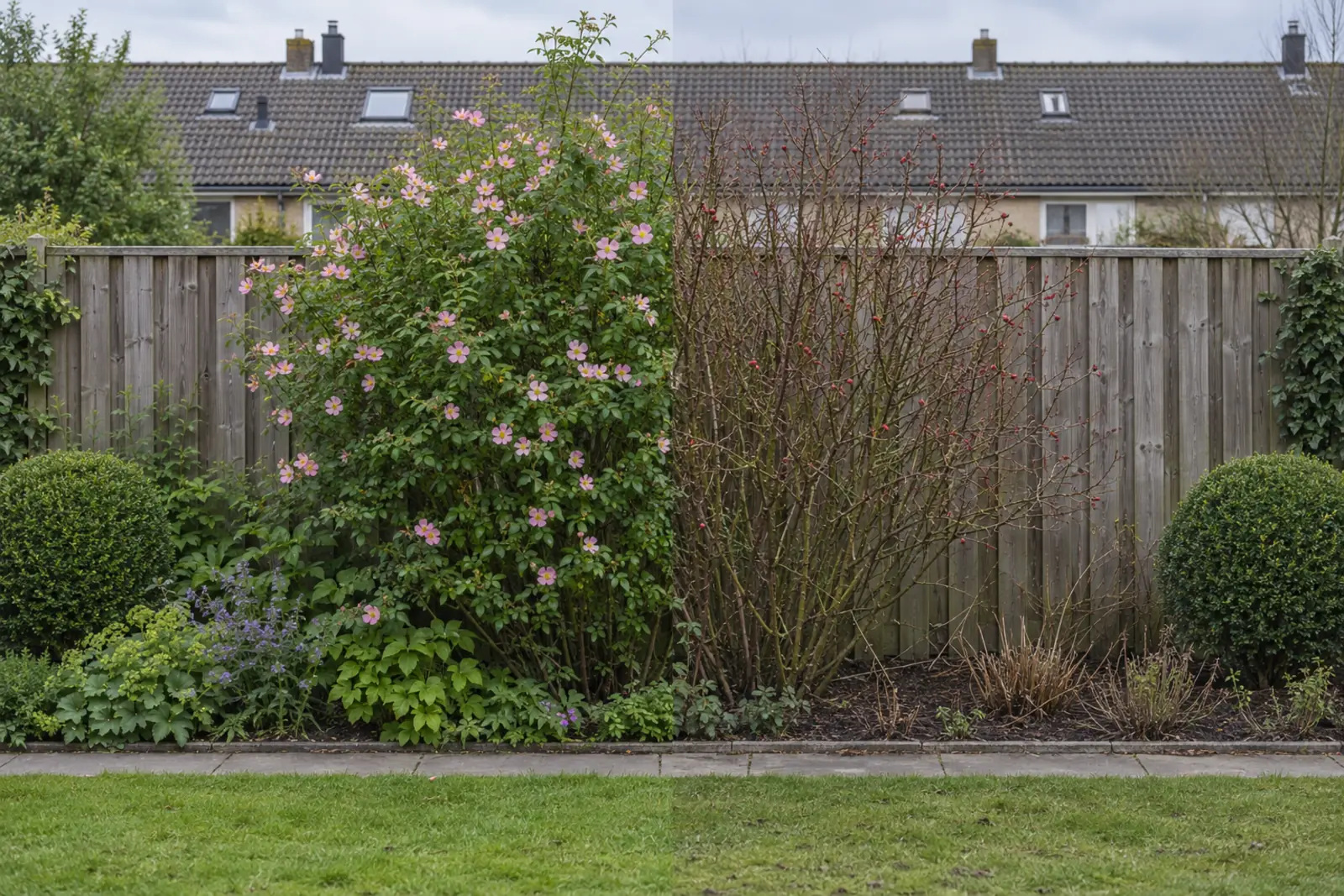 The same border in June and in January. This is a generated image, not a photo.
If the shrub is to go at the back against the fence, beside a path, place it on your own plot in the app first. The app draws the plant at a grown plant's width, not at pot size.
Planting and caring for sweet briar
Plant sweet briar between November and the end of March, while the shrub is dormant. That is when nurseries sell bare-root plants, with no soil around the roots. A bare-root plant is the cheapest way to buy it.
Leave about 2 metres between a free-standing sweet briar and the next shrub. On planting day that looks far too wide. After a few years the branches fill the space. For a hedge, plant 2 to 3 shrubs per metre, 30 to 50 centimetres apart. In the first year, water whenever a dry spell lasts.
| When | What to do |
|---|---|
| End of winter | Cut out dead, diseased and crossing branches |
| When the shrub gets too full | Saw one or two old branches off close to the ground |
Wait until the end of winter to prune, and the hips stay on until then. Many birds breed from March to the end of July. If a branch is in the way in those months, cut it only when you are sure it holds no nest.
Sweet briar problems and what to do
Few or no flowers appear. A spot that is too dark can be one cause: the shoots then sometimes make no bud. A sunny, open spot helps. Another cause is pruning too hard. A wild rose flowers on older wood, so always leave enough of it.
The leaves get purple-black spots and fall. That is rose black spot, a fungus. Clear up the fallen leaves in autumn. Preventing it completely is not possible, because the spores blow in with the rain.
A white, powdery layer covers the leaves and young tips. That is powdery mildew, also a fungus. Cut out badly affected shoots straight away. Water regularly in a dry spell. Leave space between the shrubs as well, so air can move around them.
The young tips curl and feel sticky. Those are aphids. A healthy garden always has a few. Wait a while, because their natural enemies often clear them up.
Which birds and insects use sweet briar?
The caterpillars of the shoulder stripe (Anticlea badiata), a moth, live on wild roses such as sweet briar, burnet rose and dog rose. The moth is fairly rare and flies from late March to late May, from dusk onwards. Gardens are part of its habitat.
Rose hips are full of seeds, and sweet briar is one of the roses that carry them. In autumn and winter, greenfinches above all feed on those seeds.
Is sweet briar poisonous or edible?
Sweet briar is not known as a poisonous plant. Around the seeds in the hip, though, sits a layer of fine hairs. Those hairs irritate the mouth and the gut when swallowed.
The photos on this page were made with AI, based on real photos and descriptions of this plant.
Frequently asked questions
How big does sweet briar grow?
Sweet briar grows up to 3 metres tall and 1.5 to 2.5 metres wide. The shrub reaches that size after 5 to 10 years.
When should you prune sweet briar?
At the end of winter, so the hips stay on the shrub until then. Cut out dead, diseased and crossing branches. If the shrub gets too full, saw one or two old branches off close to the ground.
Is sweet briar poisonous?
No, sweet briar is not known as a poisonous plant. The seeds inside the hips do sit in a layer of fine hairs. Those hairs irritate the mouth and gut if swallowed.
How do you tell sweet briar from dog rose?
Rub a leaf: sweet briar smells of apple, a dog rose does not. On a sweet briar hip the sepals stay upright for a long time.
How much sun does sweet briar need?
Ideally more than six hours of direct sun a day around midsummer. Partial shade, with the sun on it for three to six hours, also works, but a spot that is too dark can mean fewer flowers.
Sources (24)
- Duistermaat, Sparrius & Denters, Standaardlijst van de Nederlandse flora 2020 (Gorteria 43)
- NDFF Verspreidingsatlas — Rosa rubiginosa
- NDFF Verspreidingsatlas — Rosa canina
- Flora van Nederland — Egelantier
- Wilde planten in Nederland en België — Egelantier
- RHS — Rosa rubiginosa (sweet briar)
- RHS — Shade gardening (definities zon en halfschaduw)
- RHS — Rose pruning: shrub roses
- RHS — Rose blindness
- RHS — Rose black spot
- RHS — Rose powdery mildew
- RHS — Aphids
- Plants For A Future — Rosa rubiginosa
- Pollennieuws — Aandachtspunten hooikoortsvriendelijke tuin
- Imkerpedia — Drachtplanten
- Antigifcentrum — Brochure planten (lijst giftige planten)
- De Vlinderstichting — Getekende rozenspanner
- Vogelbescherming — Eekhoorn aan de ontbijttafel
- Vogelbescherming — Snoeien in het broedseizoen, mag dat?
- Directplant — Wilde roos (prijs per maat, plantafstand)
- Ecoflora — Egelantier (prijs)
- Wikimedia Commons — Leaf: photo by AnRo0002 (CC0)
- Wikimedia Commons — Flower: photo by AnRo0002 (CC0)
- Wikimedia Commons — Fruit: photo by AnRo0002 (CC0)