5 min read
Wood anemone: planting and care under trees and shrubs
Anemone nemorosa
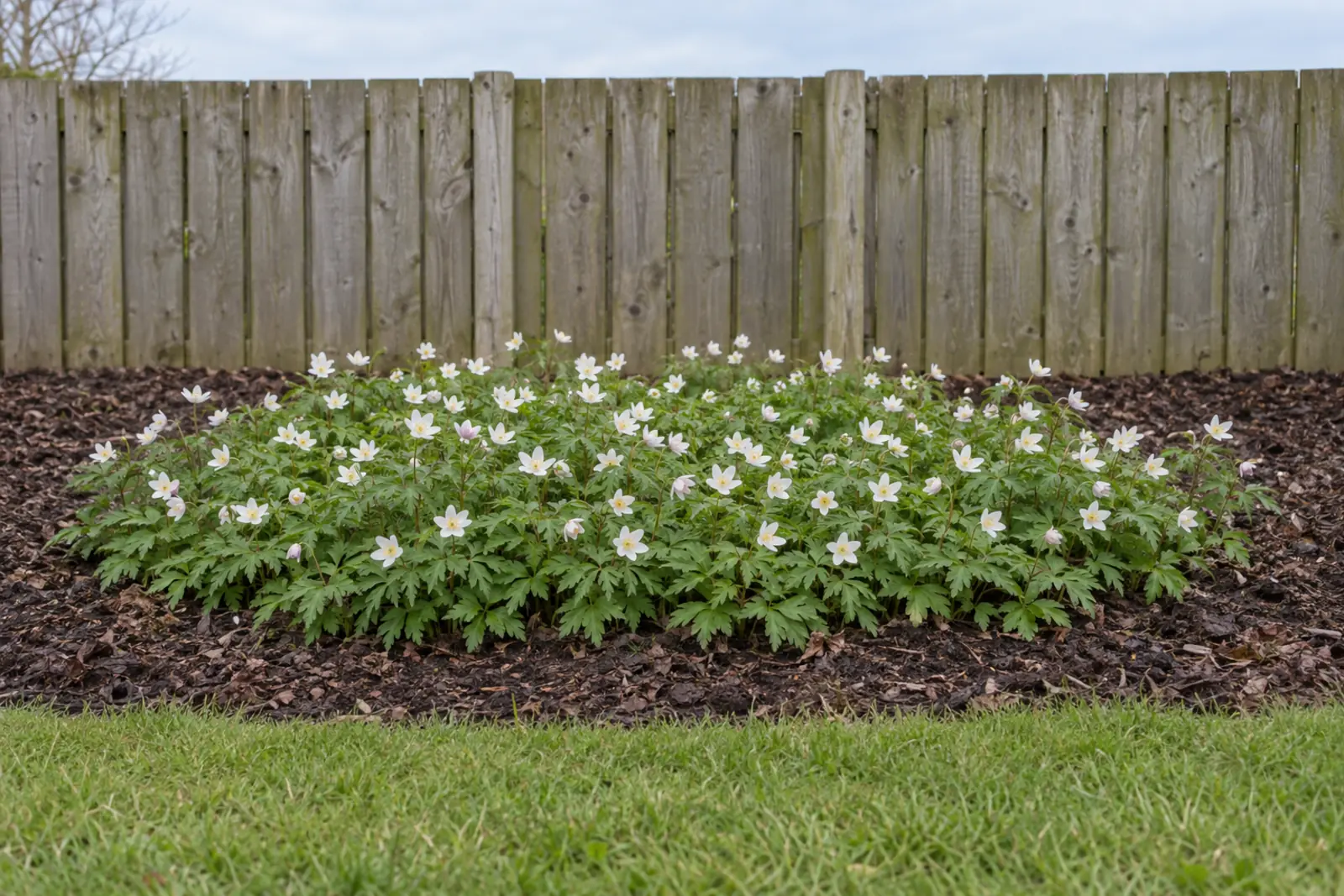
Wood anemone (Anemone nemorosa) is a low, native spring flower. Each stem carries one white flower above a ring of three deeply cut leaves. The plant flowers under trees and shrubs, before they come into leaf. Its creeping rhizome lets wood anemone spread over the years into a white carpet.
Wood anemone at a glance
| Feature | Wood anemone |
|---|---|
| Height | 5 to 25 cm |
| Spread | 10 to 50 cm per plant |
| Full grown after | 2 to 5 years |
| Sun | Partial shade to shade |
| Soil | Moist and rich in humus |
| Water | Average: drier soil is fine in summer |
| Maintenance | Low: no digging and no feeding |
| Flowers | March to May, white |
| For bees | Yes: pollen only, March to May |
| Hay fever | Not or weakly allergenic |
| Leaves | Drop in summer |
| Hardy | Yes |
| Native | Yes |
| Poisonous | Mildly: the sap above all |
| Pricks or stings | No |
| Price, young | About €0.31 to €1.50 per loose rhizome |
| Price, grown | About €2.75 to €4.61 per plant, in a pot |
- Leaf
- March to June
- Flower
- March to May
- Fruit
- May to June
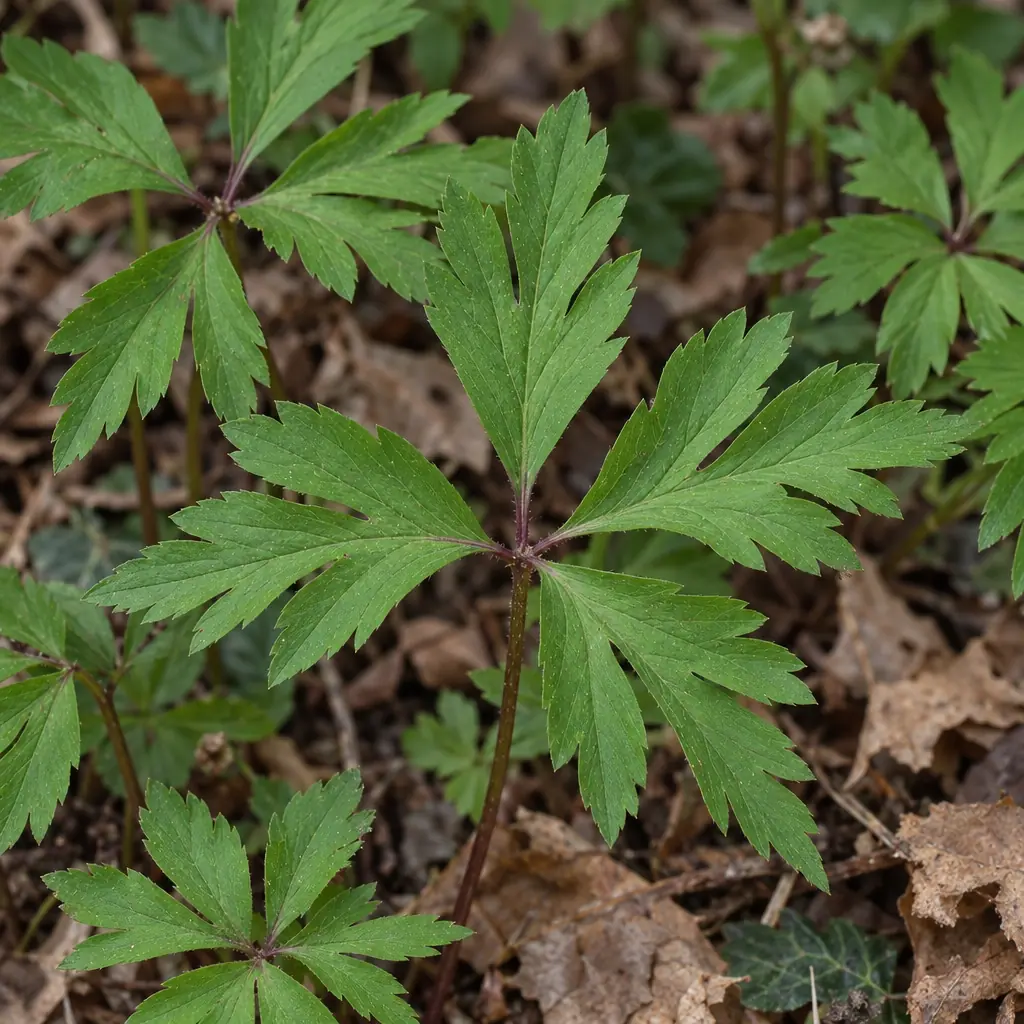
Leaf 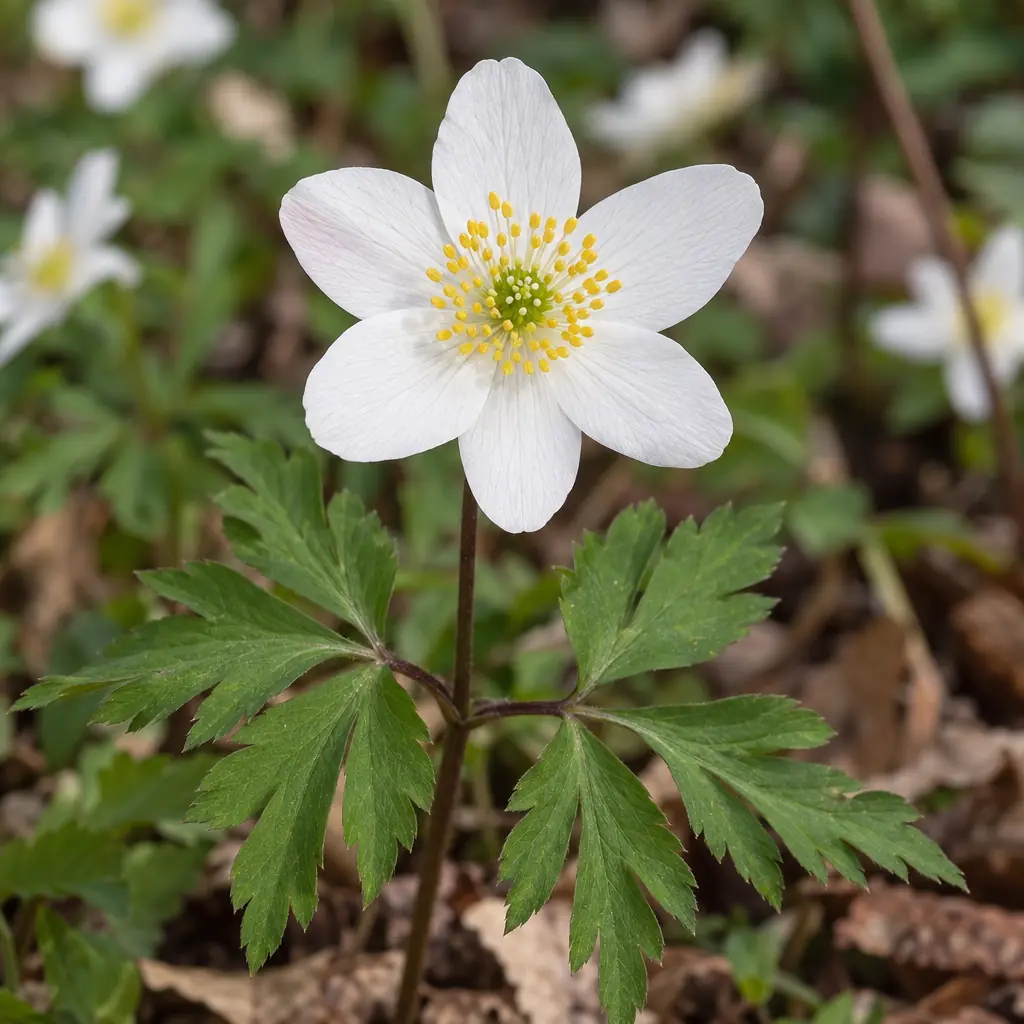
Flower 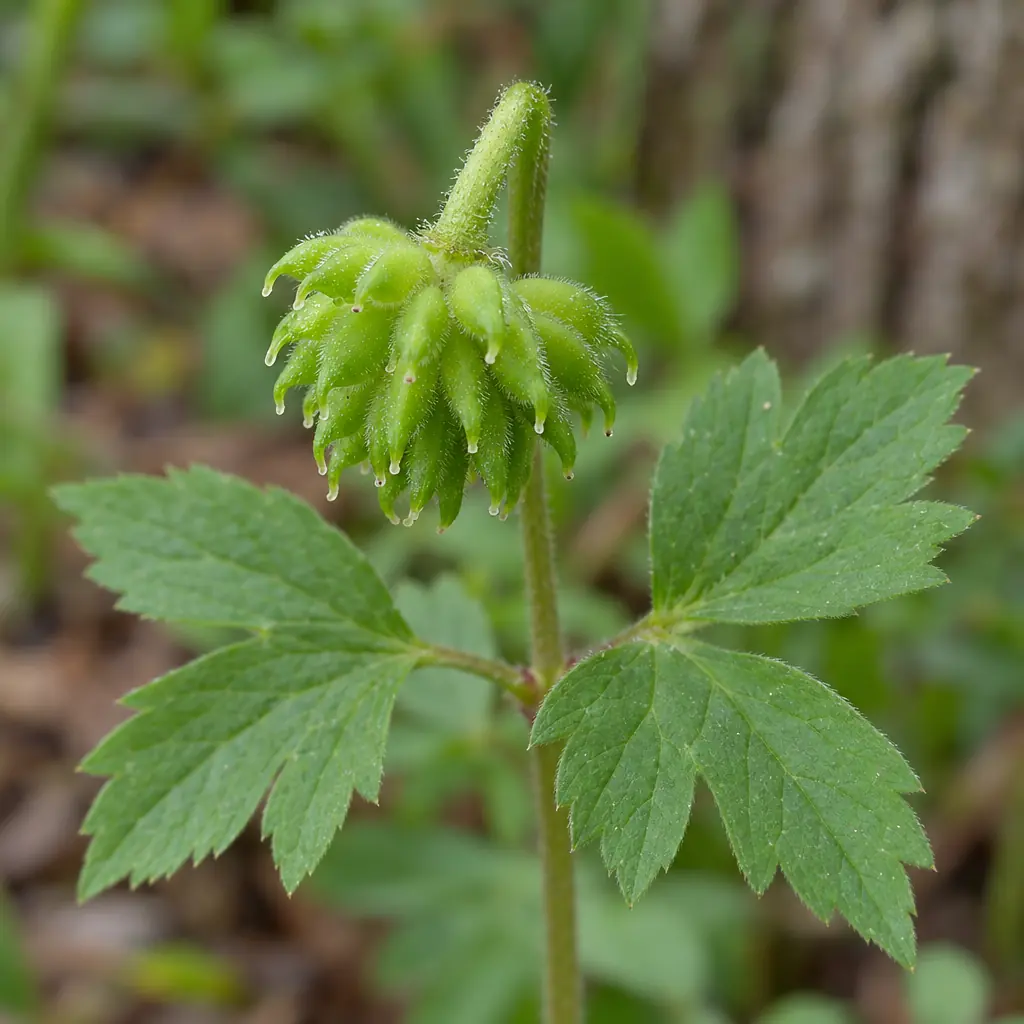
Fruit
How do I recognise wood anemone?
Look halfway up the stem first. Three leaves grow there in a ring, each on a stalk of its own. Every leaf is cut almost to the base into three or five coarsely toothed parts. Apart from these, leaves on long stalks grow straight from the rhizome.
Above the ring sits one flower, 2 to 4 centimetres across. The flower is white, often tinged pink or purple underneath. Six to eight white petals, sometimes more, surround a yellow centre. After flowering, a small ball of green nutlets hangs from the stem. Each nutlet holds just one seed.
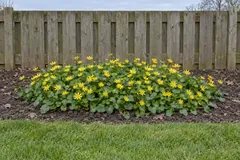
The yellow anemone (Anemone ranunculoides) looks most like wood anemone. Check the colour and the leaf stalks. The yellow anemone has yellow flowers, one to three per stem, each 1.5 to 2 centimetres across. The leaves in its ring sit on the stem with almost no stalk.
Where does wood anemone grow best?
Pick a spot in partial shade, which gets 3 to 6 hours of direct sunlight a day around midsummer. The ground under shrubs, where little grows in summer because of the shade, suits wood anemone too. The soil should be moist, moderately fertile and rich in humus, like a woodland floor.
Two garden spots suit wood anemone poorly:
- Dry soil with little humus. The plant copes with drought only when the soil holds plenty of humus.
- Soil that stays wet for a long time. The rhizome needs moist soil, but the water must be able to drain away.
Do not plant clover and other legumes right next to wood anemone. The plant holds back the growth of its neighbours, and legumes most of all.
In winter there is nothing to see of wood anemone. By then the leaves have been gone for months, and the plant rests underground as a rhizome.
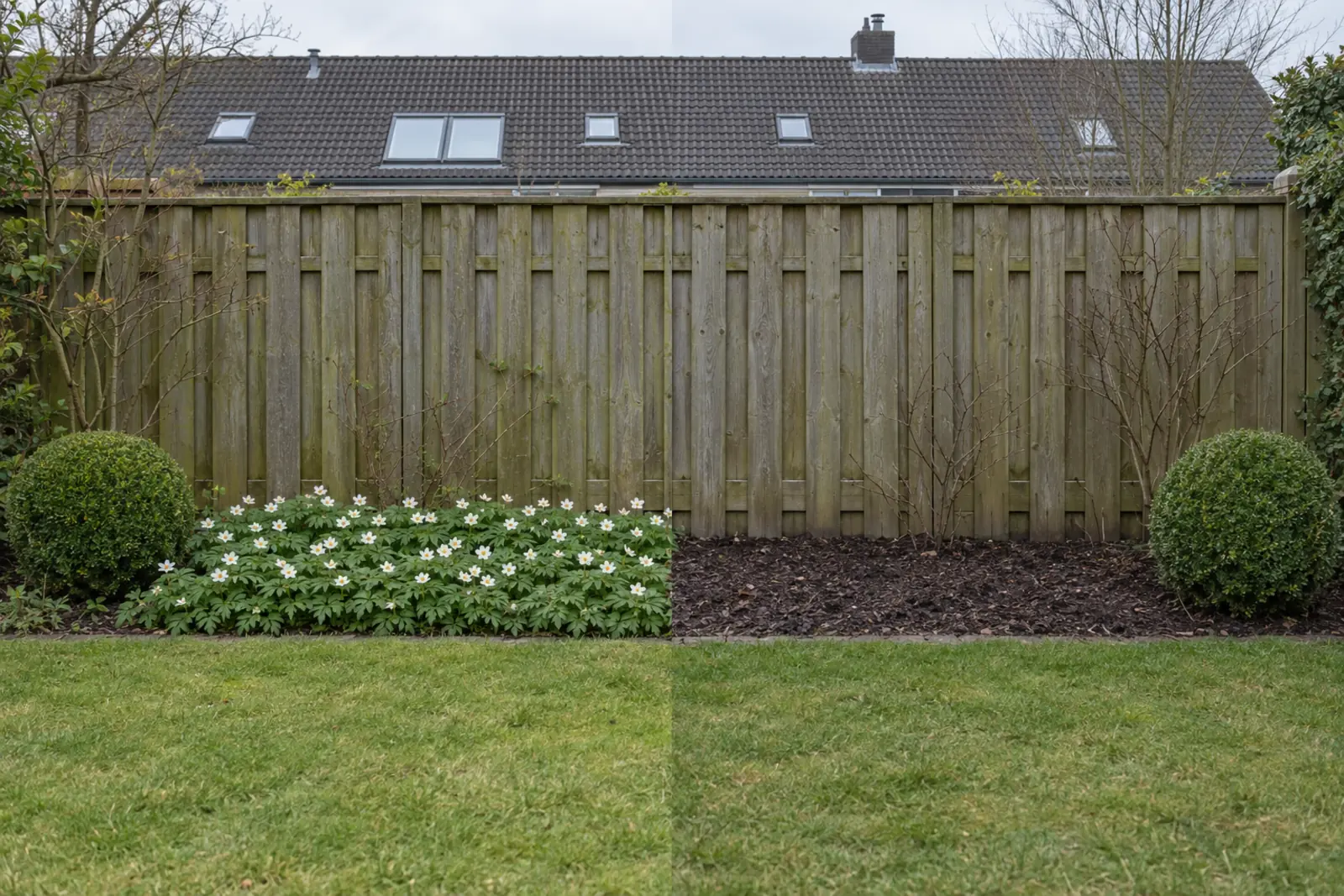 The same border in April and in January. This is a generated image, not a photograph.
The app shows your own plot to scale, together with the neighbouring buildings. On that drawing, measure how many metres of border beneath your shrubs are free for a carpet of wood anemones.
Planting and caring for wood anemone
Wood anemone is sold as a loose rhizome or as a small plant in a pot. Loose rhizomes are the cheapest way to buy it. Plant them from August to December, or in February and March. Lay each rhizome flat in the soil, 3 centimetres deep.
Plan on 9 to 11 plants per square metre. On planting day that looks like a bare bed. After that the rhizomes creep further and the group spreads. In a spot the plant likes, this sometimes goes fast. Keep the soil moist in the first spring. Once the leaves have gone, the soil can be drier.
No pruning is needed.
What goes wrong with wood anemone?
The leaves turn yellow and disappear. That is normal. In midsummer the leaves die back, and the plant stores food in its rhizome. Do not cut the leaves off before then.
The flowers hang down or stay closed. In the evening and in bad weather the stems bend over. That keeps the pollen dry. In sunny weather the flowers stand upright again.
There are holes in the leaves. Slugs and caterpillars can eat the leaves. Pick the slugs off by hand on a damp evening.
A white powder covers the leaves. This is a fungus called powdery mildew. The leaves die back in summer anyway, so nothing needs doing.
The patch gets smaller every year. Wood anemone does not like digging or feeding. So do not dig between the plants, and do not feed them.
Which insects and birds use wood anemone?
A wood anemone flower makes no nectar. What the plant offers insects is pollen, early in the year. The wild bee species that visit it have not been described by name, and neither has a bird that uses the plant.
Is wood anemone poisonous or edible?
Wood anemone is mildly poisonous. All parts contain protoanemonin, an acrid substance that irritates. On the skin, the sap can cause strong irritation. Eating the plant irritates the stomach and gut. No edible part of the plant is known.
The photos on this page were made with AI, based on real photos and descriptions of this plant.
Frequently asked questions
Are wood anemones poisonous?
Yes, mildly. All parts contain an acrid substance that irritates the skin, and the stomach and gut when eaten. The sap in particular is poisonous.
When do you plant wood anemone rhizomes?
Plant loose rhizomes from August to December, or in February and March. Lay each rhizome flat, 3 centimetres deep.
Why do wood anemones disappear in summer?
In midsummer the leaves die back. The plant then stores food in the rhizome under the ground. In March the new leaves come up again.
Is wood anemone native to the Netherlands?
Yes. Wood anemone is originally native to the Netherlands. In the wild the plant grows in deciduous woods, coppice, wooded banks, hedges and road verges.
Sources (19)
- Duistermaat, Sparrius & Denters, Standaardlijst van de Nederlandse flora 2020 (Gorteria 43)
- NDFF Verspreidingsatlas — Anemone nemorosa
- NDFF Verspreidingsatlas — Anemone ranunculoides (gele anemoon)
- Flora van Nederland — Bosanemoon
- BSBI — Fermanagh species account, Anemone nemorosa
- RHS — Anemone nemorosa (wood anemone)
- RHS — Shade gardening (definities zon en schaduw)
- PFAF — Anemone nemorosa
- Imkerpedia — Drachtplanten
- Bestuivers.nl — Bijenplanten, bosanemoon
- Pollennieuws / Flora van Nederland — Aandachtspunten hooikoorts vriendelijke tuin
- Nederlandse Mycologische Vereniging via Nature Today — Anemonebekerzwam en bosanemoon
- Sterkebollen — Anemone nemorosa (wortelstokken, prijs en planttijd)
- Postplanten — Bosanemoon (wortelstok, prijs)
- Yarinde — Bosanemoon (prijs en plantafstand)
- De Cruydt-Hoeck — Bosanemoon (prijs)
- PlantBezorgd — Bosanemoon (prijs en plantafstand)
- Wikimedia Commons — Leaf: photo by Robert Flogaus-Faust (CC BY 4.0)
- Wikimedia Commons — Fruit: photo by Leo Michels (CC0)