5 min read
Raspberry plant: where to grow it, pruning and price
Rubus idaeus
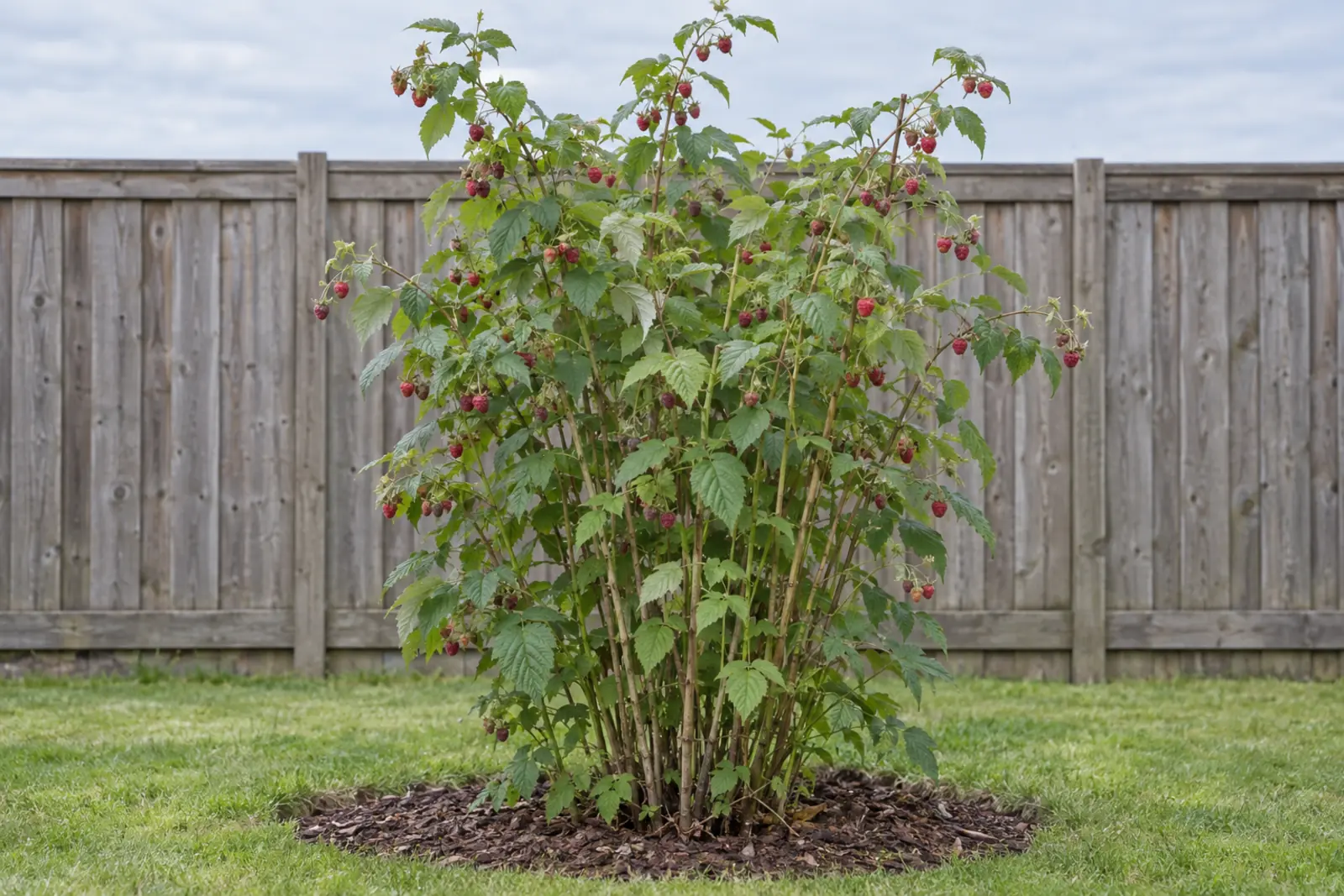
The raspberry (Rubus idaeus) is a native shrub with upright canes of 0.6 to 2.5 metres. From May to July it has small white flowers, followed by the red fruit. The plant wants sun or partial shade and soil that is moist but not wet. Suckers grow from the roots.
Raspberry at a glance
| Feature | Raspberry |
|---|---|
| Height | 0.6 to 2.5 m |
| Spread | 0.5 to 1 m per plant |
| Full grown after | 2 to 5 years |
| Sun | Full sun to partial shade |
| Soil | Moist but not wet, preferably low in lime |
| Water | Average: keep moist, never wet |
| Maintenance | Average: one pruning a year |
| Flowers | May to July, white |
| For bees | Yes: plenty of nectar and pollen, May to July |
| Hay fever | Not or weakly allergenic |
| Leaves | Drop in autumn |
| Hardy | Yes |
| Native | Yes |
| Poisonous | No: the fruit is edible |
| Pricks or stings | Yes: prickles |
| Price, young | About €9 each, 20-40 cm, as a rhizome |
| Price, grown | About €162 per ready-made hedge element, 150 cm tall and 50 cm wide |
- Leaf
- April to October
- Flower
- May to July
- Fruit
- June to August
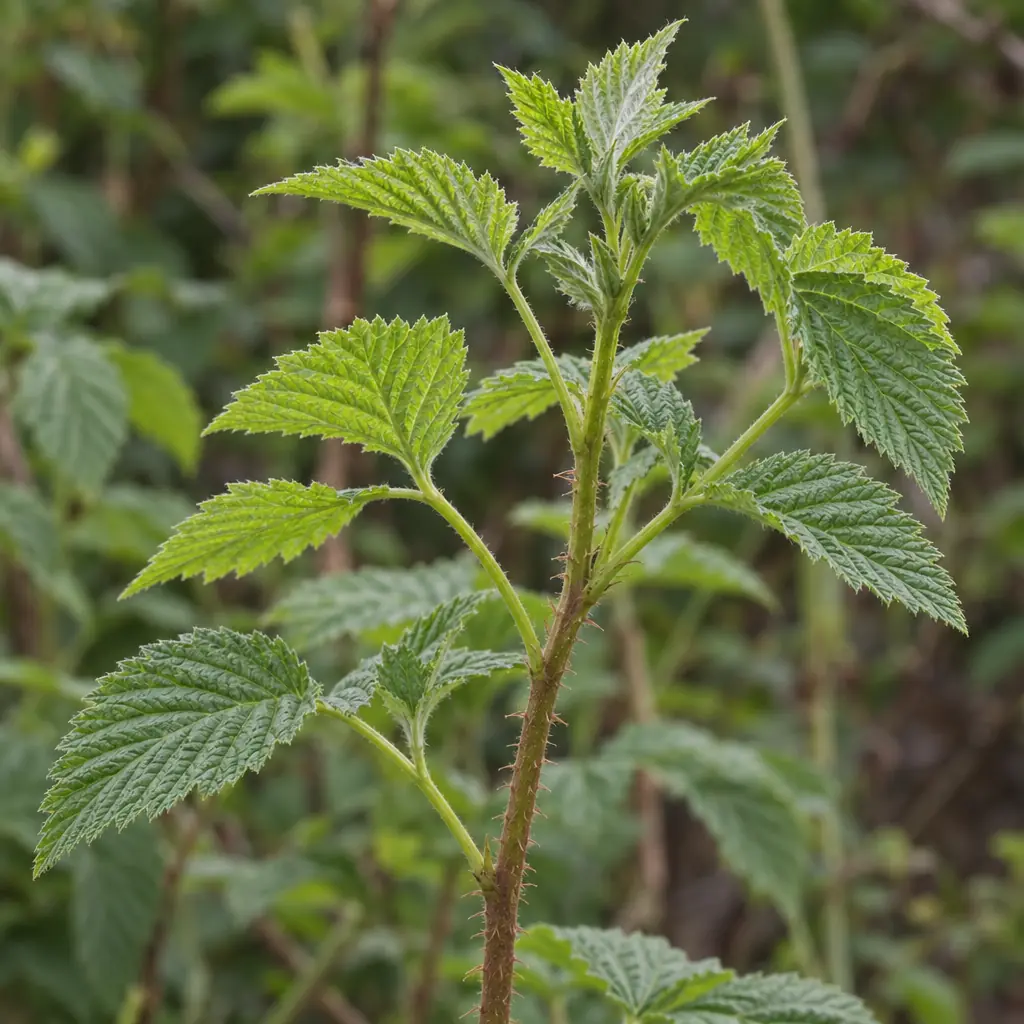
Leaf 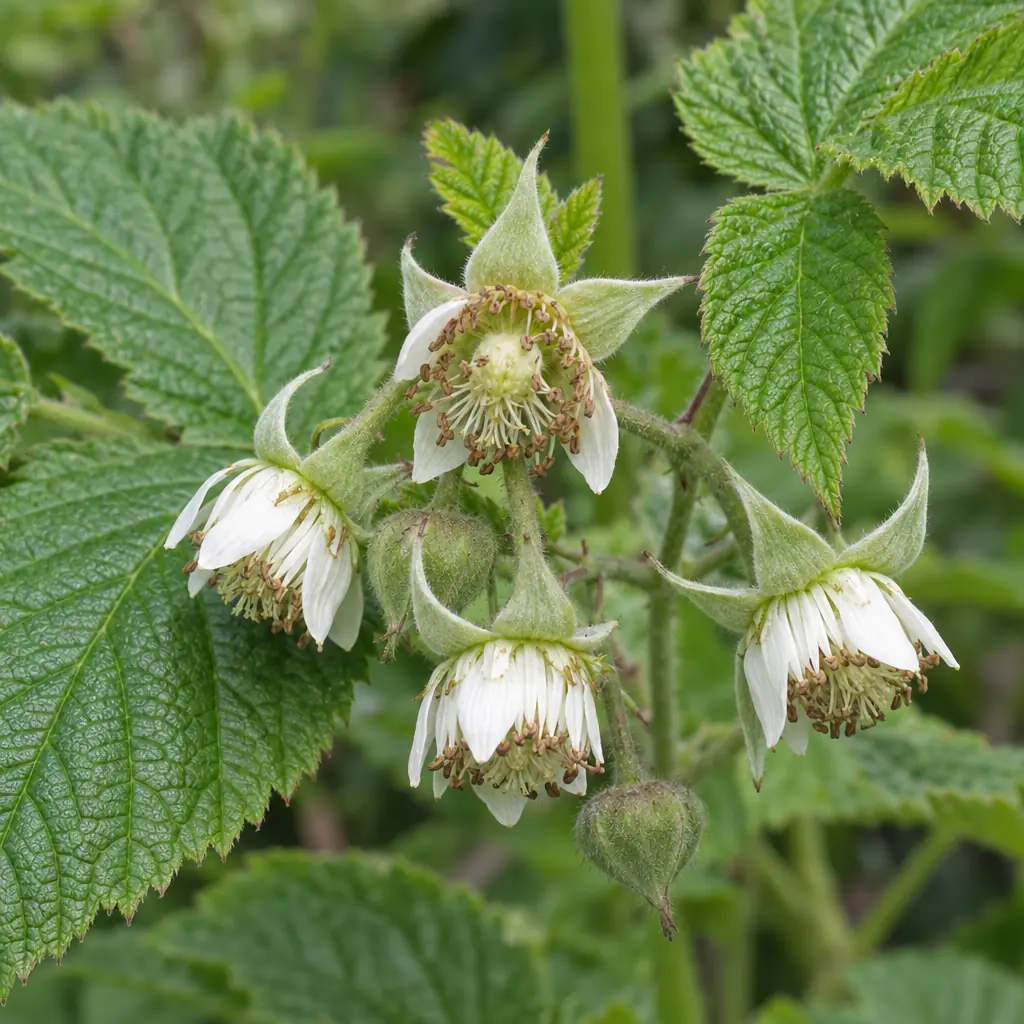
Flower 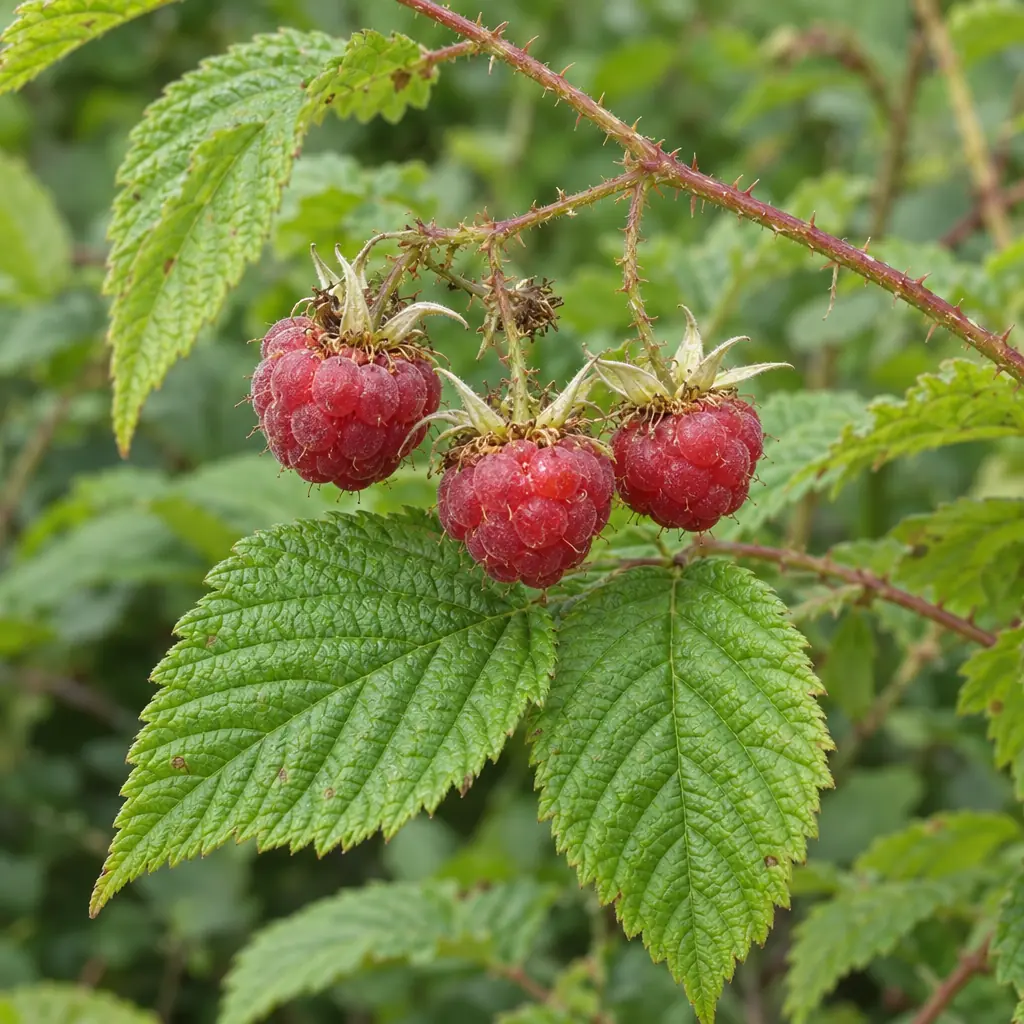
Fruit
How do I recognise a raspberry plant?
Start with the canes. They stand upright and hardly branch, with only a few small prickles. Young canes are green, and older ones turn reddish purple to brown.
The leaf is pinnate: three, five or seven leaflets on one stalk. Its underside is greyish white and felted. Turn a leaf over and you see that at once.
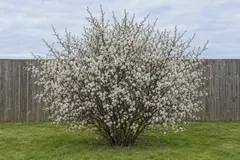
The flowers are white and about a centimetre across. Each flower has five narrow petals, shorter than the sepals. After flowering, those sepals bend backwards.
The fruit is a dull, dark purplish red and slightly hairy. A ripe raspberry comes away whole. A small cone stays behind on the plant.
The blackberry bears similar fruit, but that fruit ripens deep purple.
Where does a raspberry plant grow best?
A sunny spot gives the most fruit. In partial shade the raspberry still bears, but you pick less and the plant stays weaker. Partial shade means three to six hours of direct sun a day around midsummer. Shelter from the wind helps too.
Three spots in a garden are hard on a raspberry:
- A corner where water stands in winter. The roots cannot cope with wet soil, least of all in winter.
- A spot in full shade. There the raspberry does poorly.
- A narrow border between the lawn and perennials. Suckers from the roots come up outside the row, in the grass and among your plants as well.
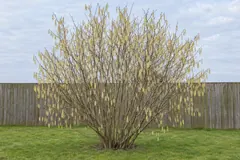
In winter the raspberry is bare: nothing but brown canes.
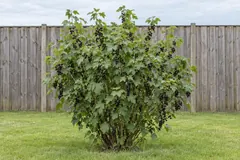
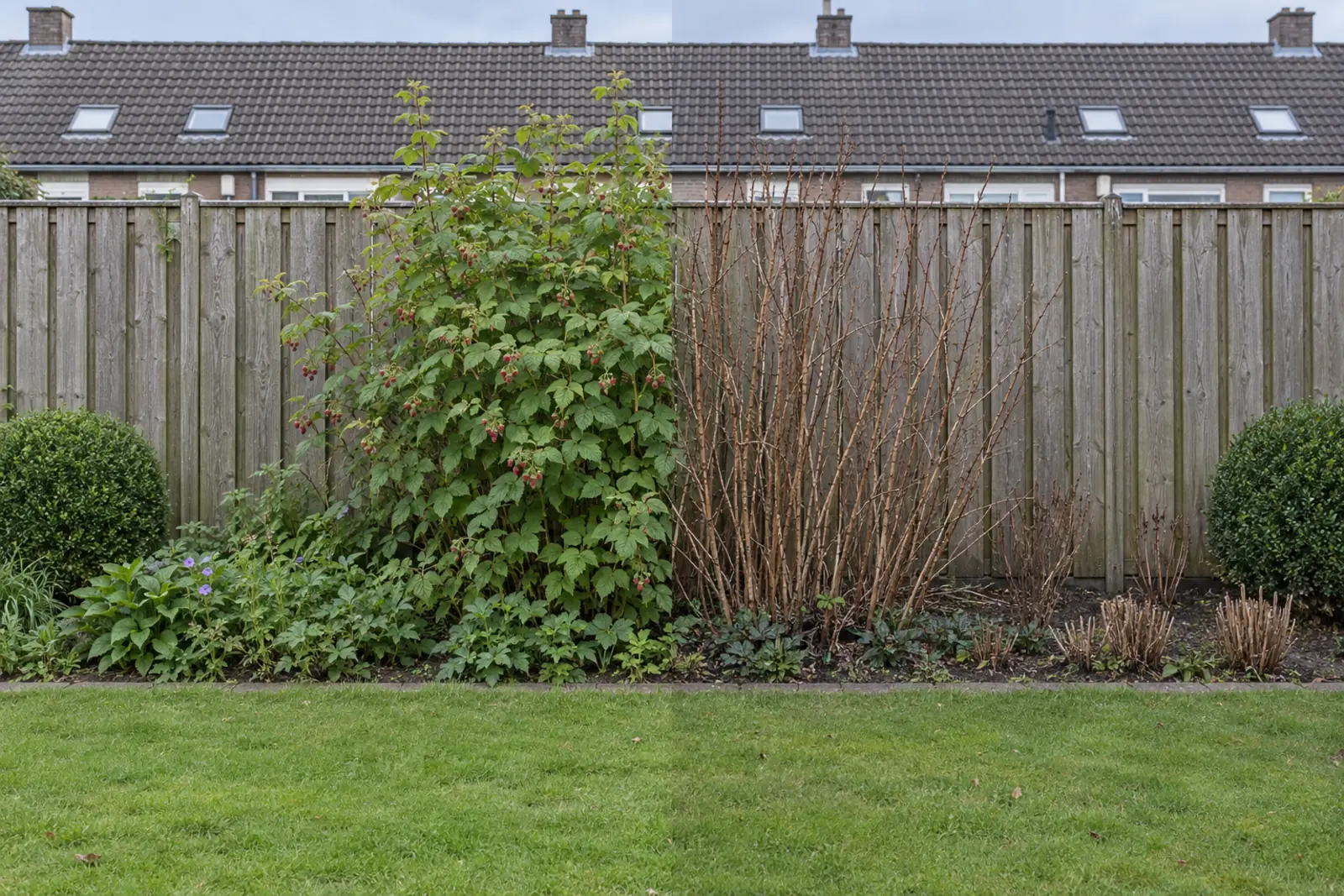 The same border in July and in January. This is a generated image, not a photo.
A row of raspberries along the fence takes up more room than planting day suggests. Draw that row on your own plot in the app: the app draws the plant at a grown plant's width, not at pot size.
Planting and caring for raspberries
Plant between November and March, while the plant is dormant. Potted plants are on sale for longer, but they often cost more. Set the top roots no deeper than 5 centimetres below the surface. After planting, cut the canes back to 25 centimetres.
Space the plants 40 to 60 centimetres apart, with 1.5 to 2 metres between two rows. On planting day a row of short stumps looks bare. Suckers fill the gaps within a few years. In the first year, water during long dry spells. Spread compost around the base, but no mushroom compost: it contains lime.
| When | What to do |
|---|---|
| After the harvest, September or October | Cut the canes that bore fruit down to the ground |
| All year | Dig out suckers that come up outside the row |
Autumn pruning comes after the nesting season. Many bird species breed from March through July, so dig out suckers with care in those months.
Raspberry problems and what to do
There are little worms in the raspberries. Those are the grubs of the raspberry beetle. Ripe fruit then gets dry, greyish-brown patches at the stalk end. Usually only a small part of the crop is hit, so accept some damage.
Old canes turn brown and die. That is normal. A cane lives for two years and dies after flowering in its second year. Cut it off at the ground after the harvest.
The plant does not flower. Cutting every cane in autumn also removes the young canes. Those are exactly the ones that flower the following year. If the plant is in full shade, move it to more sun.
The plant wilts and wastes away. Check whether the soil is too wet, especially in winter. If so, move the raspberry to a spot where water drains away.
Which birds and insects use the raspberry?
The caterpillar of the peach blossom (Thyatira batis), a moth, feeds on blackberry and raspberry. This moth is very common and flies from late April to early September. The raspberry clearwing (Pennisetia hylaeiformis) is rarer, and raspberry is its only food plant. This moth flies from late June to late August, almost only by day.
In a wildlife garden with a mixed hedge, greenfinches turned out to love the raspberry planted in it.
Is the raspberry poisonous or edible?
No part of the raspberry is known to be poisonous. The fruit is edible, raw or prepared, for example in jam or in a tart.
The photos on this page were made with AI, based on real photos and descriptions of this plant.
Frequently asked questions
How tall does a raspberry plant grow?
A raspberry grows 0.6 to 2.5 metres tall. One plant spreads 0.5 to 1 metre, but suckers from the roots turn it into a whole clump after a few years.
When should you prune raspberries?
After the harvest, in September or October. Cut the canes that bore fruit down to the ground. Leave this year's young canes, because next year's fruit grows on them.
How much sun does a raspberry plant need?
A sunny spot gives the most fruit. In partial shade, three to six hours of direct sun a day around midsummer, the raspberry still fruits, but less. In full shade the plant does poorly.
Is the raspberry plant poisonous?
No part of the raspberry is known to be poisonous. The fruit is edible, raw or prepared, for example in jam.
Is the raspberry native to the Netherlands?
Yes, the raspberry originally belongs in the Netherlands. In the wild it grows in forest clearings, along woodland edges and in scrub.
Sources (21)
- Duistermaat, Sparrius & Denters, Standaardlijst van de Nederlandse flora 2020 (Gorteria 43)
- NDFF Verspreidingsatlas — Rubus idaeus
- Flora van Nederland — Framboos
- Wilde planten in Nederland en België — Framboos
- RHS — Rubus idaeus (raspberry)
- RHS — Shade gardening (definities zon en halfschaduw)
- RHS — Raspberries: grow your own
- RHS — Raspberry beetle
- Nederlands Soortenregister — Frambozenkever
- Imkerpedia — Drachtplanten
- Pollennieuws — Aandachtspunten hooikoortsvriendelijke tuin
- PFAF — Rubus idaeus
- De Vlinderstichting — Braamvlinder
- De Vlinderstichting — Frambozenwespvlinder
- Vogelbescherming — Een vogelvriendelijke tuin begint met goede planten
- Vogelbescherming — Snoeien in het broedseizoen, mag dat?
- Tuincentrum Koeman — Framboos (prijs)
- Tuinplantenloods — Framboos haagelement (prijs)
- Wikimedia Commons — Leaf: photo by Ted Moravec (CC0)
- Wikimedia Commons — Flower: photo by Robert Flogaus-Faust (CC BY 4.0)
- Wikimedia Commons — Fruit: photo by AnRo0002 (CC0)