5 min read
Blackcurrant bush: how to recognise, plant and prune it
Ribes nigrum
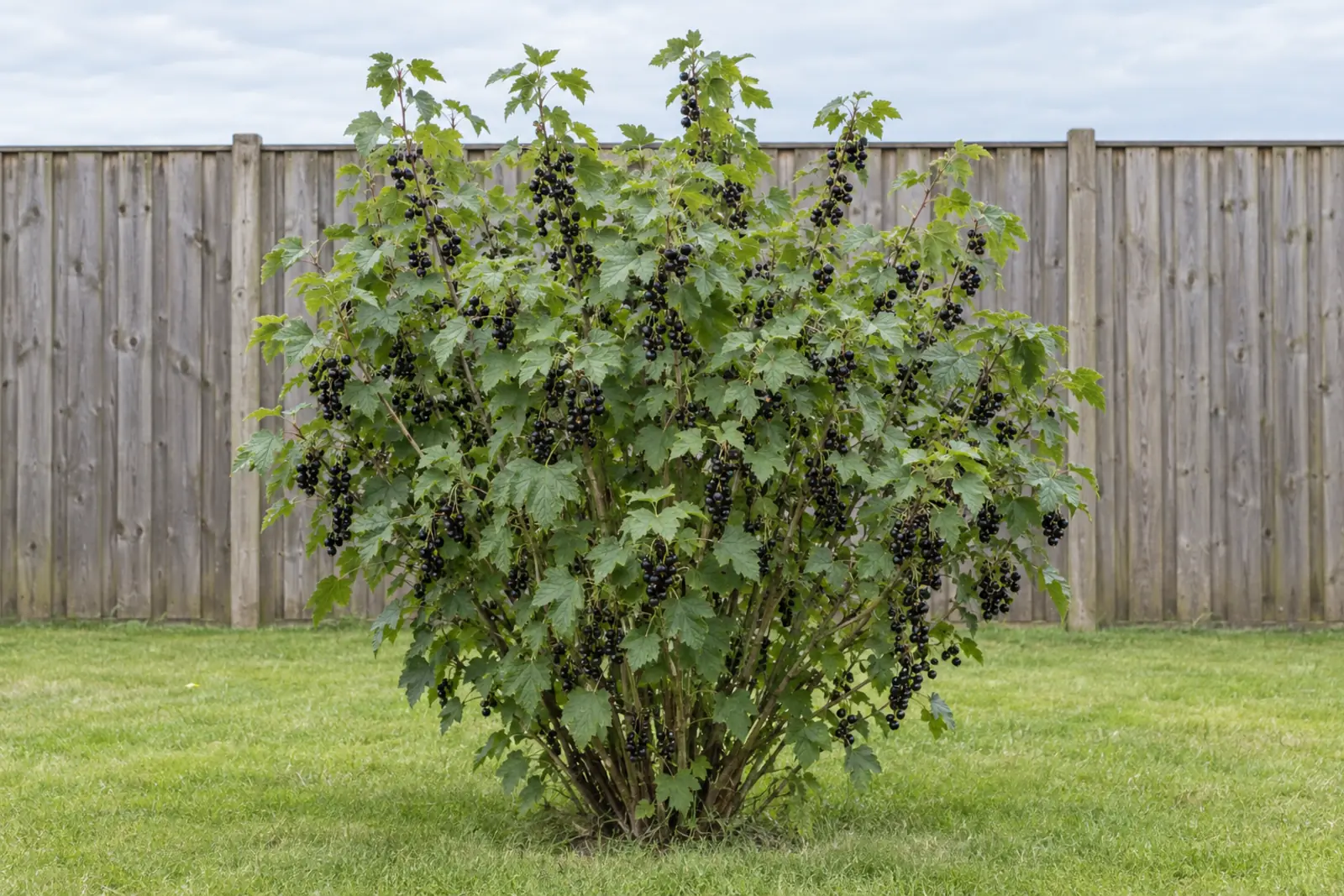
Blackcurrant (Ribes nigrum) is a native, thornless bush that grows 0.6 to 1.5 metres tall. Hanging clusters of small reddish-green bells open in April and May. By summer the glossy black berries ripen. The bush wants sun or partial shade and moist soil. The leaves smell of blackcurrant.
Blackcurrant at a glance
| Feature | Blackcurrant |
|---|---|
| Height | 0.6 to 1.5 m |
| Spread | 1 to 1.5 m |
| Full grown after | 2 to 5 years |
| Sun | Full sun to partial shade |
| Soil | Moist but not wet: clay, loam or sand |
| Water | Average: keep it moist |
| Maintenance | Low |
| Flowers | April and May, reddish green |
| For bees | Yes: plenty of nectar and pollen, April and May |
| Hay fever | Not or weakly allergenic |
| Leaves | Drop in autumn |
| Hardy | Yes |
| Native | Yes |
| Poisonous | No: the berries are edible |
| Pricks or stings | No |
| Price, young | About €2.30 to €3 each, 60-90 cm, bare-root |
| Price, grown | Not for sale |
- Leaf
- April to October
- Flower
- April to May
- Fruit
- June to August
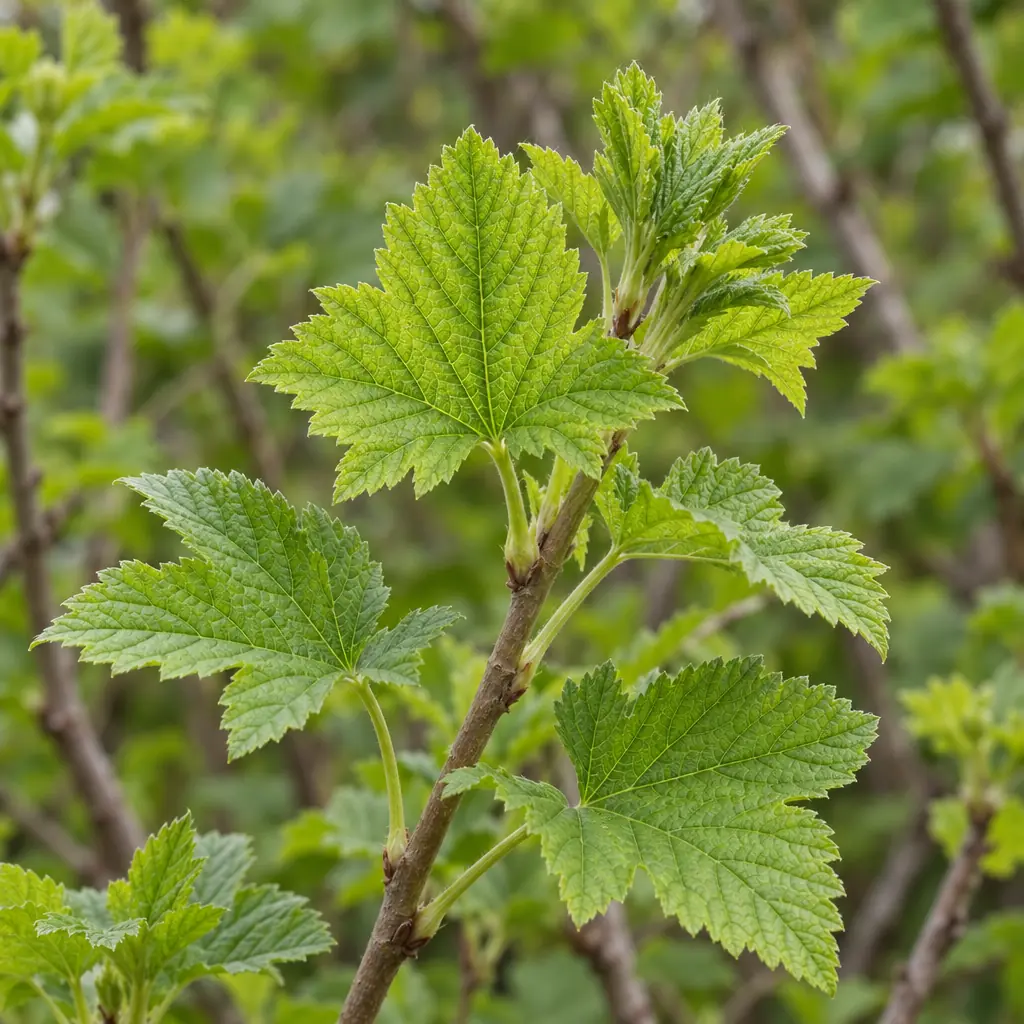
Leaf 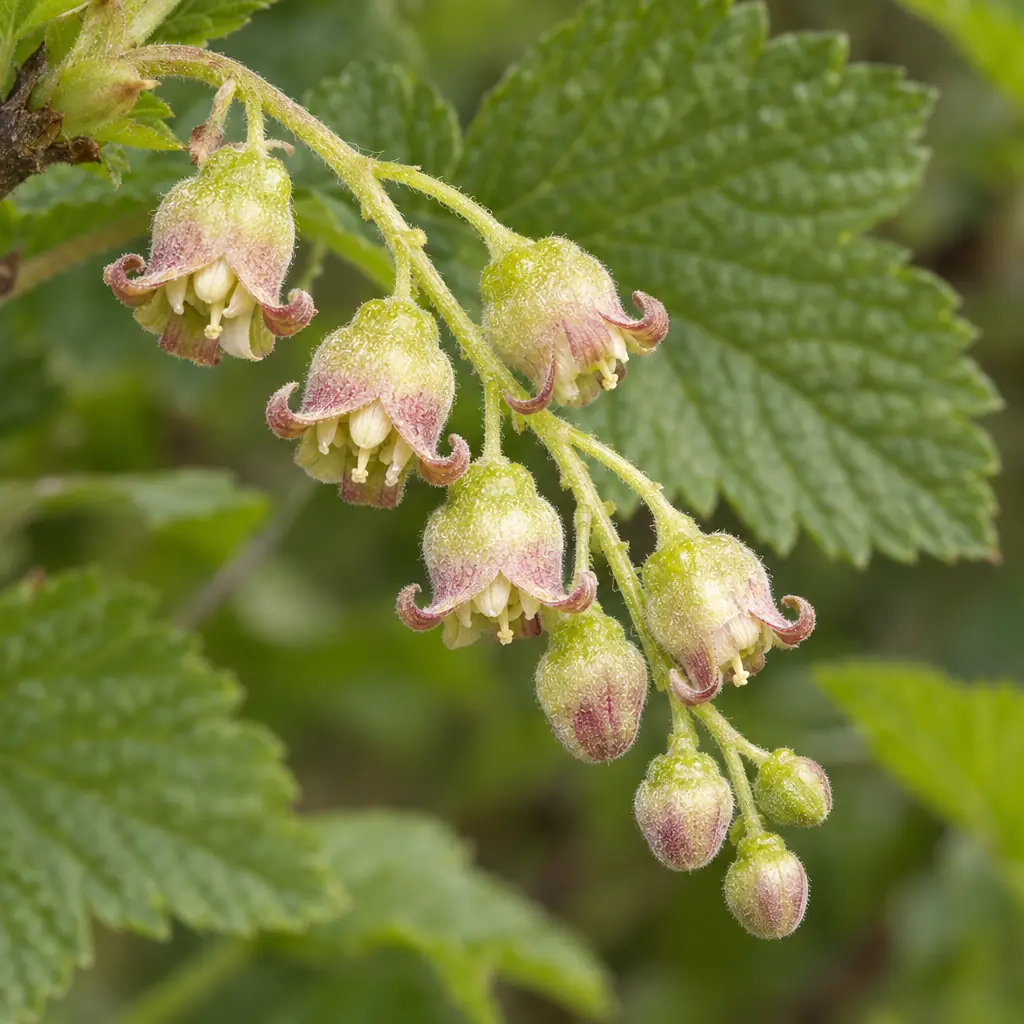
Flower 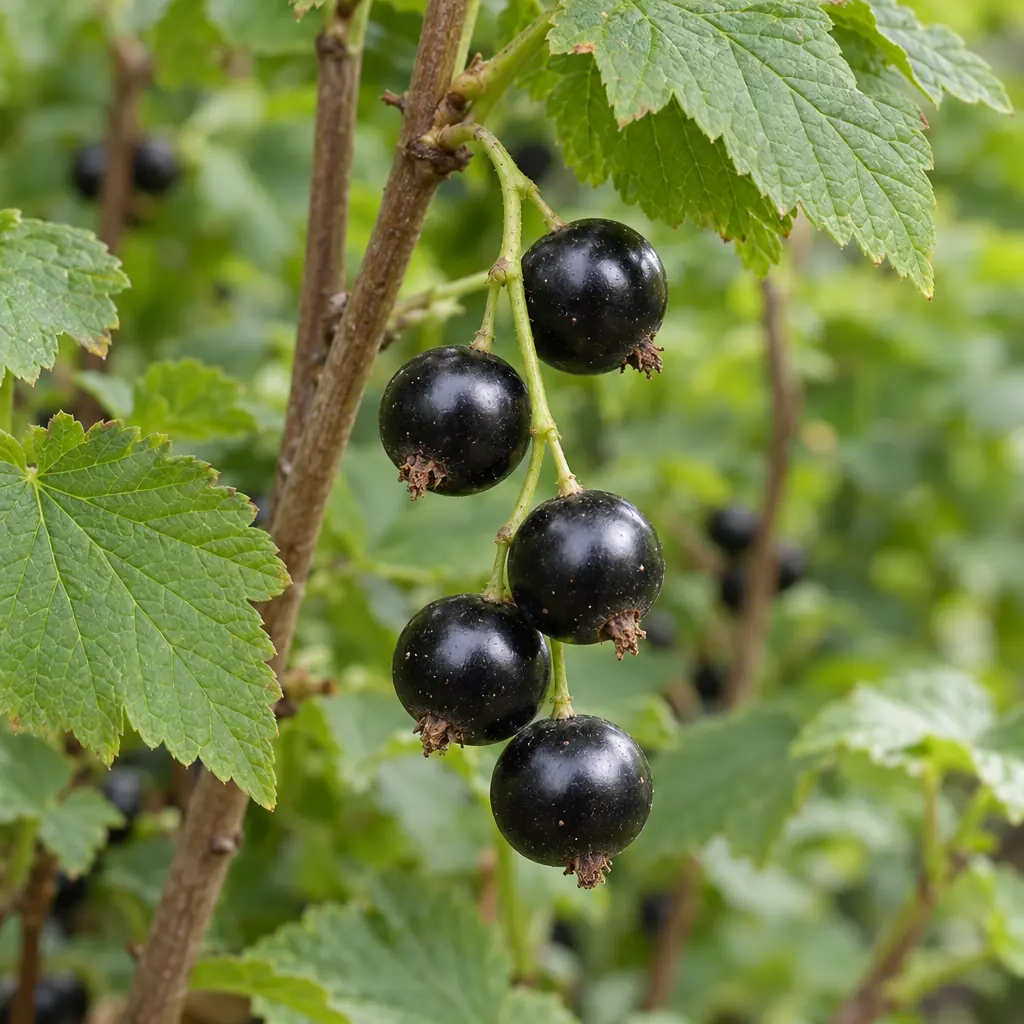
Fruit
How do you recognise a blackcurrant bush?
The stems grow upright, branch little and carry no prickles. The leaves are hand-shaped, with three to five lobes and a toothed edge. The two outer lobes are sometimes barely visible. Small yellow to brown glands sit on the underside.
The flowers hang in long clusters. Each bell is 7 to 8 millimetres long, reddish or brownish green. Berries follow: glossy black and 1.2 to 1.5 centimetres across.
Two relatives look similar. Gooseberry carries prickles on its stems. Redcurrant has none either, but its berries are red with a somewhat translucent skin. Rub a leaf to tell them apart: only blackcurrant leaves carry a scent, and it is the scent of blackcurrant.
Where does a blackcurrant bush grow best?
Blackcurrant prefers full sun. Partial shade also works: a spot that gets three to six hours of direct sun around midsummer. Clay, loam and sand all suit it, as long as the soil stays moist and water still drains away. In the wild the bush grows in wet woodland.
Three spots make this bush struggle:
- Dry sandy soil. In summer it dries out fast, and the roots want moisture.
- A hollow where water sits after rain. Moist is good, but the soil still needs to drain.
- A cold corner still prone to frost in April. Frost during flowering costs part of the crop.
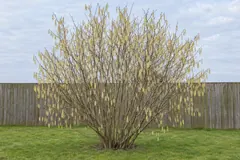
In winter the blackcurrant is bare, with only straight brown stems.
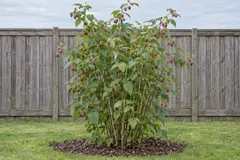
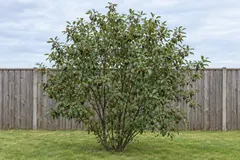
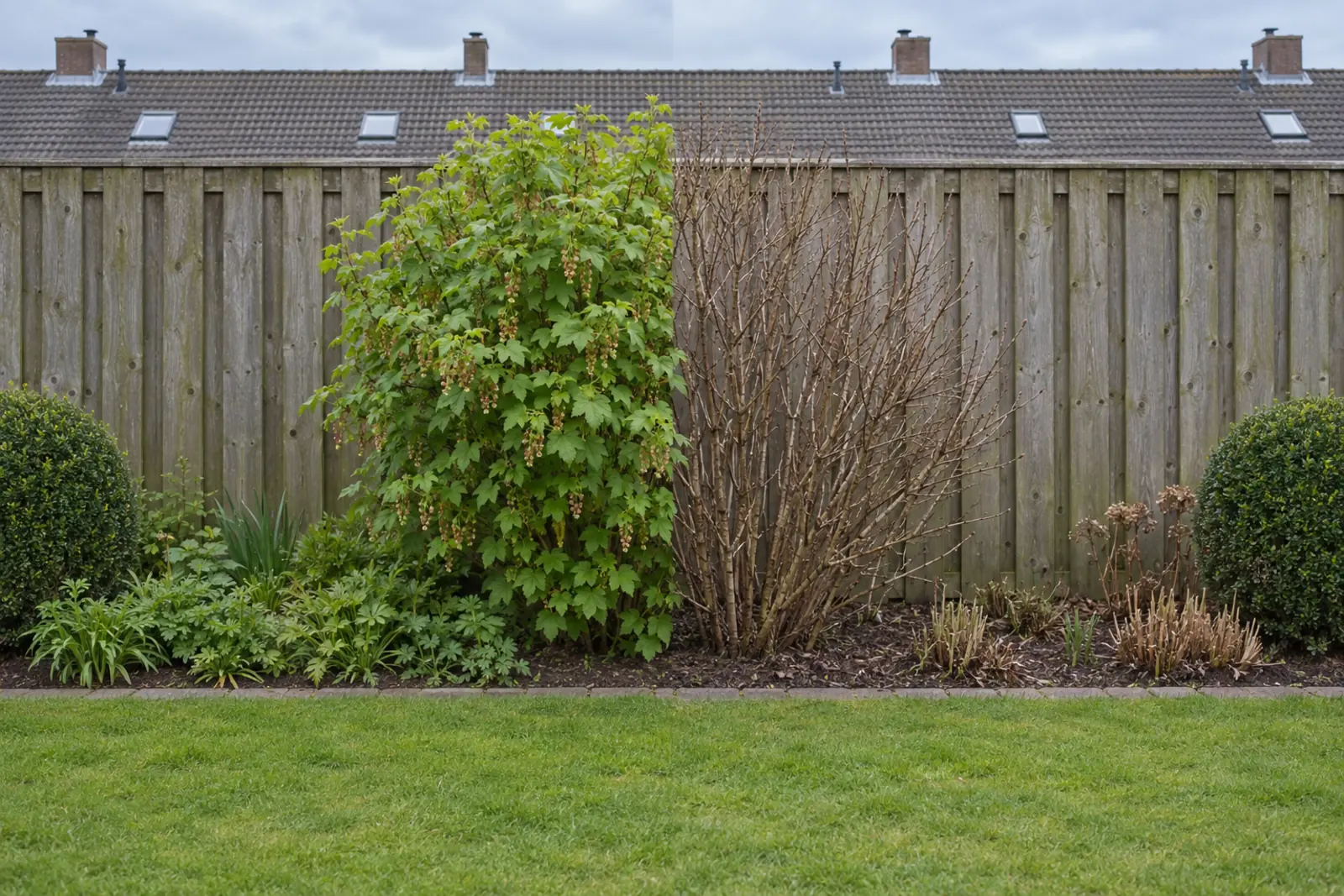 The same border in May and in January. This is a generated image, not a photo.
Next to a terrace, a shrub one and a half metres wide takes up more room than a young bare-root bush of 60 centimetres suggests. Place it on a plan of your own plot first: the app draws the plant at a grown plant's width, not at pot size.
Planting and caring for a blackcurrant bush
Plant a bare-root shrub from the end of October to March, but not into wet or frozen soil. A potted shrub can go into the ground all year round. Set the plant 5 centimetres deeper than it stood before.
Leave 1.5 metres between two shrubs. On planting day that looks like a lot of space for a few cut-back stubs. After a few years the gap fills in. Water it for the first two years whenever it stays dry for long, and spread compost around the base.
| When | What to do |
|---|---|
| Right after planting | Cut all stems back to one or two buds above the ground |
| Every winter, from the fourth year | Saw off up to a third of the oldest stems at ground level |
The berries grow mostly on young stems from the last few years. Many birds breed from March to the end of July, and a nest is protected during that time. Winter pruning falls outside it.
Blackcurrant bush problems and what to do
The buds are thick and round. In winter you see swollen buds like this. Inside sits a tiny mite. Such buds produce little leaf and few flowers in spring. Pick them off in winter and throw them well away from the bush. If the bush is full of them, replace it after the harvest.
Birds eat the berries. Lay a net over the bush before the berries ripen.
The leaves curl. Look on the underside: aphids often sit there. They suck at the leaf, and it deforms as a result.
Few berries appear. Frost during flowering can be the cause. Cover the bush on a frosty night with cloth on stakes. Take it off in the morning, so insects can pollinate the flowers. A bush that is never pruned also crops less.
The bush hangs limp on a warm day. Feel whether the soil is dry. If it is, give it a full watering can.
Which birds and insects use a blackcurrant bush?
The caterpillar of the currant clearwing moth lives mainly on redcurrant and blackcurrant. This moth flies from mid-May to the end of July. In sunny weather it flutters around the bush and often settles on the leaves. The species is fairly rare and lives mainly in gardens and allotments.
Which birds eat the berries is not well described for this bush.
Is blackcurrant poisonous or edible?
No part of blackcurrant is known to be poisonous. The glossy black berries are edible, raw or cooked. Ripe, they taste sweet. More often they are cooked into jam or a tart.
The photos on this page were made with AI, based on real photos and descriptions of this plant.
Frequently asked questions
How big does a blackcurrant bush grow?
A blackcurrant bush grows 0.6 to 1.5 metres tall and 1 to 1.5 metres wide. It reaches that size after 2 to 5 years.
When do you prune a blackcurrant bush?
In winter. From the fourth year, saw off up to a third of the oldest stems at ground level. Berries grow mostly on young stems from the last few years.
How much sun does a blackcurrant bush need?
Ideally full sun. Partial shade also works: a spot that gets three to six hours of direct sun around midsummer.
Is blackcurrant poisonous?
No, no part of blackcurrant is known to be poisonous. The berries are edible, raw or cooked.
Is blackcurrant native to the Netherlands?
Yes, blackcurrant is native to the Netherlands. In the wild the bush grows in wet woodland.
Sources (18)
- Duistermaat, Sparrius & Denters, Standaardlijst van de Nederlandse flora 2020 (Gorteria 43)
- NDFF Verspreidingsatlas — Ribes nigrum
- Flora van Nederland — Zwarte bes
- Flora van Nederland — Aalbes
- RHS — Ribes nigrum (blackcurrant)
- RHS — Shade gardening (definities zon en halfschaduw)
- RHS — Blackcurrants: grow your own
- RHS — Blackcurrant big bud mite
- PFAF — Ribes nigrum
- Imkerpedia — Drachtplanten
- Pollennieuws — Aandachtspunten hooikoortsvriendelijke tuin
- De Vlinderstichting — Bessenwespvlinder
- Vogelbescherming — Snoeien in het broedseizoen, mag dat?
- Tuinplantenbezorgd — Zwarte bes, kale wortel (prijs)
- Ten Hoven Bomen — Zwarte bes (prijs)
- Wikimedia Commons — Leaf: photo by W.carter (Public domain)
- Wikimedia Commons — Flower: photo by Line Sabroe (CC BY 2.0)
- Wikimedia Commons — Fruit: photo by Dāvis Mosāns (CC0)