5 min read
Red clover: planting, care and the insects it feeds
Trifolium pratense
Red clover (Trifolium pratense) is a low wild perennial with round, purplish-red flower heads. The plant grows 15 to 50 centimetres tall and flowers from May into October. Bumblebees and butterflies drink its nectar. Red clover wants sun and soil that has not been manured. The species is originally native to the Netherlands.
Red clover at a glance
| Feature | Red clover |
|---|---|
| Height | 0.15 to 0.5 m, sometimes 0.8 m |
| Spread | 0.1 to 0.5 m |
| Full grown after | 2 to 5 years |
| Sun | Full sun |
| Soil | Moderately dry to moist, not manured |
| Water | Average |
| Maintenance | Low: no pruning needed |
| Flowers | May to October, purplish red |
| For bees | Little: some nectar and pollen, May to October |
| Hay fever | Not or weakly allergenic |
| Leaves | Drop in winter |
| Hardy | Yes |
| Native | Yes |
| Poisonous | Not known as a poisonous plant |
| Pricks or stings | No |
| Price, young | About €3.25 to €4.09 per plant, as a plug plant or in a small pot |
| Price, grown | Not for sale |
- Leaf
- April to November
- Flower
- May to October
- Fruit
- no noticeable fruit
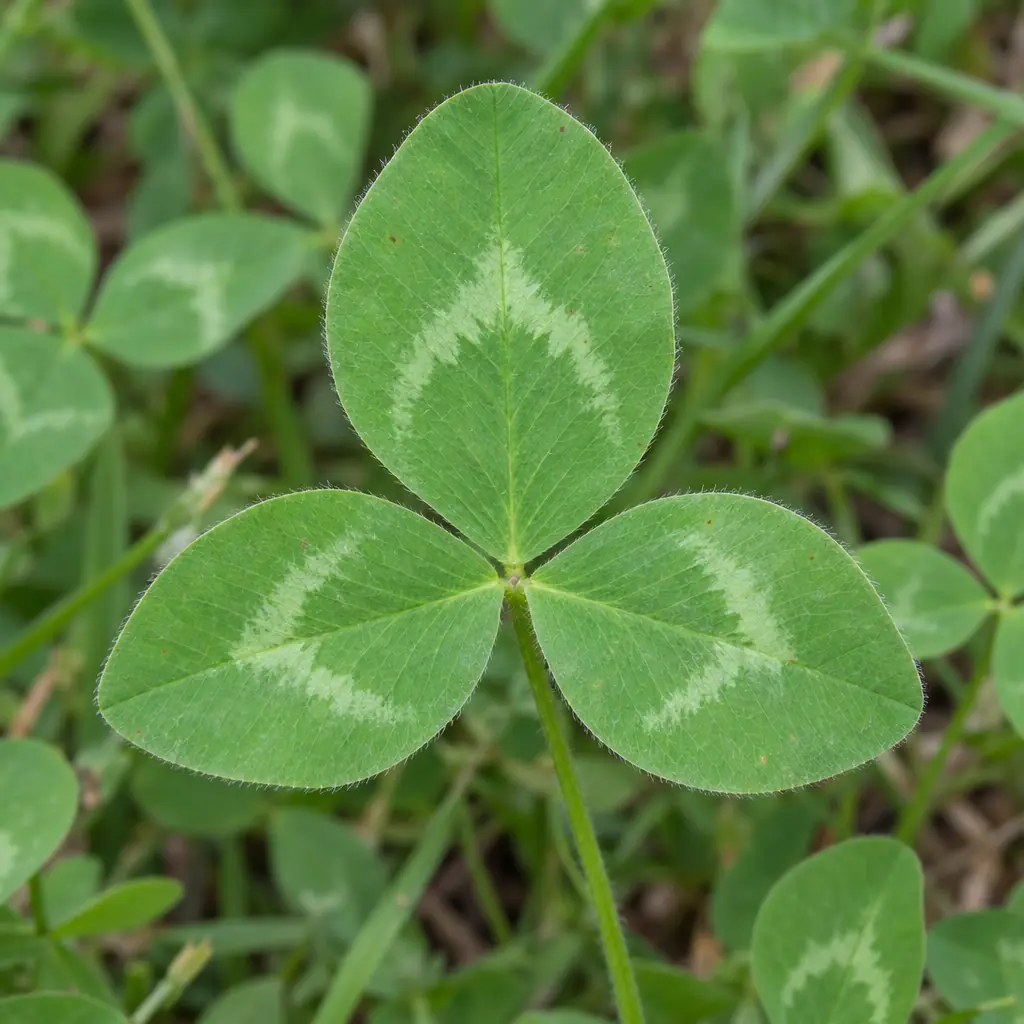
Leaf 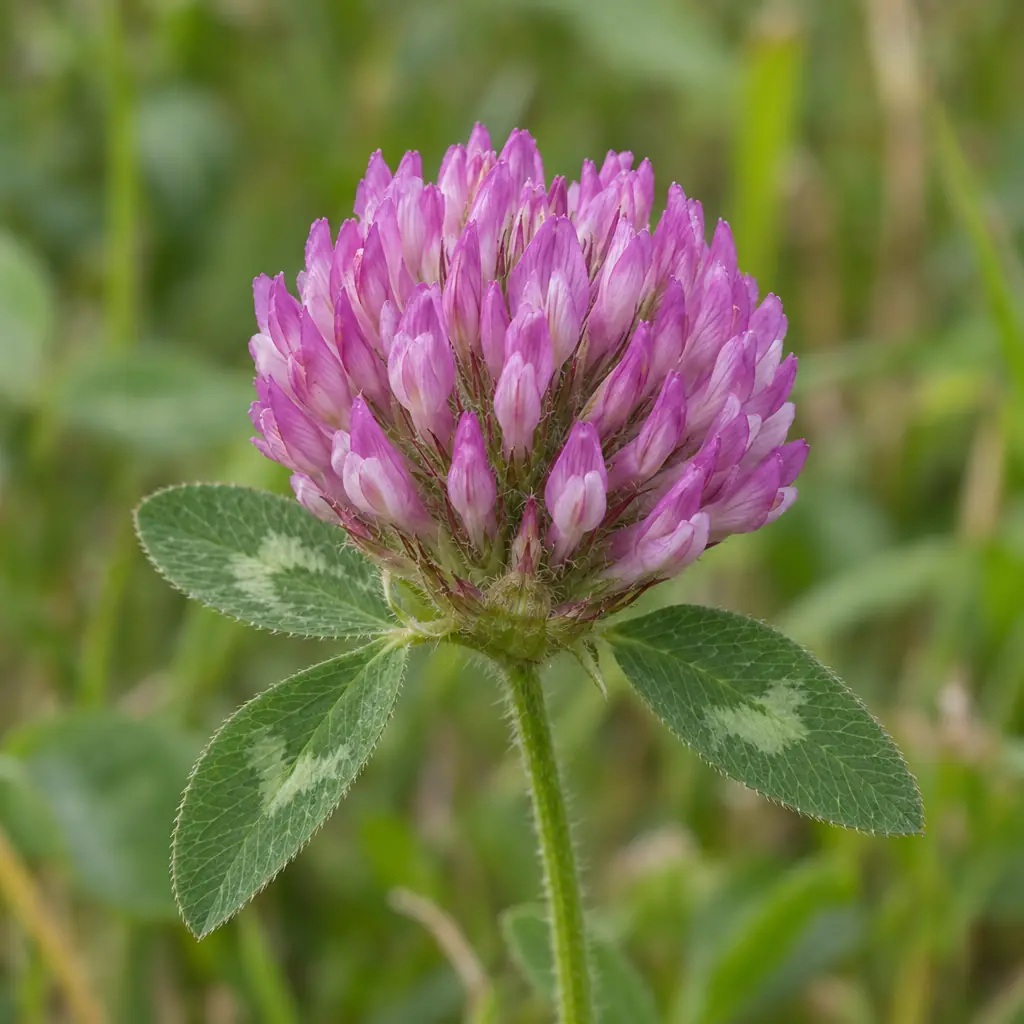
Flower
How do you recognise red clover?
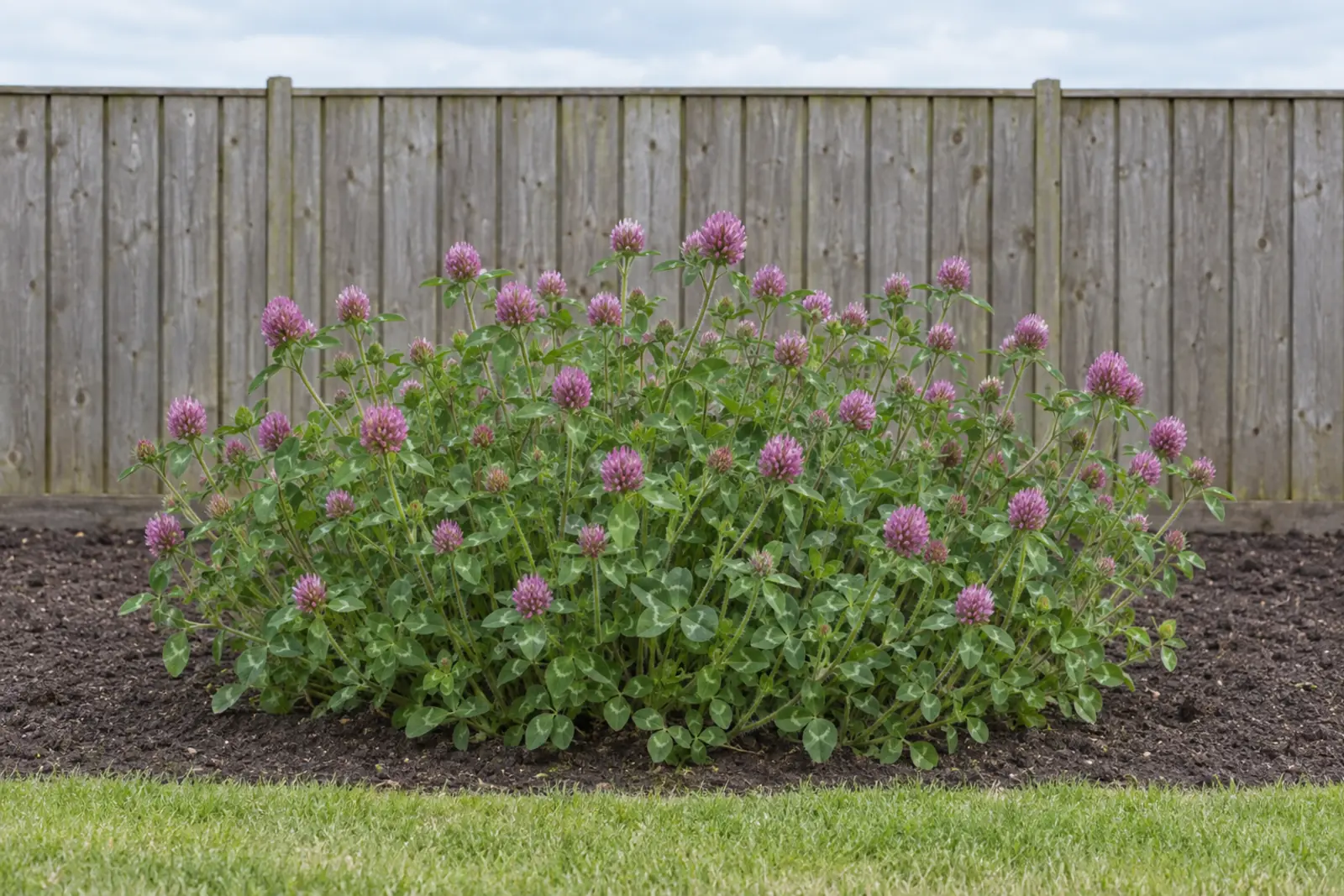
Start with the leaves. Each leaf is made up of three oval to oblong leaflets, hairy on both sides. In the middle of every leaflet sits a pale mark shaped like a V. The lower leaves have long stalks, while the upper ones sit almost directly on the stem. From a rosette, the hairy stems curve upwards.
The flower heads are round to egg-shaped and 2 to 3 centimetres across. Each head is packed with small flowers, usually purplish red, sometimes flesh-coloured or white. Most heads sit in a small collar formed by the two top leaves.
Zigzag clover (Trifolium medium) looks the most like it. That species has narrower leaflets, with a mark you can hardly see. Its stem also zigzags between the leaves. Seed needs a second look too: some seed sold in the Netherlands as rode klaver turns out to be crimson clover (Trifolium incarnatum). Crimson clover flowers bright red, in straight spikes up to 7 centimetres long.
Where does red clover grow best?
Red clover wants full sun. Around midsummer that means more than six hours of direct sunlight a day. Moderately dry to moist soil suits the plant. Sand, loam, clay and peat all work, and slightly acid soil is fine.
Two kinds of spot are better left out:
- A border that gets manure every year. Red clover wants soil low in nitrogen. Small nodules on its roots take that nitrogen from the air themselves.
- A low patch where water lies after a shower. The plant needs soil in which rainwater drains away.
The leaves die back in winter. In January there is little of the clover left to see.
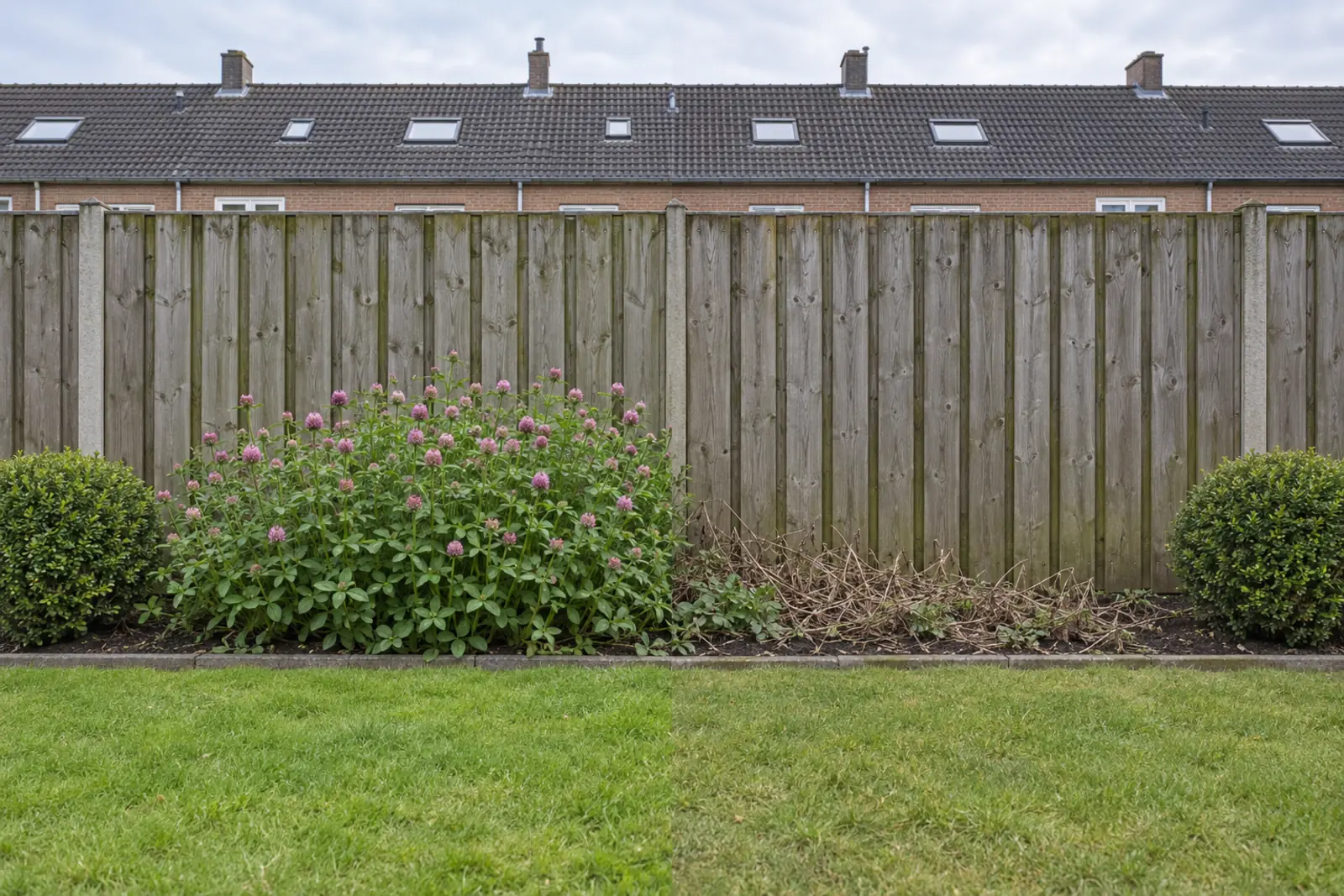 The same border in May and in January. This is a generated image, not a photograph.
A few plants together fill a sunny strip between lawn and border. When you put that strip on the map of your own plot in the app, the app draws the plant at a grown plant's width, not at pot size.
Planting and caring for red clover
Red clover is sold as a plug plant: a small plant with a little ball of soil. A small pot works too. For sowing, seed comes in packets. A plant from a pot can go in the ground at any time of year, as long as the ground is not frozen or waterlogged.
Allow for 8 to 11 plants per square metre. Such a bed looks empty for the first few weeks, because a plug plant is only a few centimetres in size. In the first year, water during dry weeks.
Red clover needs no pruning or cutting back. The plant grows without your help.
What goes wrong with red clover?
The plant has disappeared after a few years. Red clover is a short-lived perennial. Sow or plant again.
The clover hardly flowers. Check whether the spot gets enough sun. Red clover does not grow in shade. Put a new plant in a sunny patch.
A new plant droops after a dry week. Water it well a few times. Once established, the clover has a deep taproot and copes with drought.
Pests and diseases rarely trouble red clover.
Which insects and birds use red clover?
The garden bumblebee (Bombus hortorum) has a long tongue. For that reason this bumblebee favours flowers with a long tube, such as red clover. In spring the wall brown (Lasiommata megera) drinks nectar from bramble and red clover, among other plants. This butterfly used to be common across the Netherlands. Since 1990 its numbers have fallen sharply.
No bird species is named in the descriptions of red clover.
Is red clover poisonous or edible?
Red clover is not known as a poisonous plant. The young leaves and young flower heads are eaten raw or cooked. Diseased clover, however, can contain toxic alkaloids, even when nothing shows on the plant. Red clover has no thorns or prickles.
The photos on this page were made with AI, based on real photos and descriptions of this plant.
Frequently asked questions
How tall does red clover grow?
Usually 15 to 50 centimetres, sometimes up to 80 centimetres. A grown plant is at most half a metre wide.
How long does red clover live?
Red clover is a perennial that lasts only a few years. To keep the clover in your garden, plant or sow more every few years.
Is red clover good for bees?
For honeybees, not much: the plant gives them some nectar and pollen. The garden bumblebee has a long tongue and prefers flowers with a long tube, such as red clover.
Is red clover poisonous?
No, red clover is not known as a poisonous plant. Diseased clover can contain toxic alkaloids, though, even when nothing shows on the plant.
Sources (21)
- Duistermaat, Sparrius & Denters, Standaardlijst van de Nederlandse flora 2020 (Gorteria 43)
- NDFF Verspreidingsatlas — Trifolium pratense
- Flora van Nederland — Rode klaver
- Flora van Nederland — Bochtige klaver
- Flora van Nederland — Inkarnaatklaver
- Bakker — Rode klaver BIO (zaad van Trifolium incarnatum)
- RHS — Trifolium pratense
- RHS — Shade gardening (definities zon en schaduw)
- RHS — Perennials: planting (vaste planten uit een pot)
- PFAF — Trifolium pratense
- Pollennieuws / Flora van Nederland — Aandachtspunten hooikoorts vriendelijke tuin
- Imkerpedia — Drachtplanten
- Antigifcentrum — Lijst van weinig of niet giftige planten
- EIS Kenniscentrum Insecten en Naturalis — Zoekkaart bijen in de tuin
- De Vlinderstichting — Argusvlinder
- De Vlinderstichting — Klaverblauwtje
- Cruydt-Hoeck — Rode klaver (prijs)
- Bloemerij — Trifolium pratense (prijs)
- Bloemenpark Appeltern — Trifolium pratense (planten per m²)
- Wikimedia Commons — Leaf: photo by Harry Rose from South West Rocks, Australia (CC BY 2.0)
- Wikimedia Commons — Flower: photo by Jac. Janssen from Baarlo lb, NL (CC BY 2.0)