5 min read
Small scabious: how to recognise, plant and care for it
Scabiosa columbaria
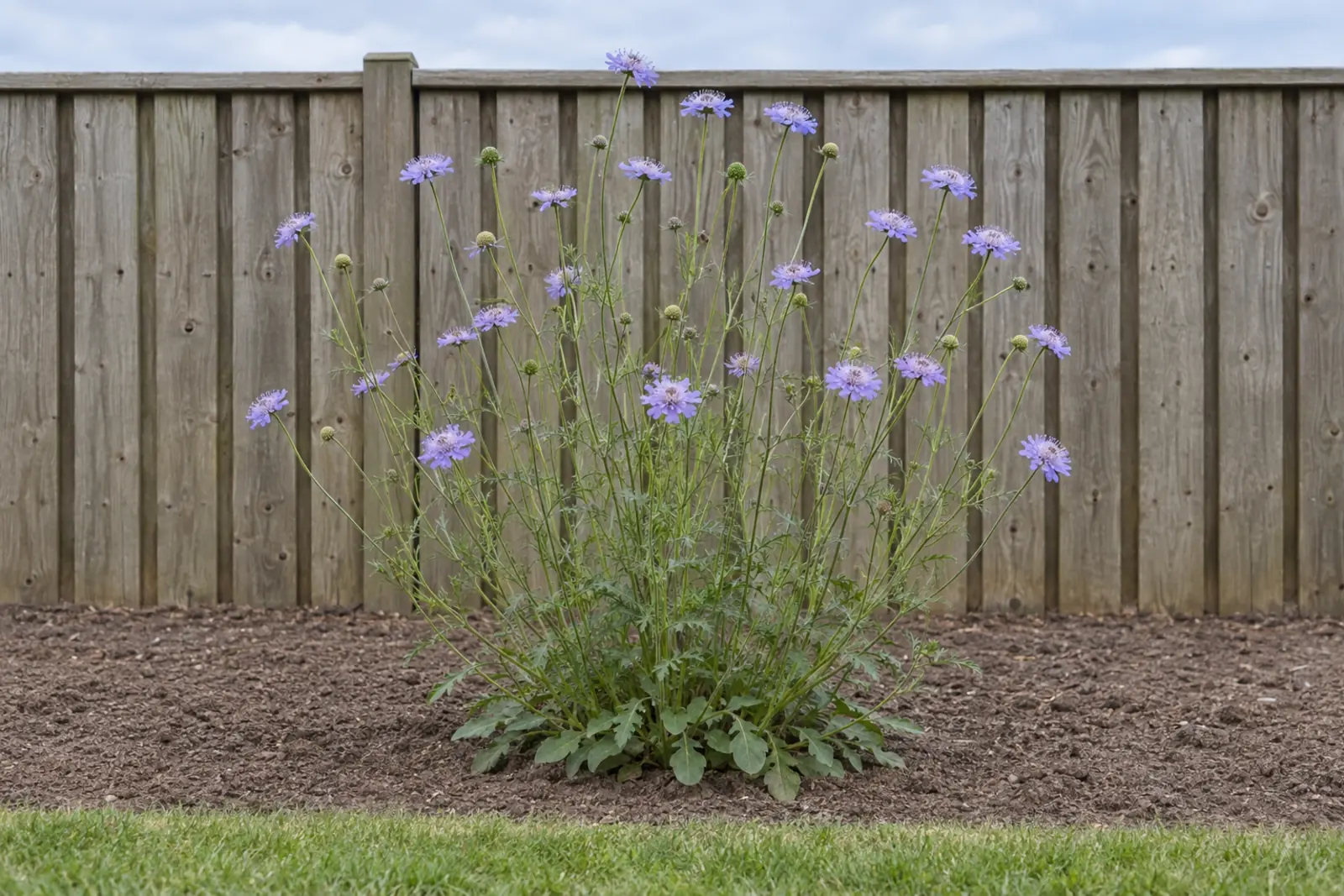
Small scabious (Scabiosa columbaria) is a wild perennial for a sunny, dry spot. The plant grows 30 to 90 centimetres tall. From July to September, fairly flat lilac-blue flower heads sit on long, thin stalks. Bees collect nectar and pollen from them. Small scabious wants free-draining soil with some lime and is originally native to the Netherlands.
Small scabious at a glance
| Feature | Small scabious |
|---|---|
| Height | 0.3 to 0.9 m |
| Spread | 0.1 to 0.5 m |
| Full grown after | 2 to 5 years |
| Sun | Full sun |
| Soil | Dry to slightly moist, preferably limy |
| Water | Little: free-draining soil |
| Maintenance | Low: cut the stems down in autumn |
| Flowers | July to September, lilac-blue |
| For bees | Yes: nectar and pollen, July to September |
| Hay fever | Not or weakly allergenic |
| Leaves | Drop in autumn |
| Hardy | Yes |
| Native | Yes |
| Poisonous | No, as far as anyone knows |
| Pricks or stings | No |
| Price, young | About €3.50 to €4.61 per plant, in a small pot |
| Price, grown | About €6.50 to €6.95 per plant, in a larger pot, sometimes from 10 plants |
- Leaf
- April to October
- Flower
- July to September
- Fruit
- no noticeable fruit
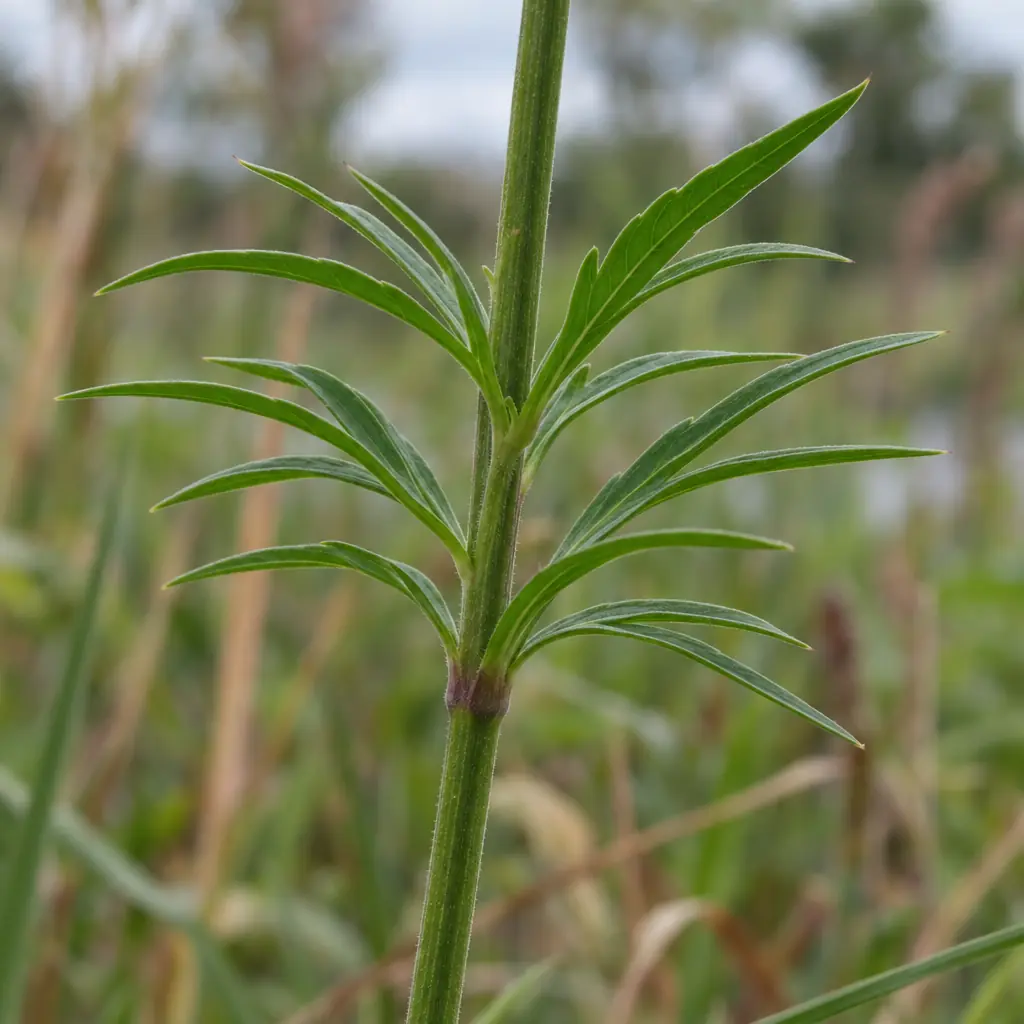
Leaf 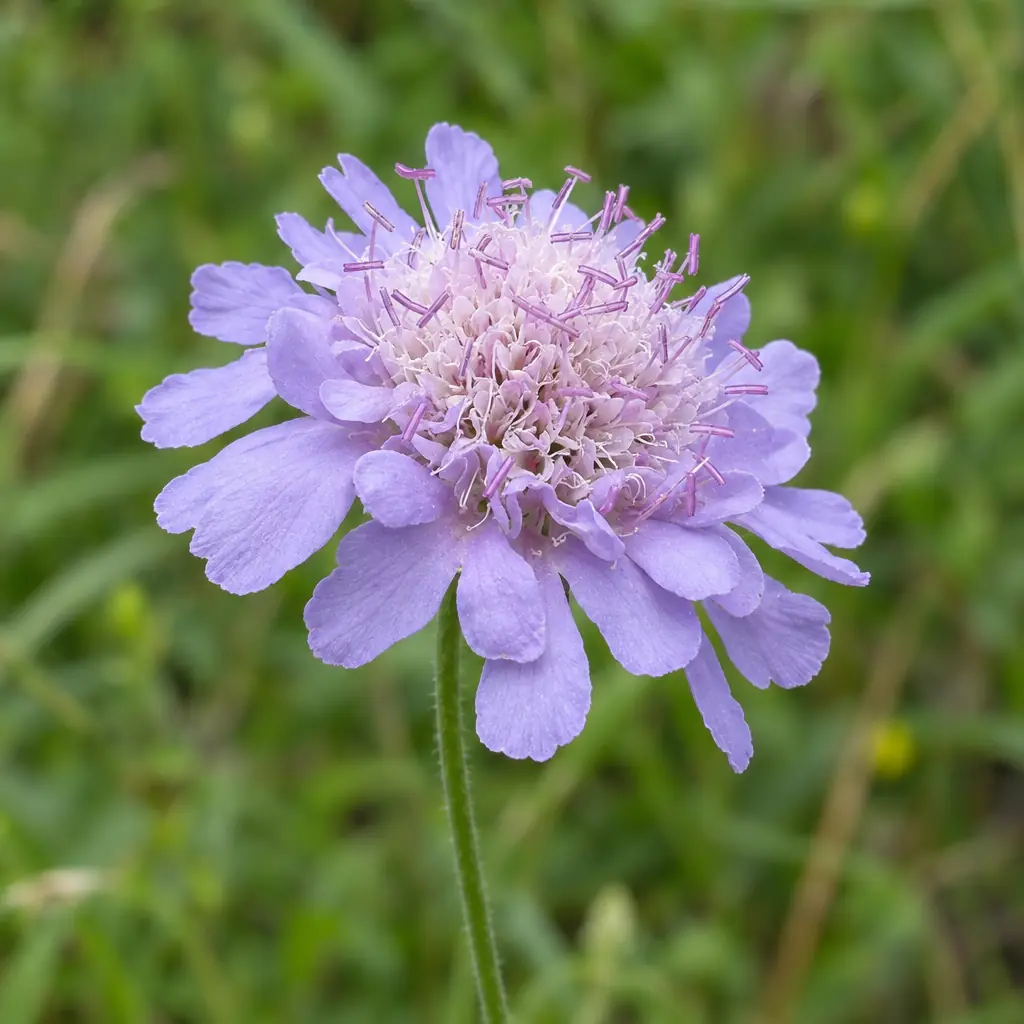
Flower
How do you recognise small scabious?
Look low down first. A rosette of spoon-shaped leaves sits close to the ground, often cut into lobes, with one large lobe at the tip. Further up the stem the leaves get finer and finer. Near the top, each leaf is split deeply into narrow strips. The round stems are thin, branch just above the base and carry hardly any hairs.
One flower head tops each stalk, 1.5 to 4 centimetres wide and fairly flat. The florets on the rim are bigger than those in the middle and face outwards. Once flowering ends, a round seed head is left, and each small fruit keeps five stiff hairs.
Field scabious and devil's-bit scabious (Succisa pratensis) look the most like it. Pull one floret out of the head and count the points at its tip. Small scabious has five, while those two species have four. Garden centres also sell 'Butterfly Blue', a cultivated form of small scabious. That form stays around 40 centimetres tall and starts flowering as early as June.
Where does small scabious grow best?
Small scabious needs full sun, which means more than six hours of direct sun a day around midsummer. Dry to slightly moist soil suits it, low in nutrients and preferably rich in lime. In the wild the plant is rare, found in South Limburg and in the river area. The Dutch Red List ranks it as endangered, after a decline of 50 to 75 per cent since 1950.
Two kinds of garden soil hold small scabious back:
- Heavy clay that stays wet all winter. The plant copes badly with wet soil in winter. Choose a spot where rainwater sinks away quickly.
- Acid soil. Small scabious grows best on neutral to limy soil. Acid soil lacks exactly that lime.
There is little to see of the plant in winter. Once the stems are cut in autumn, January shows only a low tuft of dry stubs.
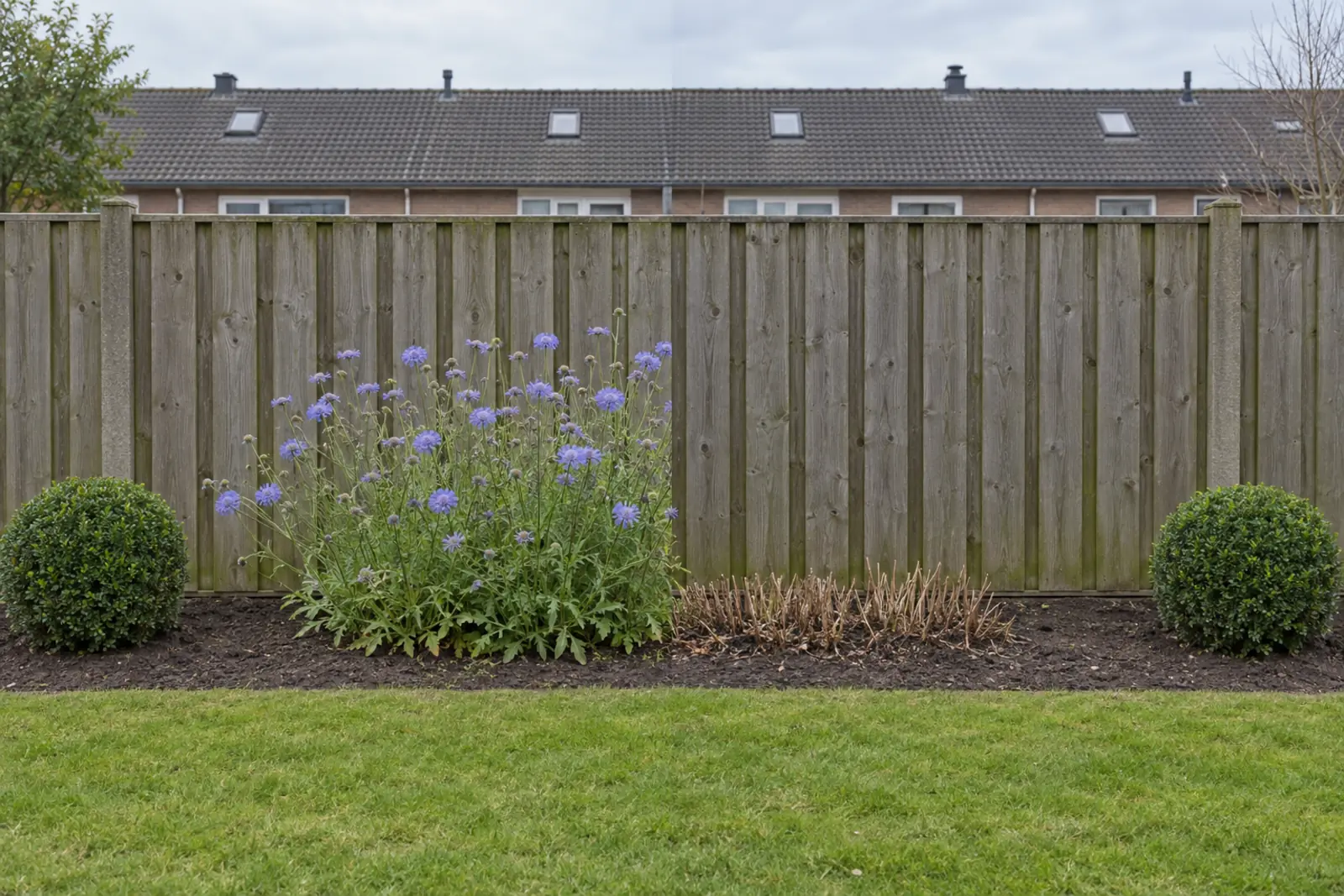 The same border in August and in January. This is a generated image, not a photograph.
Small scabious takes up little room. A narrow strip along the terrace often has space for a few plants. On the plan of your own garden, the app draws the plant at a grown plant's width, not at pot size.
Planting and caring for small scabious
Small scabious comes as a young plant in a pot, labelled duifkruid in Dutch nurseries. Any season works for planting, provided the ground is neither frozen nor waterlogged. Dig the hole deep enough to cover the roots, with the base of the stems left above the soil. Water well afterwards, even when rain is on the way.
Keep about 30 centimetres between plants. That puts 8 to 11 on a square metre. On planting day this looks like a lot of bare soil, because a young plant is still small. In the first year, water during dry weeks. A perennial needs it most in that year.
| When | What to do |
|---|---|
| July to September | Cut off faded flower heads, so the plant flowers for longer |
| In autumn | Cut the old stems down to just above the ground |
Many bird species nest from March through July, and some carry on into August. The summer deadheading falls in that period, so look between the stems before you cut.
What goes wrong with small scabious?
Only a few flowers appear. Check the light first: small scabious belongs in full sun. If the plant grows in a darker spot, put a new one in a sunny place.
The plant does not come back in spring. Wet soil in winter is then the first suspect. Put a new plant where water drains away quickly.
A new plant wilts in a dry week. Water it until the soil around the roots is moist.
Pests and diseases rarely trouble small scabious.
Which insects and birds use small scabious?
The caterpillar of the grey pug (Eupithecia subfuscata) feeds on small scabious, among other plants. This moth is fairly common and lives in gardens too. Even so, the provisional Red List ranks it as vulnerable. The caterpillars are not fussy: yarrow, St John's wort and goldenrod are also on their menu.
The large scabious mining bee (Andrena hattorfiana) is endangered and gathers its food almost only from field scabious. Visits to small scabious are occasional. In the Netherlands, small scabious is therefore not an important plant for this bee.
No bird species has been recorded by name eating the seeds of small scabious.
Is small scabious poisonous or edible?
Small scabious is not known as a poisonous plant. That does not mean you can eat it. Almost nothing has been described about small scabious as food. The plant has no thorns or prickles, and its thin stems are only lightly hairy.
The photos on this page were made with AI, based on real photos and descriptions of this plant.
Frequently asked questions
How tall does small scabious grow?
Small scabious grows 30 to 90 centimetres tall. A grown plant is 10 to 50 centimetres wide, so it also fits a narrow border.
When does small scabious flower?
From July to September. Cutting off the faded flower heads regularly keeps the plant flowering for longer.
Is small scabious good for bees?
Yes. Small scabious gives nectar and pollen from July to September. The caterpillar of the grey pug, a moth, also feeds on the plant.
Is small scabious poisonous?
No, small scabious is not known to be poisonous. That does not make the plant edible: almost nothing has been described about its use as food.
When should you cut back small scabious?
In autumn the old stems come off to just above the ground. In summer you can cut off the faded flower heads.
Sources (22)
- Duistermaat, Sparrius & Denters, Standaardlijst van de Nederlandse flora 2020 (Gorteria 43)
- NDFF Verspreidingsatlas — Scabiosa columbaria
- Flora van Nederland — Duifkruid
- RHS — Scabiosa columbaria
- RHS — Shade gardening (definities zon en schaduw)
- RHS — Perennials: planting (vaste planten uit een pot)
- PFAF — Scabiosa columbaria
- Pollennieuws / Flora van Nederland — Aandachtspunten hooikoorts vriendelijke tuin
- Imkerpedia — Drachtplanten
- Antigifcentrum — Lijst van weinig of niet giftige planten
- De Vlinderstichting — Duifkruid (waardplant)
- De Vlinderstichting — Grijze dwergspanner
- EIS Nederland — De Knautiabij: kroon op de Beemdkroon (rapport EIS2008-09)
- Vogelbescherming — Snoeien in het broedseizoen, mag dat?
- Ecoflora — Scabiosa columbaria (prijs)
- Cruydt-Hoeck — Duifkruid (prijs)
- Puur van 't Veld — Duifkruid (prijs)
- Sprinklr — Duifkruid (prijs)
- Yarinde — Duifkruid (plantafstand)
- Heijnen Planten — Scabiosa columbaria 'Butterfly Blue'
- Wikimedia Commons — Leaf: photo by AnRo0002 (CC0)
- Wikimedia Commons — Flower: photo by AnRo0002 (CC0)