5 min read
Silverweed: planting and caring for a silver ground cover
Potentilla anserina
Silverweed (Potentilla anserina) is an original native perennial that creeps over the ground. Its pinnate leaves have a silvery sheen from a dense layer of fine hairs. In summer, single golden-yellow flowers stand above them. New plants keep growing along long, often reddish runners. Silverweed wants sun and moist soil, and it can take some rough treatment.
Silverweed at a glance
| Feature | Silverweed |
|---|---|
| Height | 5 to 30 cm |
| Spread | 0.1 to 0.5 m per plant, spreads by runners |
| Full grown after | 2 to 5 years |
| Sun | Full sun to partial shade |
| Soil | Moist to wet, also compacted |
| Water | Average: likes moist soil |
| Maintenance | Low: cut back the runners now and then |
| Flowers | May to August, golden yellow |
| For bees | Little: not on the Dutch honeybee forage lists |
| Hay fever | Not or weakly allergenic |
| Leaves | Drop in autumn |
| Hardy | Yes |
| Native | Yes |
| Poisonous | No, as far as is known |
| Pricks or stings | No |
| Price, young | About €2.49 to €4.09 each, young plant |
| Price, grown | Not for sale |
- Leaf
- April to October
- Flower
- May to August
- Fruit
- no noticeable fruit
Leaf 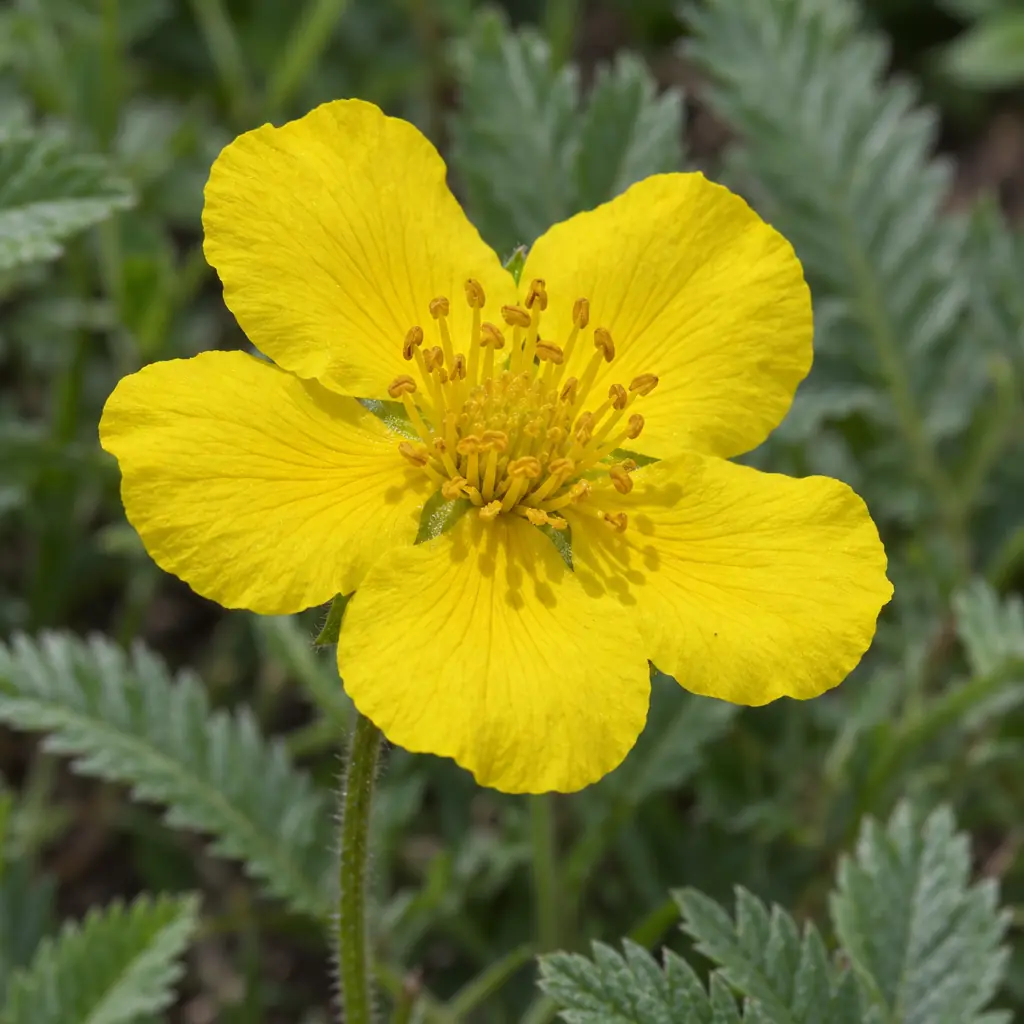
Flower
How do I recognise silverweed?
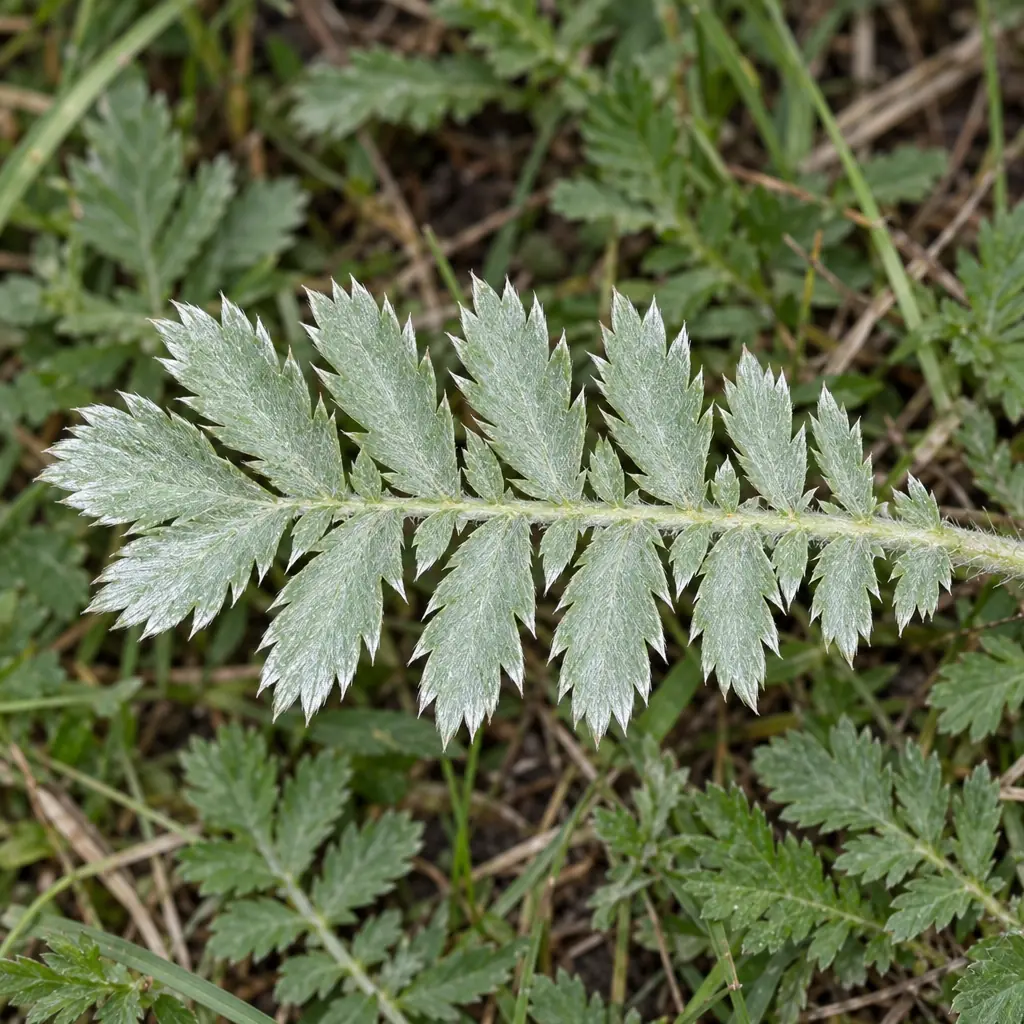
Turn a leaf over to see at once where the name comes from. The underside shines silver with dense, silky hairs. The upper side is often silvery too. Each leaf is 5 to 25 centimetres long and pinnate, a little like a fern leaf. Pairs of sharply toothed leaflets line the midrib, sometimes more than twenty. Small leaflets sit between the large ones.
The flowers are 1.5 to 3 centimetres across. Each one sits alone on a long, hairy stalk. The five petals are egg-shaped and rounded at the tip. After flowering, the stalk stays upright. The fruit is a small nutlet with one seed, and it is hard to spot.
The stems creep over the ground and are often reddish. At the nodes they put down roots, and a new plant grows there.
Creeping cinquefoil (Potentilla reptans) looks very similar: also yellow, also creeping, also with runners. The leaf tells them apart. Creeping cinquefoil almost always has five leaflets, spread like fingers from one point. Silverweed has a long leaf with many pairs of leaflets along one vein.
Where does silverweed grow best?
Silverweed does best in full sun. That means a spot with more than six hours of direct sunlight a day around midsummer. Some shade is tolerated as well. The soil can be moist to wet and moderately to very rich in nutrients. Compacted or disturbed soil is no problem, and the plant copes fairly well with being walked on. In the wild, look for silverweed on road verges, in grassland, on dikes, along water and on salt marshes.
Silverweed has a hard time in two places:
- Dry, poor sandy soil. The plant stays small there. Its roots reach only 10 centimetres deep and find too little moisture in dry sand.
- Among tall grass. A low mat gets too little light there. On a lawn edge, where the grass stays short, silverweed does well.
In winter the leaves drop. The buds for the new year then wait at soil level for spring.
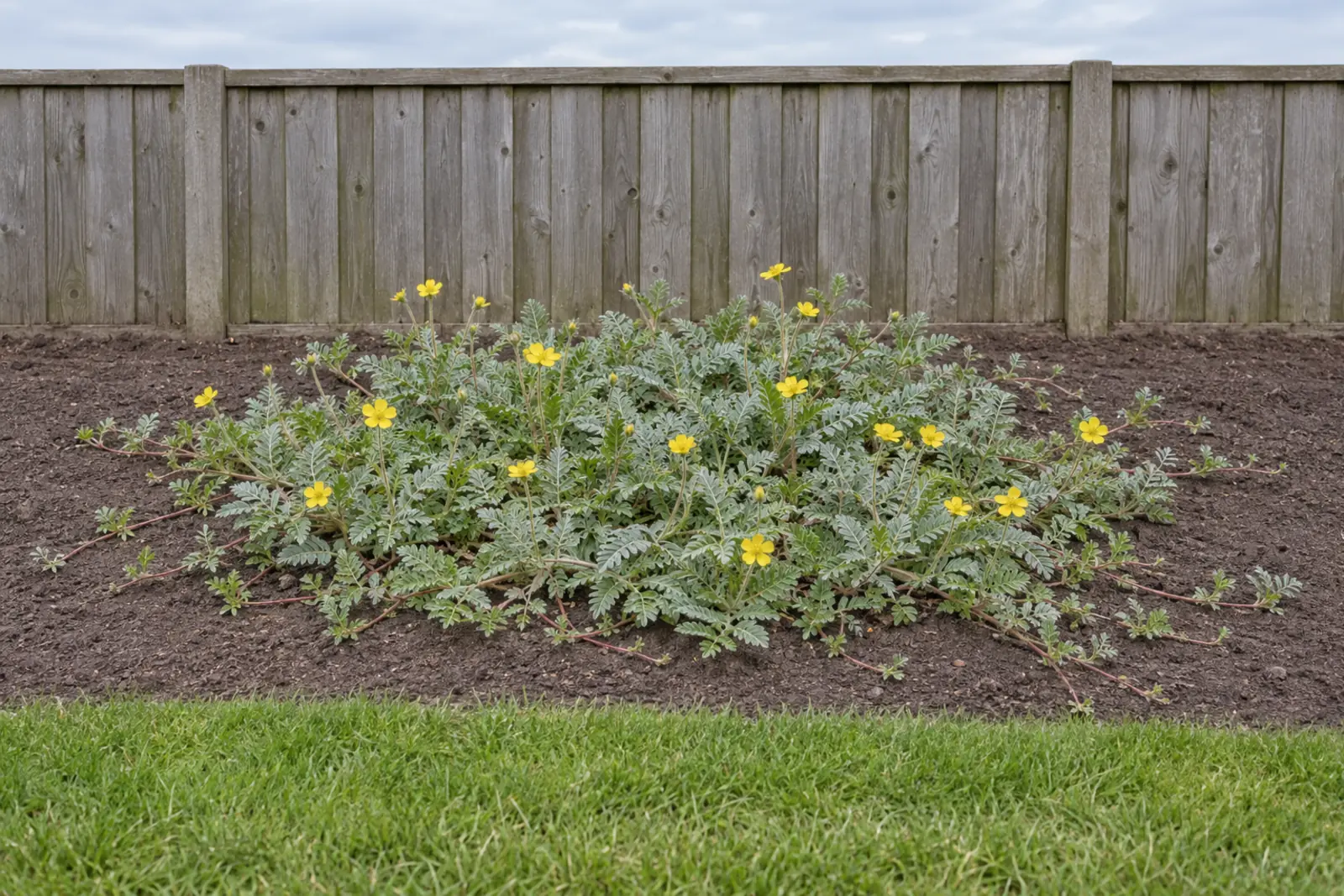
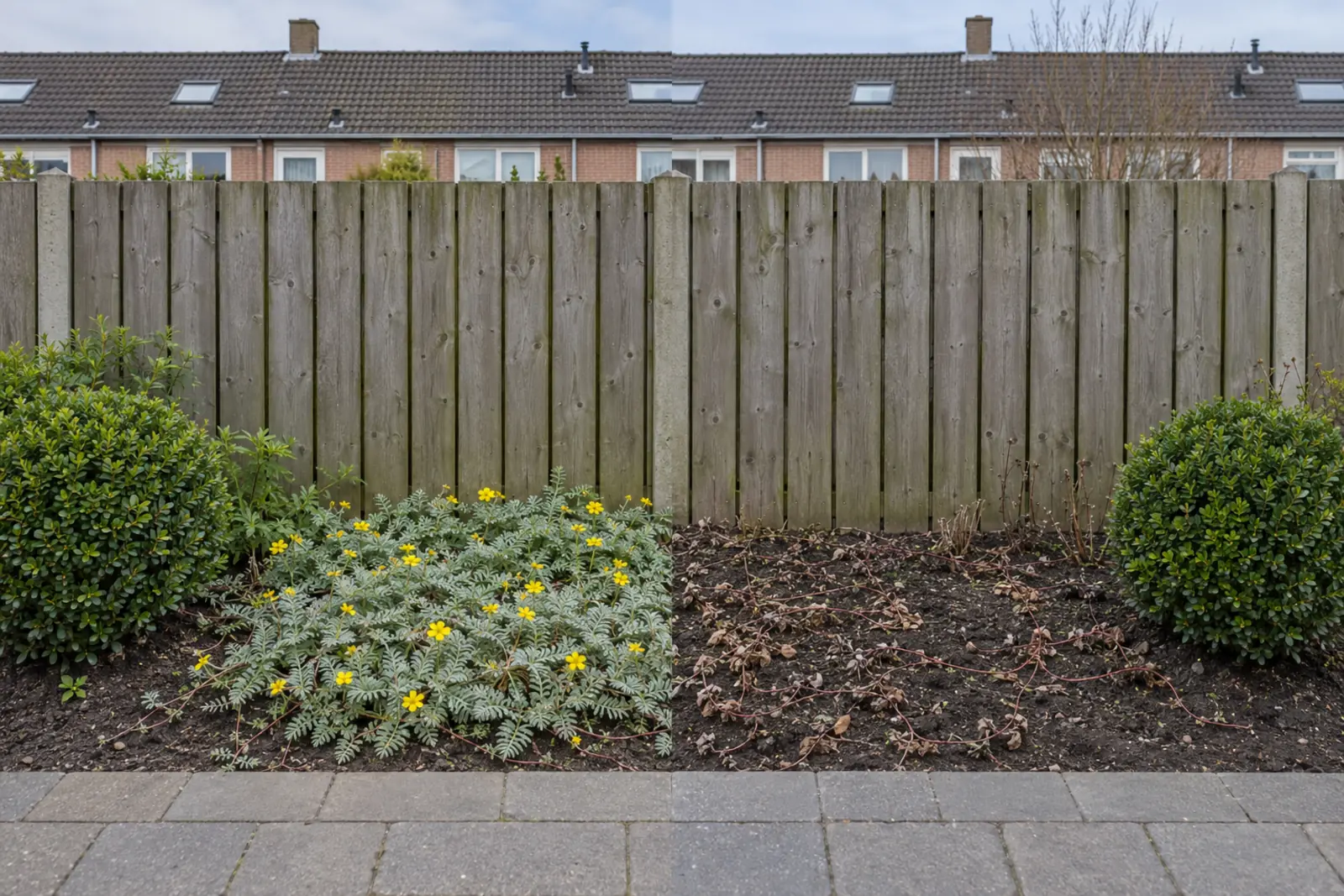 The same border in May and in January. This is a generated image, not a photo.
Once your lawn edge and paths are on the plan, you can see where a low silver edging fits beside the border. The app draws the plant at a grown plant's width, not at pot size.
Planting and caring for silverweed
Nurseries sell silverweed as a young plant. The best planting times are March to early May, or late September through October, when the soil is moist. A plant from a pot can go in at any time of year, as long as the ground is not frozen or waterlogged.
Set 9 to 12 plants per square metre, about 30 centimetres apart. On planting day that looks very wide, with lots of bare soil in between. The runners grow fast and fill those gaps by themselves. Water in well after planting, even if it has just rained. Keep the soil moist in the first year, especially in a dry summer.
Pruning is not needed. When silverweed creeps into a border, cut off the runners with a sharp spade. A piece cut off like that has its own roots, so you can replant it straight away somewhere else.
What can go wrong with silverweed?
The plant stays small and the leaves hang limp. The soil is too dry. Silverweed roots shallowly and needs moisture. Water in dry weeks, or move a few plants to a wetter spot.
Silverweed is growing everywhere among the other plants. The runners spread the plant quickly, and that can get out of hand. Cut off the runners along the edge of the border now and then. Pests are rare on silverweed.
The mat disappears under the grass. Tall grass blocks the light. Mow the grass around the plant now and then, and silverweed keeps its place.
Which insects and birds use silverweed?
Insects pollinate the flowers. No fixed link between silverweed and a particular butterfly, bee or bird has been described.
Is silverweed poisonous or edible?
Silverweed is not known as a poisonous plant. Edibility is a separate question, and for this species it has been described. The root is edible, raw or cooked. In the past, dried roots were also ground into flour. Young shoots can be eaten raw, and the leaves are used to make tea. The plant can irritate the stomach a little, though.
The photos on this page were made with AI, based on real photos and descriptions of this plant.
Frequently asked questions
How tall does silverweed grow?
Silverweed stays low. The leaves lie almost flat, and with the flower stalks included the plant usually reaches 5 to 30 centimetres.
Is silverweed invasive?
Yes, the plant spreads fast through long runners that root at the nodes. On a lawn edge or a verge, that is useful. Beside a border, cut the runners off now and then.
Is silverweed poisonous?
No, silverweed is not known to be poisonous. The root is edible, raw or cooked, and young shoots can be eaten raw. The plant can irritate the stomach a little, though.
How much sun does silverweed need?
Full sun suits it best: more than six hours of direct sunlight a day around midsummer. Silverweed also tolerates some shade, as long as the soil stays moist.
Is silverweed native to the Netherlands?
Yes, silverweed is an original native of the Netherlands. In the wild it grows on road verges, in grassland, on dikes and along water.
Sources (19)
- Duistermaat, Sparrius & Denters, Standaardlijst van de Nederlandse flora 2020 (Gorteria 43)
- NDFF Verspreidingsatlas — Potentilla anserina
- Flora van Nederland — Zilverschoon
- Flora van Nederland — Vijfvingerkruid
- Wilde planten in Nederland en België — Zilverschoon
- RHS — Potentilla anserina (silverweed)
- RHS — Shade gardening (definities zon en schaduw)
- RHS — Planting perennials
- PFAF — Potentilla anserina
- Hortus botanicus Leiden — Natuur op de stoep: zilverschoon
- Imkerpedia — Drachtplanten
- Bijenhouden 2024.4 — Drachtwaarde planten voor honingbijen
- Pollennieuws / Flora van Nederland — Aandachtspunten hooikoorts vriendelijke tuin
- Antigifcentrum — Lijst van weinig of niet giftige planten
- Tuinplantenloods — Potentilla anserina (prijs, plantdichtheid)
- Ecoflora — Potentilla anserina (prijs)
- Cruydt-Hoeck — Zilverschoon (prijs)
- Wikimedia Commons — Leaf: photo by S. Rae from Scotland, UK (CC BY 2.0)
- Wikimedia Commons — Flower: photo by AnRo0002 (CC0)