5 min read
Common bugle: planting, care and price
Ajuga reptans
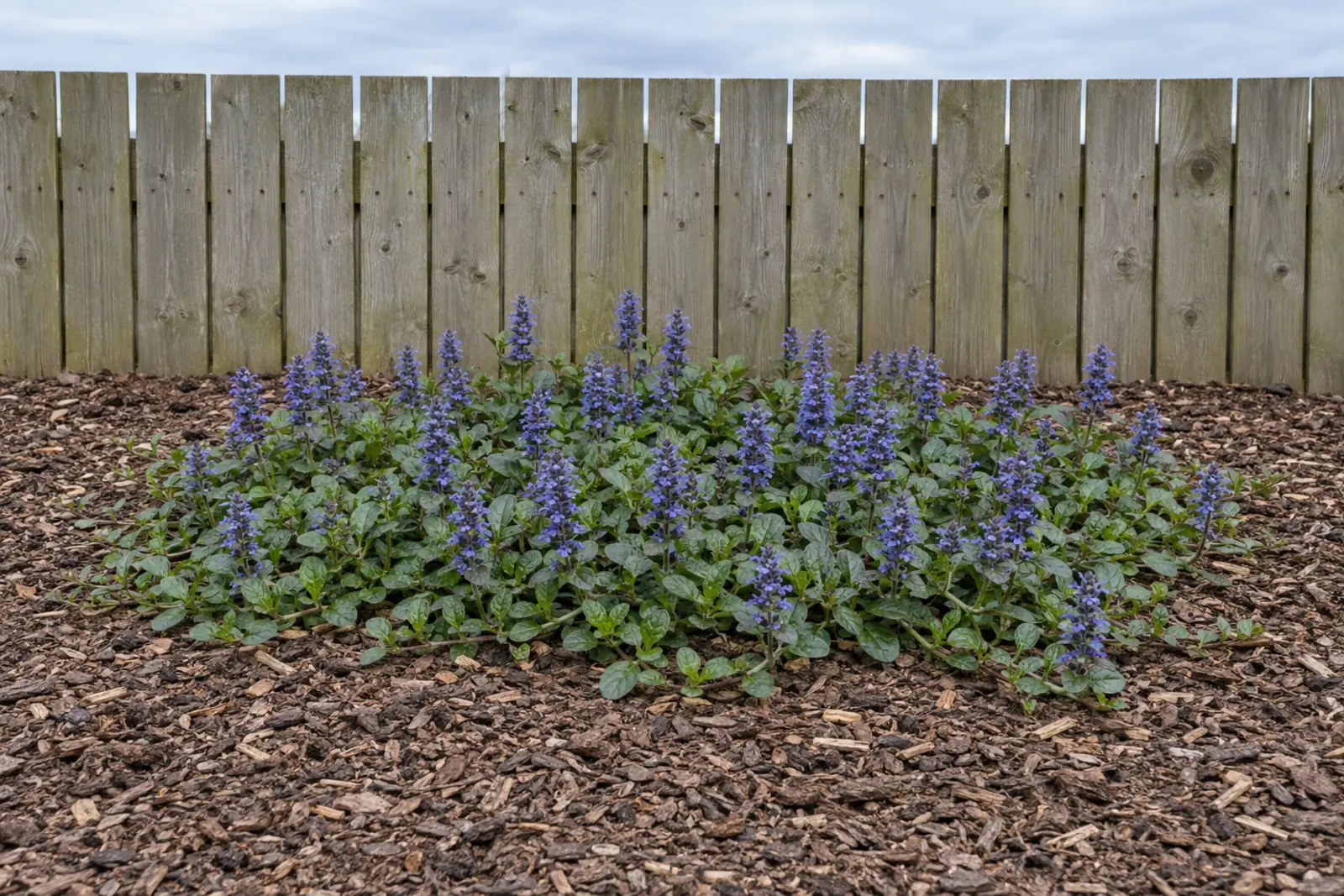
Common bugle (Ajuga reptans) is a native ground cover from the mint family. Runners grow over the soil from its rosettes, and they build a low mat that stays green in winter. From April to June, short spikes of blue-violet flowers rise above it. The plant likes moist soil with humus, in partial shade or shade.
Common bugle at a glance
| Feature | Common bugle |
|---|---|
| Height | 7 to 30 cm |
| Spread | 0.5 to 1 m per plant, creeps further |
| Full grown after | 2 to 5 years |
| Sun | Partial shade to shade |
| Soil | Moist, with humus |
| Water | Average |
| Maintenance | Low: no pruning, only keep the runners in check |
| Flowers | April to June, blue-violet |
| For bees | Yes: nectar and pollen, April to June |
| Hay fever | Not or weakly allergenic |
| Leaves | Stay green |
| Hardy | Yes |
| Native | Yes |
| Poisonous | No |
| Pricks or stings | No |
| Price, young | About €2.50 to €3.79 each, 5-10 cm, in a small pot |
| Price, grown | About €7.95 each, in a large pot |
- Leaf
- all year
- Flower
- April to June
- Fruit
- no noticeable fruit
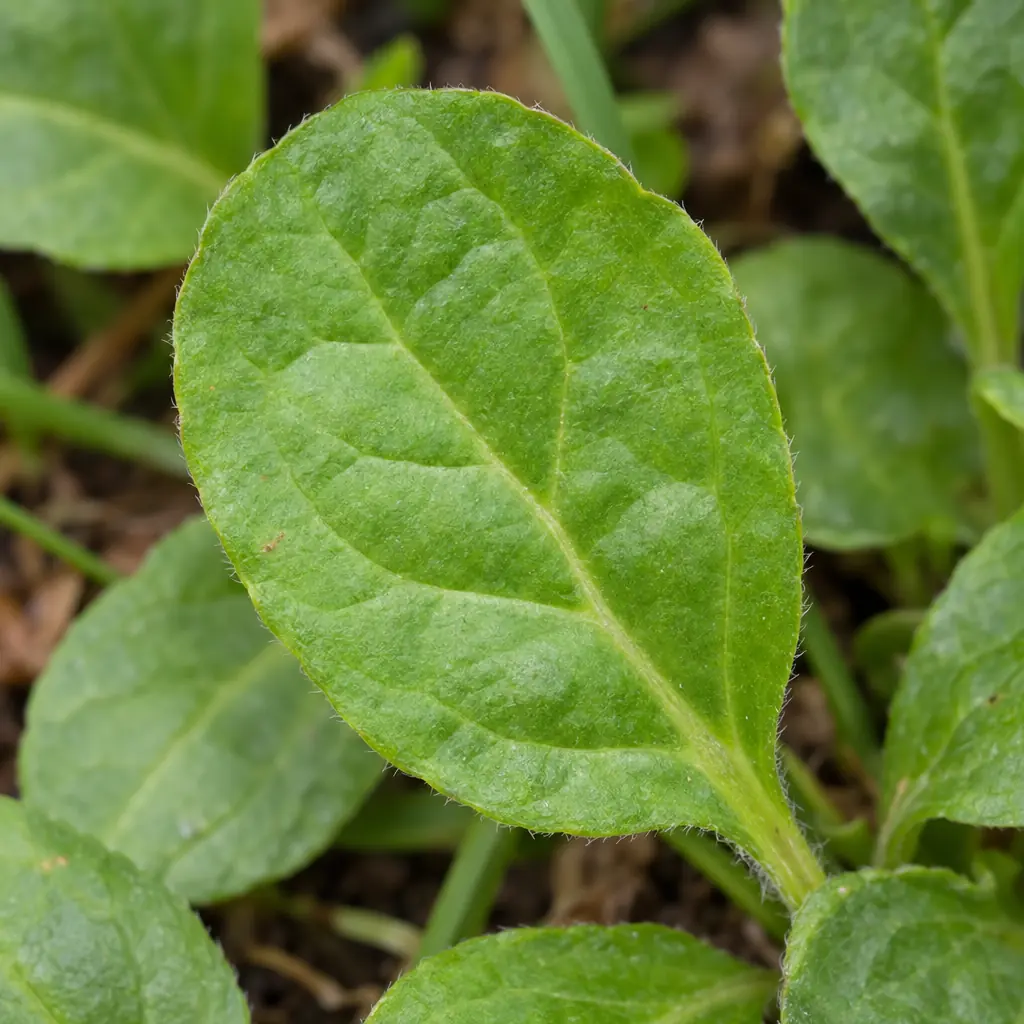
Leaf 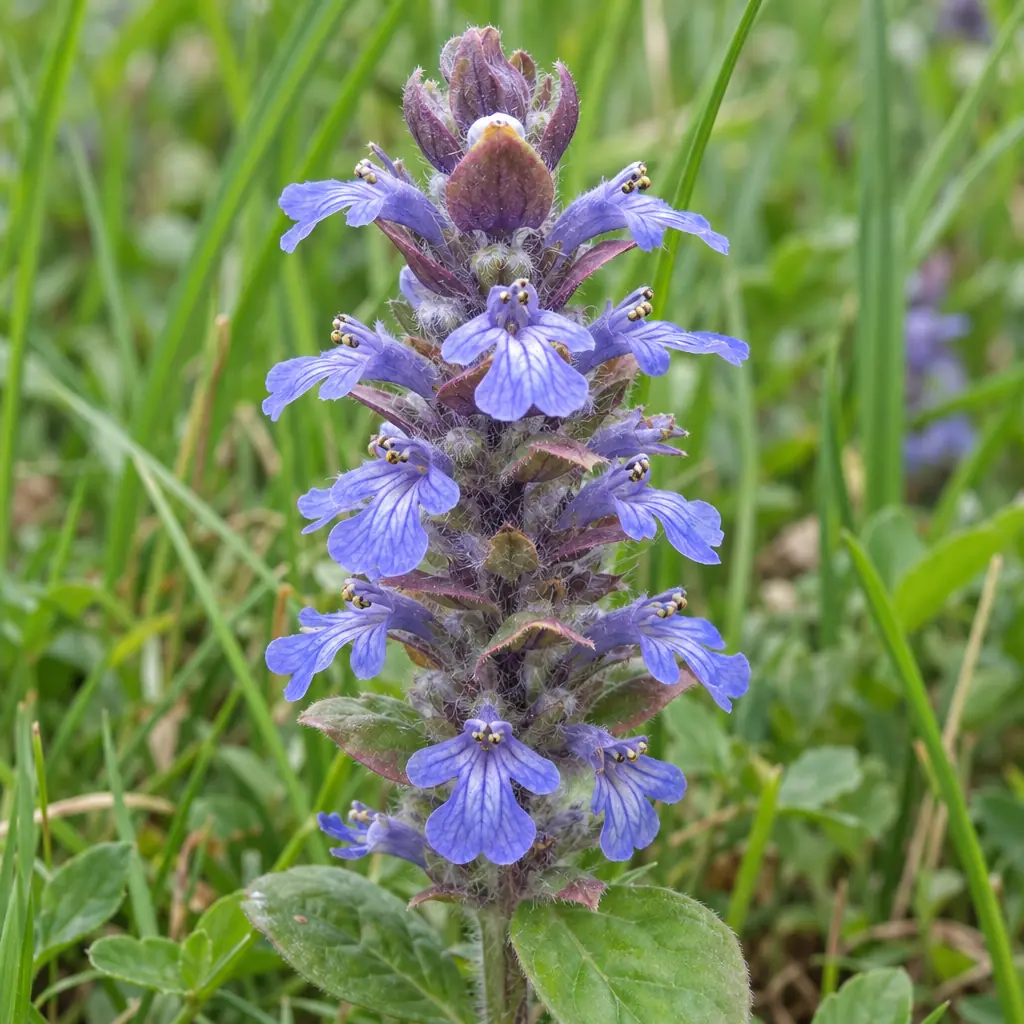
Flower
How do I recognise common bugle?
Look first at the leaves near the ground. Together, the lowest leaves form a rosette. Each leaf has a stalk and is spoon-shaped: narrow at the stalk, broad and rounded at the tip. The edge is smooth or slightly wavy. On the square stem, the leaves grow in pairs, each pair at right angles to the one below. Higher up the stem they get smaller, and they often have a bluish tinge.
The stem is usually hairy on two opposite sides only. The flowers are blue-violet, sometimes pink or white, and 1 to 1.7 centimetres in size. Small whorls of two to six flowers are stacked one above the other along the spike. The upper lip is quite small, so it is mostly the broad lower lip you notice. After flowering, small nutlets form.
The plant that looks most like it is ground ivy. That plant also has creeping stems and blue-violet flowers. Ground ivy's leaves, however, are kidney-shaped or nearly round, with a scalloped edge. Nurseries also sell the cultivar 'Atropurpurea'. Its leaves are bronze-purple all year, though greener in shade. The wild plant has dark green leaves.
Where does common bugle grow best?
Common bugle grows best in partial shade or full shade. Partial shade is a spot with three to six hours of direct sunlight a day around midsummer. In sun, the plant only does well if the soil stays moist. Clay and loam are fine, ideally with plenty of humus in them. If heavy clay stays wet for a long time, choose another spot. In the wild, the species grows in woods, along woodland edges, on road verges and in damp grassland.
You will get little pleasure from it in these spots:
- A dry border in full sun. In a long drought the plant visibly suffers. Its leaves need soil that holds on to moisture.
- A path you walk along every day. The leaves do not stand up well to being trodden on.
- Right next to the lawn or a border of perennials. The runners creep into the grass or the border, and getting them out again is hard work.
In winter the mat keeps its dark green leaves.
In the app you can measure how much room there is under your shrubs or along the fence, on a map of your own plot. That plot comes from the Kadaster, the Dutch cadastre, and is drawn to scale with the neighbours' buildings around it.
Planting and caring for common bugle
Nurseries sell common bugle as a young plant in a pot. A potted plant can go into the ground at any time of year, as long as the soil is not frozen. Space the plants about 30 centimetres apart, which comes to about 12 per square metre. On planting day you mostly see bare soil. The spacing looks too wide, but the runners close the gaps by themselves. In the first summer, water in dry weeks.
Common bugle needs no pruning. There are two small jobs:
| When | What to do |
|---|---|
| When a runner creeps too far | Cut it loose and pull it out |
| When the mat gets too crowded | Dig out a piece and replant the rooted stems elsewhere |
Where the mat grows under a hedge or shrub, keep the nesting season in mind. Many birds nest from March through July.
What goes wrong with common bugle?
There is a white, powdery layer on the leaves. That is powdery mildew, a fungus. A plant that keeps drying out gets it sooner. So water in dry spells, and clear away the affected leaves.
Clumps suddenly wilt, and the stems turn brown or black. That is crown rot, a fungal disease. Heavy, wet soil and an overcrowded mat make it more likely. Remove the diseased plants together with the soil around them. Thin out a dense mat every few years.
The leaves wilt in a dry summer. The soil under the mat has dried out. Water until the soil feels moist again.
Which insects and birds use common bugle?
On chalk grassland, the grizzled skipper (Pyrgus malvae) drinks nectar from common bugle. This butterfly flies from mid-April to mid-June and is rare in the Netherlands. The dingy skipper (Erynnis tages) seldom visits flowers. When this small butterfly does, it picks low herbs such as common bugle. In the Netherlands, the dingy skipper has become extremely rare.
No bird species has been described by name as using common bugle.
Is common bugle poisonous?
Common bugle is not known as a poisonous plant. That still does not make it an edible one. Nothing on it pricks, either: the stems and leaves are softly hairy.
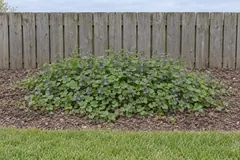
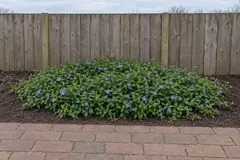
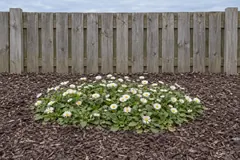
The photos on this page were made with AI, based on real photos and descriptions of this plant.
Frequently asked questions
How tall does common bugle grow?
The leaves lie flat on the ground. With the flower spikes included, common bugle grows 7 to 30 centimetres tall.
Does common bugle spread?
Yes. The plant makes long runners that creep over the ground and form new rosettes along the way. One plant grows 0.5 to 1 metre wide. Cut the runners loose where they go too far.
Is common bugle poisonous?
No, common bugle is not known to be poisonous. That does not make the plant edible.
Does common bugle grow in shade?
Yes. Partial shade and full shade are the two best spots for it. Partial shade means three to six hours of direct sunlight a day around midsummer. In sun, common bugle only does well if the soil stays moist.
Is common bugle native to the Netherlands?
Yes. Common bugle is an original native of the Netherlands. Here it grows in woods, along woodland edges, on road verges and in damp grassland.
Sources (24)
- Duistermaat, Sparrius & Denters, Standaardlijst van de Nederlandse flora 2020 (Gorteria 43)
- NDFF Verspreidingsatlas — Ajuga reptans
- NDFF Verspreidingsatlas — Glechoma hederacea
- Flora van Nederland — Kruipend zenegroen
- RHS — Ajuga reptans (bugle)
- RHS — Ajuga reptans 'Atropurpurea'
- RHS — Shade gardening (definities zon en schaduw)
- RHS — Powdery mildews
- Missouri Botanical Garden — Ajuga reptans
- Melinda Myers — Crown rot causing sudden wilting and death on ajuga
- PFAF — Ajuga reptans
- Imkerpedia — Drachtplanten
- Pollennieuws / Flora van Nederland — Aandachtspunten hooikoorts vriendelijke tuin
- De Vlinderstichting — Aardbeivlinder
- De Vlinderstichting — Bruin dikkopje
- Vogelbescherming — Snoeien in het broedseizoen, mag dat?
- Antigifcentrum — Weinig of niet giftige planten
- Heijnen Planten — Ajuga reptans (prijs en planttijd)
- Heijnen Planten — Ajuga reptans 'Atropurpurea'
- Natuurlijk Sterker — Ajuga reptans (prijs)
- PlantBezorgd — Ajuga reptans (prijs)
- Yarinde — Kruipend zenegroen (plantafstand)
- Wikimedia Commons — Leaf: photo by Tournasol7 (CC BY 4.0)
- Wikimedia Commons — Flower: photo by AnRo0002 (CC0)