5 min read
Common daisy: planting and care for the native lawn flower
Bellis perennis
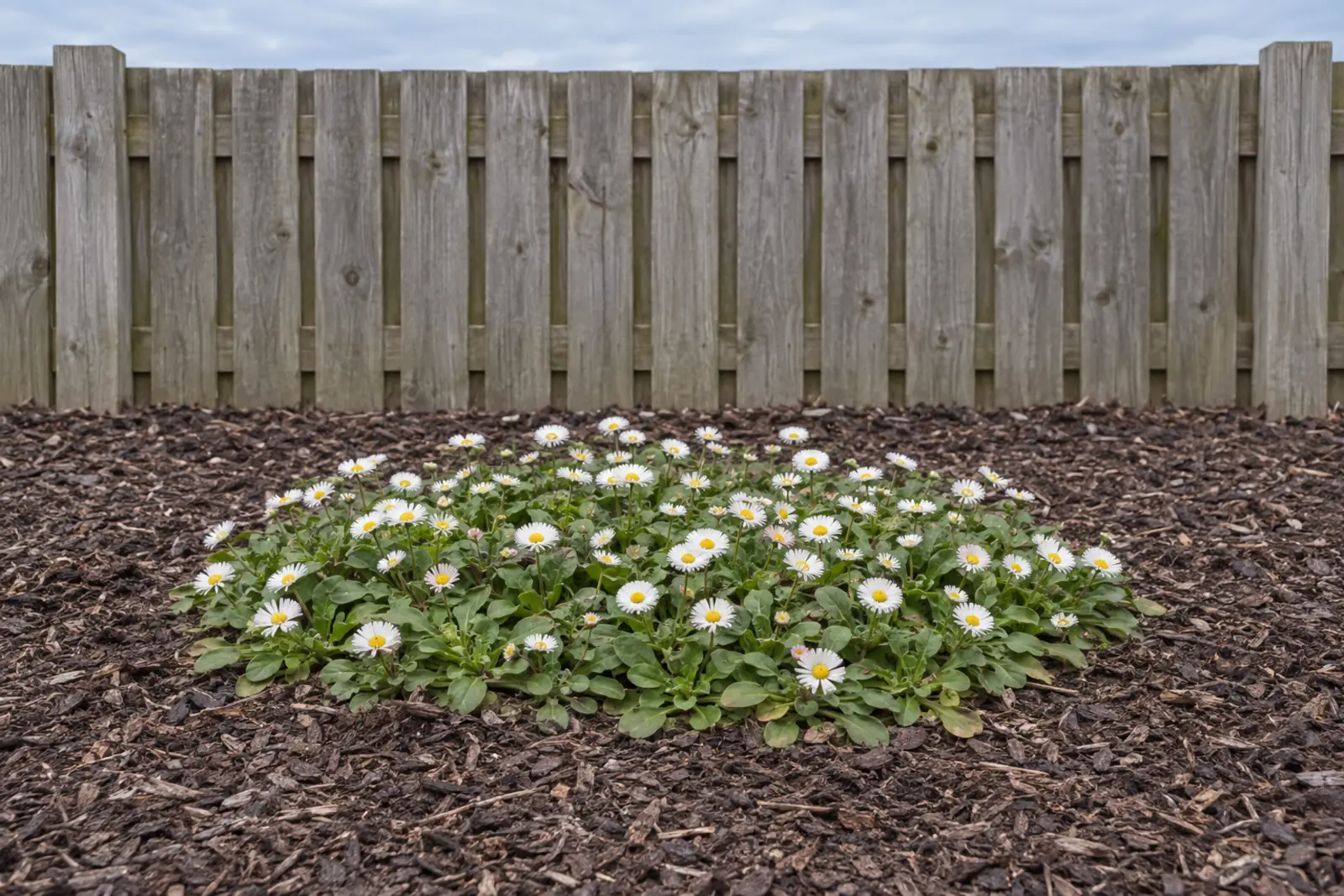
The common daisy (Bellis perennis) is a low, native perennial of the lawn. Its leaves lie in flat rosettes on the ground. Each thin stalk carries one white flower head with a yellow centre. The plant flowers from March to October. With its flowers, a common daisy grows 5 to 15 centimetres tall.
Common daisy at a glance
| Feature | Common daisy |
|---|---|
| Height | 5 to 15 cm |
| Spread | Up to 10 cm per rosette, grows into a mat |
| Full grown after | 2 to 5 years |
| Sun | Full sun to partial shade |
| Soil | Moist, moderately to very rich in nutrients |
| Water | Average: likes moist soil |
| Maintenance | Low: no pruning needed |
| Flowers | March to October, white with a yellow centre |
| For bees | Little: some nectar and pollen, April to September |
| Hay fever | Not or weakly allergenic |
| Leaves | Stay green |
| Hardy | Yes |
| Native | Yes |
| Poisonous | No, as far as is known |
| Pricks or stings | No |
| Price, young | About €3.09 to €4.09 each, in a small pot |
| Price, grown | Not for sale |
- Leaf
- all year
- Flower
- March to October
- Fruit
- no noticeable fruit
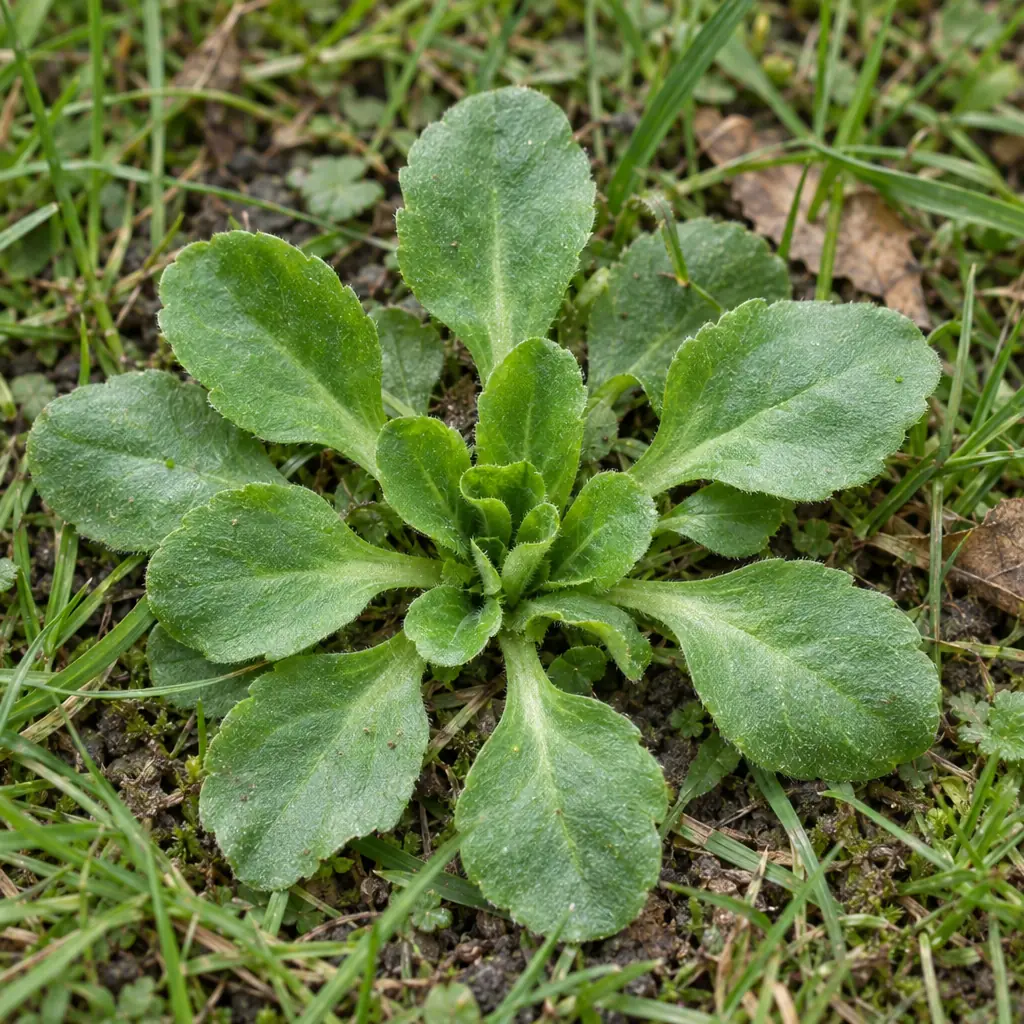
Leaf 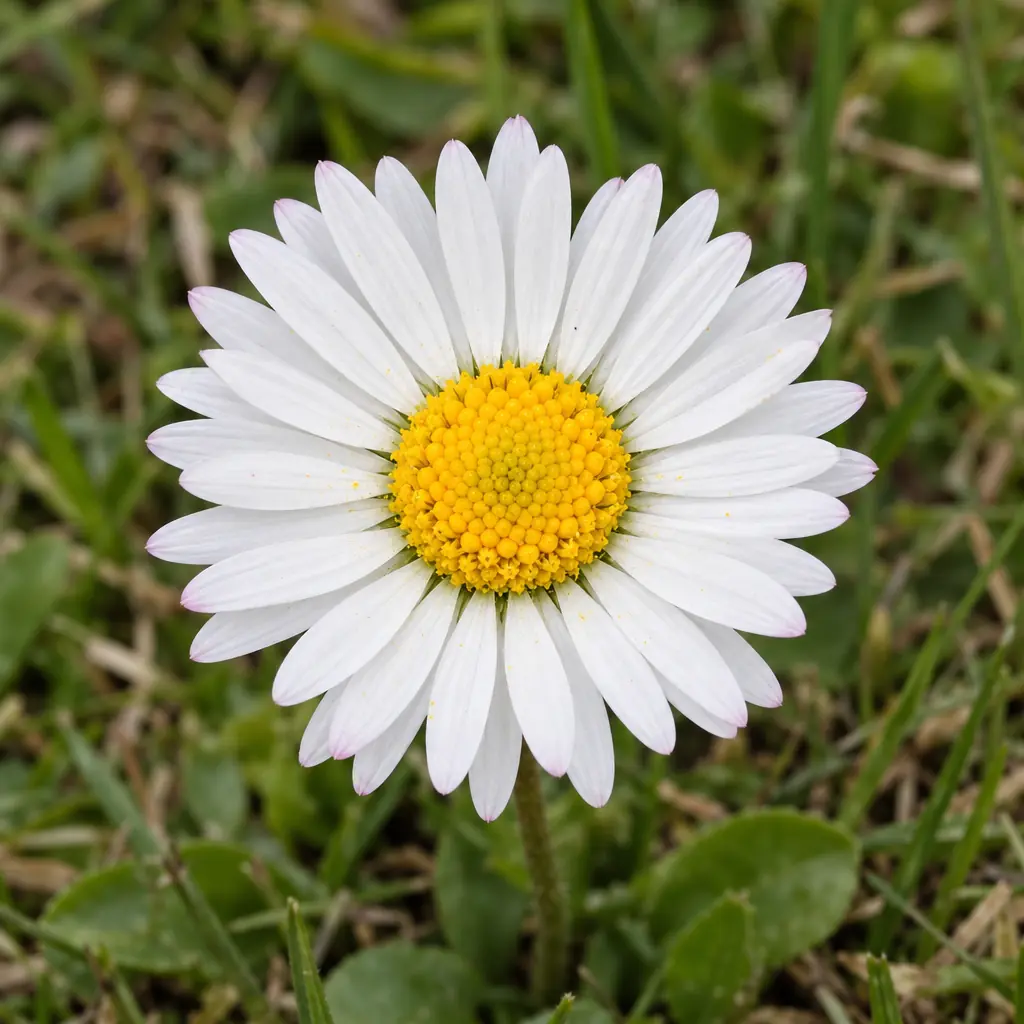
Flower
How do you recognise a common daisy?
Start low, at ground level. The leaves form a flat rosette, each leaf spoon-shaped and up to 5 centimetres long. Every leaf is slightly fleshy and hairy. The edge is smooth or a little toothed.
Thin stalks, usually without leaves, rise from the centre of the rosette. Each stalk ends in one flower head of 1 to 3 centimetres. What looks like a single flower is a head packed with tiny florets. White ray florets form the edge, often with a pink to purplish-red tip. The centre is made up of many small yellow disc florets.
After flowering, tiny nutlets of 1.5 to 2 millimetres ripen in the head. Each nutlet carries upright hairs.
Garden centres also sell daisies with thick, double pompon heads in red, pink or white. Those are cultivars, with heads up to about 6 centimetres across. The wild common daisy has a single ring of white ray florets around a flat yellow centre.
Where does the common daisy grow best?
A sunny spot suits the common daisy best. Partial shade works too: a spot with three to six hours of direct sunlight a day around midsummer. The soil is ideally moist and moderately to very rich in nutrients. Trodden, compacted soil is not a problem. In the wild the plant grows in lawns, meadows and road verges, on dykes and between paving stones.
The common daisy soon gives up in two kinds of spot:
- Among tall grass or in a full border. A daisy has leaves only in a rosette on the ground, so taller plants block all the light.
- Sandy soil that dries out in summer. The plant needs moisture in the soil. In a drought only a few flowers appear.
In winter the rosettes stay green.
On a plan of your own plot you can see whether there is room for a low strip beside the terrace or along the path. The app draws the plant at a grown plant's width, not at pot size.
Planting and caring for common daisies
Nurseries sell the wild common daisy as a young plant in a small pot. A pot-grown plant like this can go in the ground in any season, as long as the ground is not frozen or waterlogged. Spring and autumn are the best time, because the soil is moist then.
Allow 9 to 16 plants per square metre. On planting day you see a lot of bare soil between the rosettes. New rosettes grow at the base of the old leaves and fill those gaps. Keep the soil moist in the first year, especially after a summer planting.
No pruning is needed. In a lawn, mowing is fine: in the wild the common daisy grows in mown grassland. For more plants, divide a clump after flowering.
What goes wrong with common daisies?
Few flowers appear. Mowing every week removes the flower heads each time. Mow less often, or leave a strip uncut for a while. Drought and hard frost also reduce flowering. Water in a dry summer.
The rosettes vanish into the grass. Taller grass or a full border blocks the light. Keep the growth around the plant short and open.
The leaves hang limp or wither. The soil is too dry. Water thoroughly, until the soil under the rosettes is wet as well.
Orange or brown pustules appear on the leaves. That is rust, a fungal disease that occurs on the common daisy. Pick off the first affected leaves straight away. While only a few leaves are affected, removing them sometimes slows the disease.
What does the common daisy offer insects and birds?
The flowers offer a little nectar and pollen. No fixed link has been described between the common daisy and any particular butterfly, moth, bee or bird.
Is the common daisy poisonous or edible?
The common daisy is not known to be poisonous. That alone does not make a plant edible, but for this species edibility is recorded separately. The leaves are edible, raw or cooked. The flower buds and petals are edible raw.
The photos on this page were made with AI, based on real photos and descriptions of this plant.
Frequently asked questions
How tall does a common daisy grow?
The leaves lie flat on the ground. With its flower stalks, a common daisy grows 5 to 15 centimetres tall.
Can you leave common daisies in the lawn?
Yes. The common daisy grows naturally in mown and trodden grass. If you mow every week, you will see fewer flowers.
Is the common daisy poisonous?
No, not as far as is known. The leaves are edible, raw or cooked. The flower buds and petals are edible raw.
How much sun does a common daisy need?
A sunny spot suits the common daisy best. Partial shade works too: three to six hours of direct sunlight a day around midsummer.
Is the common daisy native to the Netherlands?
Yes, the common daisy is an original native of the Netherlands. The plant is common throughout the country, in lawns, meadows and road verges.
Sources (21)
- Duistermaat, Sparrius & Denters, Standaardlijst van de Nederlandse flora 2020 (Gorteria 43)
- NDFF Verspreidingsatlas — Bellis perennis
- Flora van Nederland — Madeliefje
- RHS — Bellis perennis (daisy)
- RHS — Bellis perennis Tasso Series
- RHS — Shade gardening (definities zon en schaduw)
- RHS — Planting perennials
- RHS — Rust diseases
- Hortus botanicus Leiden — Inheemse planten: madeliefje
- Vroege Vogels (BNNVARA) — Madeliefje is onze nationale bloem
- EIS Kenniscentrum Insecten — Bestuivende insecten in Hellevoetsluis (2014)
- Imkerpedia — Drachtplanten
- Pollennieuws / Flora van Nederland — Aandachtspunten hooikoorts vriendelijke tuin
- PFAF — Bellis perennis
- Antigifcentrum — Lijst van weinig of niet giftige planten
- Vogelbescherming — Eet als een vogel
- Tuinplantenloods — Bellis perennis (prijs)
- Cruydt-Hoeck — Madeliefje (prijs)
- Bloemenpark Appeltern — Bellis perennis (plantafstand)
- Wikimedia Commons — Leaf: photo by AnRo0002 (CC0)
- Wikimedia Commons — Flower: photo by Thomas Bresson (CC BY 3.0)