5 min read
Common juniper: where it grows, price and pruning
Juniperus communis
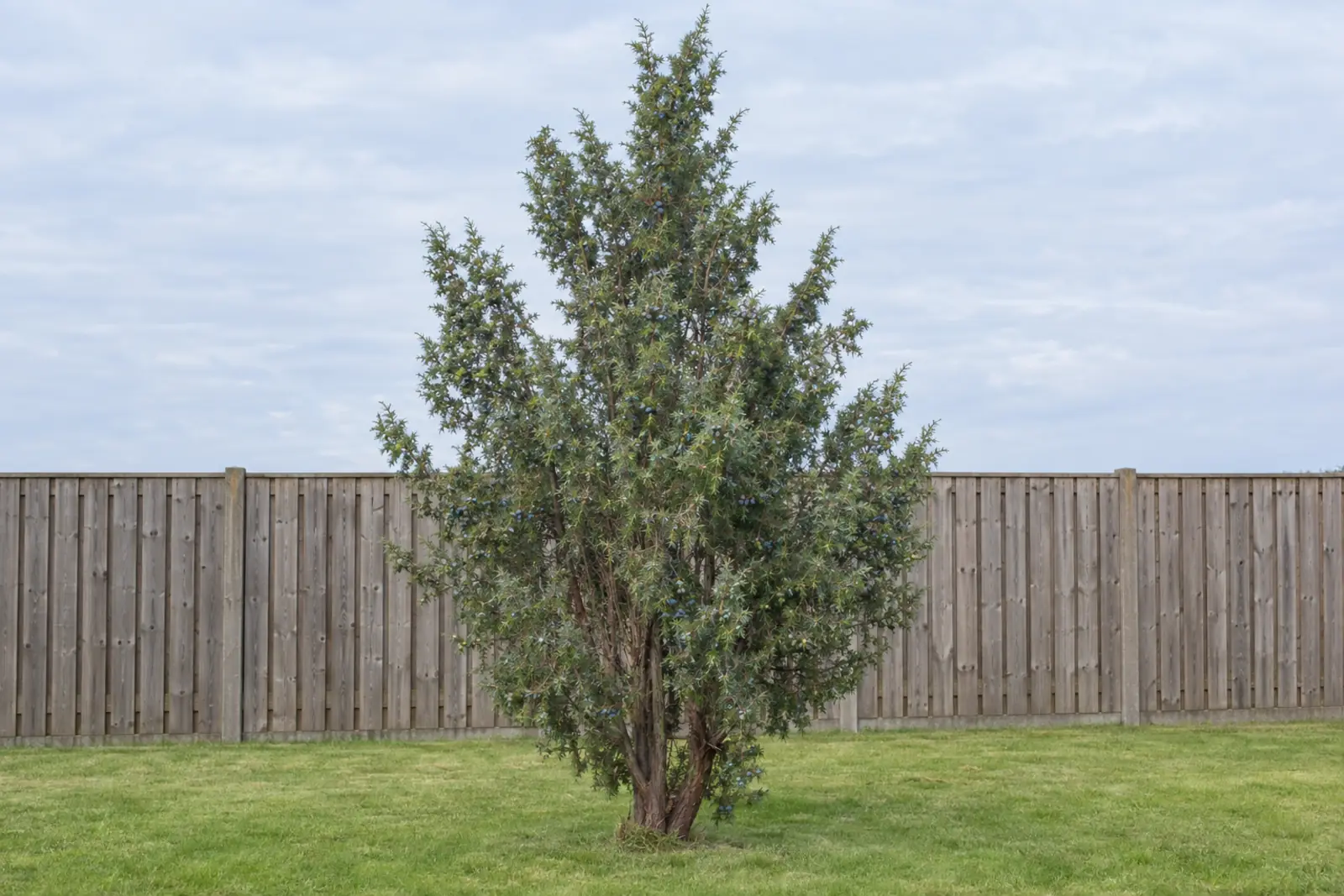
Common juniper (Juniperus communis) is a conifer native to the Netherlands that stays green all year. It usually grows as a loose shrub 4 to 8 metres tall. The flowers in April and May are inconspicuous. Female plants bear blue-black berries, which take two years to ripen. Juniper needs an open spot on dry, poor soil.
Common juniper at a glance
| Feature | Common juniper |
|---|---|
| Height | 4 to 8 m |
| Spread | 2.5 to 4 m |
| Full grown after | 10 to 20 years |
| Sun | Full sun |
| Soil | Dry and poor, preferably sand |
| Water | Little: copes well with drought |
| Maintenance | Low: no pruning needed |
| Flowers | April and May, yellowish, inconspicuous |
| For bees | Little: the wind pollinates the flowers, not a known bee plant |
| Hay fever | Not or weakly allergenic |
| Leaves | Stay green |
| Hardy | Yes |
| Native | Yes |
| Poisonous | Mildly: the sap and many berries |
| Pricks or stings | Yes: spiny leaves |
| Price, young | About €10 to €15 each, in a small pot |
| Price, grown | Not for sale |
- Leaf
- all year
- Flower
- April to May
- Fruit
- all year
Leaf 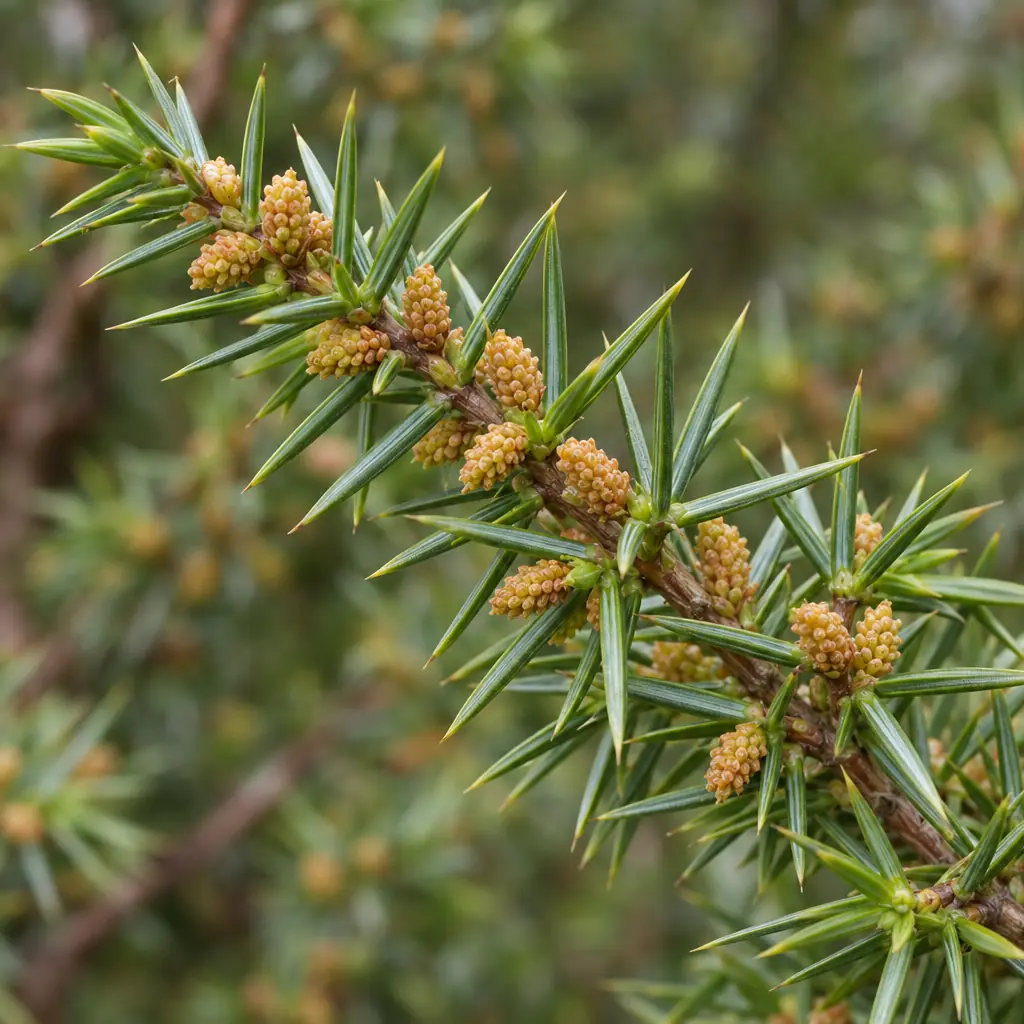
Flower 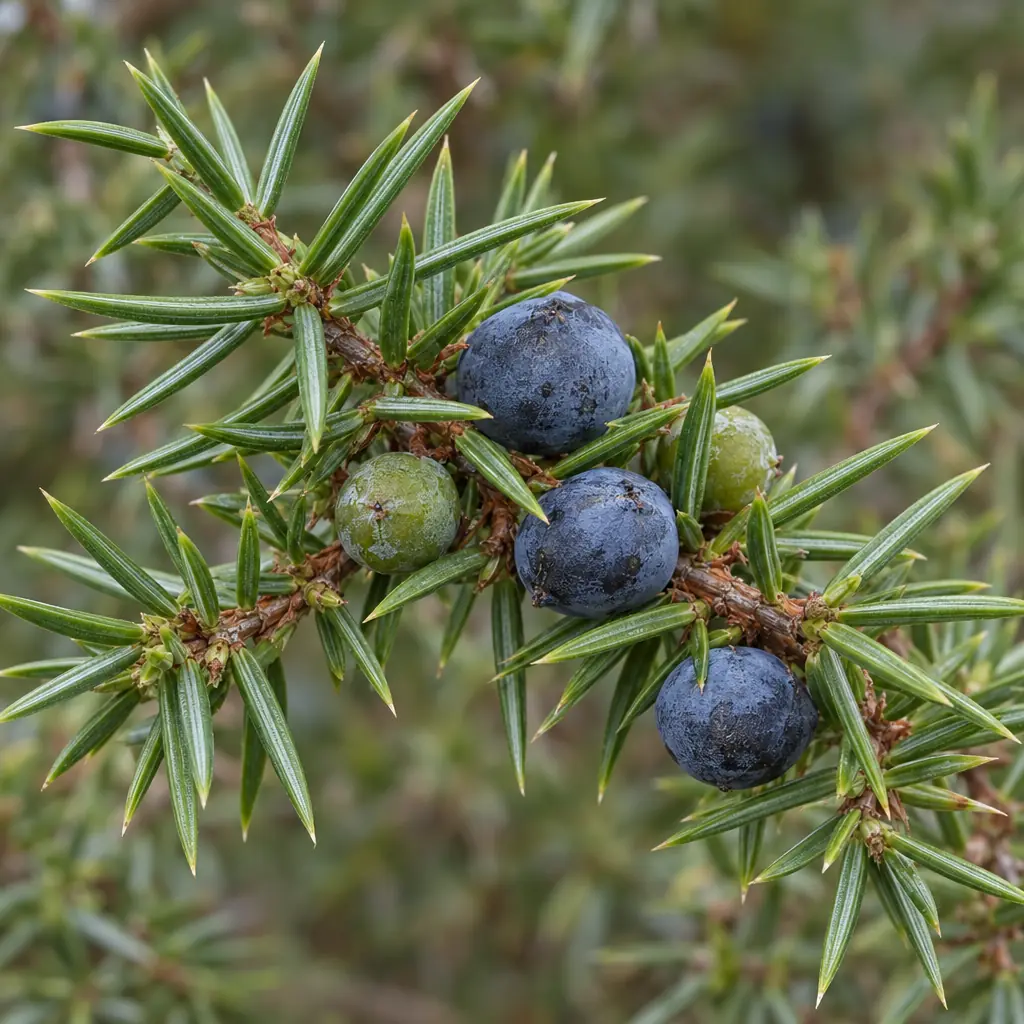
Fruit
How do I recognise common juniper?
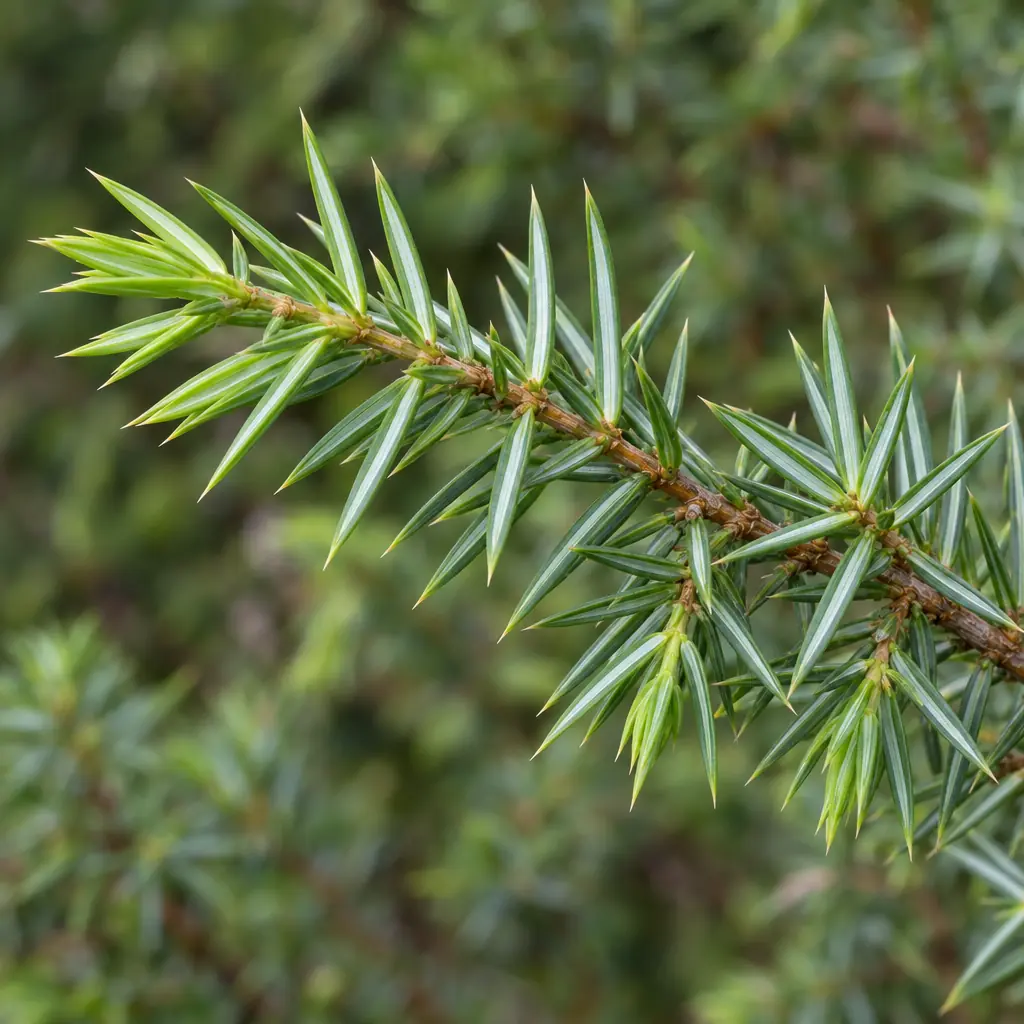
Start with the needles. They grow in whorls of three around the twig. Each needle is short and stiff and ends in a sharp point. A broad whitish band runs along its upper side. The bark is grey-brown to red-brown. On older plants it peels away in long, narrow strips.
A juniper is either male or female, never both. Male plants carry yellow cones of a few millimetres in spring. Round berries of 5 to 9 millimetres grow on a female plant. In their first year the berries are green. In the autumn of the second year they drop in large numbers.
Garden centres also sell other junipers, such as the Chinese juniper (Juniperus chinensis). Besides needles, that species carries tiny scale-like leaves that lie flat against the twig. A wild common juniper has needles only.
Where does common juniper grow best?
Common juniper needs full sun: more than six hours of direct sun a day around midsummer. Dry, poor sandy soil suits it best, but chalky soil works too. In the wild the species grows on heathland and drift sand. There it has declined sharply since 1950.
A juniper slowly dies back in these spots:
- Under or beside tall trees. Juniper copes poorly with shade. Lasting shade is fatal, above all for a young plant.
- On ground where puddles remain after rain. Wet soil turns the needles brown, and the roots can start to rot.
In winter a juniper stays grey-green. A female plant still carries berries then.
So a juniper needs an open spot, away from high walls. In the app your own plot opens to scale, with the buildings around it. That way you can see in advance which corner of the garden lies clear of walls and buildings.
Planting and caring for common juniper
The best time to plant a juniper is late October, early November or March. A plant from a pot can go in at another time too, but not in heat or drought. Nurseries sell the wild species mostly young, in a small pot.
Plant a free-standing juniper 1.25 to 2 metres from the fence or the path. That is half the spread of a full-grown plant. On planting day this looks far too roomy, but the shrub only fills that space after many years. Water regularly for the first two years. Drying out is the main thing that kills a young juniper.
| When | What to do |
|---|---|
| April to the end of August | Only if needed: shorten green shoot tips, never back into bare brown wood |
| Autumn | Do not cut: brown patches form easily then |
Many birds breed from March through July, a few already in February. If you cut in those months, look between the branches for a nest first.
What can go wrong with common juniper?
The needles turn brown. Drought, frost, wet soil or a cold, drying wind is often the cause. On wet soil, root rot can be to blame as well. Brown patches sometimes fill in again, but that takes years.
There are white specks on the needles. That is juniper scale, a scale insect of juniper and other conifers. A few do no harm: ladybirds and some birds eat them. With many insects the needles turn yellow and twigs die back.
You see no berries. Only a female plant bears berries. The pollen travels on the wind from a male plant, so one has to grow nearby.
Which birds and insects use common juniper?
The common crossbill eats mainly conifer seeds, but juniper berries too. For the greenfinch, a dense juniper is a place to rest and, in spring, to nest. The firecrest also builds its nest in a juniper now and then.
The caterpillar of the juniper carpet (Thera juniperata), a moth, feeds on juniper and other conifers. In gardens this species also lives on cultivated conifers.
Is common juniper poisonous or edible?
Common juniper is mildly poisonous. The sap can irritate the skin, so wear gloves when you prune. In small amounts the ripe blue-black berries are a well-known flavouring, in jenever, gin and sauerkraut. Large amounts of berries can damage the kidneys. The green, unripe berries are very resinous and not edible.
The photos on this page were made with AI, based on real photos and descriptions of this plant.
Frequently asked questions
How big does common juniper get?
In a garden, common juniper grows 4 to 8 metres tall and 2.5 to 4 metres wide. Reaching that size takes 10 to 20 years. The shape differs from plant to plant, from narrow and upright to broad and spreading.
Is common juniper poisonous?
Common juniper is mildly poisonous. The sap can irritate the skin. Large amounts of berries can damage the kidneys, and the green unripe berries are not edible.
Why does my juniper have no berries?
Only a female juniper bears berries. The pollen travels on the wind from a male plant, so one has to grow nearby.
Can common juniper grow in shade?
Preferably not. Juniper grows best in full sun, with more than six hours of direct sun a day around midsummer. The plant copes poorly with lasting shade from trees or a wall.
Does common juniper need pruning?
No, pruning is not needed. To keep a juniper smaller anyway, trim only green shoot tips between April and the end of August. A juniper does not sprout again from bare brown wood.
Sources (25)
- Duistermaat, Sparrius & Denters, Standaardlijst van de Nederlandse flora 2020 (Gorteria 43)
- NDFF Verspreidingsatlas — Juniperus communis
- Flora van Nederland — Jeneverbes
- Wilde planten in Nederland en België — Jeneverbes
- Wijdeven, Van Dort & Van Hees, Beheervisie Jeneverbes (Alterra-rapport 465, WUR)
- RHS — Juniperus communis (common juniper)
- RHS — Juniperus chinensis (Chinese juniper)
- RHS — Gardening in shade
- RHS — How to grow conifers
- RHS — Conifers with brown patches
- RHS — Juniper scale
- PFAF — Juniperus communis
- LUMC — Bomenkompas voor allergeniciteit
- Imkerpedia — Drachtplanten (nectar- en pollenwaarde voor de honingbij)
- De Vlinderstichting — Jeneverbesspanner
- De Vlinderstichting — Jeneverbesdwergspanner
- Vogelbescherming — Fifteen minutes of fame (kruisbek)
- Vogelbescherming — Doe 3 dingen voor groenlingen
- Vogelbescherming — Vuurgoudhaan
- Vogelbescherming — Snoeien in het broedseizoen, mag dat?
- De Cruydt-Hoeck — Jeneverbes (prijs)
- Ecoflora — Juniperus communis (prijs)
- Wikimedia Commons — Leaf: photo by Crusier (CC BY 3.0)
- Wikimedia Commons — Flower: photo by Shkumbin on Flickr (CC BY 2.0)
- Wikimedia Commons — Fruit: photo by MPF (CC BY 2.5)