5 min read
Common hornbeam: planting, hedges and pruning
Carpinus betulus
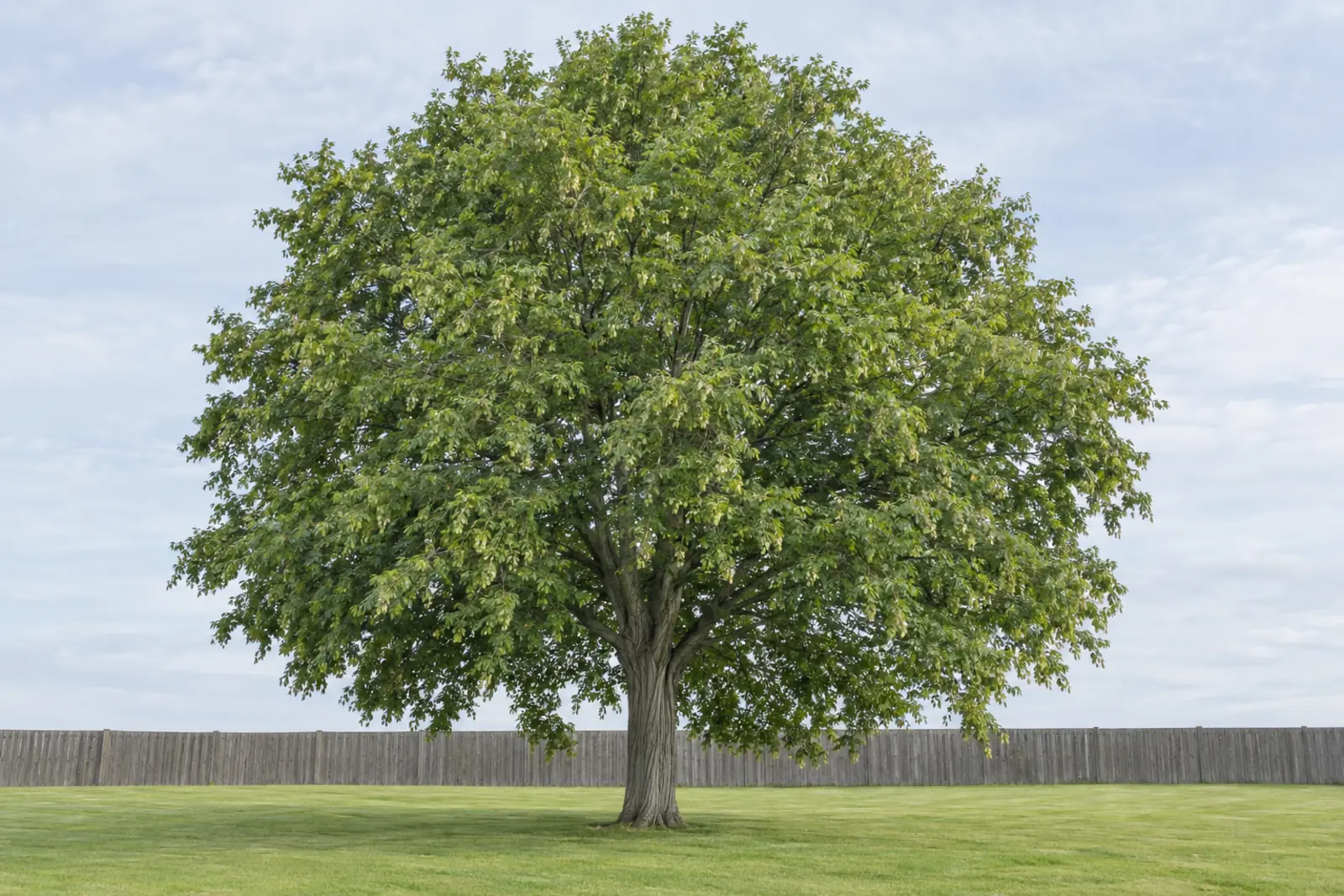
Common hornbeam (Carpinus betulus) is a native broadleaf tree with a fluted, grey trunk and sharply toothed leaves. Grown freely it reaches 15 to 25 metres. Green catkins hang from it in April and May. As a hedge, hornbeam takes a trim every year. Moist loam or clay is its best soil.
Common hornbeam at a glance
| Feature | Common hornbeam |
|---|---|
| Height | 15 to 25 m |
| Spread | 12 to 15 m |
| Full grown after | 20 to 30 years |
| Sun | Sun to full shade |
| Soil | Moist, ideally loam or clay |
| Water | Average: moist but not waterlogged |
| Maintenance | Low: a free-standing tree needs no routine pruning |
| Flowers | April and May, green catkins, inconspicuous |
| For bees | Little: the wind carries the catkins' pollen |
| Hay fever | Moderately allergenic, April and May |
| Leaves | Drop in autumn |
| Hardy | Yes |
| Native | Yes |
| Poisonous | No |
| Pricks or stings | No |
| Price, young | About €1.20 to €2.50 each, 60-80 cm, bare-root |
| Price, grown | About €16 to €18 each, 150-200 cm, in a pot |
- Leaf
- April to November
- Flower
- April to May
- Fruit
- August to November
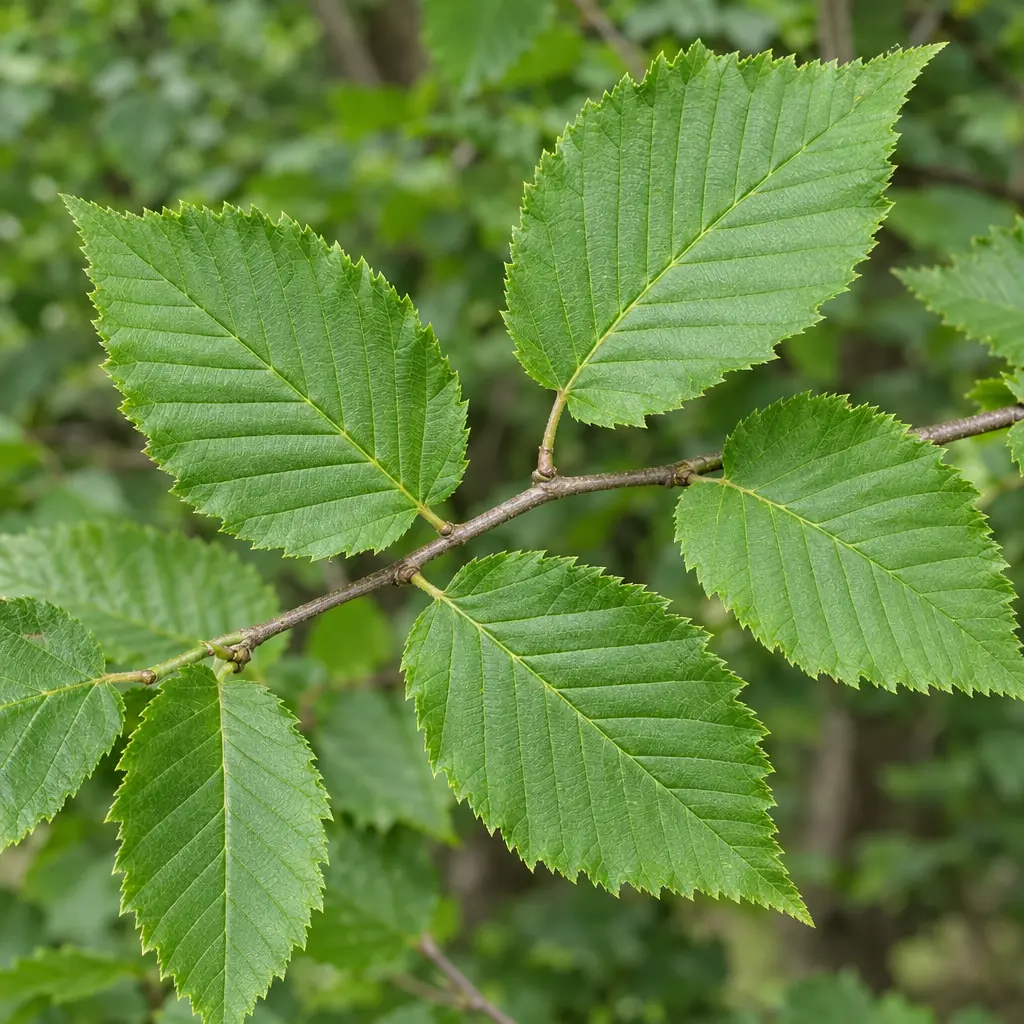
Leaf 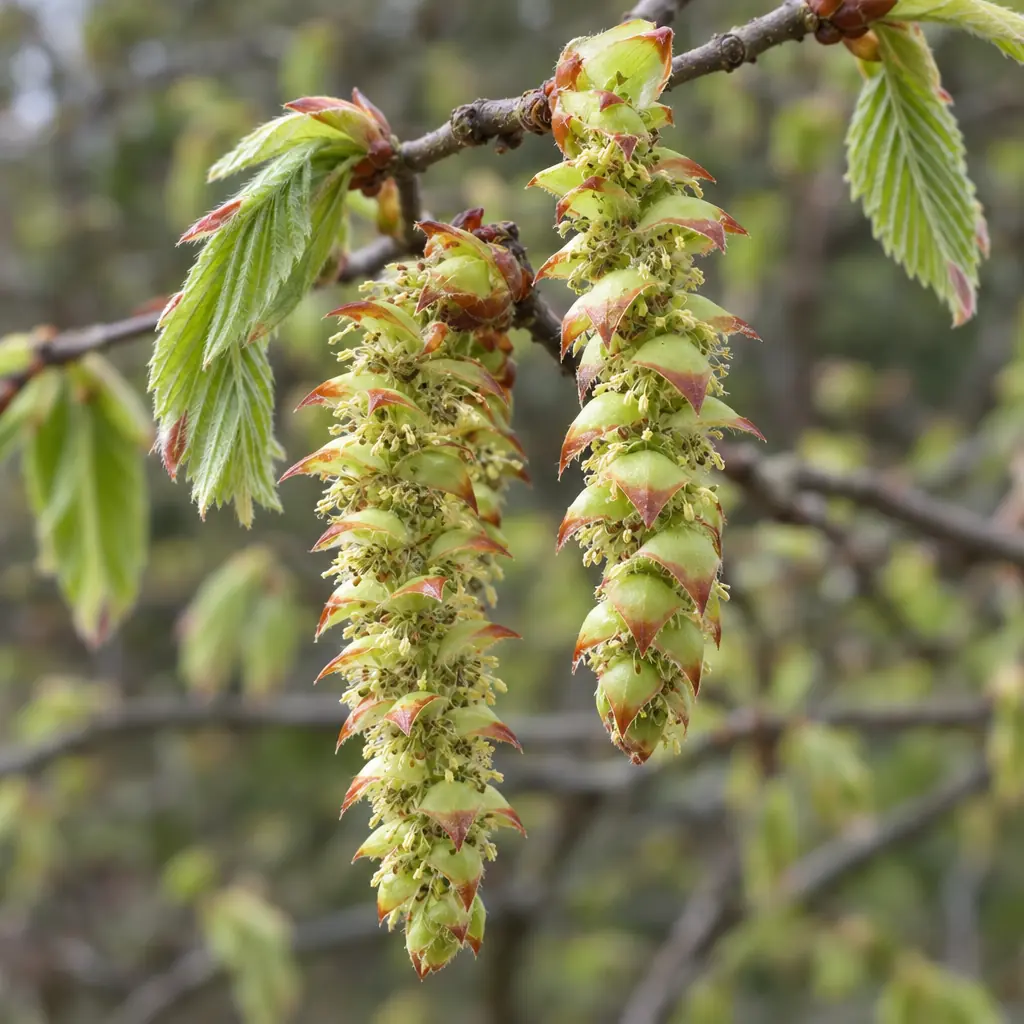
Flower 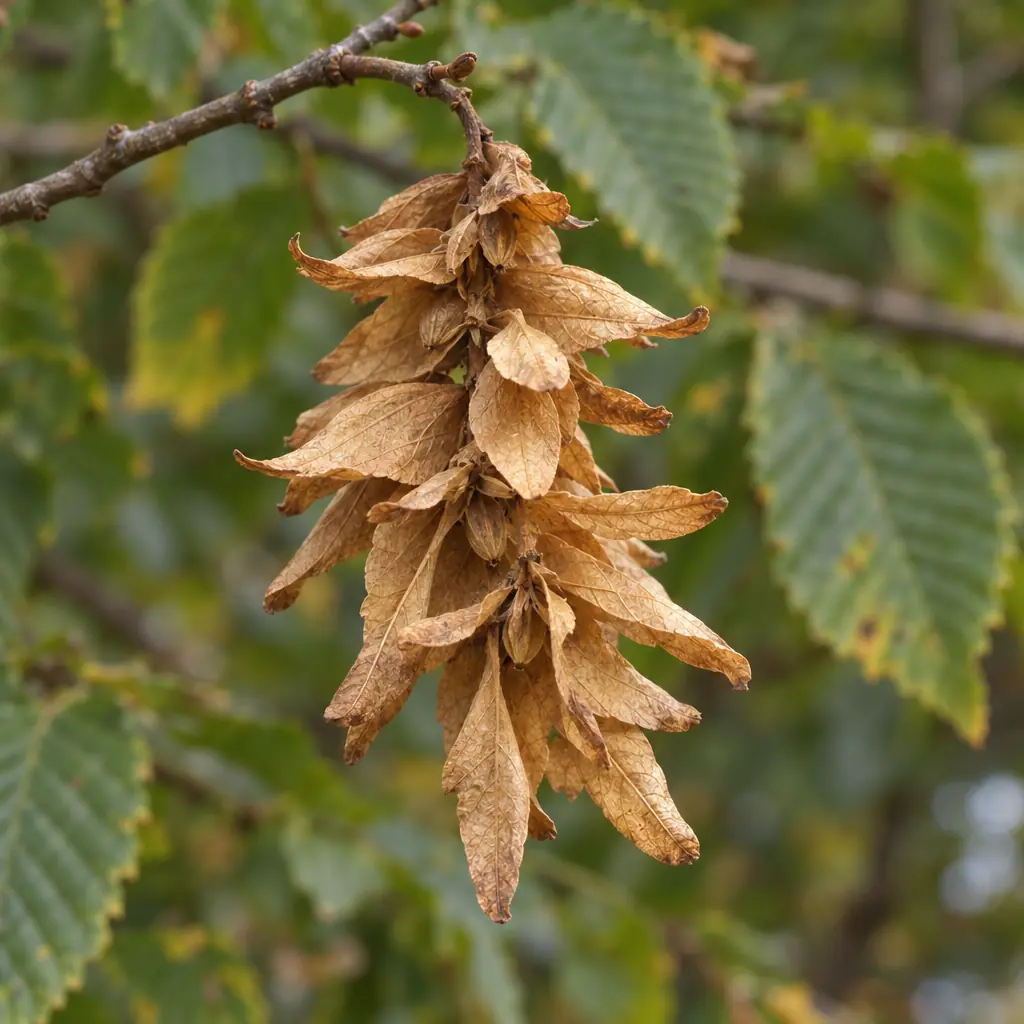
Fruit
How do I identify a common hornbeam?
Start with the trunk. In cross-section it is not round, but irregularly fluted. The bark stays smooth and grey for a long time.
A leaf is egg-shaped, 5 to 10 centimetres long, with a pointed tip. Straight veins run into the sharply toothed edge. That gives every leaf a ribbed look. In autumn it turns yellow.
Male flowers hang as catkins from the twigs. Loose clusters of fruit grow from the female ones. Each nutlet is flat, ribbed lengthwise and smaller than a centimetre. It is attached to a bract with three lobes.
Common beech looks similar from a distance. Pick up a leaf to tell them apart. Beech leaves have a wavy edge with fine hairs. Hornbeam leaves are more sharply toothed and have a clear stalk.
Where does common hornbeam grow best?
Full sun suits a common hornbeam well: six hours or more of direct sunlight a day around midsummer. It also tolerates a lot of shade, even in an older tree. Moist soil with loam or clay is its favourite. Sand and chalk also work.
A common hornbeam struggles in these spots:
- Close to the house. A free crown grows 12 to 15 metres wide and then reaches the wall.
- In the middle of paving. Hornbeam does not tolerate hard surfacing around the trunk.
In autumn, the brown leaves often hang on the branches for a long time. In January a free-standing hornbeam is bare, and that is when the fluted trunk stands out most.
Such a wide crown needs a plan that fits. In the app you work on your own plot, to scale, with the houses around it.
How to plant and look after a common hornbeam
Plant a bare-root hornbeam as soon as the leaves have fallen, from mid-October to the end of February. Bare-root means sold without soil around the roots. That is the cheapest way to buy one. A hornbeam in a pot is on sale all year round.
Keep 6 to 7.5 metres clear between trunk and wall for a free-standing tree. That is half the width of the crown. On planting day the gap looks far too wide. For a hedge, count on six plants per metre. Water it in dry spells. A 7.5 centimetre layer of mulch keeps the weeds down.
| When | What to do |
|---|---|
| The winter after planting, and the winter after that | Cut back the upright tips of a young hedge by a third |
| Mid to late summer | Trim a hedge once a year |
| Late winter or early spring | On a free-standing tree, remove only diseased, damaged or crossing branches |
Many birds nest from March through July, and some into August. The summer trim falls right in the middle of that, so check the hedge for nests first.
Common hornbeam problems and what to do
There is a white powder on the leaves. That is powdery mildew, a fungus. A tree that regularly stands a little dry gets it faster. Water it in dry spells and lay down mulch. Cut off affected twigs quickly.
Dead twigs are covered in small orange-pink dots. That is coral spot. Hornbeam is prone to it. The fungus is weak and often points to another problem. Cut the branch back to healthy wood. Do not leave dead wood lying around.
Caterpillars or aphids are on the leaves. That happens. Even so, a hornbeam is a healthy tree with few pests.
Which birds and insects use common hornbeam?
Hornbeam seeds are among the hawfinch's favourite food. The bird prefers to eat them straight from the tree, but also searches for them in fallen leaves. In winter especially, hawfinches live on tree seeds, and hornbeam seeds are one of them.
Moth caterpillars live on the leaves. The buff-tip and the red-headed chestnut both feed on hornbeam. The small white wave sometimes feeds on it too, though it prefers hazel and birch. That small moth is listed as threatened on the provisional red list.
Is common hornbeam poisonous?
Hornbeam is not known to cause poisoning. The tree is on a list of plants that are little or not toxic. That does not make it edible: no edible parts are known.
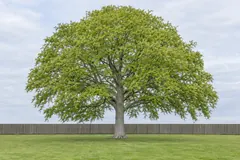
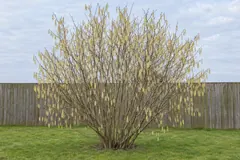
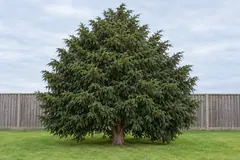
The photos on this page were made with AI, based on real photos and descriptions of this plant.
Frequently asked questions
How big does a common hornbeam grow?
Grown freely, a common hornbeam reaches 15 to 25 metres tall. The crown then grows 12 to 15 metres wide. As a hedge, one trim a year keeps it small.
When should I trim a hornbeam hedge?
Trim a hornbeam hedge once a year, from mid to late summer. Check first that no birds are nesting in it. In a young hedge's first two winters, cut the upright tips back by a third.
What is the difference between hornbeam and beech?
Look at the leaf edge. Hornbeam leaves are sharply toothed, with straight veins running into the teeth. Beech leaves have a wavy edge with fine hairs.
Is common hornbeam poisonous?
No, hornbeam is not known to cause poisoning. That does not make the tree edible: no edible parts are known.
How much sun does a common hornbeam need?
A common hornbeam grows well in full sun: six hours or more of direct sunlight a day around midsummer. It also tolerates a lot of shade, even in an older tree.
Sources (28)
- Duistermaat, Sparrius & Denters, Standaardlijst van de Nederlandse flora 2020 (Gorteria 43)
- NDFF Verspreidingsatlas — Carpinus betulus
- Flora van Nederland — Haagbeuk
- NDFF Verspreidingsatlas — Fagus sylvatica
- Natuurpunt — Haagbeuk
- Bomenstichting — Haagbeuk
- Van den Berk Boomkwekerijen — Carpinus betulus
- RHS — Carpinus betulus (common hornbeam)
- RHS — Shade gardening (definities zon en halfschaduw)
- RHS — Hedges: planting
- RHS — Pruning hedges
- RHS — Light pruning for trees and shrubs
- RHS — Powdery mildews
- RHS — Coral spot
- PFAF — Carpinus betulus
- Antigifcentrum — Lijst van weinig of niet giftige planten
- LUMC — Bomenkompas voor allergeniciteit (2023)
- De Vlinderstichting — Haagbeuk (waardplant)
- De Vlinderstichting — Wit spannertje
- Vogelbescherming — Appelvink
- Vogelbescherming — Invasie van appelvinken
- Vogelbescherming — Snoeien in het broedseizoen, mag dat?
- Directplant — Haagbeuk (prijs per maat)
- Haag-Heg — Haagbeuk blote wortel 60-80 cm (prijs)
- Heijnen — Haagbeuk 150-175 cm in pot (prijs)
- Wikimedia Commons — Leaf: photo by AnRo0002 (CC0)
- Wikimedia Commons — Flower: photo by AnRo0002 (CC0)
- Wikimedia Commons — Fruit: photo by AnRo0002 (CC0)