5 min read
Great mullein: recognise, plant and care for it
Verbascum thapsus
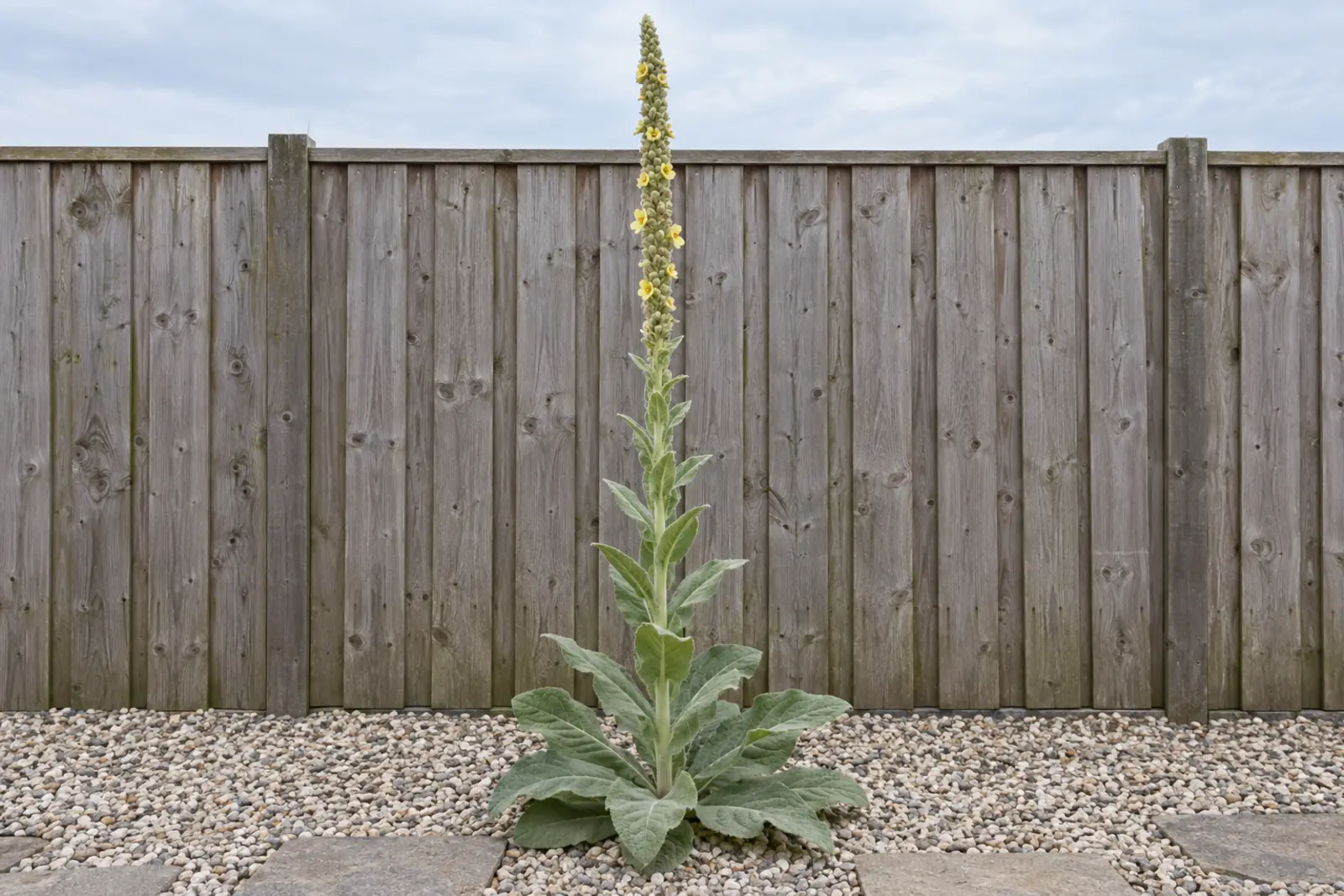
Great mullein (Verbascum thapsus) is a native biennial. In its first year it forms a rosette of soft, woolly leaves. The second year brings one straight stem 0.3 to 2 metres tall, with pale-yellow flowers from July to October. Great mullein wants full sun and dry soil that drains well.
Great mullein at a glance
| Feature | Great mullein |
|---|---|
| Height | 0.3 to 2 m |
| Spread | 10 to 50 cm |
| Full grown after | 1 to 2 years |
| Sun | Full sun |
| Soil | Dry and free-draining, preferably with lime |
| Water | Little: dry soil is fine |
| Maintenance | Low: no pruning needed |
| Flowers | July to October, pale yellow |
| For bees | Yes: pollen, July to September |
| Hay fever | Not or weakly allergenic |
| Leaves | Stay green: the rosette overwinters |
| Hardy | Yes |
| Native | Yes |
| Poisonous | No, as far as is known |
| Pricks or stings | No |
| Price, young | About €3 to €4 each, in a small pot |
| Price, grown | Not for sale |
- Leaf
- all year
- Flower
- July to October
- Fruit
- August to February
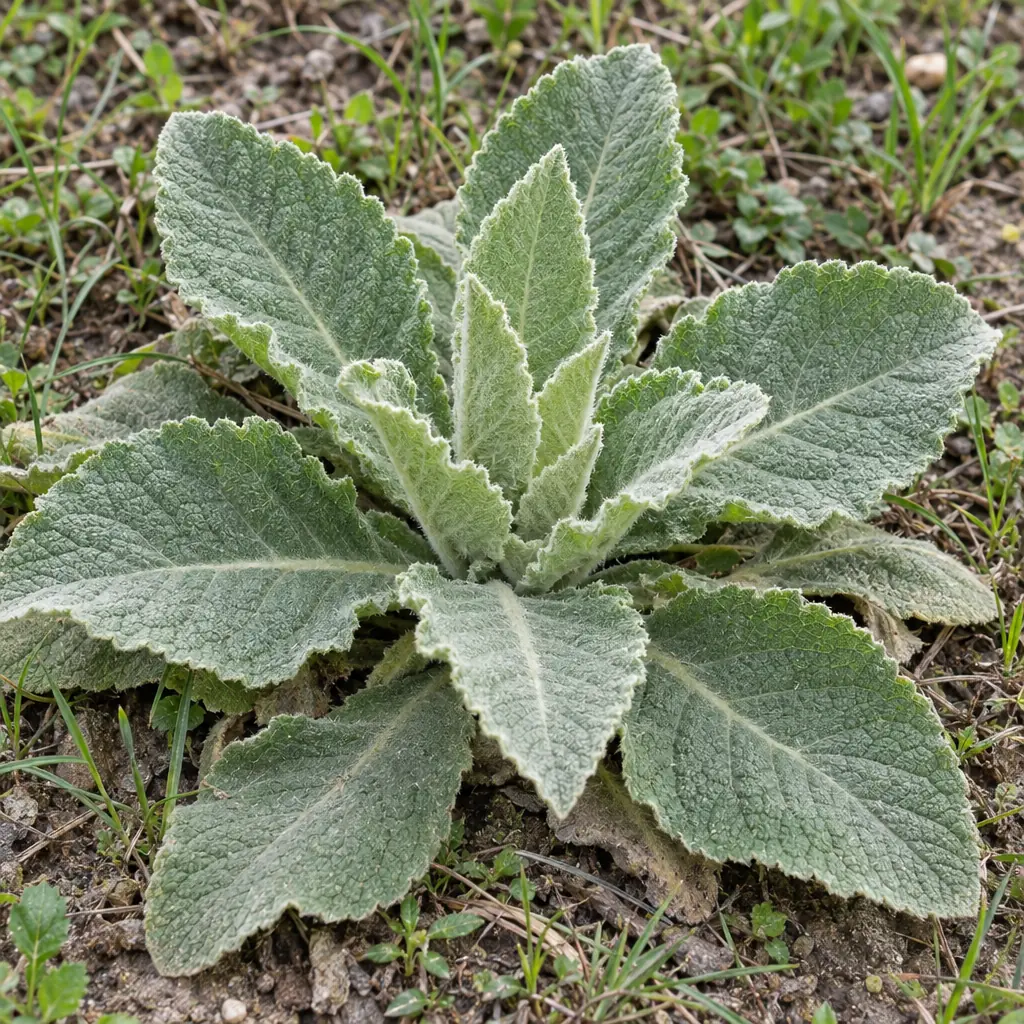
Leaf 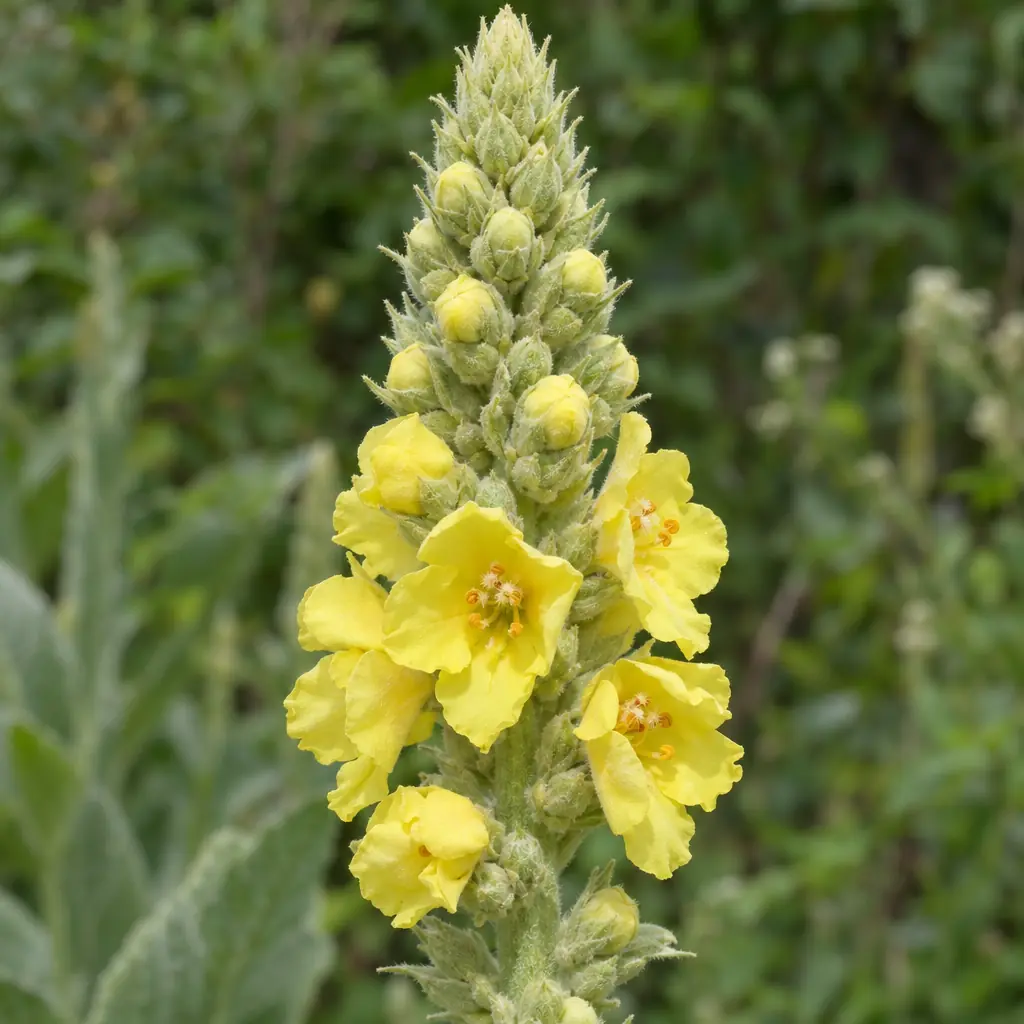
Flower 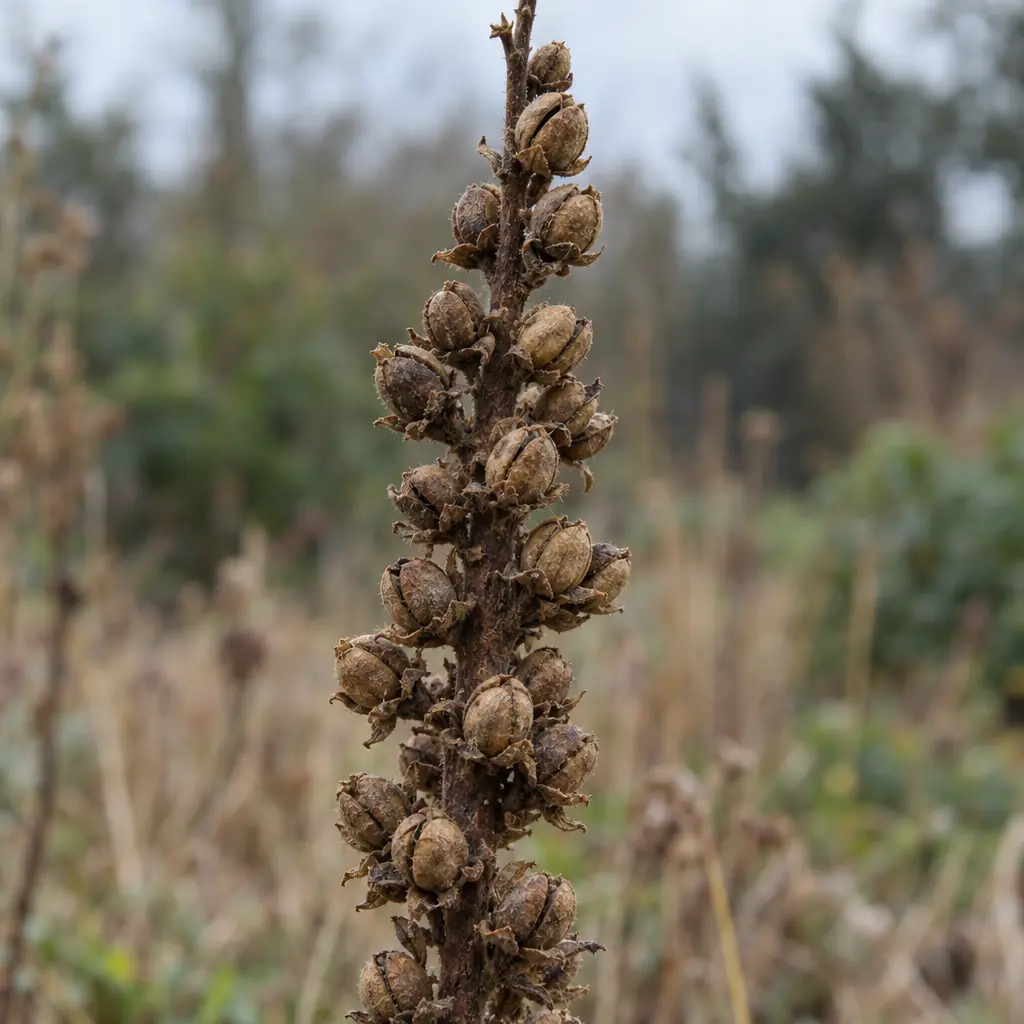
Fruit
How do you recognise great mullein?
In the first year you see only a rosette: a ring of leaves flat on the ground. Those leaves are oblong to oval, with a weakly scalloped edge. Each one is densely woolly and grows up to 40 centimetres long. Up close the leaf looks like that of lamb's ear, a grey garden plant.
In the second year one straight stem grows from the centre. The lower part of that stem does not branch, and wool turns it grey or white. The leaves on the stem have no stalk. Each leaf runs some way down along the stem.
At the top sits a dense head packed with woolly buds. Between them the flowers open one after another. Each flower is pale yellow, funnel-shaped and 1.2 to 2.5 centimetres across. Look into the heart of a flower. Three of the five stamens, the threads that carry the pollen, bear white woolly hairs. After flowering come small capsules: dry, round fruits that split open.
A related species is dense-flowered mullein (Verbascum densiflorum), stalkaars in Dutch. Its flowers are larger and fairly flat, 3 to 5 centimetres across. The two species sometimes cross with each other.
Where does great mullein grow best?
Give great mullein the sunniest spot in your garden. Full sun means more than six hours of direct sunlight a day around midsummer. The soil can be dry and poor, as long as water drains away fast. Lime in the soil is not a problem. In the wild great mullein grows in sunny, open places: sandy road verges, dune paths and the verges along railway lines.
Avoid these two spots for great mullein:
- Under a tree or a large shrub. Great mullein copes poorly with shade.
- Wet clay, or a low patch that stays waterlogged. The plant copes just as poorly with wet soil. Its roots need rain to drain away fast.
In winter you see two things. The rosettes of young plants stay grey-green. On plants that have already flowered, the brown stem often stays upright all through autumn and winter.
A young plant from the nursery is small, but it grows a good deal wider. On a plan of your own plot you put each plant in its place, with the houses around it to scale. The app draws the plant at a grown plant's width, not at pot size.
Planting and caring for great mullein
Sow great mullein in spring, or buy a young plant in a small pot. Give each plant about 50 centimetres of room, because a grown plant gets that wide. On planting day that looks roomy. No fertiliser is needed: great mullein grows well on poor soil, dry soil included.
Pruning is not needed. After flowering, though, you decide what happens to the stem.
| When | What to do |
|---|---|
| After flowering, if you want no seedlings | Cut off the stem before the capsules split open |
| Autumn and winter, if you do want seedlings | Leave the stem, so the wind shakes the seed out |
Between March and the end of July many birds are breeding. If you cut in those months, first check the border around the plant for a nest.
A stem left in place lets great mullein sow itself. That seed can wait in the soil for years, longer than five years.
Common problems with great mullein
No flower appears in the first year. That is normal. Great mullein makes only a rosette in its first year and flowers in its second.
The plant dies after flowering. That is part of its life too, because great mullein is a biennial. The odd plant lives a little longer.
The leaves are full of holes. Usually caterpillars are eating the leaves. Cut away the worst leaves if they bother you.
A white powder covers the leaves. That is powdery mildew, a fungus. Cut off affected parts promptly. Clear up the fallen leaves in autumn, and the fungus comes back less.
Which insects and birds use great mullein?
Which insects and birds in the Netherlands seek out great mullein in particular has not been well described, species by species. The plant certainly offers pollen for bees in summer.
Is great mullein poisonous or edible?
Great mullein is known as a plant of low or no toxicity. That does not make it edible. The fine hairs on the leaves can cause irritation, though.
The photos on this page were made with AI, based on real photos and descriptions of this plant.
Frequently asked questions
Is great mullein poisonous?
No, great mullein is known as a plant of low or no toxicity. That does not make it edible. The fine hairs on the leaves can cause irritation, though.
How tall does great mullein grow?
In its second year great mullein grows one stem 0.3 to 2 metres tall. In the first year the plant stays low, with only a rosette of leaves on the ground.
Does great mullein come back every year?
A single plant flowers only once and then dies. If you leave the stem, great mullein sows itself. New plants come up from that seed.
How much sun does great mullein need?
Full sun: more than six hours of direct sunlight a day around midsummer. Great mullein copes poorly with shade.
How do you tell great mullein from dense-flowered mullein?
Look at the flowers. Great mullein has funnel-shaped flowers of 1.2 to 2.5 centimetres. Dense-flowered mullein has larger, fairly flat flowers of 3 to 5 centimetres.
Sources (19)
- Duistermaat, Sparrius & Denters, Standaardlijst van de Nederlandse flora 2020 (Gorteria 43)
- NDFF Verspreidingsatlas — Verbascum thapsus
- NDFF Verspreidingsatlas — Verbascum densiflorum (stalkaars)
- Flora van Nederland — Koningskaars
- RHS — Verbascum thapsus (great mullein)
- RHS — Shade gardening (definities zon en schaduw)
- RHS — Powdery mildews
- NC State Extension — Verbascum thapsus
- PFAF — Verbascum thapsus
- Imkerpedia — Drachtplanten
- Pollennieuws / Flora van Nederland — Aandachtspunten hooikoorts vriendelijke tuin
- Antigifcentrum — Lijst van weinig of niet giftige planten
- Vogelbescherming — Snoeien in het broedseizoen, mag dat?
- Passiflora — Verbascum thapsus (prijs)
- Tuincentrum Soontiëns — Verbascum thapsus (prijs)
- Cruydt-Hoeck — Koningskaars (prijs)
- Wikimedia Commons — Leaf: photo by AnRo0002 (CC0)
- Wikimedia Commons — Flower: photo by AnRo0002 (CC0)
- Wikimedia Commons — Fruit: photo by AnRo0002 (CC0)