5 min read
Frogbit (Hydrocharis morsus-ranae): pond care and price
Hydrocharis morsus-ranae
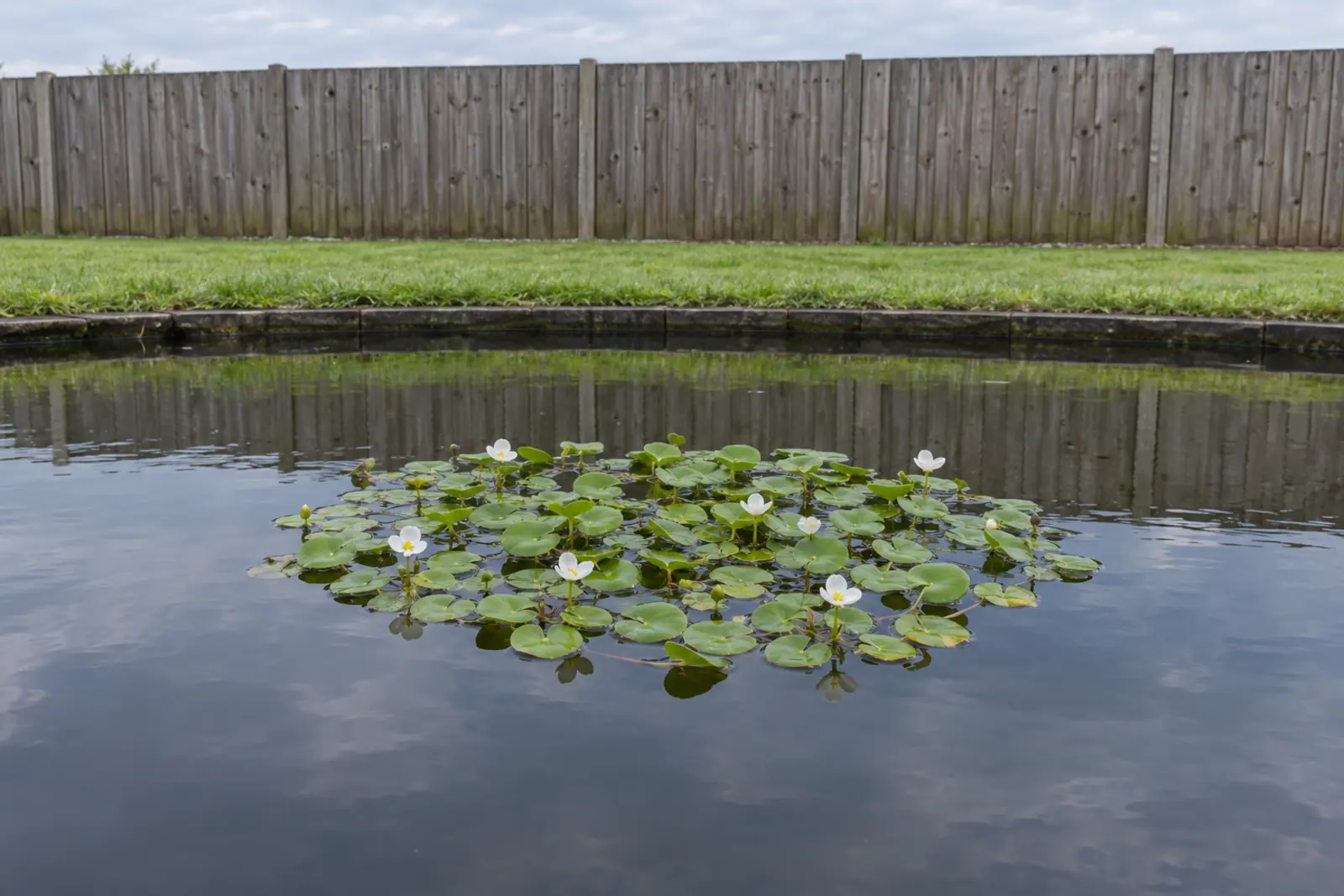
Frogbit (Hydrocharis morsus-ranae) is a native floating plant for a pond or ditch. Its round leaves lie loose on the water, and the roots hang free beneath them. From June to August, white flowers with three petals rise above the water. Give frogbit still water in full sun.
Frogbit at a glance
| Feature | Frogbit |
|---|---|
| Height | Up to 0.1 m above the water |
| Spread | 0.5 to 1 m |
| Full grown after | 5 to 10 years |
| Sun | Full sun |
| Soil | None: floats loose on the water |
| Water | Plenty: floats on the water |
| Maintenance | Low: no pruning needed |
| Flowers | June to August, white |
| For bees | Little: some nectar, June to August |
| Hay fever | Unknown |
| Leaves | Drop in autumn |
| Hardy | Yes |
| Native | Yes |
| Poisonous | No, as far as is known |
| Pricks or stings | No |
| Price, young | €0.95 per loose plant to €3.88 per tub |
| Price, grown | Not for sale |
- Leaf
- April to October
- Flower
- June to August
- Fruit
- no noticeable fruit
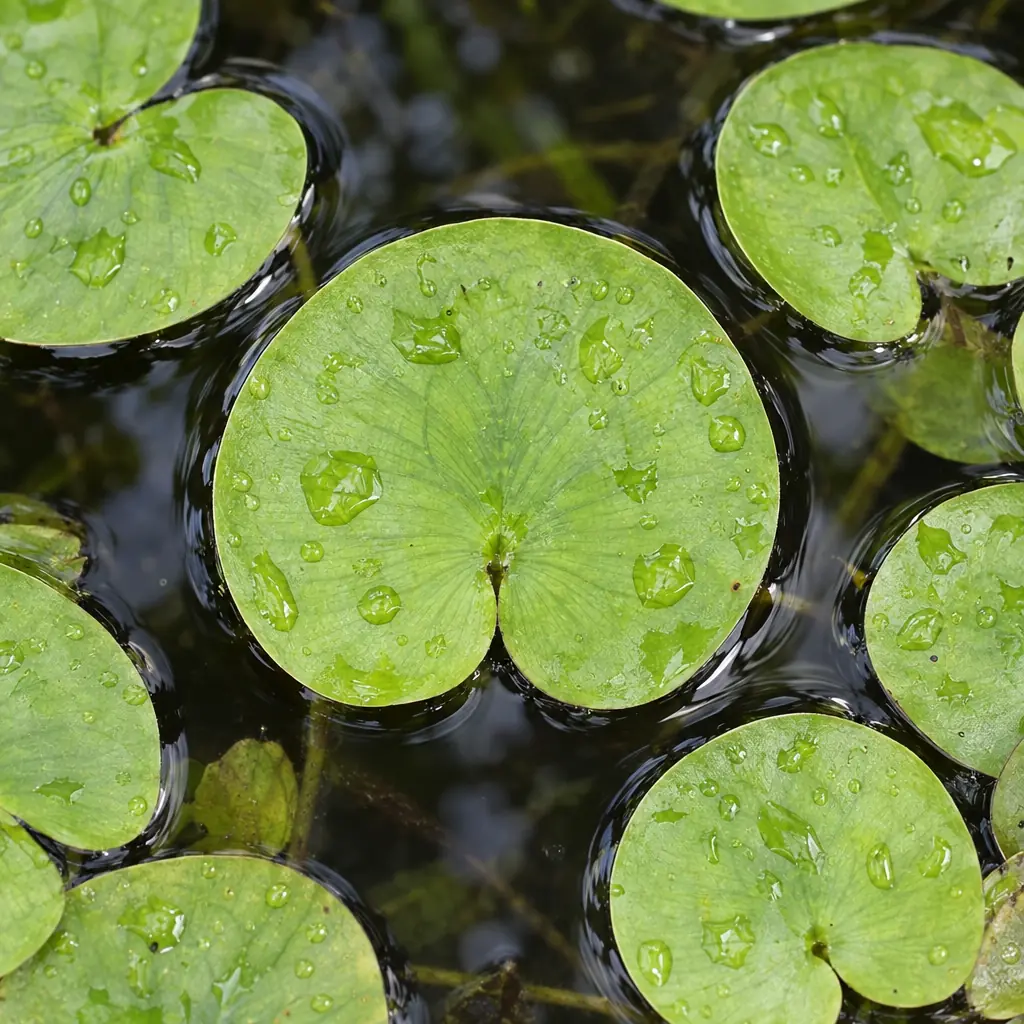
Leaf 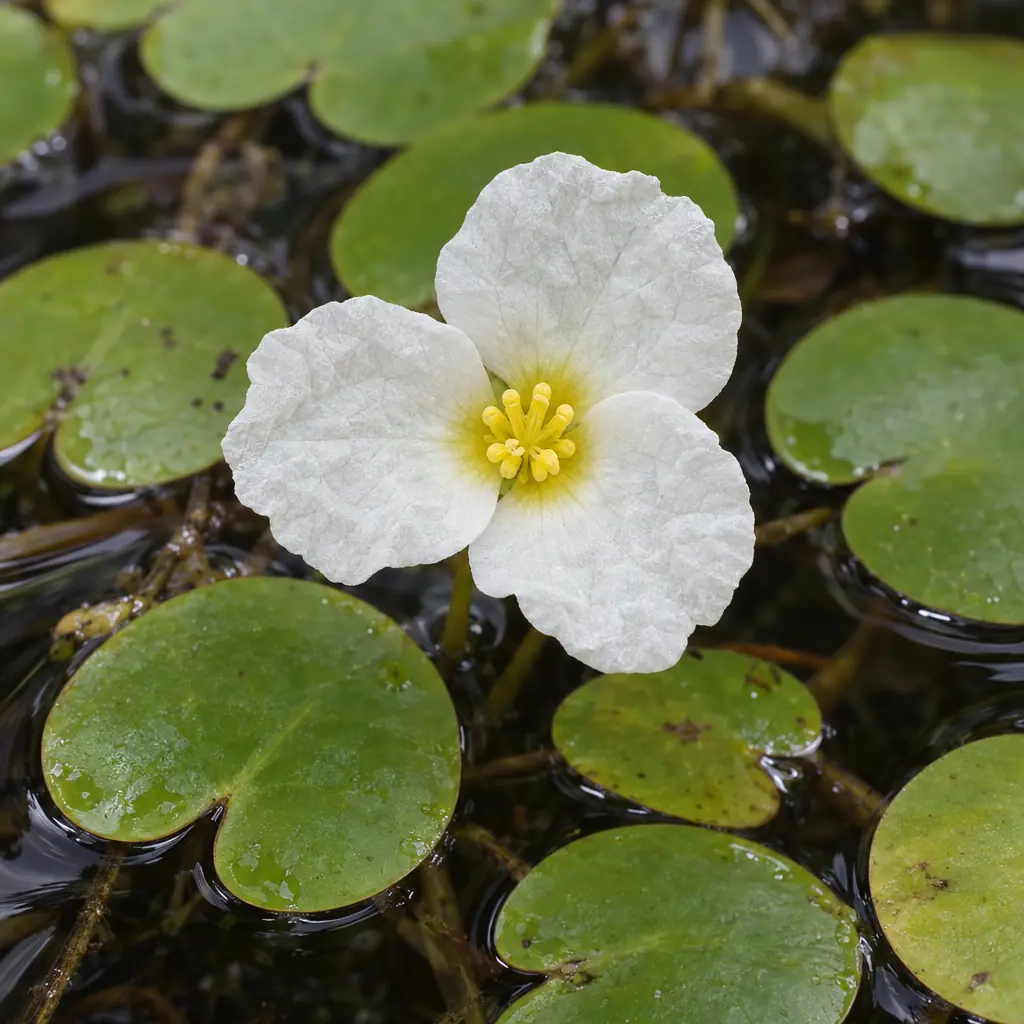
Flower
How do I recognise frogbit?
Start with the leaf. Each one is almost round and about 3 cm across, with a deep, heart-shaped notch at the base. The leaf feels fleshy and has a smooth edge, without teeth. On the water the leaves sit together in small rosettes.
Long white roots hang in the water under each rosette. Most of the time they do not reach the bottom. A long stem, called a runner, grows from a leaf axil, and a new plant forms on it.
The flower is 2 to 3 cm across and sits on a stalk above the water. Its three white petals are yellow at the base.
Fringed water-lily (Nymphoides peltata) has leaves that are nearly as round. The flower tells the two apart: fringed water-lily flowers yellow, with fringed petals. White water-lily also flowers white, but its flowers are much larger: 6 to 20 cm, with 15 to 25 petals.
Where does frogbit grow best?
Frogbit needs full sun. Around midsummer, that means more than six hours a day of sunlight falling straight on the water. The plant grows in shallow, still, sheltered water that is rich in nutrients. In the wild, frogbit turns up in ditches, ponds and sheltered corners of lakes.
Frogbit fails in two places:
- A pond with a pump or a fountain. Frogbit belongs in still water. A current keeps pushing the loose plants away.
- A shallow container that freezes to the bottom. The winter buds rest on the bottom through the cold months, so the water must be deep enough to protect them.
In autumn the leaves and stems die back. Small winter buds of about a centimetre then sink to the bottom. By January nothing lies on the water. In April the buds rise again and start to grow.
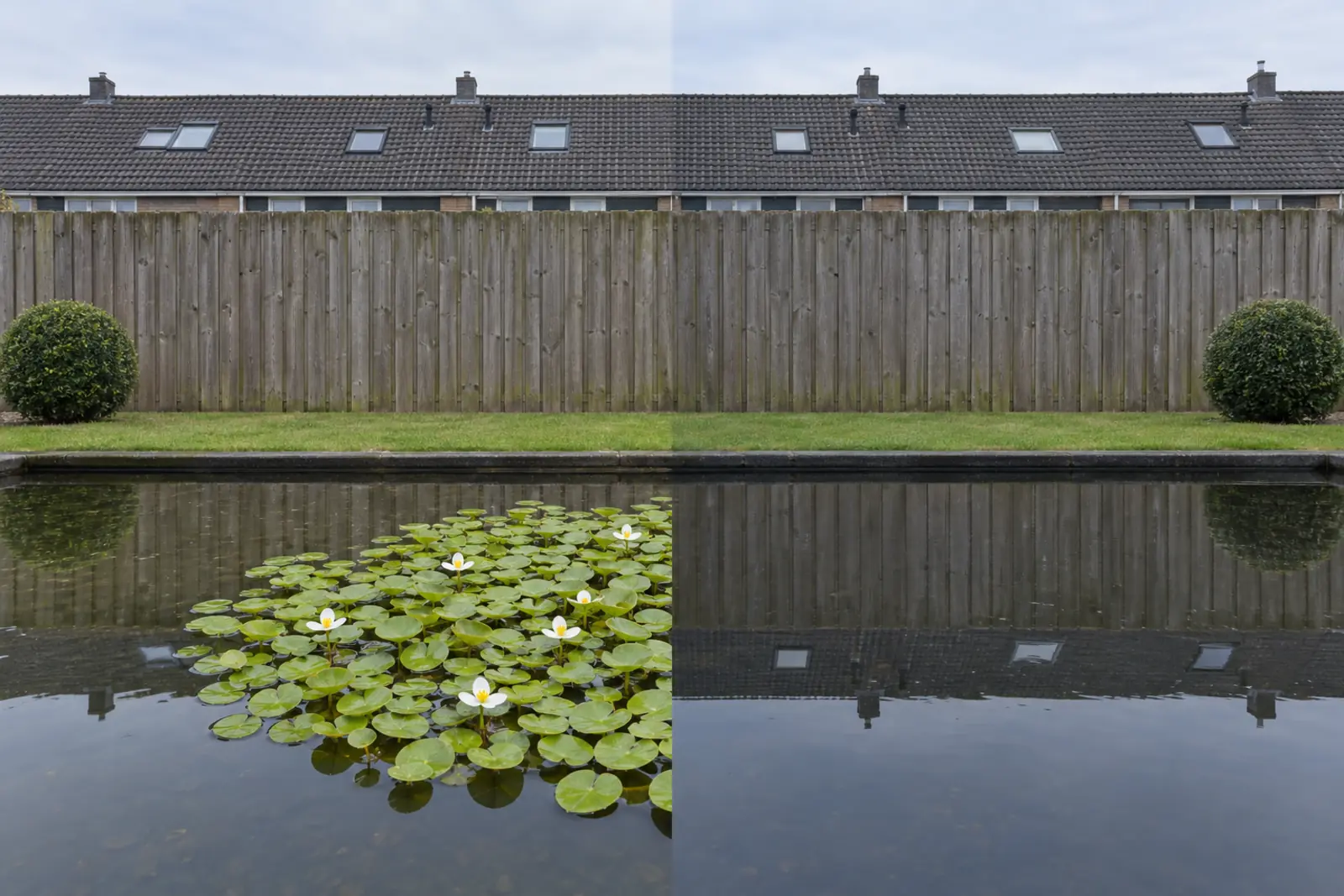 The same pond in July and in January. This is a generated image, not a photograph.
In the app your own plot appears to scale, with the neighbours' houses around it. On that plan you can measure for yourself how much room there is for a pond.
Planting and caring for frogbit
Frogbit does not go into soil. Lay the plants loose on the water in spring or summer, while they are in leaf. Out of season, nurseries sometimes sell winter buds instead of plants. Those also go loose into the pond.
There is no fixed planting distance, because the plants drift wherever the wind takes them. Each plant makes new rosettes on its runners. A group spreads that way to between half a metre and a whole metre across. On planting day, a handful of plants therefore looks like very little on a pond.
The plant lives in water, so watering is never needed, and neither is pruning. To keep some open water, scoop a few plants off with a pond net in summer.
Frogbit problems and what to do
The leaves have little tunnels or folded edges, and they rot away. That may be the caterpillars of the brown china-mark moth, a small brown moth with white spots. These caterpillars feed on many kinds of water plant. In most cases, leave them be.
There are snails on the leaves. Frogbit can be troubled by water snails. Most pond snails feed mainly on dead plant material and algae, and they usually leave healthy plants alone.
You see hardly any flowers. Each flower is open for one day only. On a male flower stalk, usually just one flower opens at a time. Check the pond on a few days in a row in July.
Everything has gone in autumn. That is normal. The plant spends the winter as a bud on the bottom and comes back in April.
Which insects and birds use frogbit?
Frogbit is on the list of plants for a dragonfly pond, among the water plants with floating leaves. Dragonflies and damselflies need water, and plants in and around that water as well.
At the base of each petal, the flower has a nectar scale: a tiny scale that holds nectar. Records of which insect and bird species use frogbit are scarce.
Is frogbit poisonous or edible?
Frogbit is not known to be poisonous. That only means no risk is known in a garden or pond. It does not mean you can eat the plant.
The photos on this page were made with AI, based on real photos and descriptions of this plant.
Frequently asked questions
How do you plant frogbit in a pond?
Lay the plants loose on the water. Their roots hang free in the water and usually do not reach the bottom. Choose a calm spot in the sun, out of the current from a pump.
What happens to frogbit in winter?
In autumn the leaves die back and small winter buds sink to the bottom. In April those buds rise again and grow new leaves. The water must be deep enough not to freeze down to the bottom.
When does frogbit flower?
From June to August. The white flowers have three petals with a yellow base. Each flower is open for one day only.
Is frogbit poisonous?
Frogbit is not known to be poisonous. That does not mean the plant is edible.
Is frogbit native to the Netherlands?
Yes, frogbit is native to the Netherlands. In the low-lying peat districts the species is common.
Sources (17)
- Duistermaat, Sparrius & Denters, Standaardlijst van de Nederlandse flora 2020 (Gorteria 43)
- NDFF Verspreidingsatlas — Hydrocharis morsus-ranae
- NDFF Verspreidingsatlas — Watergentiaan (Nymphoides peltata)
- NDFF Verspreidingsatlas — Witte waterlelie (Nymphaea alba)
- NDFF Verspreidingsatlas — Waterleliemot (Elophila nymphaeata)
- Flora van Nederland — Kikkerbeet
- Wilde planten in Nederland en België — Kikkerbeet
- FLORON via Nature Today — Onderduikers (winterknoppen)
- RHS — Hydrocharis morsus-ranae
- RHS — Shade gardening (definities zon en schaduw)
- RHS — Waterlily invertebrates
- De Vlinderstichting — Planten voor een libellenvijver
- Vijverplantenland — Kikkerbeet los (prijs)
- Directplant — Kikkerbeet (prijs)
- Biovijver — Kikkerbeet (planten en winterknoppen)
- Wikimedia Commons — Leaf: photo by AnRo0002 (CC0)
- Wikimedia Commons — Flower: photo by Skjold Søndergaard (CC BY 4.0)