5 min read
Water soldier: a spiny native pond plant
Stratiotes aloides
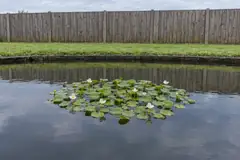
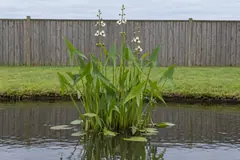
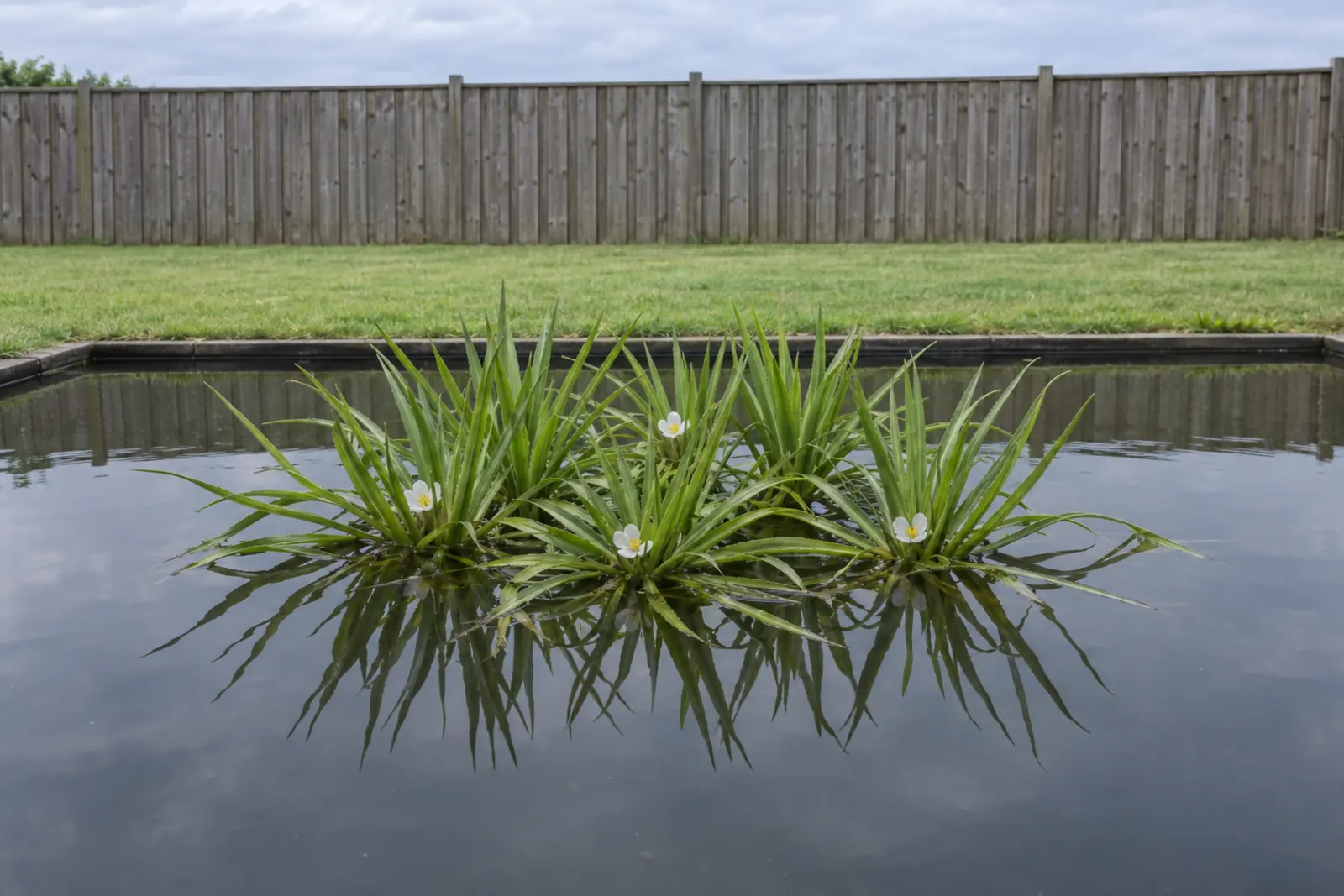
Water soldier (Stratiotes aloides) is a native water plant that floats as a spiny rosette in still water. Its narrow leaves have toothed edges. From May to July the plant flowers white, with three petals. In winter the water soldier sinks to the pond floor. Set it loose in a calm, sunny pond.
Water soldier at a glance
| Feature | Water soldier |
|---|---|
| Height | 15 to 40 cm |
| Spread | 0.5 to 1 m |
| Full grown after | 5 to 10 years |
| Sun | Full sun to partial shade |
| Soil | None: floats loose in still water |
| Water | Plenty: lives in the pond |
| Maintenance | Low: sometimes remove rosettes |
| Flowers | May to July, white |
| For bees | Little: pollinated by flies, among others |
| Hay fever | Unknown |
| Leaves | Partly green: overwinters on the bottom |
| Hardy | Yes |
| Native | Yes |
| Poisonous | No, as far as known |
| Pricks or stings | Yes: spiny leaves |
| Price, young | About €3.25 to €4.99 per plant, loose |
| Price, grown | Not for sale |
- Leaf
- all year
- Flower
- May to July
- Fruit
- no noticeable fruit
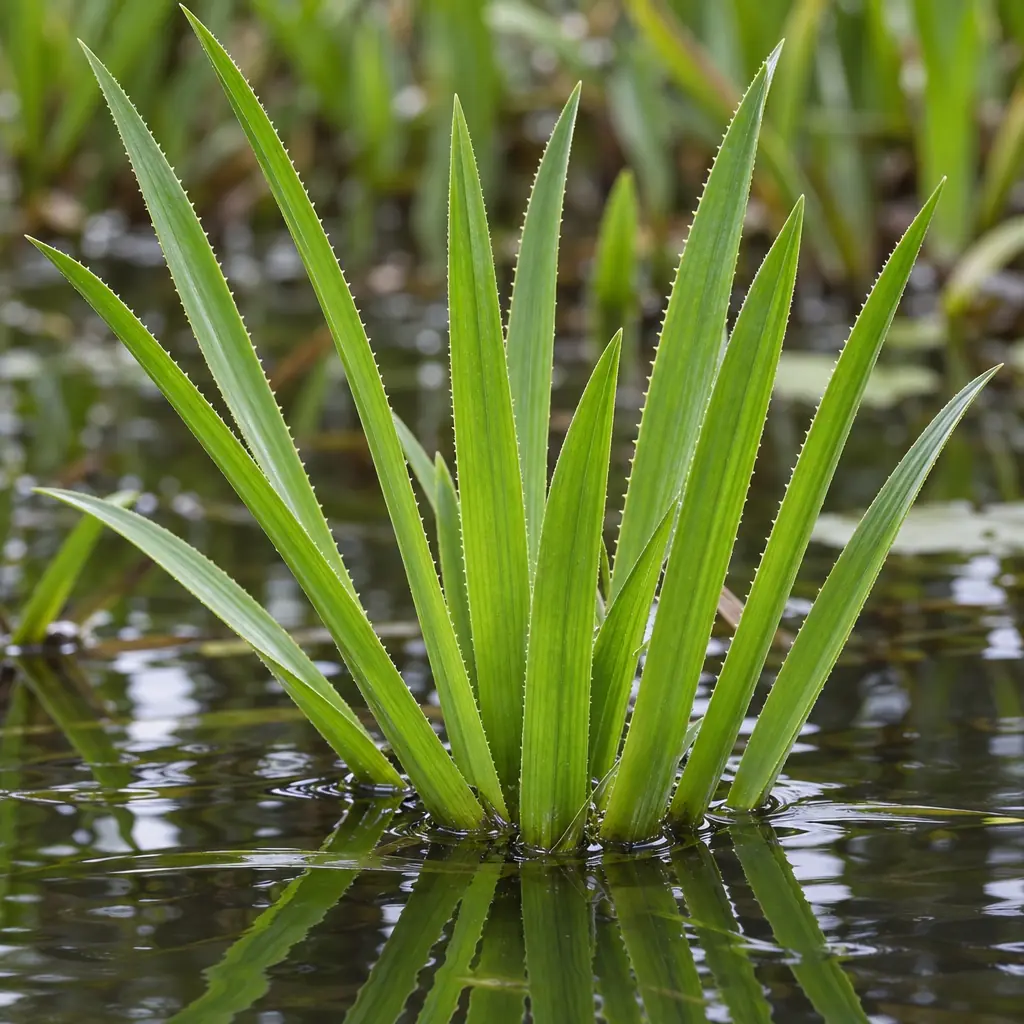
Leaf 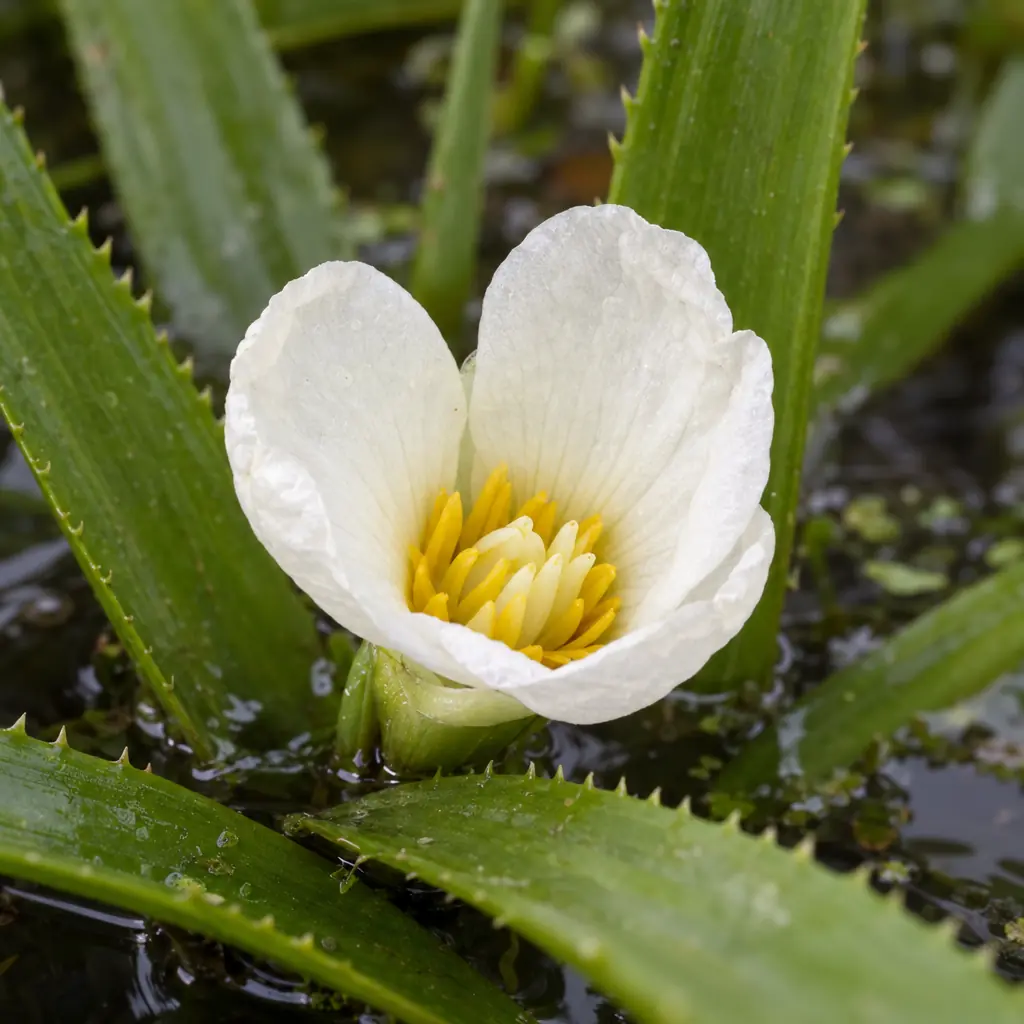
Flower
How do you recognise a water soldier?
Look at the leaf first. A rosette has many narrow leaves that taper slowly to a sharp point. They grow up to 45 cm long. The edge is strongly toothed, and each tooth carries a small forward-pointing spine. Above water the leaf is grass green; below water it turns dark green to wine red.
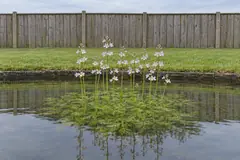
The flower is about 4 cm wide, with three white petals. One plant carries only male or only female flowers. The flowers come from a spathe, a sheath in the leaf axil. From each spathe, a female plant produces one flower, almost without a stalk. A male plant produces three to six stalked flowers from one spathe, of which only one blooms at a time.
Water lettuce looks similar from a distance, since it also floats as a rosette on the water. Its leaf is soft, light green and ribbed, with long feathery roots underneath. Water lettuce also cannot survive frost. The water soldier has stiff, narrow, spiny leaves and survives winter outdoors.
Where does a water soldier grow best?
A water soldier wants shallow, still and nutrient-rich water in a sheltered spot. In the wild the plant grows in water 50 cm to 2 m deep. The rosette prefers full sun. Around midsummer that means more than six hours of direct sunlight on the water. Partial shade also works, with three to six hours of direct sunlight.
Here is where it goes wrong:
- A pond with a pump, skimmer or fountain. The rosettes drift loose. Moving water carries them away, sometimes into the pump.
- A small pond you want to keep open. New rosettes on the runners can fill a small water surface completely.
In January you usually see nothing of the water soldier at the surface.
In the app you place your own plot to scale, with the buildings around it. On that plot you draw the pond between your terrace, your borders and the fence. That way you see, before you start digging, how big the pond can become.
Planting and caring for a water soldier
A water soldier goes straight onto the water, never into soil. Set the rosette loose, without a basket, pond soil or gravel. Choose a calm part of the pond. Put a new plant into the water as soon as it arrives, so it does not dry out.
Plan on about 5 plants per 2000 litres of water. Do not place them close together. Each plant eventually needs half a metre to a full metre of space. On the first day that looks like a lot of open water.
Watering is never needed, because the plant lives in the pond. Extra feeding is not needed either, and neither is pruning.
Water soldier problems and what to do
The plant stays on the bottom. In cold water a water soldier sometimes sinks a little towards the bottom. If the rosette lies at less than 50 cm deep, it grows and floats up again once the water warms. If the plant lies deeper, move it to a shallower part of the pond.
The new plant lies on its side. Plants sent later in the season are often top-heavy. It can take a few weeks before they float upright. Just leave them be.
The pond fills up. Every spring, runners grow from the leaf axils, with a young plantlet at the end. Remove the surplus rosettes and leave the rest. Wear gloves while doing this, because the leaf edges prick. Never throw what you remove into a ditch or pool: plant material from a pond does not belong in natural water.
No fruit appears. That is normal. A colony often grows from a single plant and is then entirely male or entirely female. Fruit is therefore rarely seen, and it makes no difference to the pond.
Which birds and insects use a water soldier?
The green hawker is a dragonfly strongly tied to the water soldier. The female lays her eggs almost only in water soldier plants. The eggs also overwinter there. The dragonfly flies from late June to late September, with most sightings in August.
The black tern, a bird of marshes, builds its nest on floating plants, preferably on water soldier. The sharp decline of the water soldier costs that bird many nesting spots.
Is a water soldier poisonous or edible?
The water soldier is not known to be poisonous. For a garden pond, no risk is therefore known. No edible parts are known either. That the plant is not known to be poisonous does not make it edible.
The photos on this page were made with AI, based on real photos and descriptions of this plant.
Frequently asked questions
How do you put a water soldier in a pond?
You set the plant loose on the water, without a basket or pond soil. Choose a calm spot with no pull from a pump or skimmer. In water less than 50 cm deep the plant grows well and floats up once the water warms.
Why does a water soldier sink in autumn?
A water soldier overwinters on the bottom of the pond. Most of the leaf dies back then, but the stem stays alive. In spring the plant comes back up.
How many water soldiers does a pond need?
Plan on about 5 plants per 2000 litres of water. After that, each plant makes new rosettes of its own through runners.
Is a water soldier poisonous?
The water soldier is not known to be poisonous. No edible parts are known either.
Is a water soldier a native plant?
Yes, the water soldier is originally native to the Netherlands. Since 1950 the species has declined sharply in the wild, by 50 to 75 percent.
Sources (16)
- Duistermaat, Sparrius & Denters, Standaardlijst van de Nederlandse flora 2020 (Gorteria 43)
- NDFF Verspreidingsatlas — Stratiotes aloides
- Flora van Nederland — Krabbenscheer
- Wilde planten in Nederland en België — Krabbenscheer
- RHS — Stratiotes aloides
- RHS — Pistia stratiotes (watersla)
- RHS — Shade gardening (definities zon en schaduw)
- PFAF — Stratiotes aloides
- De Vlinderstichting — Groene glazenmaker
- Vogelbescherming — Zwarte stern
- Biovijver — Krabbenscheer (plaatsen en onderhoud)
- Vijvermeester — Krabbenscheer (prijs, diepte, aantal)
- Vijverplantenland — Krabbenscheer los (prijs)
- Vijverkenner — Krabbenscheer (prijs)
- Wikimedia Commons — Leaf: photo by Velela (Public domain)
- Wikimedia Commons — Flower: photo by Velela (Public domain)