6 min read
Water mint plant: where to grow it, care and insects
Mentha aquatica
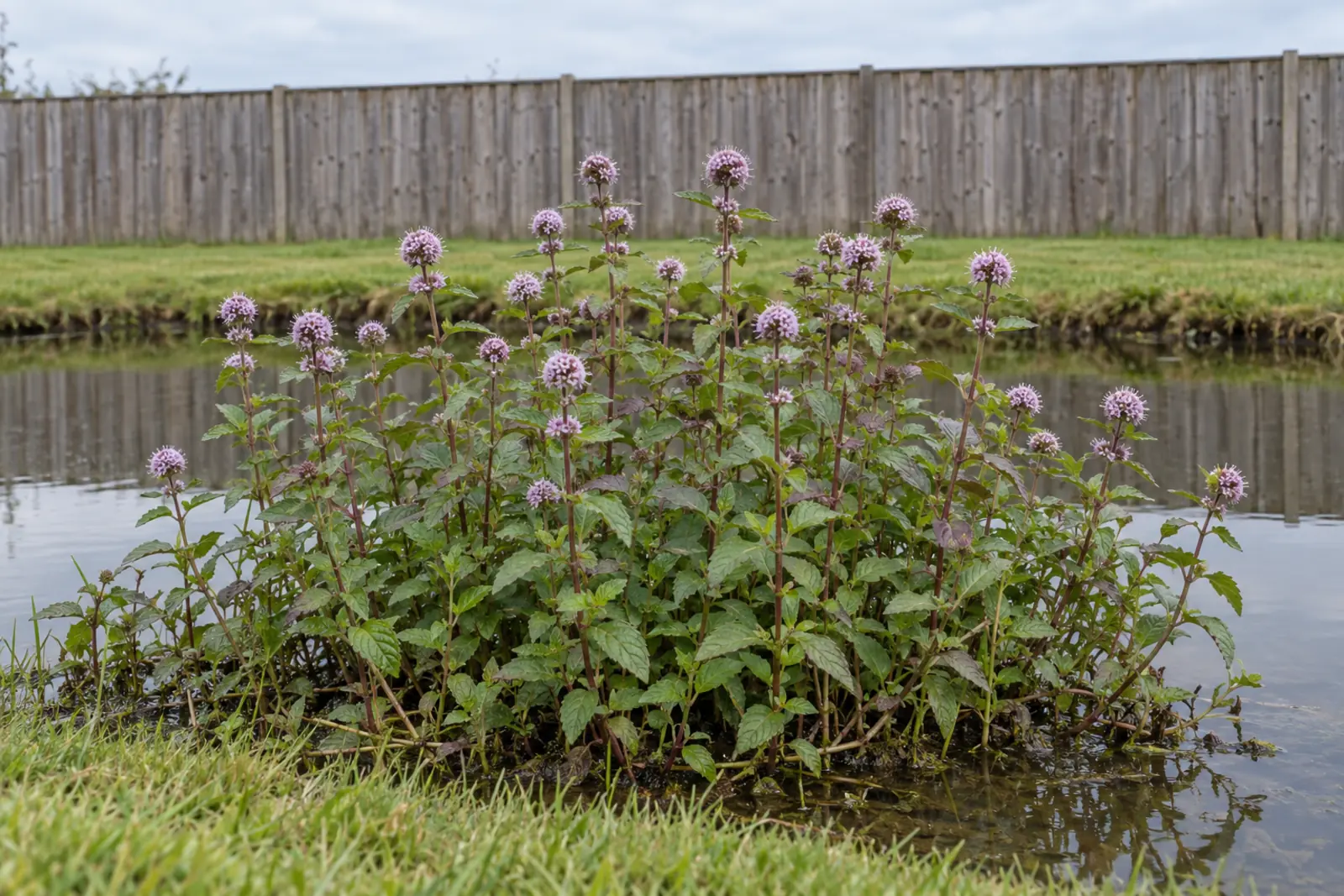
Water mint (Mentha aquatica) is a native mint plant for wet soil and the shallow edge of a pond. From July to November, round lilac flower heads stand above the leaves. A crushed leaf smells of peppermint. Left to itself, the plant spreads through its runners into a wide mat.
Water mint at a glance
| Feature | Water mint |
|---|---|
| Height | 0.3 to 0.9 m |
| Spread | 0.5 to 1 m per clump |
| Full grown after | 2 to 5 years |
| Sun | Full sun to partial shade |
| Soil | Wet and rich in nutrients, preferably clay or loam |
| Water | Plenty: it can stand in shallow water |
| Maintenance | Average: keep the runners in check |
| Flowers | July to November, lilac |
| For bees | Yes: nectar and pollen, July to September |
| Hay fever | Not or weakly allergenic |
| Leaves | Drop: the plant dies back above ground in winter |
| Hardy | Yes |
| Native | Yes |
| Poisonous | No, as far as is known |
| Pricks or stings | No |
| Price, young | About €3.50 to €4.99 each, in a small nursery pot |
| Price, grown | About €9.75 to €9.94 each, in a pond basket, sometimes only in lots of 3 |
- Leaf
- April to November
- Flower
- July to November
- Fruit
- no noticeable fruit
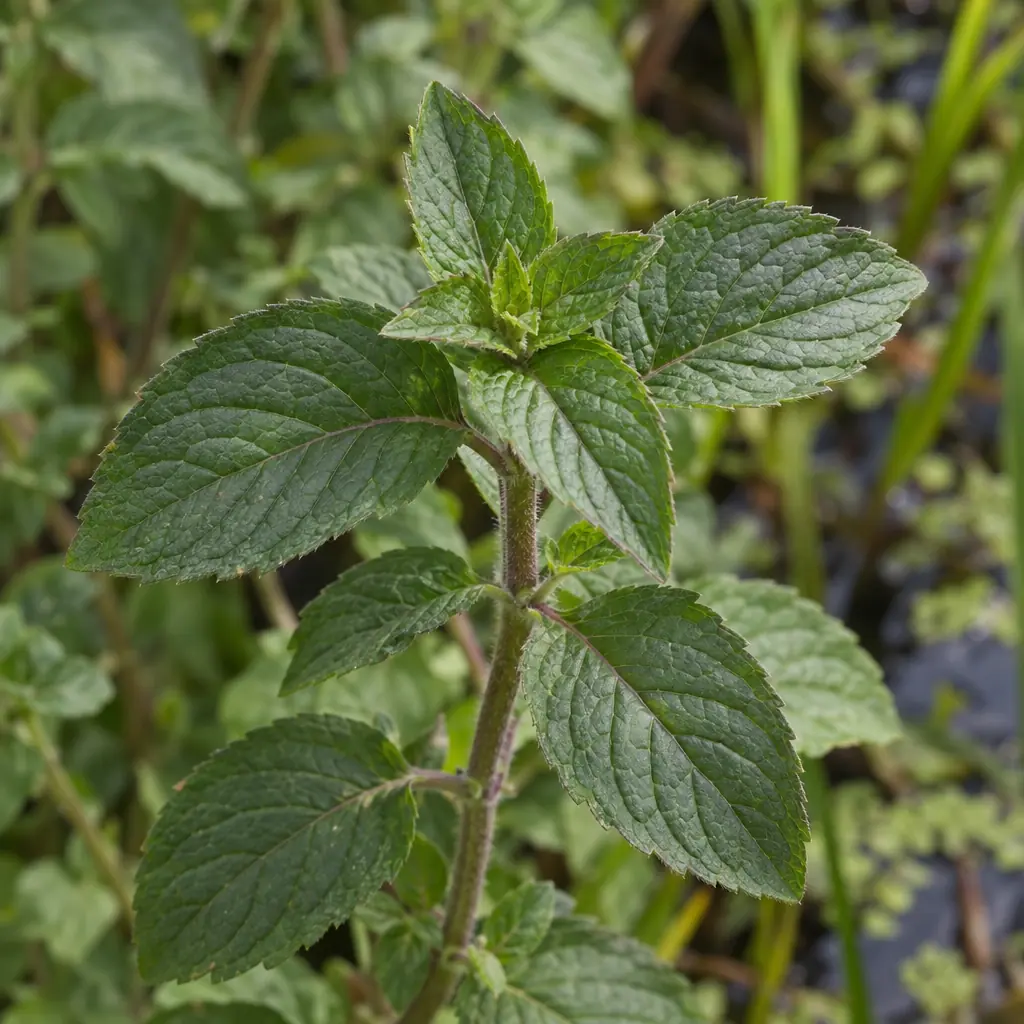
Leaf 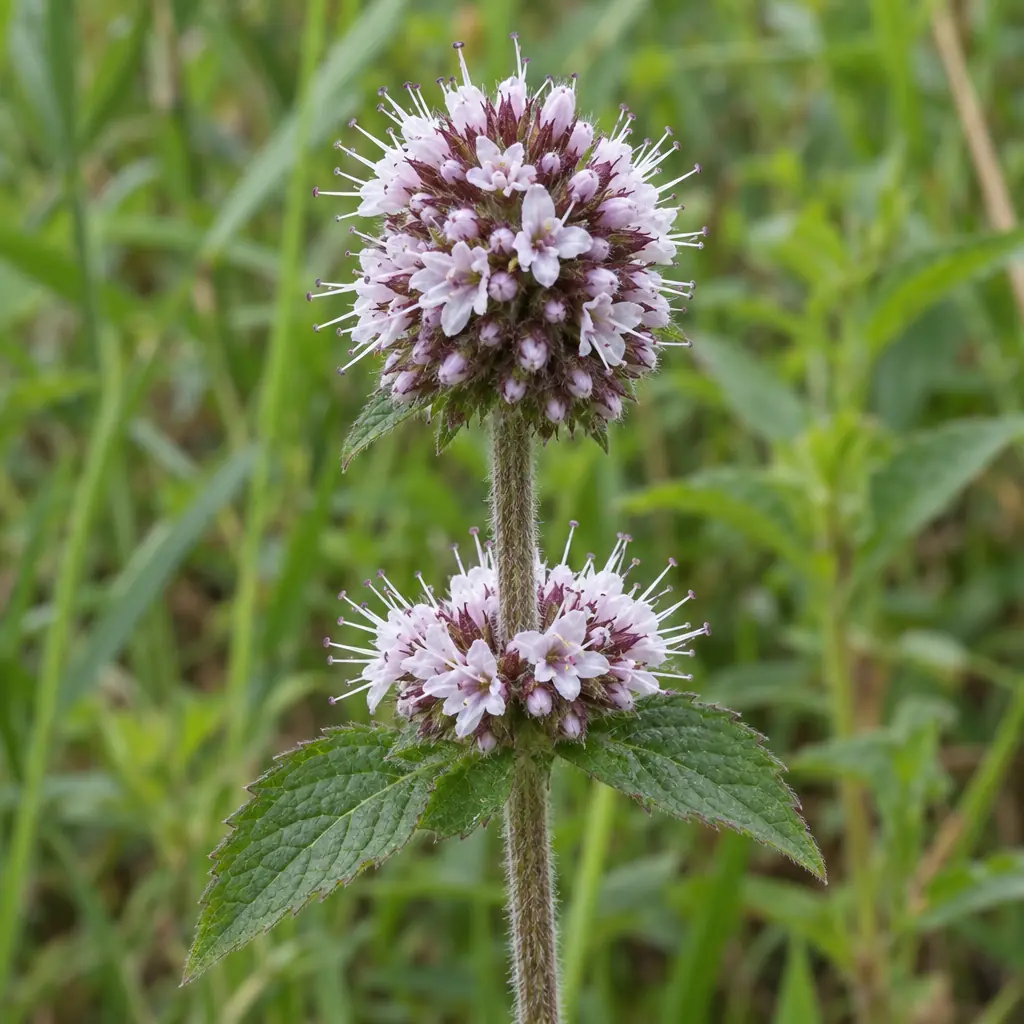
Flower
How do you recognise water mint?
The stem is square, hairy and often reddish purple. The leaves grow in pairs, each pair set crosswise on the pair below. Each leaf is oval to oblong, with a toothed or scalloped edge and a short stalk. The leaves are often tinged purple, and a crushed leaf smells strongly of peppermint.
The tiny flowers are reddish lilac. They sit tightly packed in whorls around the stem. The top whorls together form one small ball at the tip. Lower down there is often one more separate whorl. Four stamens stick out of each flower, which makes the ball look fluffy. After flowering the plant sets tiny seeds, which can still germinate after more than five years.
Corn mint (Mentha arvensis) looks very similar. Check the top of the stem: corn mint ends in a few leaves without flowers. Water mint ends in a round flower head.
Where does water mint grow best?
Water mint flowers most freely in full sun: more than six hours of direct sun on a midsummer day. With three to six hours of direct sun, the plant still grows. In the wild, water mint grows along watersides and in marshes, reed beds and wet grassland. Heavy soil, clay or loam, suits it well.
Places where water mint will not do well:
- A sandy border that dries out in summer. The stems go limp, and in dry soil water mint is more likely to get mint rust or powdery mildew.
- A small pond without a basket. Long runners grow above and below ground, and they soon take over the whole bank.
In autumn the plant dies back above ground. Left uncut, the clump is only dry, brown stems with dead flower heads in January.
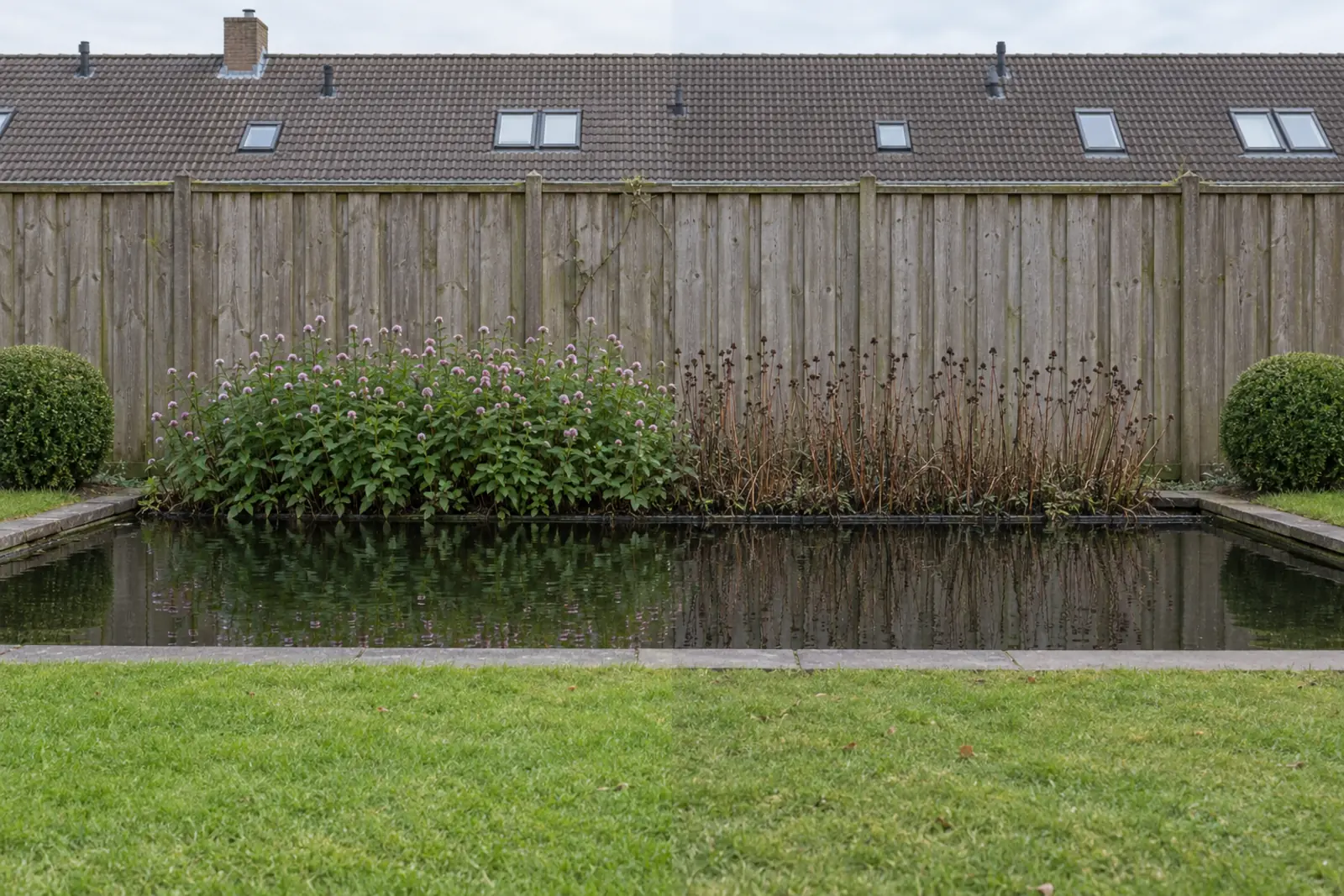 The same pond edge in August and in January. This is a generated image, not a photograph.
On a plan of your plot drawn to scale, with the buildings around it, you draw in your pond yourself. On that plan you can measure whether there is a metre of open space along the bank.
Planting and caring for water mint
Nurseries sell water mint all year as a young plant in a small nursery pot. Move it into a pond basket, which keeps the runners together. The basket goes in shallow water, usually 0 to 20 centimetres deep. Plant a piece of an existing clump in spring, right after dividing.
Nurseries allow 5 to 9 plants per square metre. On planting day that looks like a lot of open ground, because a young plant is only a few stems. The runners fill the gaps on their own. In or beside a pond there is no need to water. In a wet border, keep the soil moist all summer.
| When | What to do |
|---|---|
| Spring | Dig up and divide a clump that has grown too wide |
| After flowering, in late autumn | Cut back the old stems |
Birds breed mainly from March through July. So before you dig up a clump in spring, check for a nest in or beside it.
What goes wrong with water mint?
There are orange, dusty spots on the leaves. That is mint rust, a fungus. Later the spots turn yellow or black and the leaves drop. Cut away the diseased stems before the black spores appear. A spot that is too dry raises the risk of mint rust.
There is a white coating on the leaves. That is powdery mildew, another fungus that strikes mainly in dry spells. Keep the base of the plant wet.
The stems hang limp. The soil is too dry. Move the plant closer to the water, or into the pond itself.
Few flowers appear. Most likely the plant gets too little sun. In spring, move the clump to a sunnier spot.
The clump pushes other marginal plants aside. The runners do that. In spring, dig out part of the clump, or put the plant in a basket after all.
Which insects and birds use water mint?
The caterpillar of the mint moth (Pyrausta aurata) feeds on water mint and on other mints. This small, very common moth turns up mostly in gardens. In August the second generation is on the wing.
The caterpillar of the water ermine (Spilosoma urticae) also eats water mint. This moth lives in marshes, in wet grassland and along banks. The gold spot (Plusia festucae), a moth that flies from dusk, visits the flowers.
With fish in the pond, a dense edge of water mint helps against the heron. The growth makes it hard for the bird to reach the water.
Is water mint poisonous or edible?
No poisonings from water mint are known. Mints in general do carry a warning: large amounts of some mints, especially as concentrated oil, can cause a miscarriage.
A herbal tea is made from the leaves. As a flavouring in food, many people find them too sharp.
The photos on this page were made with AI, based on real photos and descriptions of this plant.
Frequently asked questions
How big does water mint get?
Water mint grows 30 to 90 centimetres tall. Through its runners a clump spreads to half a metre to a metre across, and the plant is full grown after 2 to 5 years.
How deep can water mint go in a pond?
Water mint grows on wet ground and in shallow water, usually 0 to 20 centimetres deep.
Does water mint spread?
Yes. Stems and roots form long runners, above and below ground. Grow the plant in a pond basket, or dig out part of the clump in spring.
When do you cut back water mint?
After flowering, so in late autumn. Water mint flowers from July to November.
Is water mint poisonous?
No poisonings from water mint are known. Some related mints do carry a warning about large amounts, especially of the concentrated oil.
Sources (22)
- Duistermaat, Sparrius & Denters, Standaardlijst van de Nederlandse flora 2020 (Gorteria 43)
- NDFF Verspreidingsatlas — Mentha aquatica
- Flora van Nederland — Watermunt
- Flora van Nederland — Akkermunt
- RHS — Mentha aquatica (water mint)
- RHS — Shade gardening (definities zon en halfschaduw)
- RHS — Mint rust
- Plants For A Future — Mentha aquatica
- Plants For A Future — Mentha x piperita
- Imkerpedia — Drachtplanten
- Pollennieuws / Flora van Nederland — Aandachtspunten hooikoorts vriendelijke tuin
- De Vlinderstichting — Bijzondere vlinder in de tuin: muntvlindertje
- De Vlinderstichting — Sneeuwbeer
- De Vlinderstichting — Goudvenstertje
- Vogelbescherming — 5 veel gehoorde vogelergernissen
- Vogelbescherming — Snoeien in het broedseizoen, mag dat?
- Vijverkenner — Mentha aquatica (prijs, plantdichtheid)
- Vijvermeester — Watermunt (prijs)
- Vijverplantenland — Mentha aquatica (prijs en plantdiepte)
- Directplant — Watermunt (prijs vijvermand, plantdichtheid)
- Wikimedia Commons — Leaf: photo by Stephen James McWilliam (CC BY 4.0)
- Wikimedia Commons — Flower: photo by B. Schoenmakers (CC BY 3.0)