5 min read
Viper's bugloss in the garden: identify, plant and price
Echium vulgare
Viper's bugloss (Echium vulgare) is a biennial plant with blue flowers. The first year brings only a rosette of rough, hairy leaves. From the second year a stem of 0.3 to 1 metre follows, flowering from May to September. The plant needs sun and dry soil where rain drains away quickly.
Viper's bugloss at a glance
| Feature | Viper's bugloss |
|---|---|
| Height | 0.3 to 1 m |
| Spread | 0.1 to 0.5 m |
| Full grown after | 1 to 2 years |
| Sun | Full sun |
| Soil | Dry, sandy or chalky |
| Water | Little: grows on dry ground in the wild |
| Maintenance | Low: pruning is not necessary |
| Flowers | May to September, blue |
| For bees | Yes: plenty of nectar and pollen, May to September |
| Hay fever | Not or weakly allergenic |
| Leaves | Drop: the plant dies after flowering |
| Hardy | Yes |
| Native | Yes |
| Poisonous | Mildly: the leaves |
| Pricks or stings | No |
| Price, young | About €2.50 to €4.09 each, in a small pot |
| Price, grown | About €6.50 each, in a bigger pot, minimum order 10 |
- Leaf
- March to October
- Flower
- May to September
- Fruit
- no noticeable fruit
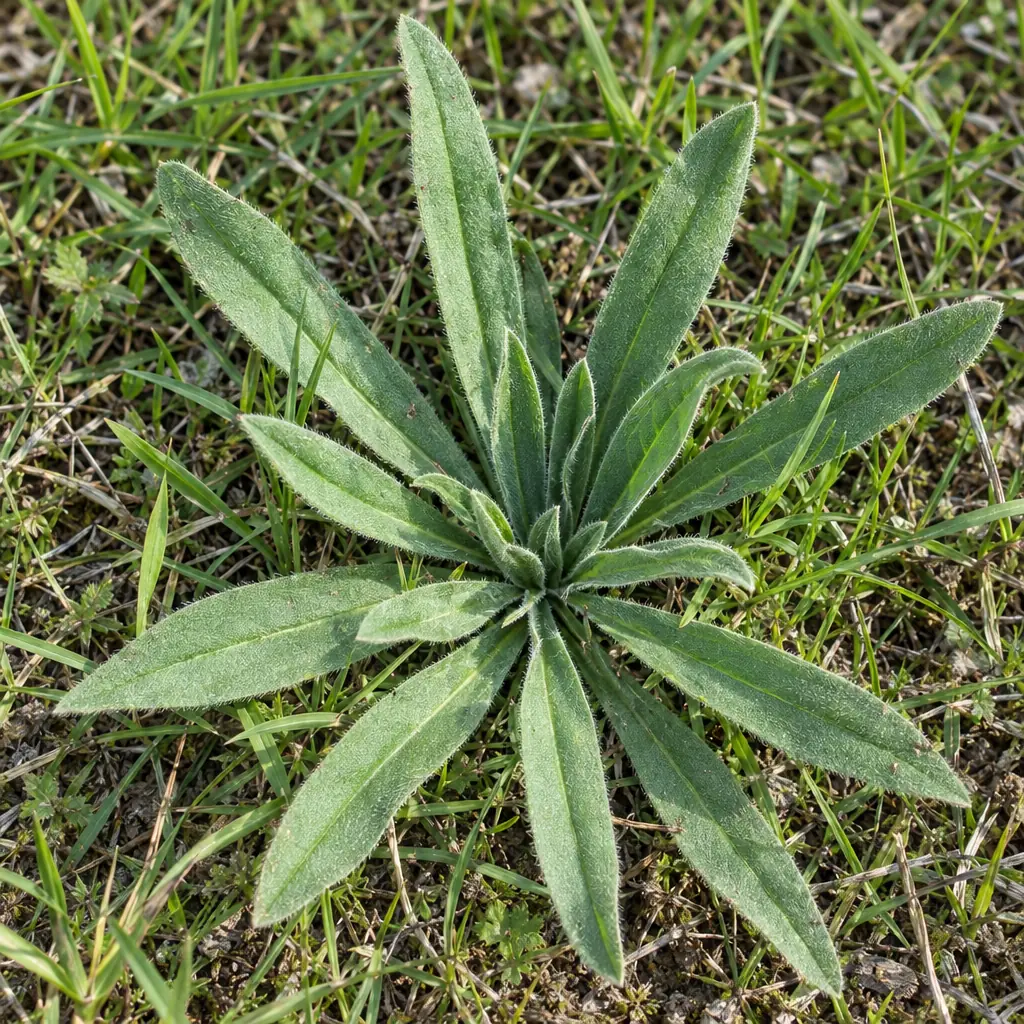
Leaf 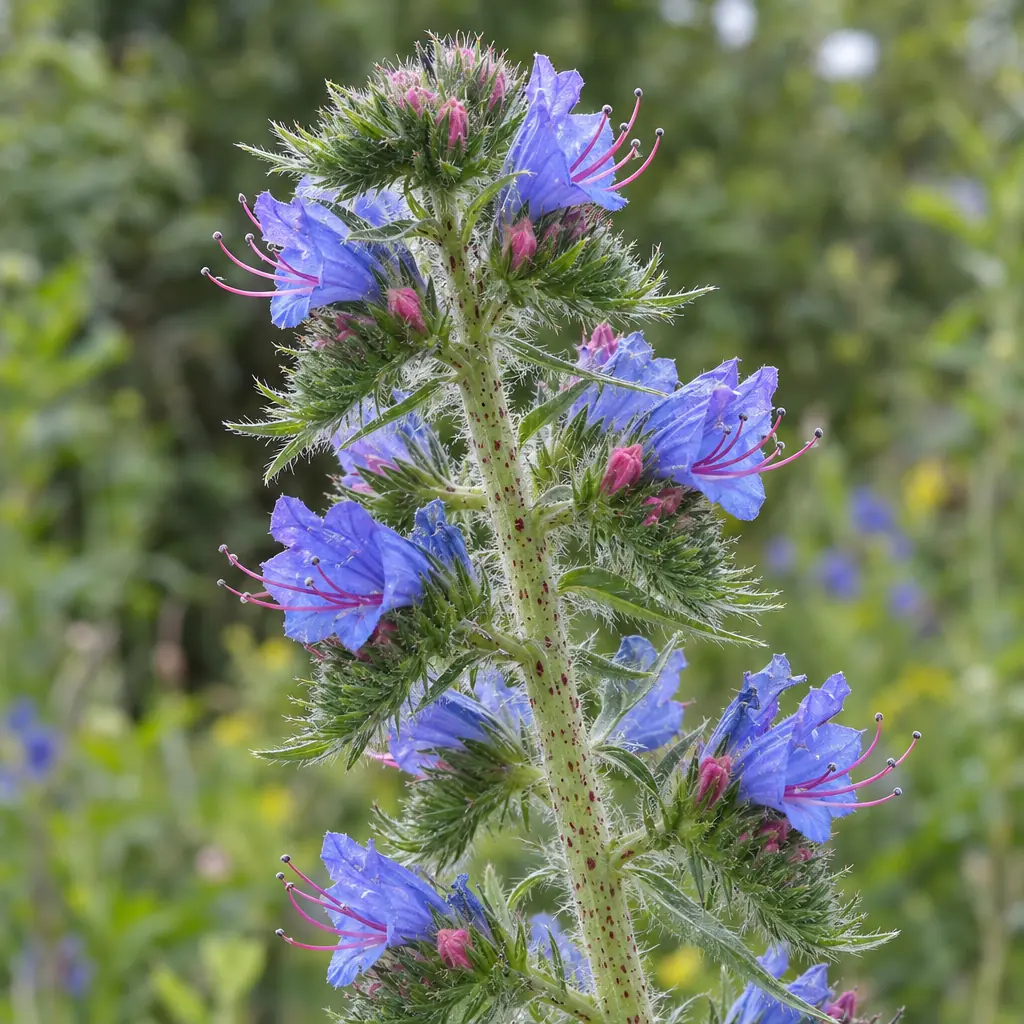
Flower
How do you recognise viper's bugloss?
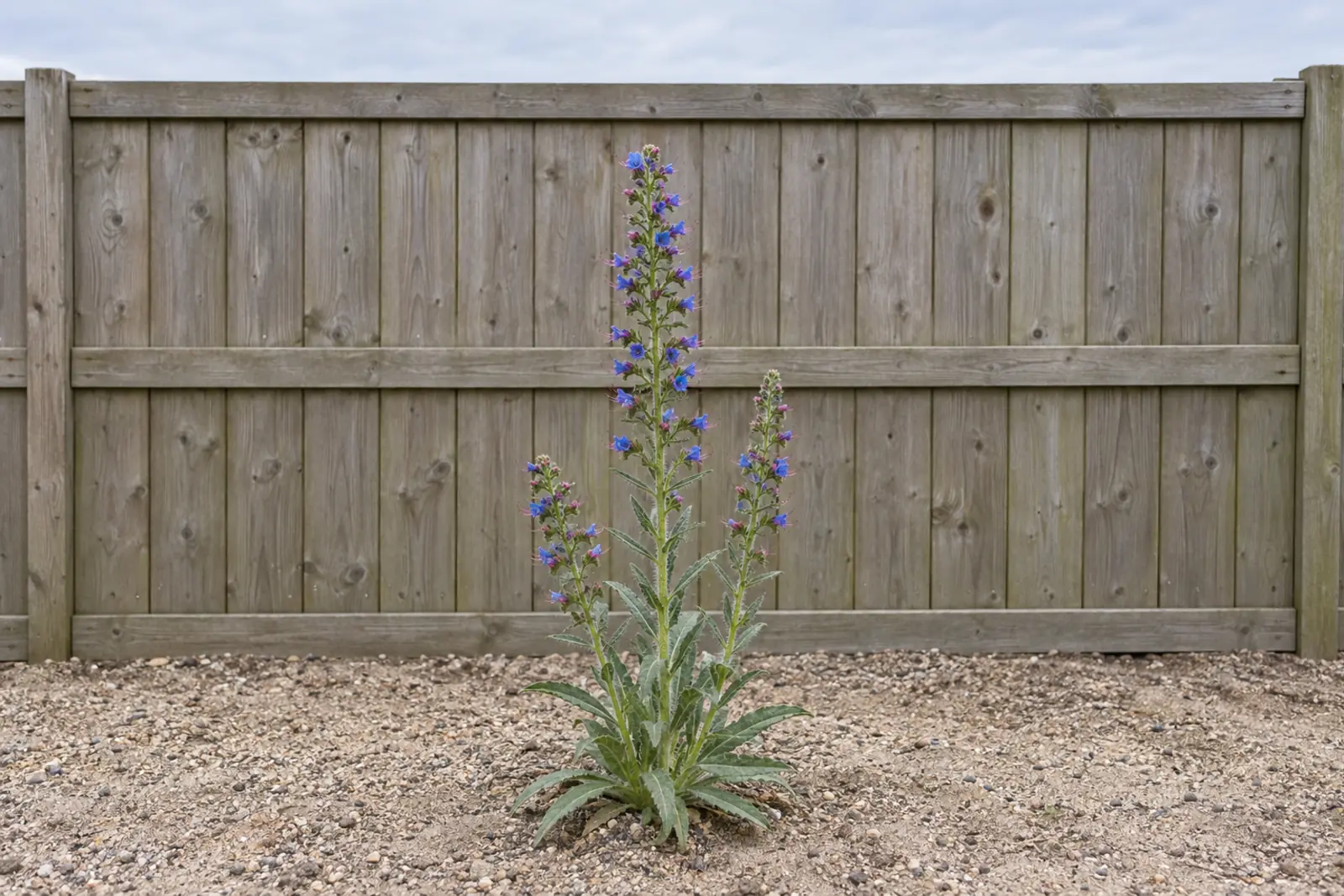
At first there is nothing but a rosette, a circle of leaves pressed flat to the ground. These oblong leaves can grow to just over 20 centimetres long. At the base each one narrows into a stalk. Bristly hairs make the leaves feel rough and prickly, yet the plant has no true thorns or prickles.
Next, a straight stem shoots up. That stem is bristly as well, with long hairs sitting on tiny bumps. Higher up, the leaves turn narrower and lose their stalk.
At the top the stem carries a long, dense spike packed with flowers. In bud the flowers are pinkish red. Once open, they change through purple to bright blue. Each flower is up to 2 centimetres in size, with a lopsided mouth. The stamens, the thin threads with the pollen, reach far out of the flower.
Where does viper's bugloss grow best?
Plant viper's bugloss in full sun, meaning more than six hours of direct sunlight per day at midsummer. The soil should be dry and low in humus. Sand, lime and even some rubble or crushed stone suit it well. In the wild viper's bugloss grows on road verges, in the dunes and along railway lines. The plant reached the Netherlands before 1500 and has grown wild here ever since.
Do not choose these spots for viper's bugloss:
- In the shade of a tree, shed or hedge. Viper's bugloss cannot grow in a shady place.
- A wet corner on heavy clay. The roots need soil where rain drains away quickly.
By January, all that is left of a plant that has flowered is bare, dead stems. Meanwhile this year's young plants spend the winter as flat rosettes on the ground.
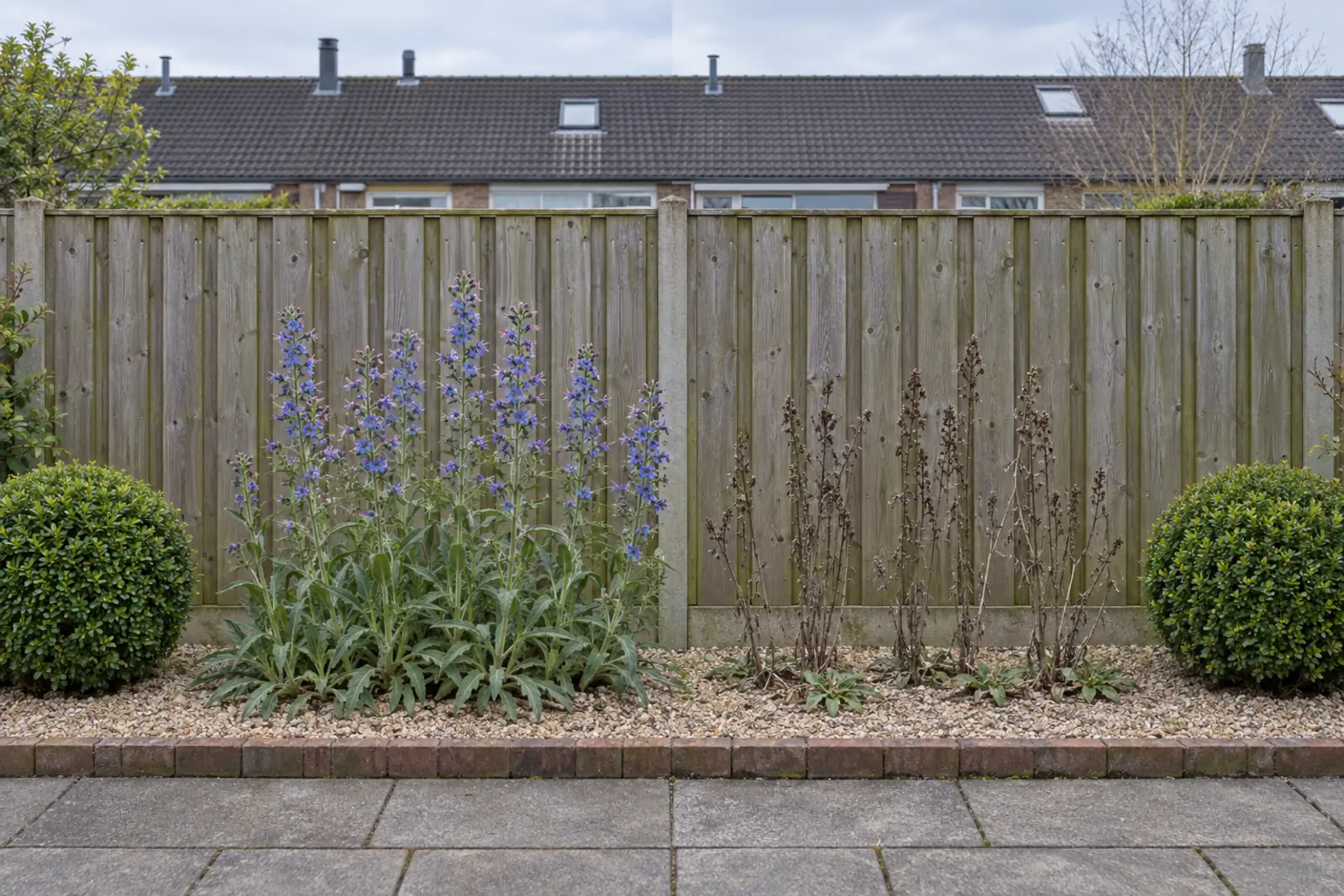 The same border in June and in January. This is a generated image, not a photo.
A small pot holds a slim young plant, but a plant in flower takes up more room. In the app you place viper's bugloss on a drawing of your own plot, where the neighbouring houses appear at true scale. The app draws the plant at a grown plant's width, not at pot size.
Planting and caring for viper's bugloss
Start from seed or from a young plant in a small pot. Nurseries advise 6 to 7 plants per square metre. On planting day that looks sparse, because a plant in flower grows up to half a metre wide.
Fertiliser is not needed: wild viper's bugloss grows on soil with little humus. An established plant also rarely needs extra water.
There is no need to prune. Once flowering is over, you do choose what to do with the stems.
| When | What to do |
|---|---|
| After flowering, if you want no new plants | Cut off the stems before the seed falls |
| Autumn, if you do want new plants | Leave the stems until the seed has dropped out |
Many birds breed from March through July, and some species into August. If you cut in that period, first check for a nest close by.
What can go wrong with viper's bugloss?
No flowers appear in the first year. That is normal. Viper's bugloss first makes a rosette and flowers only in its second year, sometimes later still.
The plant dies once it has flowered. That is also part of being a biennial. When a few stems are left to shed their seed, new plants come up.
The young rosettes have holes in them. Slugs may be the cause, because viper's bugloss can be prone to them. Look for them on a damp evening and remove them.
The plant stays small and hardly flowers. Perhaps its spot is too dark or too wet. Then sow or plant again, in a sunny, dry place.
Seedlings come up everywhere. The seed stays viable for a long time and can wait in the ground. Cut off the stems before the seed ripens.
Which insects and birds use viper's bugloss?
Bees, butterflies, moths and hoverflies pollinate the flowers of viper's bugloss. For the Essex skipper (Thymelicus lineola), a common butterfly from late June to late August, viper's bugloss is an important nectar plant. The broad-bordered bee hawk-moth (Hemaris fuciformis), a fairly rare moth of the dunes, drinks from the tubular flowers. The dingy skipper (Erynnis tages), an extremely rare species, sometimes visits the flowers too. No bird is described by name as using viper's bugloss.
Is viper's bugloss poisonous?
The leaves of viper's bugloss are mildly poisonous. No cases of poisoning in people have been described. The bristly hairs on leaves and stem can badly irritate the skin, though. So do not eat the leaves.
The photos on this page were made with AI, based on real photos and descriptions of this plant.
Frequently asked questions
Is viper's bugloss poisonous?
Yes, mildly. The leaves are weakly poisonous, and the bristly hairs on leaves and stem can badly irritate the skin. No cases of poisoning in people have been described.
Is viper's bugloss native to the Netherlands?
Yes, in the sense that the plant belongs here. Viper's bugloss reached the Netherlands before 1500 and has grown wild here ever since.
Does viper's bugloss come back every year?
Each plant flowers once and then dies. If you leave the stems until the seed falls, new plants come up. That seed stays viable for a long time.
How much sun does viper's bugloss need?
Viper's bugloss needs full sun, which means more than six hours of direct sunlight per day at midsummer. In shade the plant does not grow.
How tall does viper's bugloss grow?
In the year it flowers, 0.3 to 1 metre. During its first year the plant stays low, as a rosette on the ground.
Sources (20)
- Duistermaat, Sparrius & Denters, Standaardlijst van de Nederlandse flora 2020 (Gorteria 43)
- NDFF Verspreidingsatlas — Echium vulgare
- Flora van Nederland — Slangenkruid
- Wilde planten in Nederland en België — Slangenkruid
- Duinbehoud — Slangenkruid
- RHS — Echium vulgare (viper's bugloss)
- RHS — Shade gardening (definities zon en schaduw)
- PFAF — Echium vulgare
- Imkerpedia — Drachtplanten
- Pollennieuws / Flora van Nederland — Aandachtspunten hooikoorts vriendelijke tuin
- De Vlinderstichting — Zwartsprietdikkopje
- De Vlinderstichting — Glasvleugelpijlstaart
- De Vlinderstichting — Bruin dikkopje
- Vogelbescherming — Snoeien in het broedseizoen, mag dat?
- Natuurlijk Sterker — Echium vulgare (prijs)
- Cruydt-Hoeck — Slangenkruid (prijs en zaaien)
- Yarinde — Slangenkruid (prijs)
- Puur van 't Veld — Echium vulgare (prijs en plantafstand)
- Wikimedia Commons — Leaf: photo by AnRo0002 (CC0)
- Wikimedia Commons — Flower: photo by LordToran (CC0)