5 min read
Cornelian cherry: early flowers, red berries and care
Cornus mas
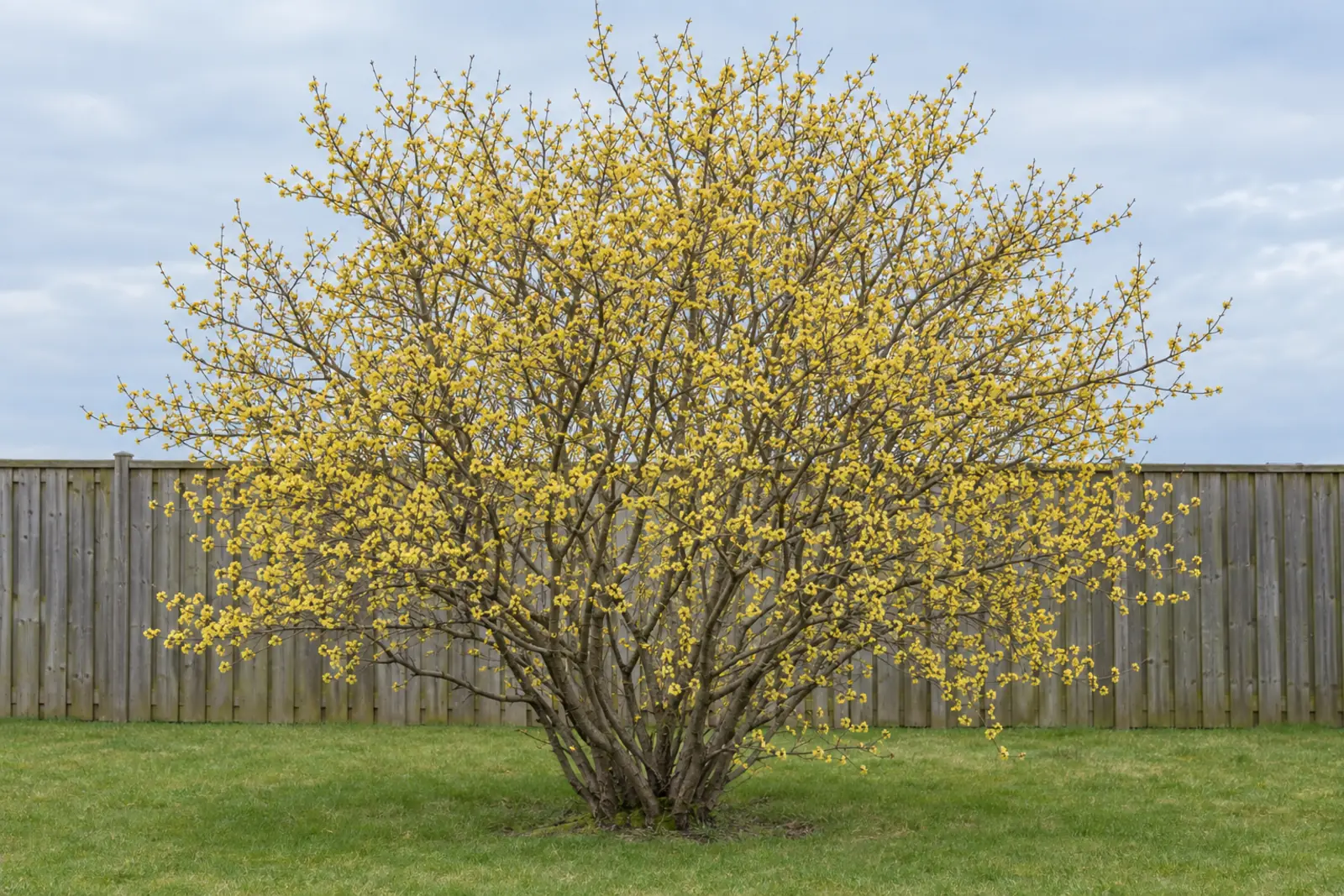
Cornelian cherry (Cornus mas) is a native shrub, 2.5 to 4 metres tall and as wide. As early as February it blooms on bare branches, with small yellow flowers in round clusters. In September glossy red berries hang from it. The shrub grows in full sun or partial shade, on soil that does not stay wet.
Cornelian cherry at a glance
| Feature | Cornelian cherry |
|---|---|
| Height | 2.5 to 4 m |
| Spread | 2.5 to 4 m |
| Full grown after | 10 to 20 years |
| Sun | Full sun to partial shade |
| Soil | Sand, loam or clay, not too wet |
| Water | Average: once established it copes with drought |
| Maintenance | Low: pruning is rarely needed |
| Flowers | February to April, yellow |
| For bees | Yes: plenty of nectar and pollen, February and March |
| Hay fever | Not or weakly allergenic |
| Leaves | Drop in autumn |
| Hardy | Yes |
| Native | Yes |
| Poisonous | No, as far as known |
| Pricks or stings | No |
| Price, young | About €2.13 to €2.35 each, 60-90 cm, bare-root |
| Price, grown | About €84.15 to €100.88 each, 150-175 cm, field-grown or in a pot |
- Leaf
- April to October
- Flower
- February to April
- Fruit
- September
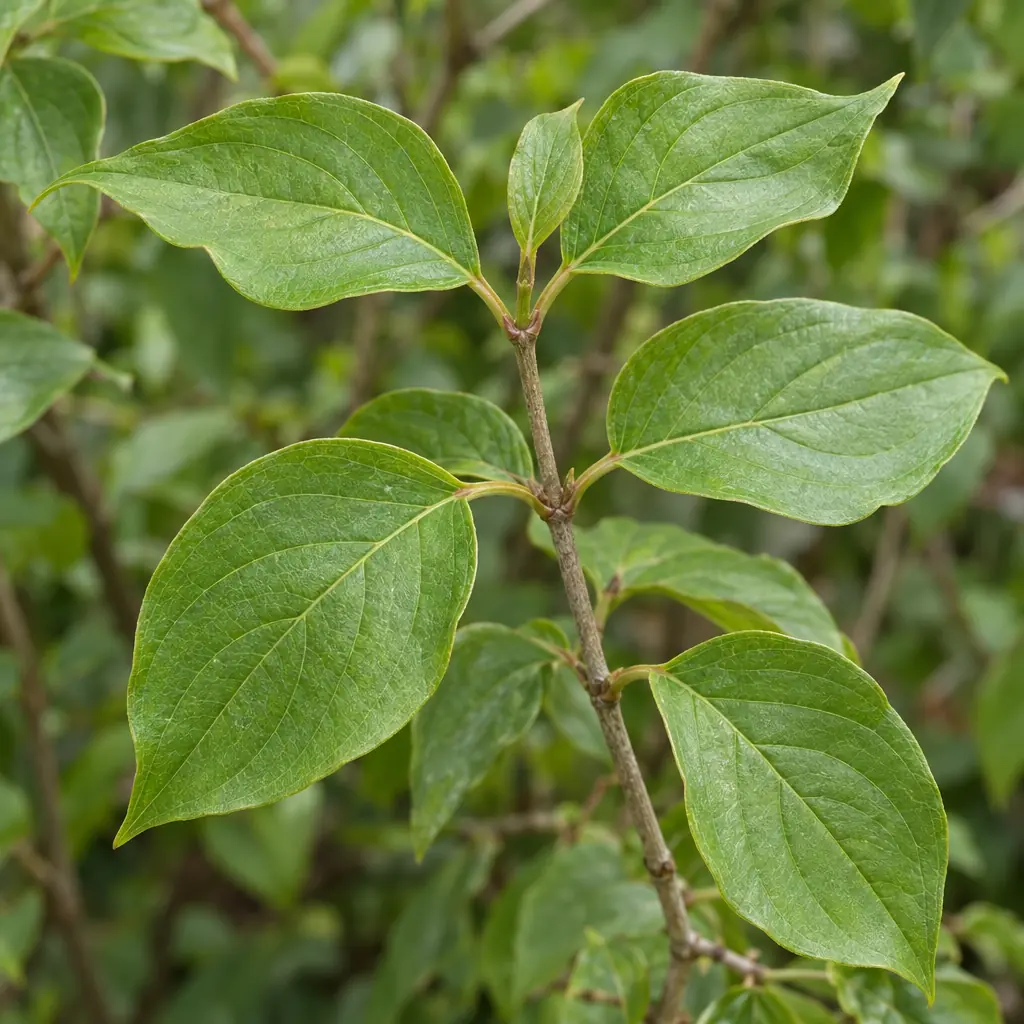
Leaf 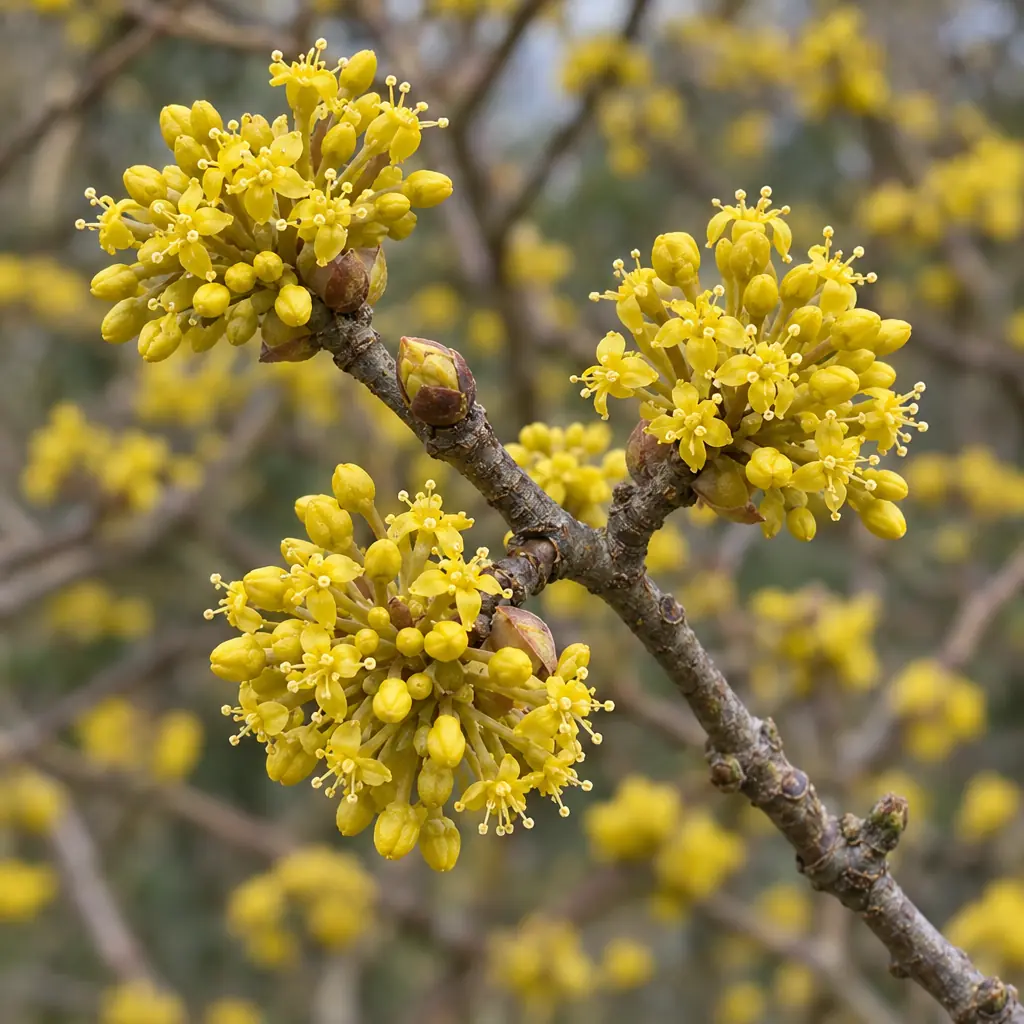
Flower 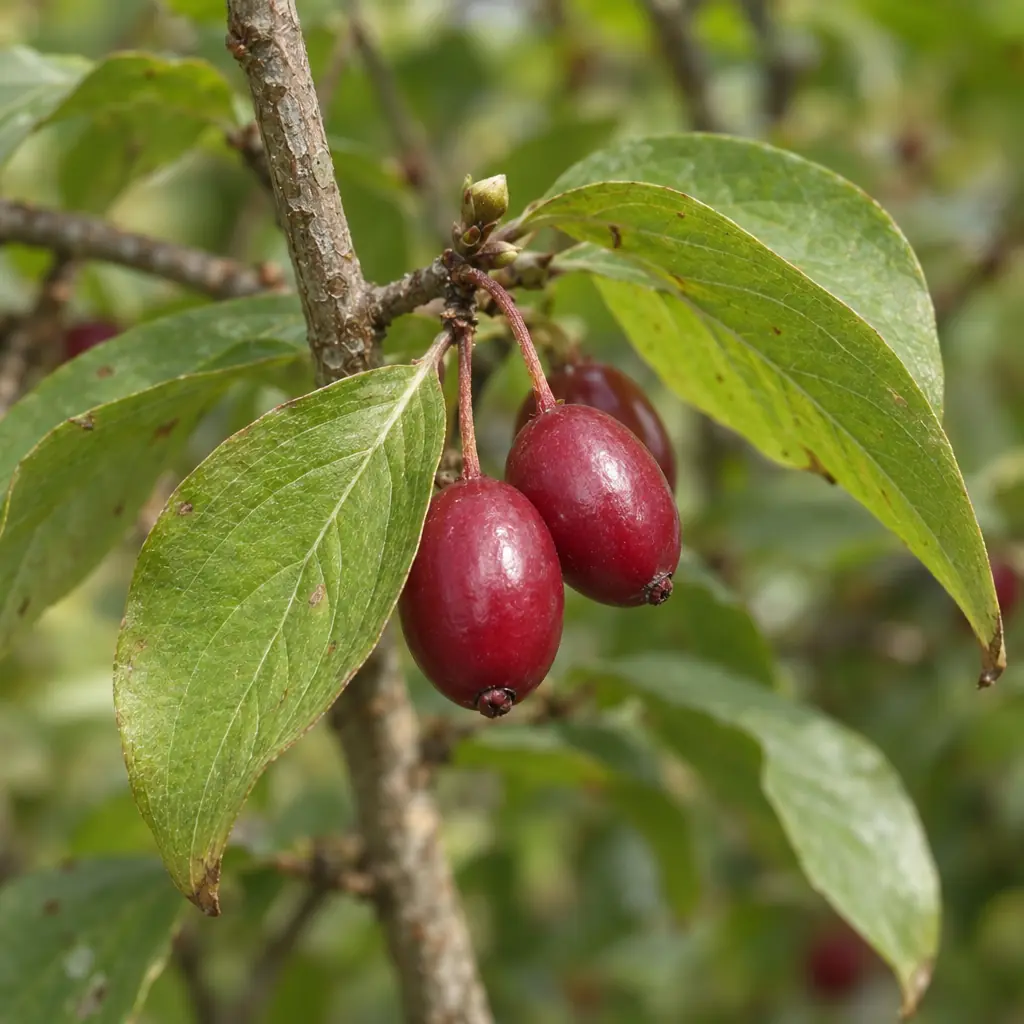
Fruit
How do I recognise cornelian cherry?
Look at the flowers first, because they come early. At the end of winter the branches are still bare. Then the yellow flowers appear, each only 4 to 5 millimetres across. Up to fifteen sit together in a round cluster, with almost no stalk.
The leaves come only after flowering. They grow in pairs, opposite each other. Each leaf is oblong and oval, 5 to 8 centimetres long, with a smooth edge and three to four pairs of veins.
The fruits are egg-shaped, 1 to 2 centimetres long and glossy red. Inside is a single large stone. Older branches have dark brown bark that flakes off in small pieces.
Do not mistake the shrub for forsythia, which also flowers yellow on bare branches. Border forsythia (Forsythia x intermedia) has short tubular flowers with four lobes. Each flower is 2.5 to 3.5 centimetres across. On cornelian cherry you see only tiny flowers in round clusters.
Where does cornelian cherry grow best?
Cornelian cherry needs at least three hours a day with the sun shining straight on it, measured around midsummer. More sun is fine too. Sand, loam and clay all suit it, as long as rainwater can drain away.
The species is native to the Netherlands, but you rarely see it in the wild. Wild shrubs grow only in South Limburg and in the dunes, in broadleaf woods and scrub. Nearly all cornelian cherries in gardens and parks were planted.
Two spots are best avoided for this shrub:
- A hollow where water stays after a shower. The roots need soil that lets water through. In waterlogged soil the shrub wastes away.
- A narrow bed between two paths. Over the years the shrub grows metres wide, and such a bed has no room for that.
In January the shrub is bare, with smooth grey-brown twigs. A month later the branches are already turning yellow.
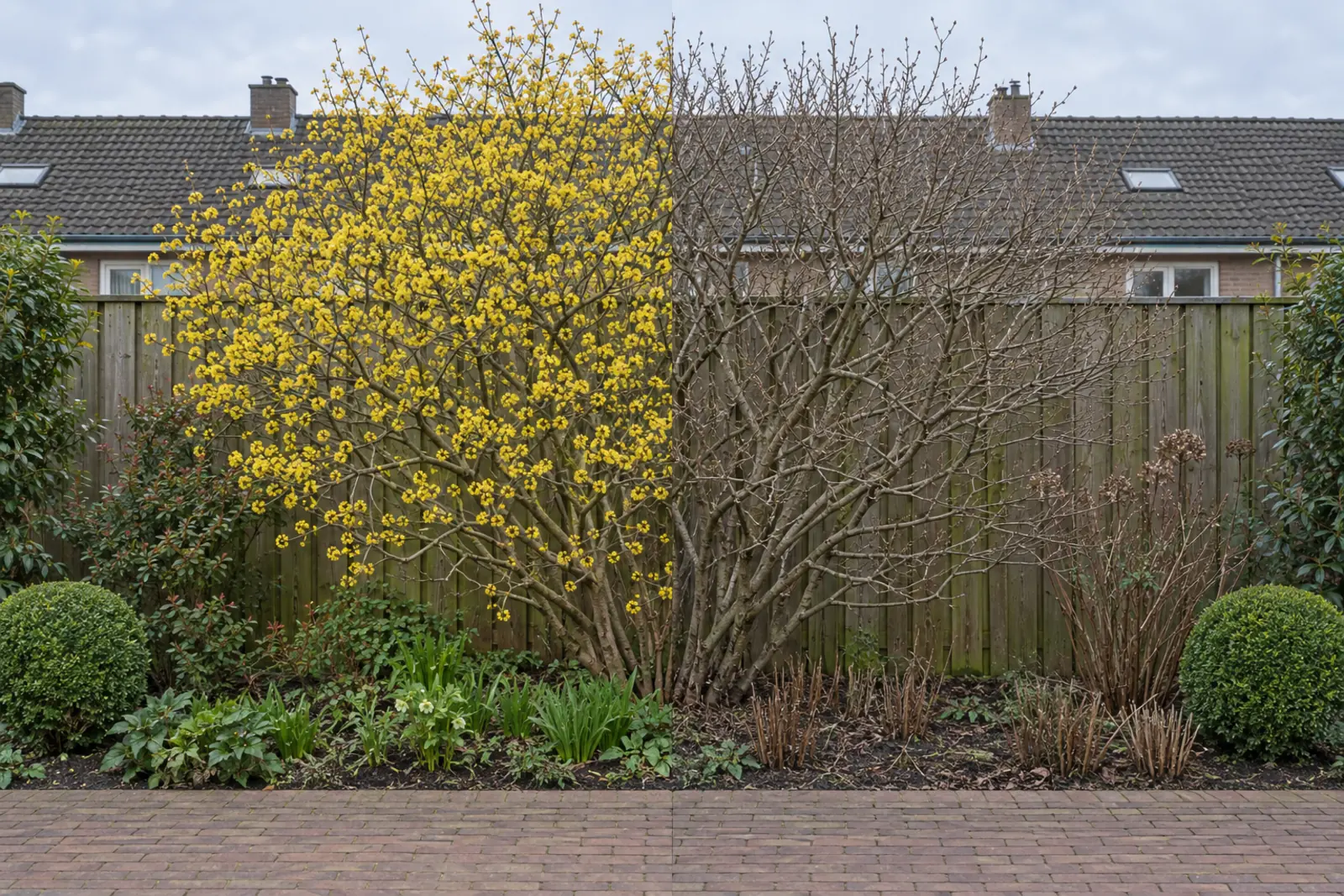 The same border in March and in January. This is a generated image, not a photo.
A young shrub from the nursery later takes up far more room than on planting day. In the app you can see whether the back of your garden has that room once you place the shrub on your own garden. The app draws the plant at a grown plant's width, not at pot size.
Planting and caring for cornelian cherry
A field-grown plant goes into the ground from October to April. Such a plant comes bare-root, with no soil around the roots, or with a root ball. A potted plant can go in all year. At the same height, a field-grown plant is usually cheaper than a potted one.
Leave 2.5 to 4 metres to the next shrub. In the first years that looks like a lot of bare ground, yet a full-grown cornelian cherry fills all of it. In the first summers, water during long dry spells. This shrub also works as a hedge.
| When | What to do |
|---|---|
| Right after flowering, from March | Remove dead, diseased and crossing branches |
| Right after flowering, for a hedge | Clip the hedge into shape |
From March until the end of July, many birds are nesting too. Check between the branches for a nest before you start cutting.
Cornelian cherry problems and what to do
The shrub hardly flowers. The flowers come at the end of winter, before the leaves. Pruning in autumn or winter cuts them off. Wait until right after flowering to prune.
Few berries appear. A berry forms only when bees or other early insects pollinate the flower. When few insects fly during flowering, the crop stays small.
The bark is covered in white dots. In early summer, scale insects lay their eggs there in white circles of about half a centimetre. This is horse chestnut scale. The insect does no serious damage, and you do not need to control it.
The leaves of a young shrub droop in summer. The roots are still short and take up too little water. Give the shrub plenty of water until the rain returns.
Which birds and insects use cornelian cherry?
Blackbirds and starlings like to eat the red berries, although they taste bitter.
The leaves feed the caterpillars of Antispila treitschkiella, a small moth called gele-kornoeljegaatjesmaker in Dutch. The caterpillars live inside the leaf, in June and July and again from late August to November. This moth occurs throughout the country, often in large numbers.
Is cornelian cherry poisonous or edible?
No poisonous parts of cornelian cherry are known. The ripe red berries are edible, but they taste tart. Traditionally they are made into compote or jam.
The photos on this page were made with AI, based on real photos and descriptions of this plant.
Frequently asked questions
How big does cornelian cherry grow?
In a garden, cornelian cherry grows 2.5 to 4 metres tall and as wide. That takes ten to twenty years. In the wild the shrub can reach up to 6 metres.
When does cornelian cherry flower?
Cornelian cherry flowers from February to April, on bare branches. The leaves come only after flowering. The yellow flowers are only 4 to 5 millimetres across.
Are cornelian cherries edible?
The ripe red berries are edible, but they taste tart. People sometimes make them into jam or compote. No poisonous parts of this shrub are known.
When should you prune cornelian cherry?
Prune right after flowering, from March. Usually little needs to go: only dead, diseased or crossing branches.
How much sun does cornelian cherry need?
Cornelian cherry grows in full sun to partial shade. That means at least three hours a day with the sun shining straight on it, around midsummer.
Sources (20)
- Duistermaat, Sparrius & Denters, Standaardlijst van de Nederlandse flora 2020 (Gorteria 43)
- NDFF Verspreidingsatlas — Cornus mas
- Flora van Nederland — Gele kornoelje
- Nederlandse Vereniging van Botanische Tuinen — Gele kornoelje
- RHS — Cornus mas (cornelian cherry)
- RHS — Shade gardening (definities zon en halfschaduw)
- RHS — Pruning groups
- RHS — Horse chestnut scale
- RHS — Forsythia x intermedia (border forsythia)
- PFAF — Cornus mas
- Imkerpedia — Drachtplanten
- Pollennieuws — Aandachtspunten hooikoorts vriendelijke tuin
- Vogelbescherming — Bloemen die 's winters bloeien
- Vogelbescherming — Snoeien in het broedseizoen, mag dat?
- De Vlinderstichting — De bladmineerders van rode en gele kornoelje zijn verschillende soorten
- Directplant — Gele kornoelje (prijs per maat, planttijd)
- Puur van 't Veld — Cornus mas 60-90 cm, blote wortel (prijs)
- Wikimedia Commons — Leaf: photo by AnRo0002 (CC0)
- Wikimedia Commons — Flower: photo by Wouter Hagens (Public domain)
- Wikimedia Commons — Fruit: photo by AnRo0002 (CC0)