5 min read
Marsh fern: planting, care and where it grows
Thelypteris palustris
Marsh fern (Thelypteris palustris) is a native fern for wet soil, in sun or partial shade. The light green fronds rise one by one on long, straw-coloured stalks. In a garden the plant grows half a metre to a metre tall. Over the years, a thin, creeping rhizome turns it into a loose colony.
Marsh fern at a glance
| Feature | Marsh fern |
|---|---|
| Height | 0.5 to 1 m |
| Spread | 0.5 to 1 m, spreads out |
| Full grown after | 5 to 10 years |
| Sun | Full sun to partial shade |
| Soil | Wet to moist, acid to neutral |
| Water | Plenty: it belongs in wet soil |
| Maintenance | Low: no pruning |
| Flowers | Does not flower: ferns make spores |
| For bees | No: no flowers |
| Hay fever | No pollen |
| Leaves | Drop in autumn |
| Hardy | Yes |
| Native | Yes |
| Poisonous | No, as far as is known |
| Pricks or stings | No |
| Price, young | About €4.05 to €6.18 each, 5-10 cm, in a small pot |
| Price, grown | Not for sale |
- Leaf
- May to October
- Flower
- no showy flowers
- Fruit
- no noticeable fruit
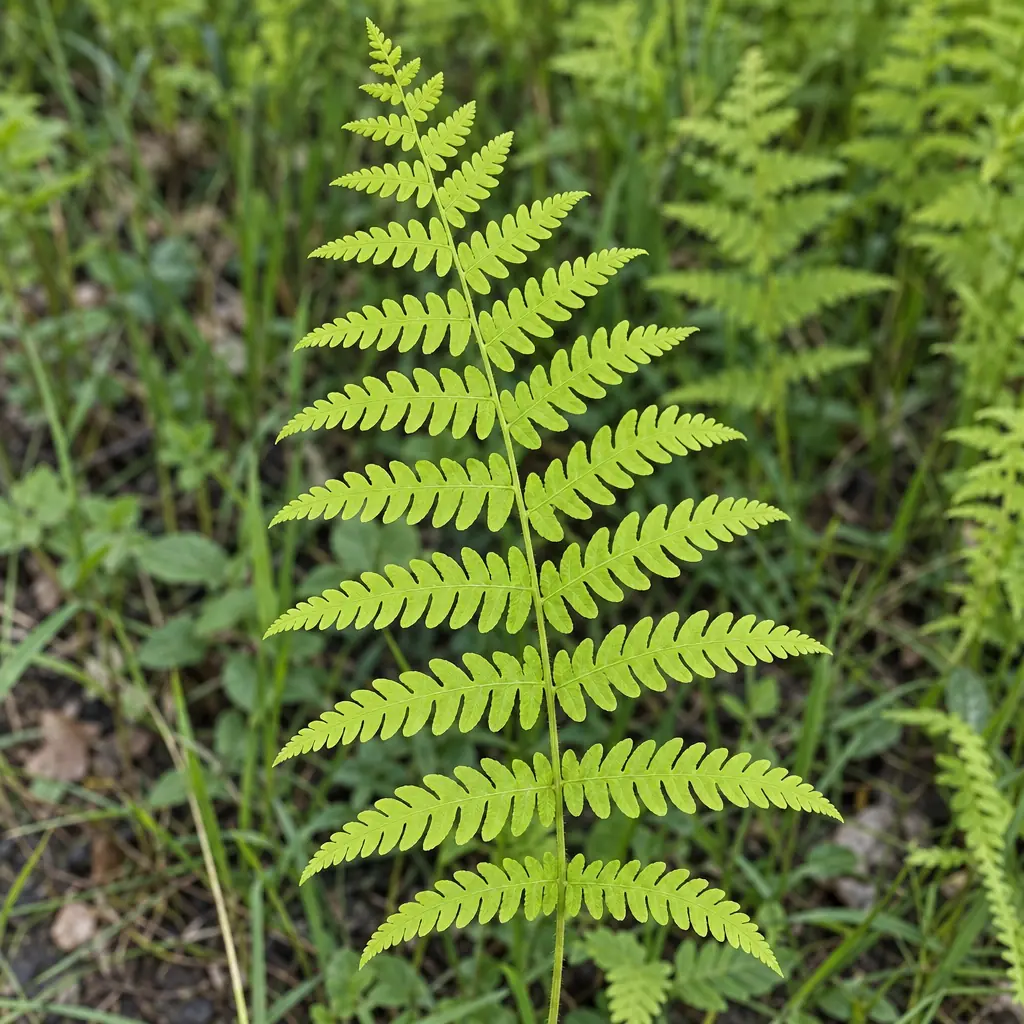
Leaf
How do I recognise marsh fern?
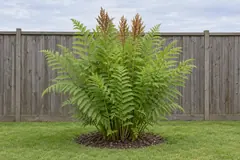
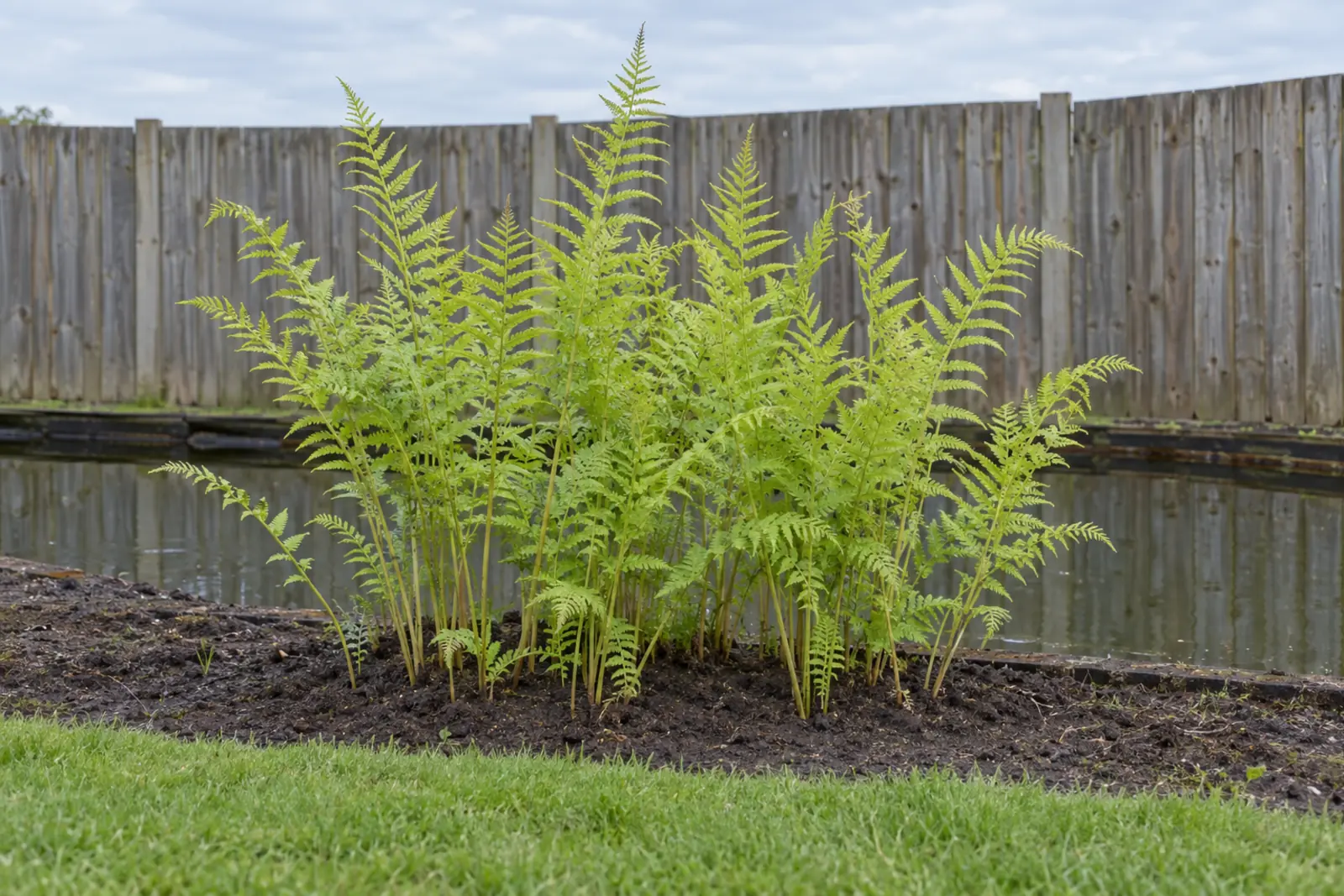
Start with the way the fronds come out of the ground. Marsh fern sends them up scattered, each on its own, sometimes with a few closer together. The frond is light green and smooth, without hairs. Its stalk is brittle and at least half as long as the leafy part. Narrow leaflets line the midrib, each one deeply cut.
Round clusters of spores sit on the underside of some fronds. The edge of the frond curls over and covers most of each cluster.
Do not confuse marsh fern with male fern (Dryopteris filix-mas). Male fern holds its fronds together in bundles. The stalk of male fern is also thick with large, golden-yellow scales.
Where does marsh fern grow best?
Marsh fern grows in sun and in partial shade. Partial shade means three to six hours of direct sun a day around midsummer. The fern also needs wet or moist soil. Acid to neutral clay or loam suits it well. In the wild, marsh fern grows in peat bogs, beside ponds and in swampy woodland.
Two kinds of spot are hard for this fern:
- Dry sand in a sunny front garden. The fern comes from marshes, and its fronds shrivel where the soil dries out.
- A narrow border between perennials. The rhizome wanders under the soil and can take over among your other plants.
In winter no green fronds are left.
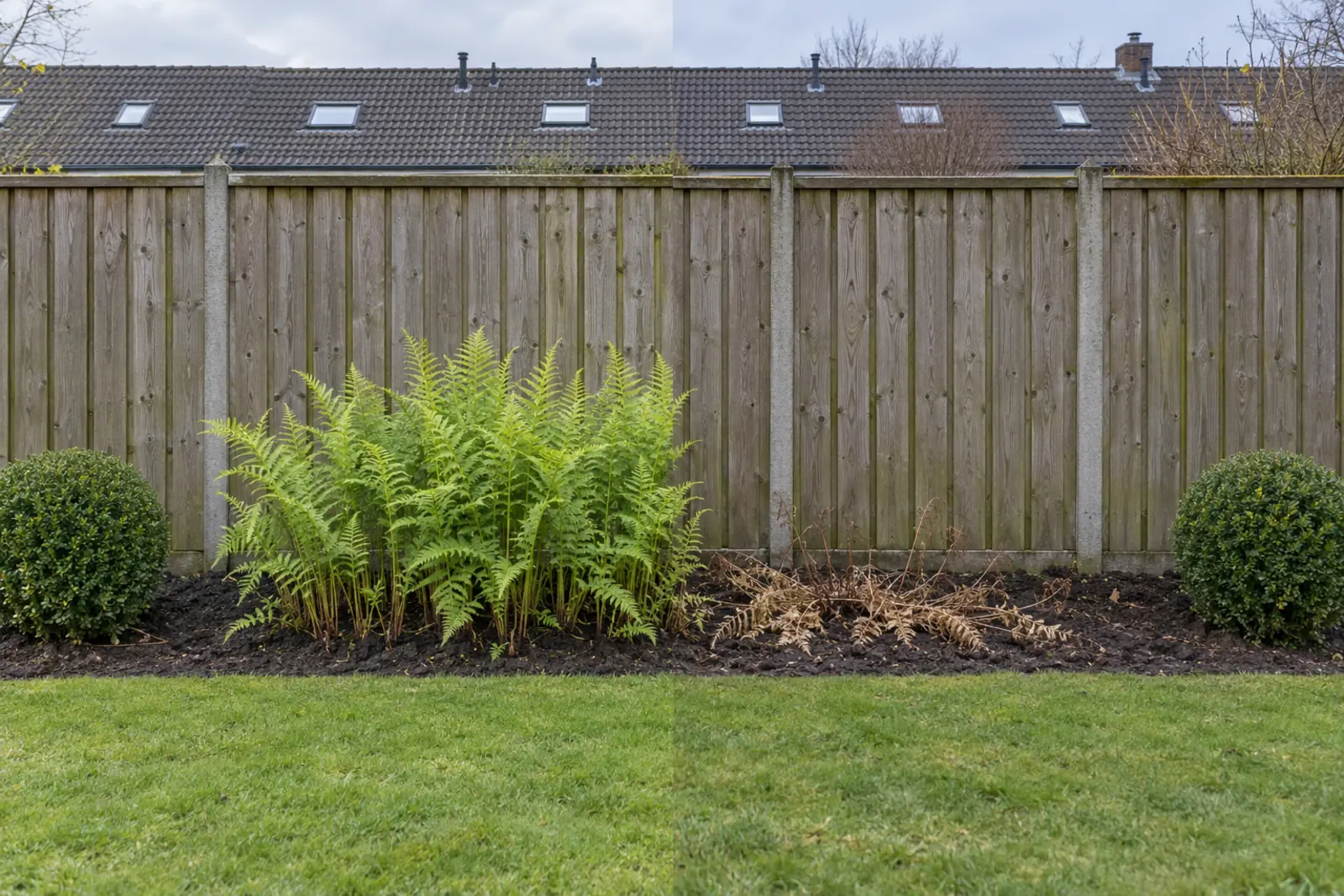 The same border in July and in January. This is a generated image, not a photo.
A colony that keeps growing deserves a permanent place on the wet side of your garden. A plan of your own plot, to scale and with the houses around it, lets you choose that place before planting.
Planting and caring for marsh fern
Nurseries sell marsh fern in a small pot. A potted plant like that can go in at any time of year, as long as the ground is not frozen. Keep about 35 cm between plants, which comes to about 8 per square metre. On planting day there is still bare soil between them. Later the creeping rhizomes fill the gaps.
By a pond, plant the fern on the edge, with its base level with the water. In the first year, water as soon as the soil feels dry.
Marsh fern needs no pruning. The dead fronds can stay on the ground through the winter.
Marsh fern problems and what to do
The fronds turn brown and dry. The soil is too dry for this fern. Water the plant, or move it to a wetter spot.
Suddenly the fern is all over the border. The rhizome creeps and can take over. Cut off the runners at the edge with a spade and plant them somewhere else.
All the fronds are gone in autumn. That is normal, because marsh fern is not an evergreen fern. New fronds appear from May.
No flowers ever appear. That is right: ferns make spores, not flowers and not seed.
Pests and diseases rarely trouble marsh fern.
Which insects and birds use marsh fern?
Marsh fern gives no nectar or pollen. The caterpillars of two moths do eat the fronds. The brown silver-line (Petrophora chlorosata) lives on bracken and marsh fern. This moth is common, especially on sandy soils, but the provisional red list rates it as vulnerable.
The splendid brocade (Lacanobia splendens) lives on various marsh plants, mainly marsh fern and woody nightshade. This moth is rare and endangered. It lives mainly in the low-lying peat areas in the west of the country.
There is no description of which birds use marsh fern.
Is marsh fern poisonous or edible?
No poisonings from marsh fern are known. Some ferns do contain substances that can cause cancer. Many ferns also contain a substance that breaks down vitamin B. The absence of poisoning reports does not make marsh fern edible.
The photos on this page were made with AI, based on real photos and descriptions of this plant.
Frequently asked questions
How tall does marsh fern grow?
In a garden, marsh fern grows half a metre to a metre tall. Through its creeping rhizome, one plant slowly becomes a loose colony.
Can marsh fern grow in full sun?
Yes. Marsh fern grows in sun and in partial shade, as long as the soil stays wet or moist.
Does marsh fern need pruning?
No, pruning is not needed. The fronds die back in autumn, and the fern comes up again in May.
Does marsh fern spread?
It can. The thin rhizome creeps along under the soil. In a small border, cut off the runners at the edge with a spade.
Is marsh fern poisonous?
No poisonings from marsh fern are known. That does not make the plant edible.
Sources (16)
- Duistermaat, Sparrius & Denters, Standaardlijst van de Nederlandse flora 2020 (Gorteria 43)
- NDFF Verspreidingsatlas — Thelypteris palustris
- Wilde planten in Nederland en België — Moerasvaren
- NDFF Verspreidingsatlas — Mannetjesvaren
- RHS — Thelypteris palustris (marsh fern)
- RHS — Shade gardening (definities zon en halfschaduw)
- Plants For A Future — Thelypteris palustris
- Nederlandse Varenvereniging, Wat zijn varens
- De Vlinderstichting — Moerasvaren (waardplant)
- De Vlinderstichting — Varenspanner
- De Vlinderstichting — Moeras-w-uil
- Heijnen Planten — Moerasvaren, 5-10 cm (prijs en planttijd)
- Cruydt-Hoeck — Moerasvaren (prijs)
- KwaliteitsPlanten — Thelypteris palustris (plantafstand)
- Vijverplantenland — Thelypteris palustris (plantdiepte)
- Wikimedia Commons — Leaf: photo by Sam Thomas (CC BY 2.0)