5 min read
May lily: a native ground cover for shade
Maianthemum bifolium
May lily (Maianthemum bifolium) is a small native woodland plant 7 to 20 centimetres tall. Thin rhizomes creep underground, so a low mat forms. In May and June, clusters of tiny white stars open above the heart-shaped leaves. May lily grows in shade on soil low in lime, ideally moist. Every part is poisonous.
May lily at a glance
| Feature | May lily |
|---|---|
| Height | 7 to 20 cm |
| Spread | 0.5 to 1 m, and the rhizomes keep creeping |
| Full grown after | 2 to 5 years |
| Sun | Partial shade to shade |
| Soil | Moist, humus-rich and low in lime |
| Water | Average: don't let the soil dry out |
| Maintenance | Low: no pruning needed |
| Flowers | May and June, white |
| For bees | Little: not a known nectar plant, though hoverflies and bees pollinate it |
| Hay fever | Unknown |
| Leaves | Drop in autumn |
| Hardy | Yes |
| Native | Yes |
| Poisonous | The whole plant, including the red berries |
| Pricks or stings | No |
| Price, young | About €4 to €4.61 each, in a small pot |
| Price, grown | Not for sale |
- Leaf
- April to October
- Flower
- May to June
- Fruit
- July to October
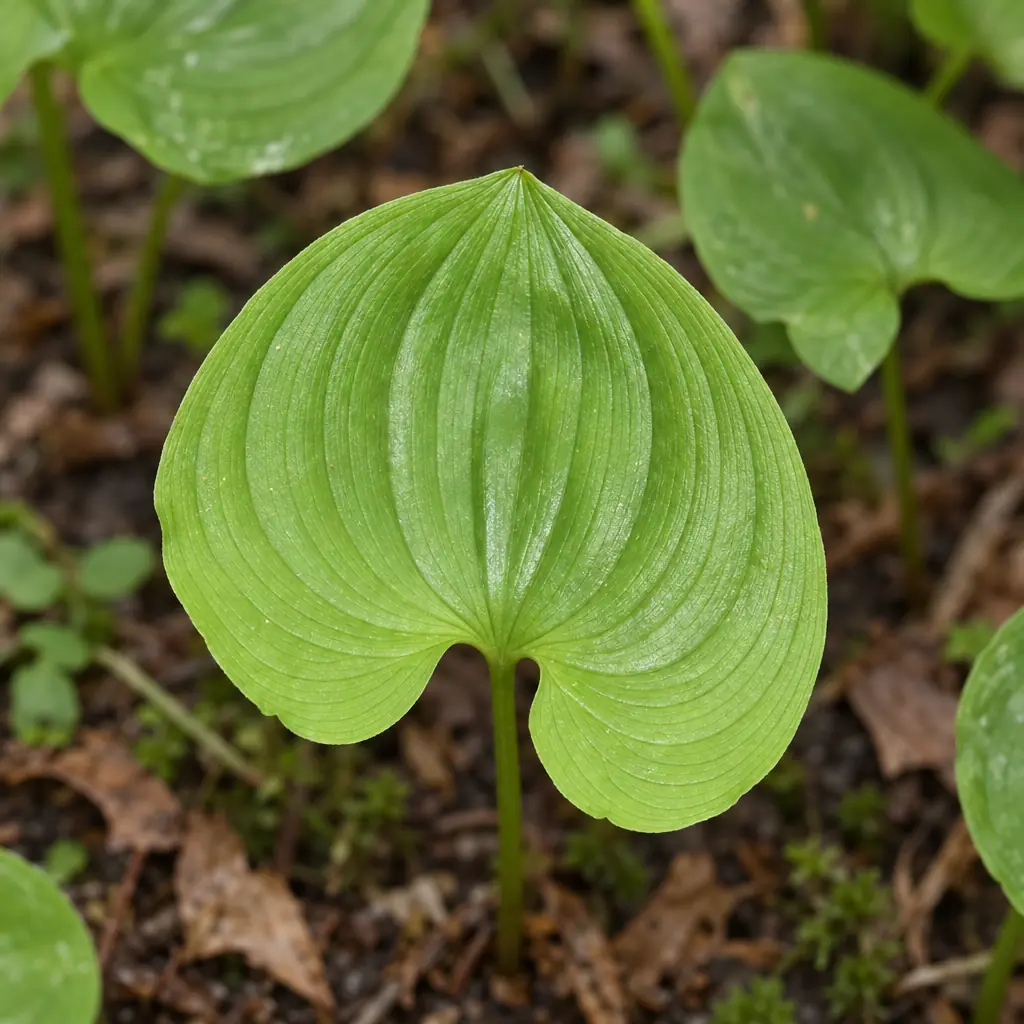
Leaf 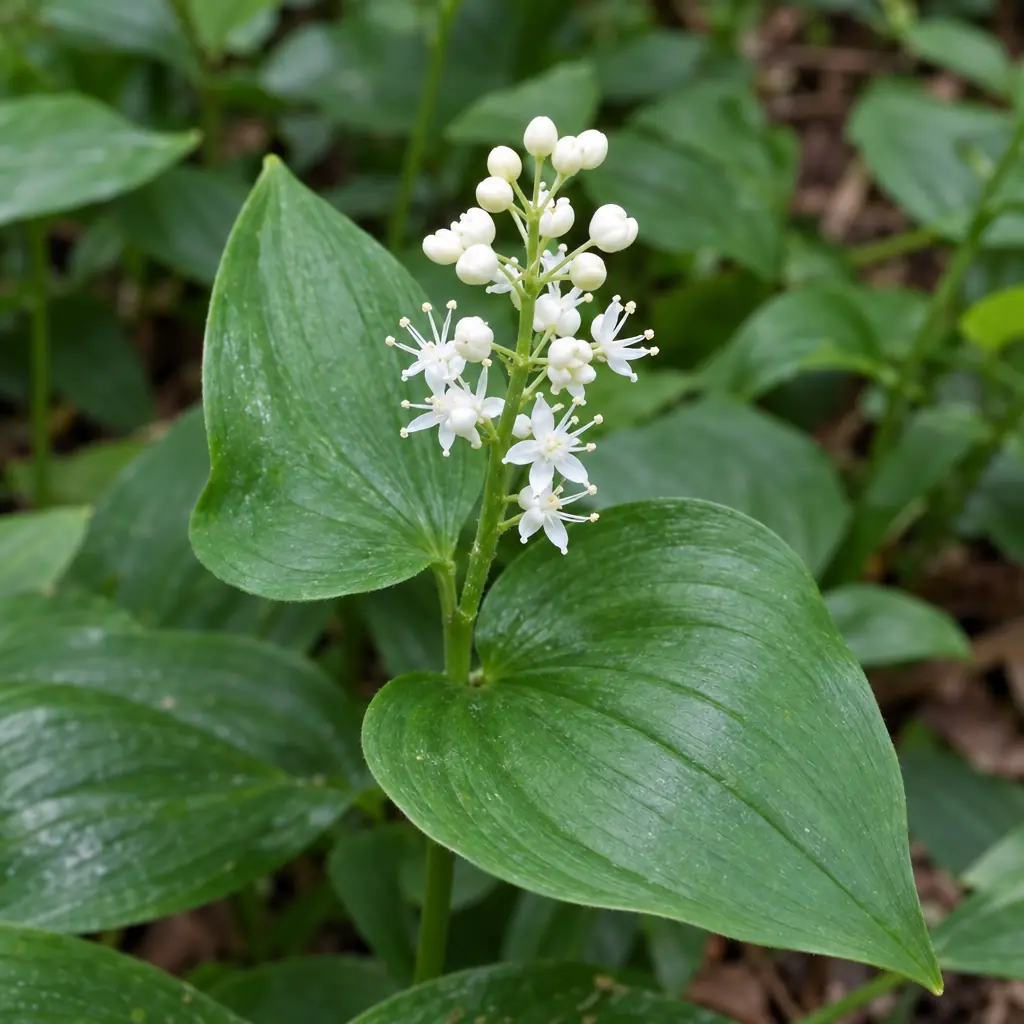
Flower 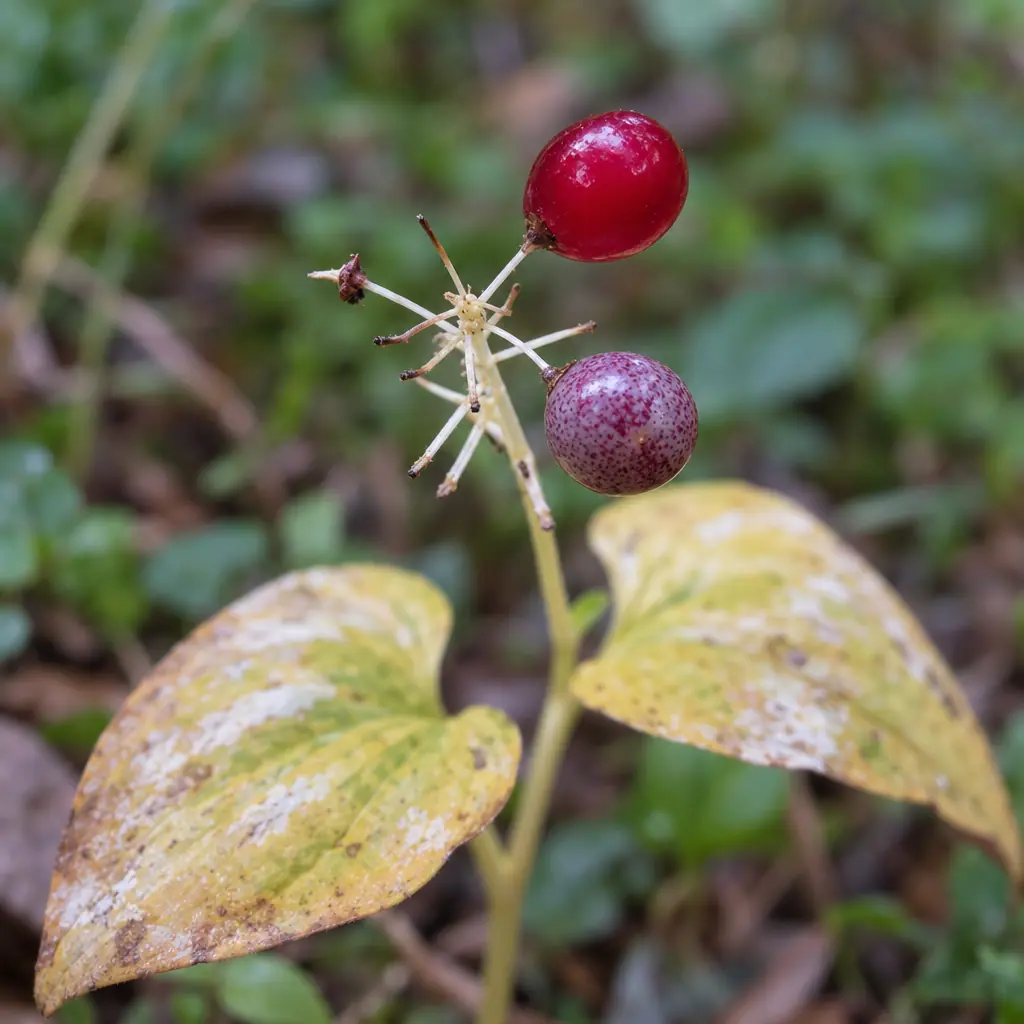
Fruit
How do I recognise may lily?
Start with the leaves. A flowering stem usually carries two leaves, sometimes three. Each leaf is broadly oval and pointed, with a heart-shaped base and a smooth edge. It is 4 to 8 centimetres in size. A third, uppermost leaf is much smaller and narrow. Between the stems, single leaves also grow on a stalk of their own.
The stem runs in a slight zigzag and carries stiff white hairs near the top. At the tip sits a short cluster of flowers. Each tiny flower is a white star of 4 to 6 millimetres, with four points. The flowers are scented. After flowering, berries follow, about 6 millimetres across. At first they are green with reddish spots, and late in the year they turn red.
Lily of the valley looks a little similar. That plant has two larger, oblong leaves with no heart-shaped base. Its flowers are white bells on curved stalks. May lily instead carries small stars in a short cluster, never bells.
Where does may lily grow best?
May lily is a true woodland plant. It needs cool, moist soil rich in humus, in light dappled shade under trees or in deep shade. Deep shade is a spot with less than two hours of direct sun a day. In the wild it grows in deciduous woods, wooded banks, castle parks and along streams.
Avoid these spots for may lily:
- A sunny border. May lily grows in shade, not in sun. It also prefers moist soil.
- Soil high in lime. May lily grows on soil low in lime, acid to neutral.
No part of may lily shows above ground in winter. The rhizomes live on underground, and the leaves return in spring.
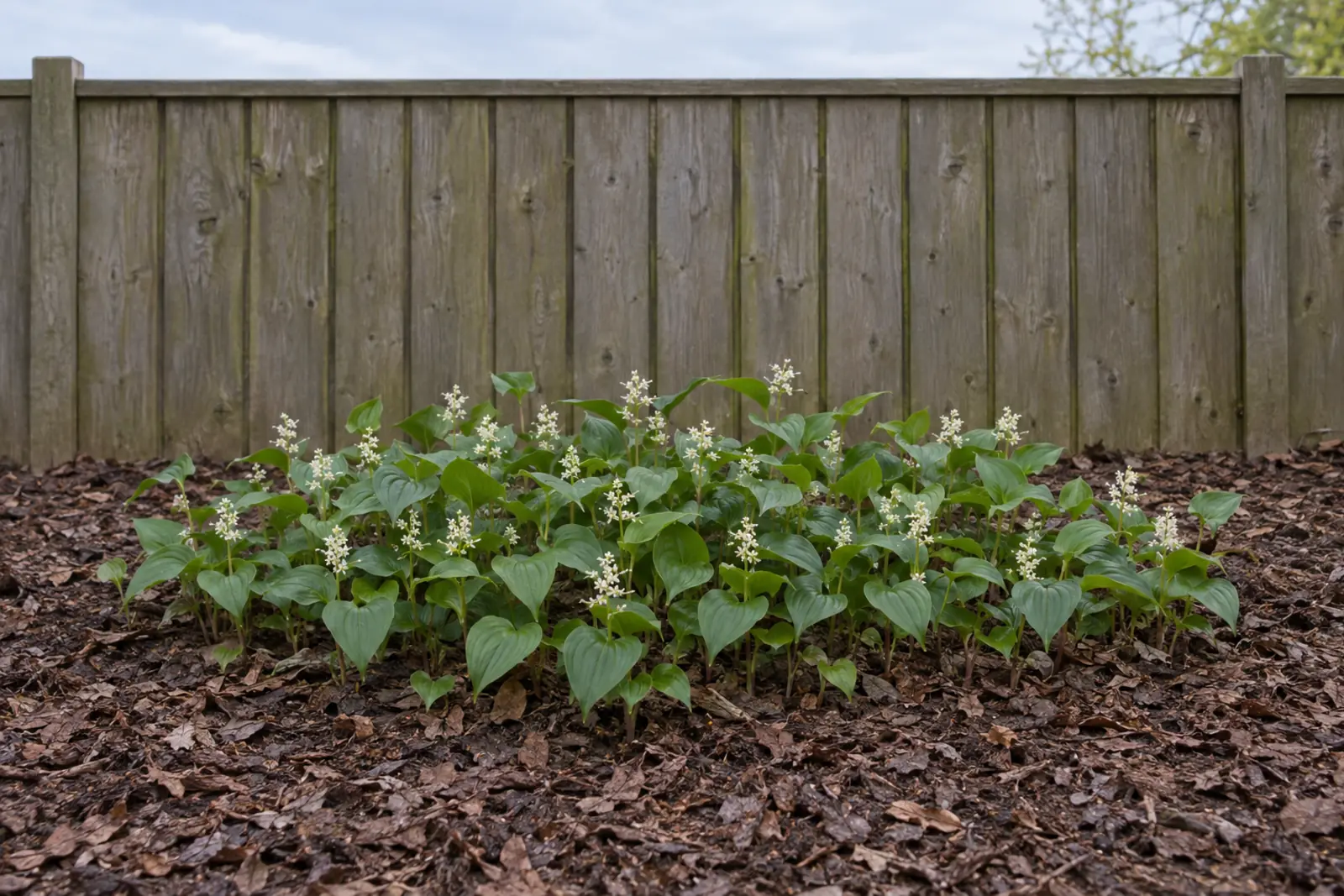
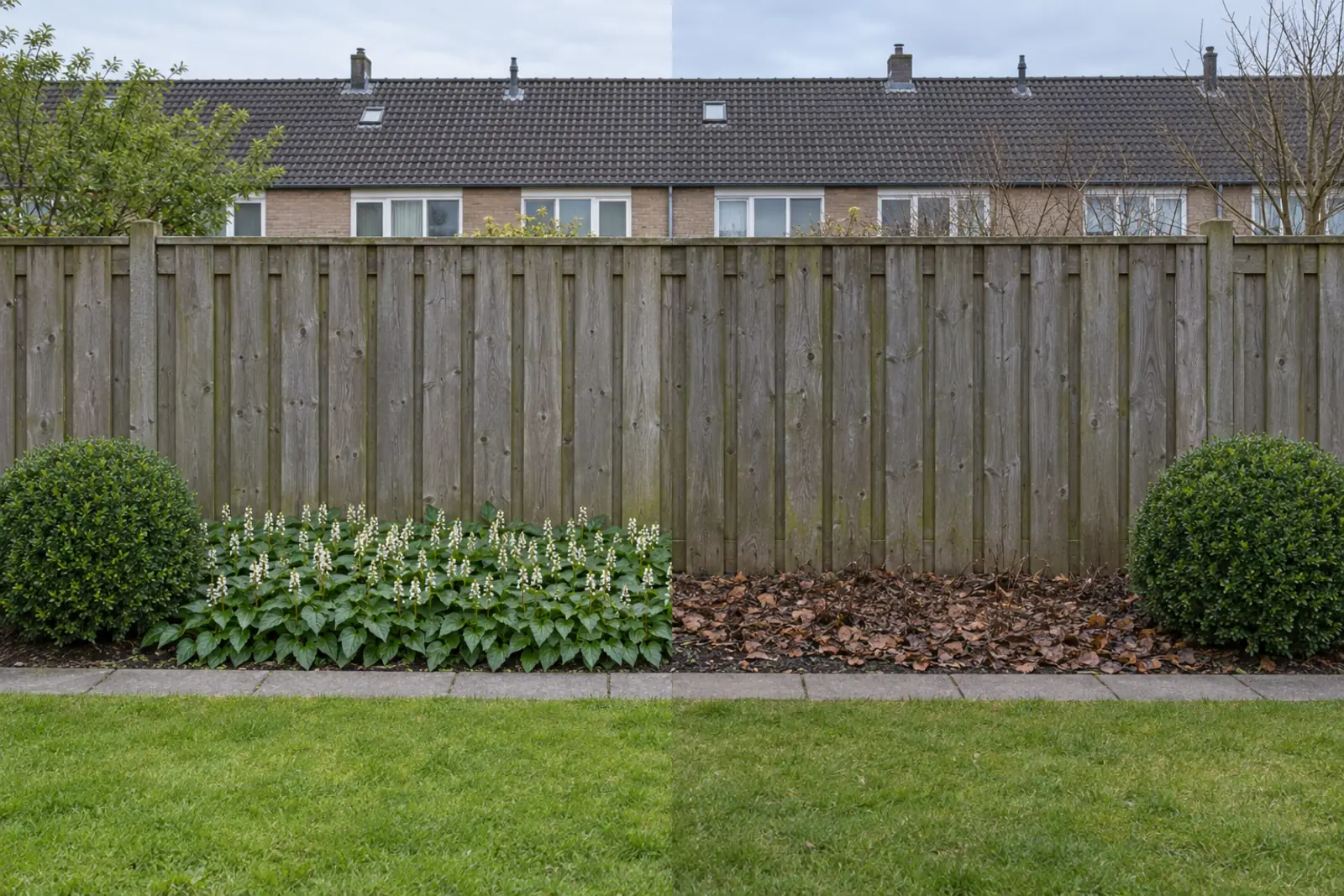 The same border in May and in January. This is a generated image, not a photograph.
The app draws your own plot to scale, buildings included, so you can check where a low mat like this has room.
Planting and caring for may lily
Nurseries sell may lily as a small plant in a pot. The best planting time is March to early May, or late September through October. A potted plant can also go into the ground at another time. The soil must then not be frozen or waterlogged.
Plan on seven plants per square metre, so about 40 centimetres apart. On planting day that looks like a bare patch. Each year the rhizomes creep further, and the plants grow together into one mat.
Water each plant in well right away, even after rain. That settles the soil around the roots. In the first year, the soil must not dry out. A layer of compost 5 to 7 centimetres thick helps with that and keeps weeds down. Leave a narrow strip clear around the stems themselves.
No pruning is needed. For more plants, cut off a rooted piece in spring. Replant that piece somewhere else.
What goes wrong with may lily?
There are holes in the leaves. Slugs and snails eat the leaves. Pick them off by hand. Disease is rare in may lily.
Many leaves grow alone, without a flower. That is normal. Single leaves grow from the rhizome alongside the stems that do flower.
The leaves wither in a dry summer. May lily needs cool, moist soil. Water it, and lay a layer of compost around the plants.
In autumn the leaves suddenly vanish. The leaves die back every year. The rhizomes survive the winter and sprout again in spring.
Which insects and birds use may lily?
Hoverflies and bees pollinate the scented flowers. Sources do not describe which exact species do this for may lily. The flowers also pollinate themselves.
No source names which butterflies, moths or birds make use of it either. What this little plant offers is flowers for pollinators in May and June, and a low, dense layer of leaves on the woodland floor.
Is may lily poisonous?
All parts of may lily are poisonous, the red berries included. Those berries stand out in autumn. No part of it is fit to eat. Sources do not describe how severe a poisoning is for may lily. Wear gloves when you transplant or divide the plant.
The photos on this page were made with AI, based on real photos and descriptions of this plant.
Frequently asked questions
Is may lily poisonous?
Yes. All parts are poisonous, including the red berries. Those berries are not fit to eat. Sources do not describe how severe a poisoning is for may lily.
How much sun does may lily need?
Very little. May lily grows in light dappled shade under trees, and also in deep shade. Deep shade is a spot with less than two hours of direct sun a day. The plant needs a cool, moist spot.
When should I plant may lily?
Preferably from March to early May, or from late September through October. A potted plant can also go into the ground at another time. The soil must then not be frozen or waterlogged.
What is the difference between may lily and lily of the valley?
May lily has small, oval leaves with a heart-shaped base and short clusters of white stars. Lily of the valley has larger, oblong leaves. Its flowers are white bells on curved stalks.
Is may lily native to the Netherlands?
Yes, may lily is originally native to the Netherlands. In the wild you find it in older, moist deciduous woods, in wooded banks and along streams.
Sources (14)
- Duistermaat, Sparrius & Denters, Standaardlijst van de Nederlandse flora 2020 (Gorteria 43)
- NDFF Verspreidingsatlas — Maianthemum bifolium
- Flora van Nederland — Dalkruid
- Wilde planten in Nederland en België — Dalkruid
- Flora van Nederland — Lelietje-van-dalen
- RHS — Maianthemum bifolium
- RHS — Shade gardening (definitions of sun and shade)
- RHS — Planting perennials
- Imkerpedia — Drachtplanten
- De Cruydt-Hoeck — Dalkruid (price)
- Arjan Schepers Vaste Planten — Maianthemum bifolium (price, plants per m²)
- Wikimedia Commons — Leaf: photo by Dalgial (CC BY 3.0)
- Wikimedia Commons — Flower: photo by B. Schoenmakers (CC BY 3.0)
- Wikimedia Commons — Fruit: photo by Borealis55 (CC0)