6 min read
Medlar tree: where to plant it, pruning and fruit
Mespilus germanica
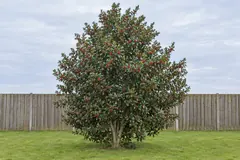
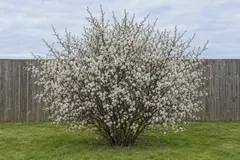
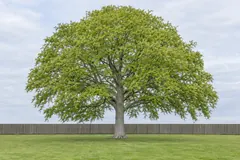
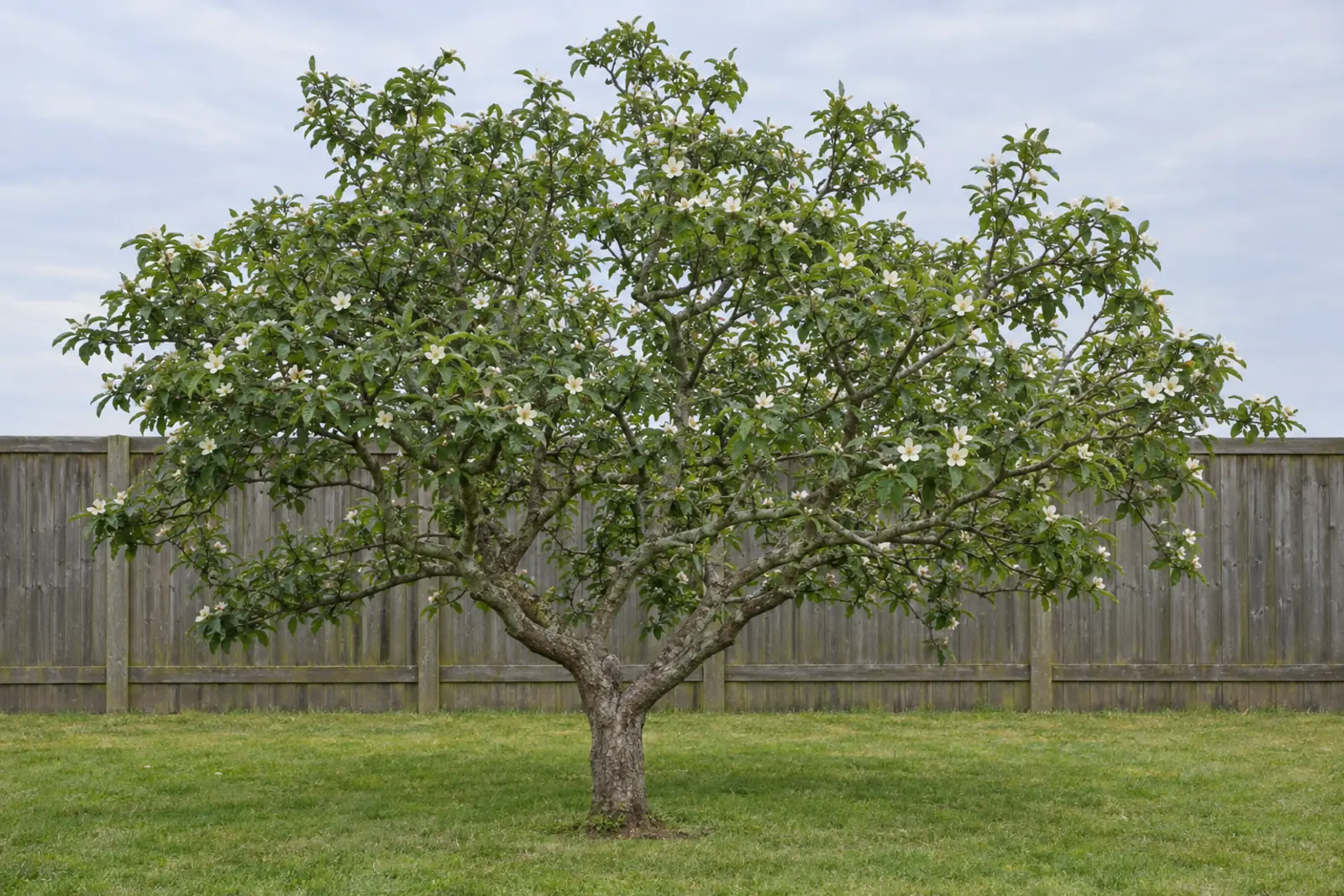
The medlar (Mespilus germanica) is a small tree with a broad, irregular crown. In May it carries large white flowers, each one on its own. Brown fruits follow in autumn, topped with a little crown of sepals. They become edible only once they turn soft. The tree wants a sheltered spot, out of strong wind.
Medlar at a glance
| Feature | Medlar |
|---|---|
| Height | 4 to 6 m |
| Spread | 4 to 6 m |
| Full grown after | 10 to 20 years |
| Sun | Full sun to partial shade |
| Soil | Deep, fertile and well-drained |
| Water | Average: moist, but not wet |
| Maintenance | Low: a light prune in winter |
| Flowers | May, white |
| For bees | Yes: nectar and pollen, May |
| Hay fever | Not or weakly allergenic |
| Leaves | Drop in autumn |
| Hardy | Yes |
| Native | Yes |
| Poisonous | No |
| Pricks or stings | Yes: thorns, mainly on the wild form |
| Price, young | About €8 each, 20-80 cm, in a pot, or bare-root in a bundle of 10 |
| Price, grown | About €81 to €132 each, 150-200 cm, in a pot, or multi-stemmed with a root ball |
- Leaf
- April to November
- Flower
- May
- Fruit
- October to November
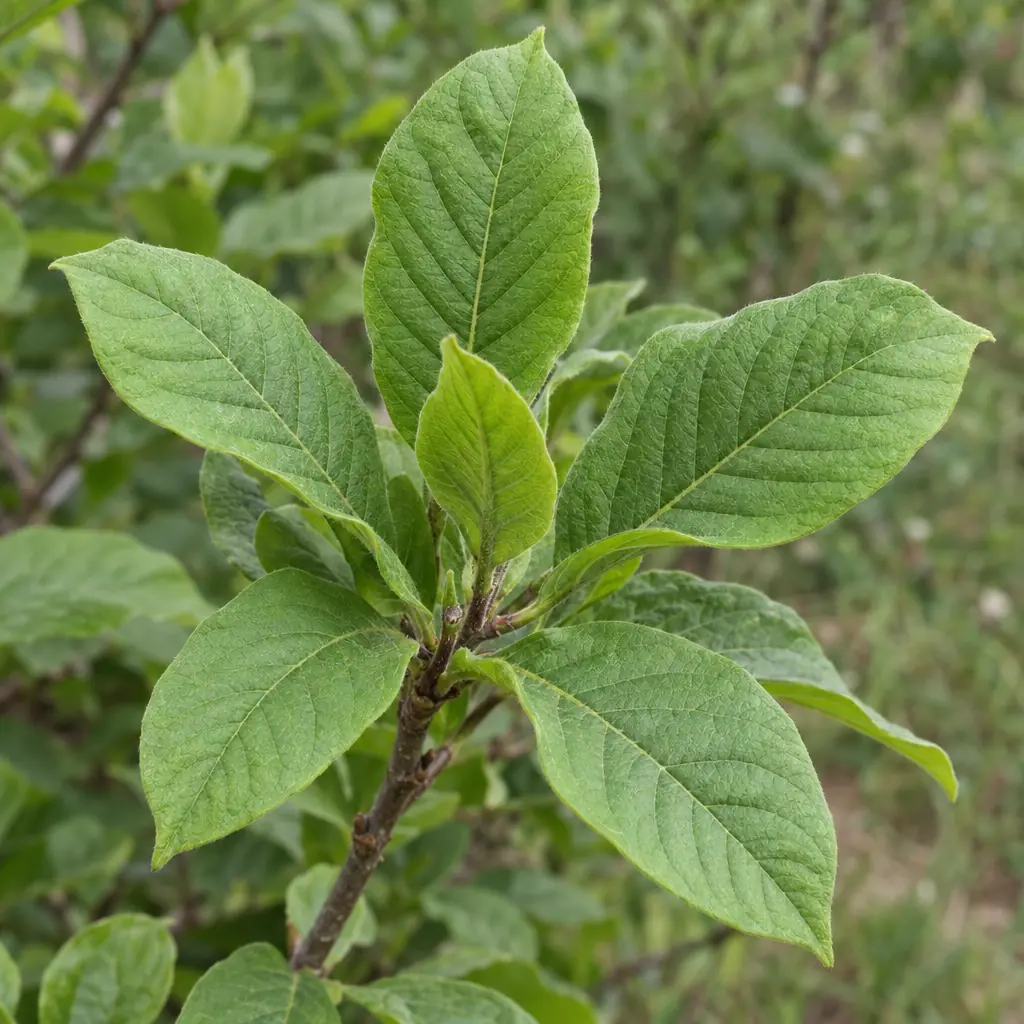
Leaf 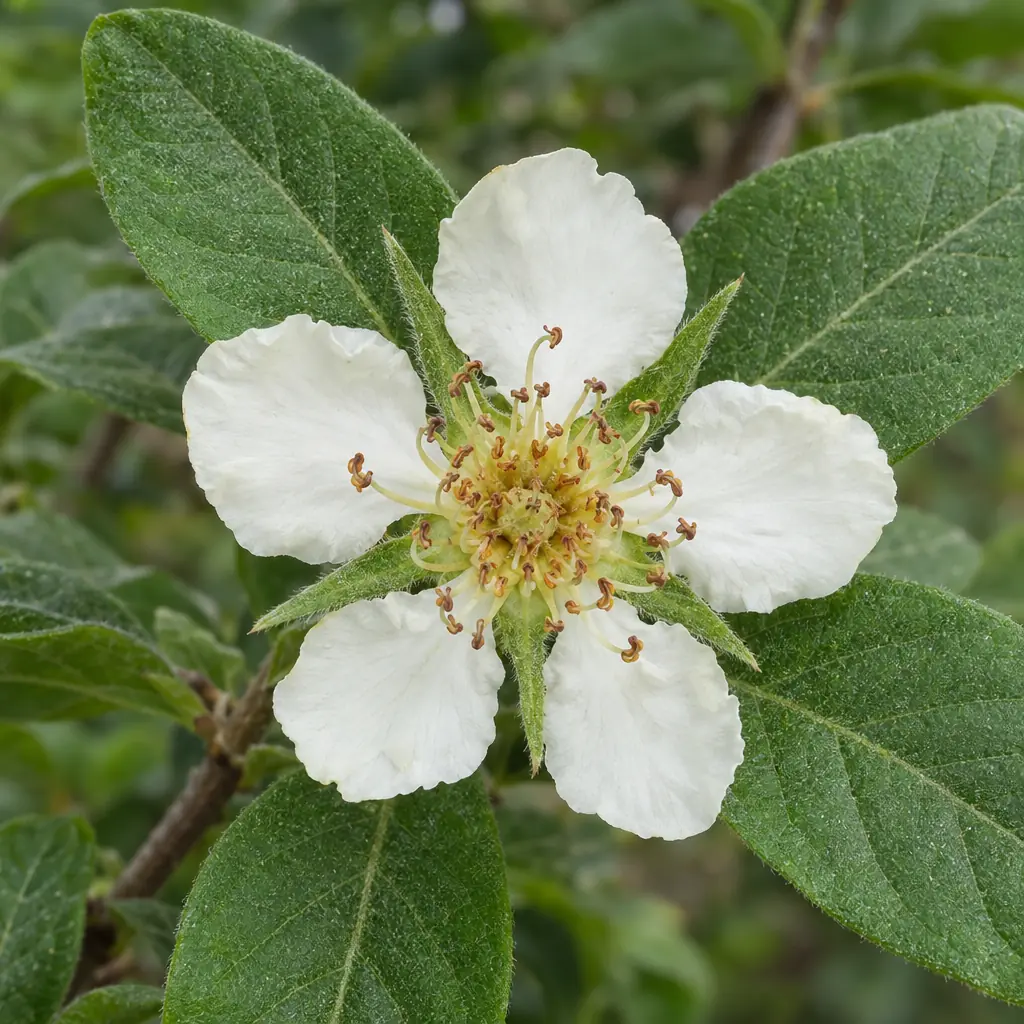
Flower 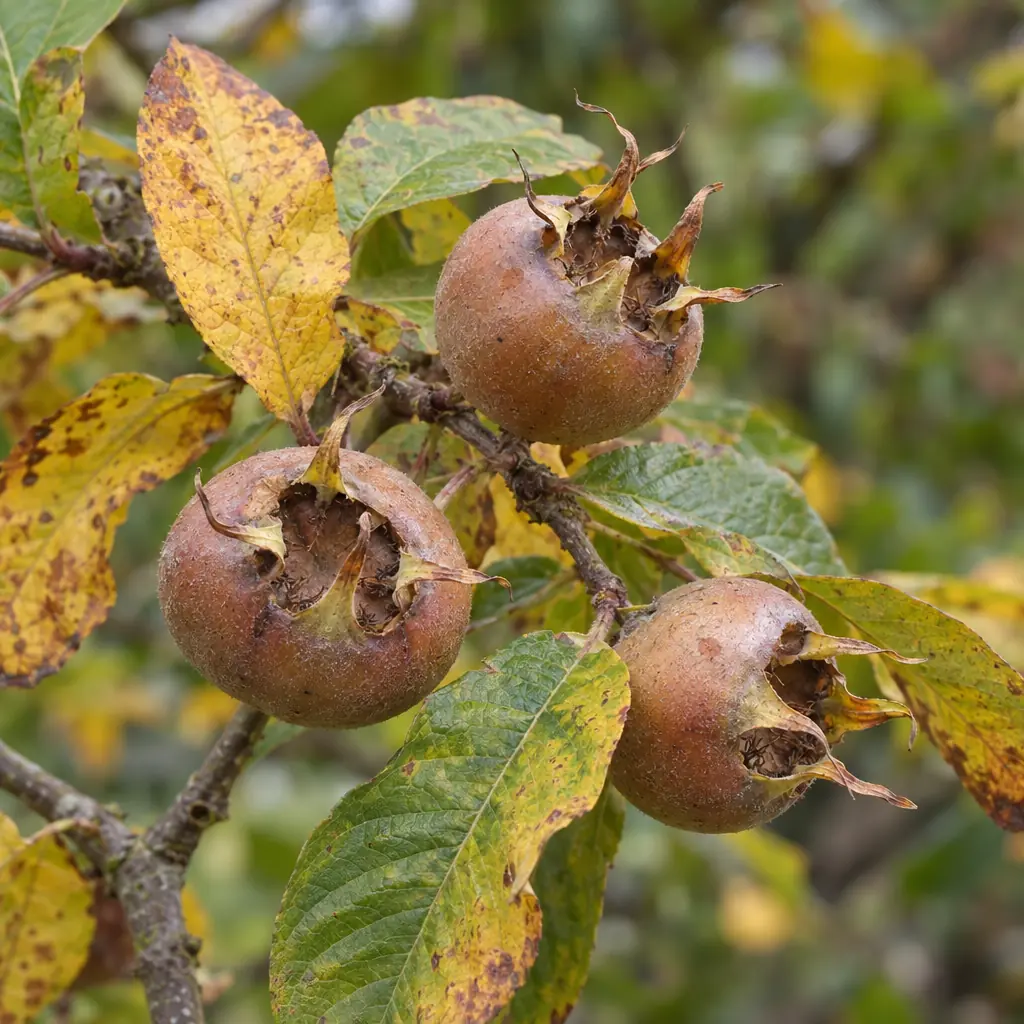
Fruit
How do I recognise a medlar tree?
Start with the leaves. Each leaf is oblong, 5 to 12 centimetres long, and ends in a point. The edge is smooth, sometimes finely toothed towards the tip. To the touch the leaf is softly hairy, and its stalk is very short.
Every flower grows singly, never in a cluster. The flowers are 2.5 to 4 centimetres across, with five cream-white petals. The five sepals are the long green points under the flower. They stay on after flowering.
The fruit is round to pear-shaped, 2 to 3.5 centimetres across and brown. On top sits a little crown of those same sepals.
On the wild form the branches usually carry thorns. Cultivated medlars often lack them. Young twigs are softly hairy.
Common hawthorn (Crataegus monogyna) also flowers white, but differently. Its flowers measure only 0.8 to 1.5 centimetres and grow together in flat heads. Hawthorn leaves are deeply cut.
Where does a medlar tree grow best?
A medlar grows best in full sun: the sun shines straight on it for more than six hours a day around midsummer. In partial shade, with three to six such hours, the tree still bears fruit. The ideal soil is deep, fertile and well-drained.
The species comes from south-eastern Europe and western Asia. People brought it to the Netherlands before 1500, so it has grown here for centuries. In the wild, medlar grows in open deciduous woods, woodland edges, wooded banks, hedges and old orchards.
A medlar struggles in these spots:
- An open, windy spot. Strong wind and late night frost damage the leaves and flowers. The result is fewer fruits.
- A narrow strip beside the house. The crown grows far wider than such a strip and pushes against the wall.
- Soil that stays wet for weeks in winter. The tree likes moisture, but the water has to drain away.
In January the medlar is bare. Only then do you see how tangled its branches grow.
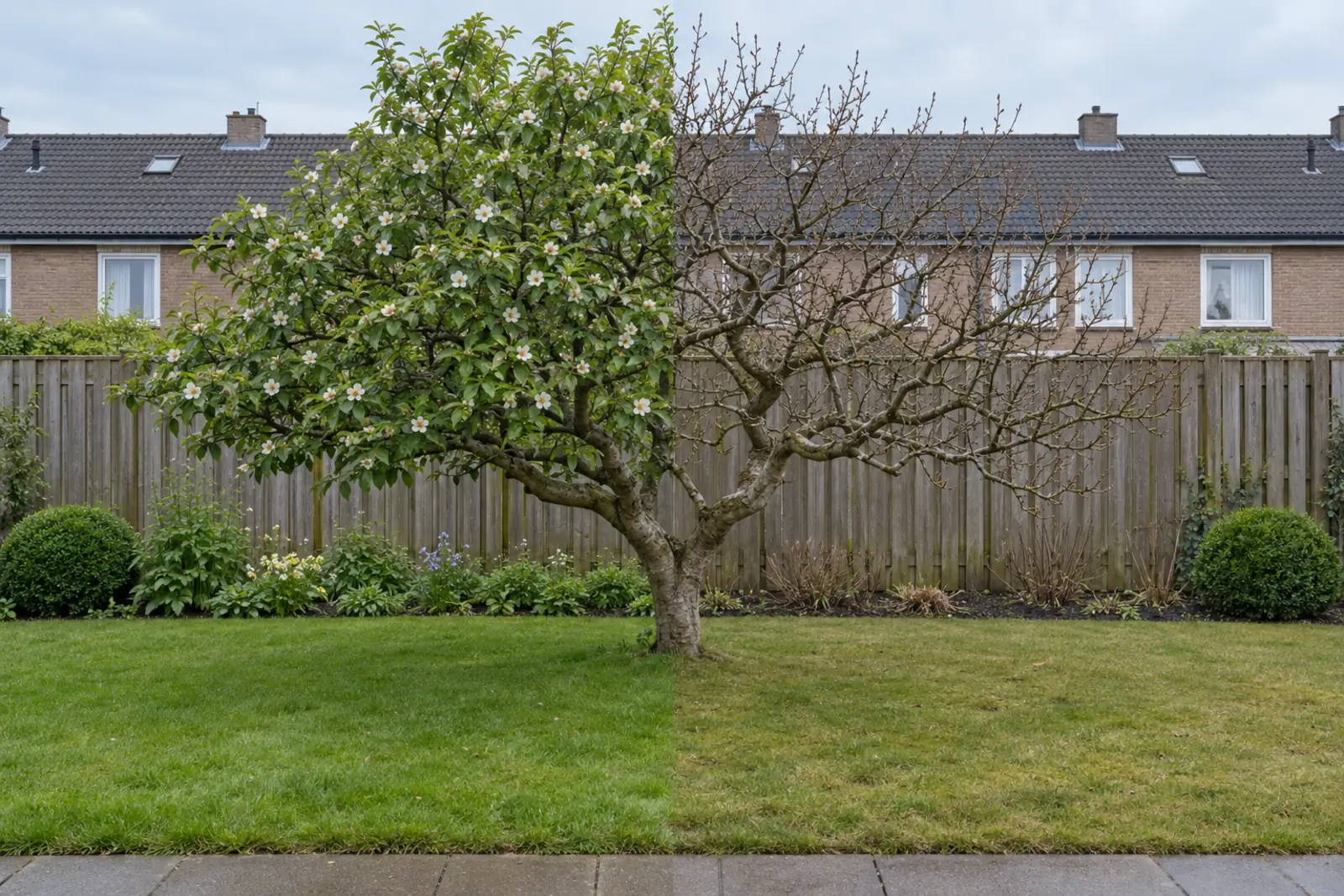 The same medlar in May and in January. This is a generated image, not a photo.
Will a tree this broad fit between your terrace and the fence? Place the medlar on a plan of your own plot and you will see. The app draws the plant at a grown plant's width, not at pot size.
Planting and caring for a medlar tree
Plant a medlar from late autumn to early spring, while the tree is dormant. Bare-root trees, sold without soil around the roots, are available from November to the end of March. At the planting spot, clear the grass over at least a metre across. That way the roots do not compete with the grass for water and food. Add a sturdy stake.
Keep at least 5 metres between the medlar and other trees or buildings. For a young tree that looks far too generous. Only after years does the crown fill the space. Spread a layer of compost 5 to 7.5 centimetres thick around the tree, but keep it off the trunk. Water during long dry spells in the first summer.
| When | What to do |
|---|---|
| Winter, when the tree is bare | Cut out dead, damaged and overcrowded branches |
| Winter | Leave the tips of the short side shoots: that is where the fruit grows |
Prune before March if you can. Many bird species breed from March to the end of July, and a few start as early as February.
What goes wrong with a medlar tree?
The leaves get small dark spots with grey centres and drop early. That is quince leaf blight, a fungus best known on quince. On a medlar it turns up now and then and does far less damage. Rake up the fallen leaves in autumn and throw them away. Cut out dead twigs in winter.
The fruits rot on the tree, with pale brown pustules in rings. That is brown rot, a fungus that enters the fruit through small wounds. Remove rotten fruit straight away and throw it out.
Few flowers or fruits appear. Look at the pruning first. The fruit grows on the tips of short side shoots, so cutting off those tips cuts off the harvest. Late night frost or a spring storm can also damage the blossom.
The leaves of a young tree hang limp. One cause is too little water in its first year.
Which birds and insects use the medlar?
Special hedges of dog rose, privet, hawthorn and medlar are planted for the grey partridge. Such a partridge hedge gives the bird a safe place to nest. The hedge also offers cover from predators.
The flowers offer nectar and pollen. Which insects visit them and which birds eat the fruit is not well described for the medlar.
Is the medlar poisonous or edible?
The medlar is not known as a poisonous garden plant. The fruit is edible, but not straight from the tree. Freshly picked, it is hard, mealy and astringent. After two to three weeks in a cool, dark place the fruit turns soft and dark brown. Only then is it eaten. People have also long made jelly from it.
The photos on this page were made with AI, based on real photos and descriptions of this plant.
Frequently asked questions
How big does a medlar tree grow?
In a garden, a medlar grows 4 to 6 metres tall and about as wide. The crown is broad and somewhat irregular. The tree reaches full size after 10 to 20 years.
When are medlars ripe?
The fruits are full-grown in October and November. Pick them in late October or November, while they are still hard. After two to three weeks in a cool, dark place they turn soft and brown, and only then are they edible.
When should you prune a medlar tree?
In winter, when the tree is bare. Cut out dead, damaged and overcrowded branches then. Leave the tips of the short side shoots, because that is where the fruit grows.
Is the medlar native to the Netherlands?
Yes, in the sense that it has grown here for centuries. The medlar comes from south-eastern Europe and western Asia and was brought to the Netherlands before 1500. In the wild it grows in woodland edges, wooded banks, hedges and old orchards.
Sources (20)
- Duistermaat, Sparrius & Denters, Standaardlijst van de Nederlandse flora 2020 (Gorteria 43)
- NDFF Verspreidingsatlas — Mespilus germanica
- NDFF Verspreidingsatlas — Crataegus monogyna
- Flora van Nederland — Mispel
- RHS — Mespilus germanica (common medlar)
- RHS — How to grow medlars
- RHS — Shade gardening (definities zon en halfschaduw)
- RHS — Quince leaf blight
- RHS — Brown rot
- Imkerpedia — Drachtplanten
- Pollennieuws — Aandachtspunten hooikoorts vriendelijke tuin
- PFAF — Mespilus germanica
- Vogelbescherming — PARTRIDGE project
- Vogelbescherming — Snoeien in het broedseizoen, mag dat?
- Yarinde — Mispel (prijs per maat)
- Ten Hoven Bomen — Wilde mispel (prijs, kale wortel)
- Den Mulder Boomteelt — Mespilus germanica meerstammig (prijs)
- Wikimedia Commons — Leaf: photo by AnRo0002 (CC0)
- Wikimedia Commons — Flower: photo by AnRo0002 (CC0)
- Wikimedia Commons — Fruit: photo by AnRo0002 (CC0)