5 min read
Yellow water lily (Nuphar lutea): pond planting and care
Nuphar lutea
Yellow water lily (Nuphar lutea) is a native water plant for a larger pond. The rhizome sits in the pond bottom, and the leaves float on the water. From May to August, small yellow flowers rise above the surface. The plant grows in full sun or partial shade, usually in 40 to 100 cm of water.
Yellow water lily at a glance
| Feature | Yellow water lily |
|---|---|
| Height | About 0.1 m above the water |
| Spread | 1 to 1.5 m |
| Full grown after | 2 to 5 years |
| Sun | Full sun to partial shade |
| Soil | Clayey pond soil, under water |
| Water | Plenty: grows in the water |
| Maintenance | Low: rein in its growth now and then |
| Flowers | May to August, yellow |
| For bees | Little: some nectar and pollen, May to August |
| Hay fever | Not or weakly allergenic |
| Leaves | Drop in autumn |
| Hardy | Yes |
| Native | Yes |
| Poisonous | Not established: the sources disagree |
| Pricks or stings | No |
| Price, young | About €9.95 to €10.88 each, as a loose rhizome |
| Price, grown | About €16 to €17.50 each, in a pond basket |
- Leaf
- April to October
- Flower
- May to August
- Fruit
- June to September
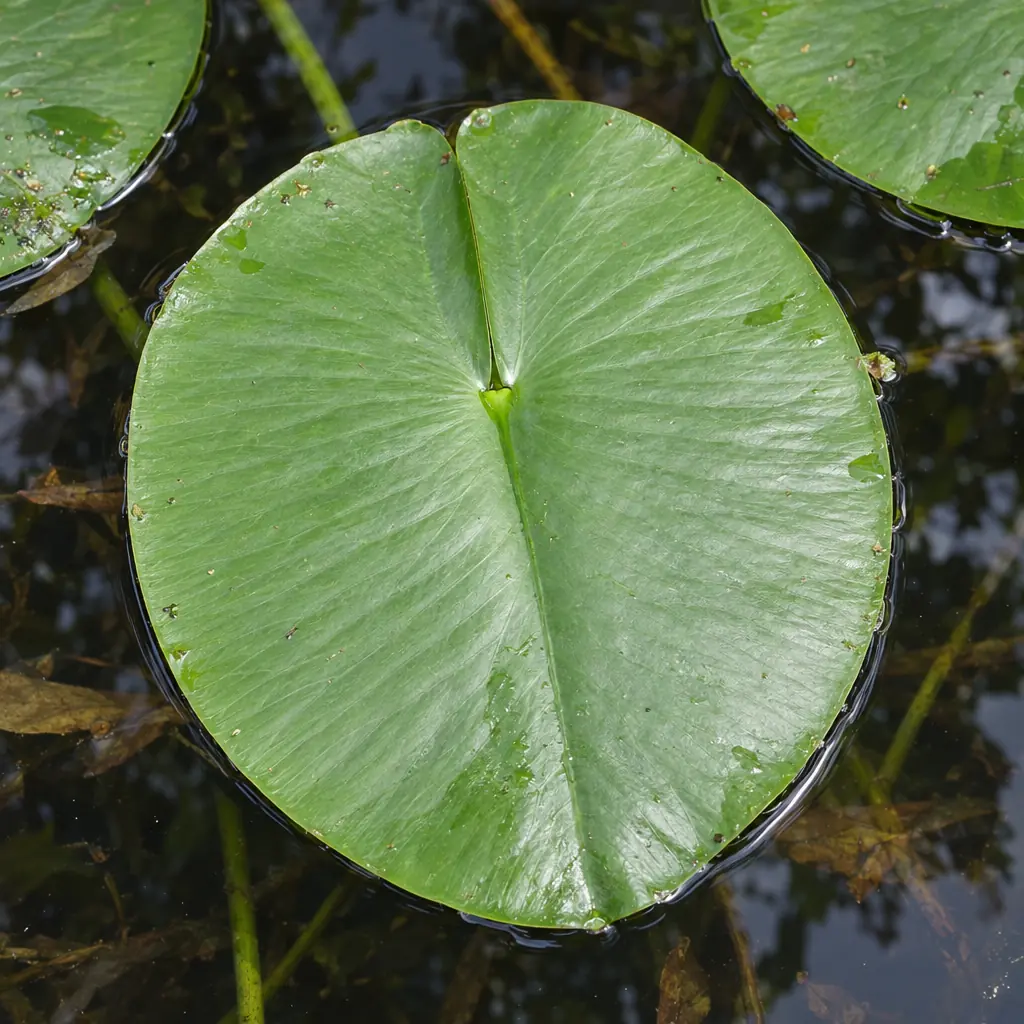
Leaf 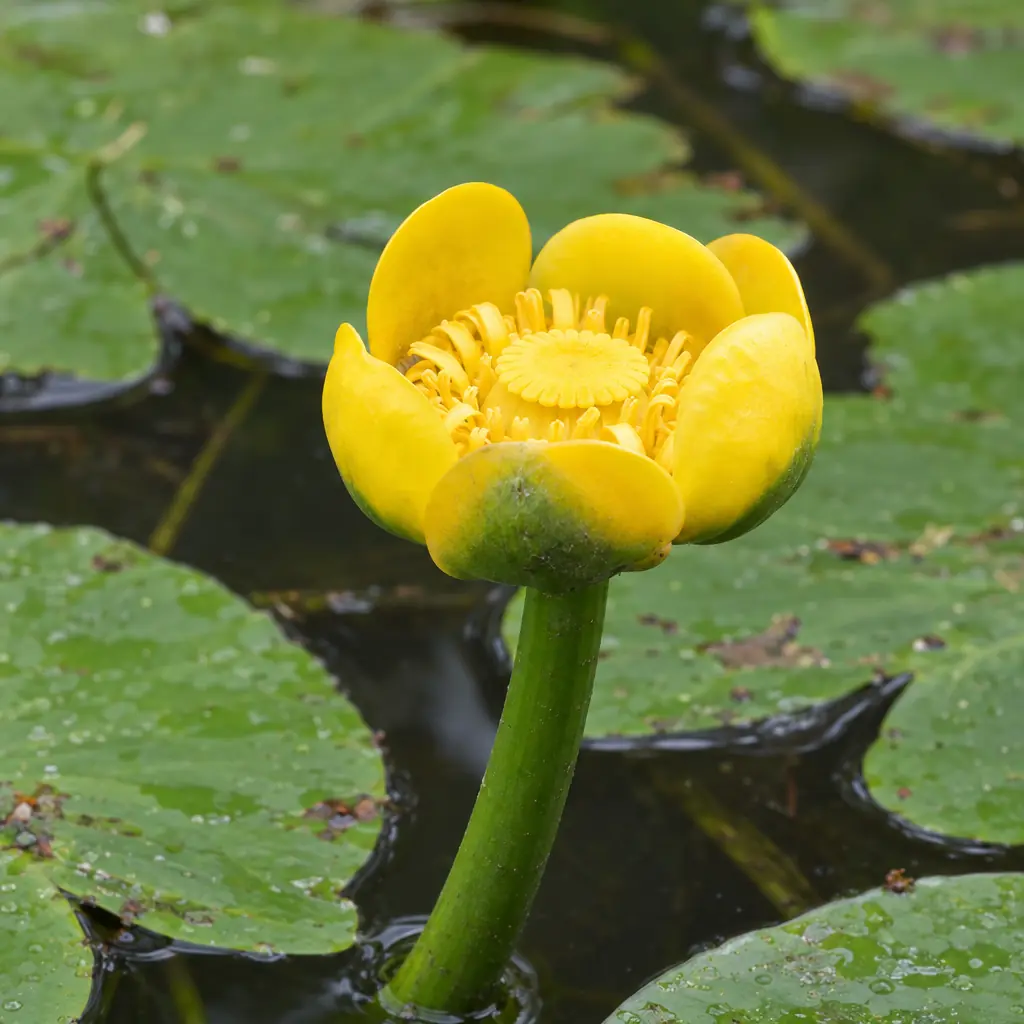
Flower 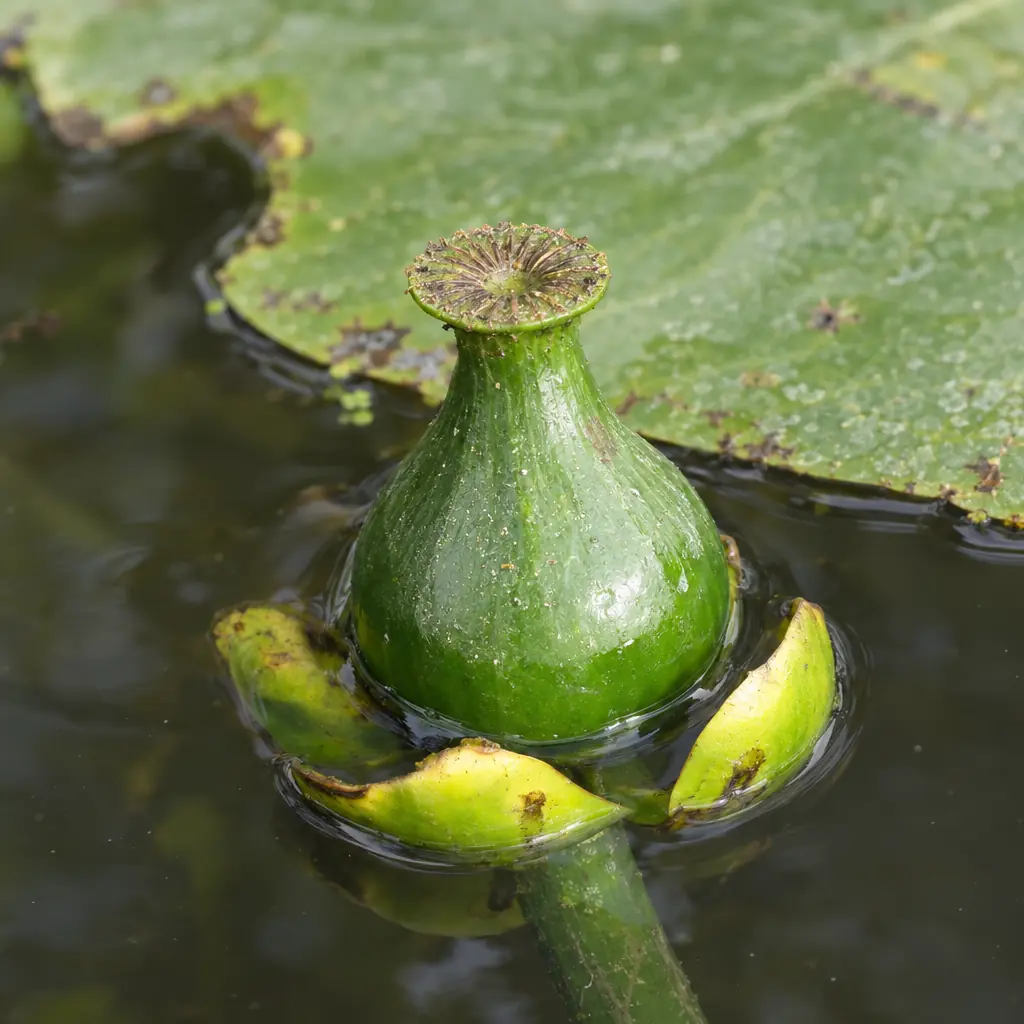
Fruit
How do I recognise yellow water lily?
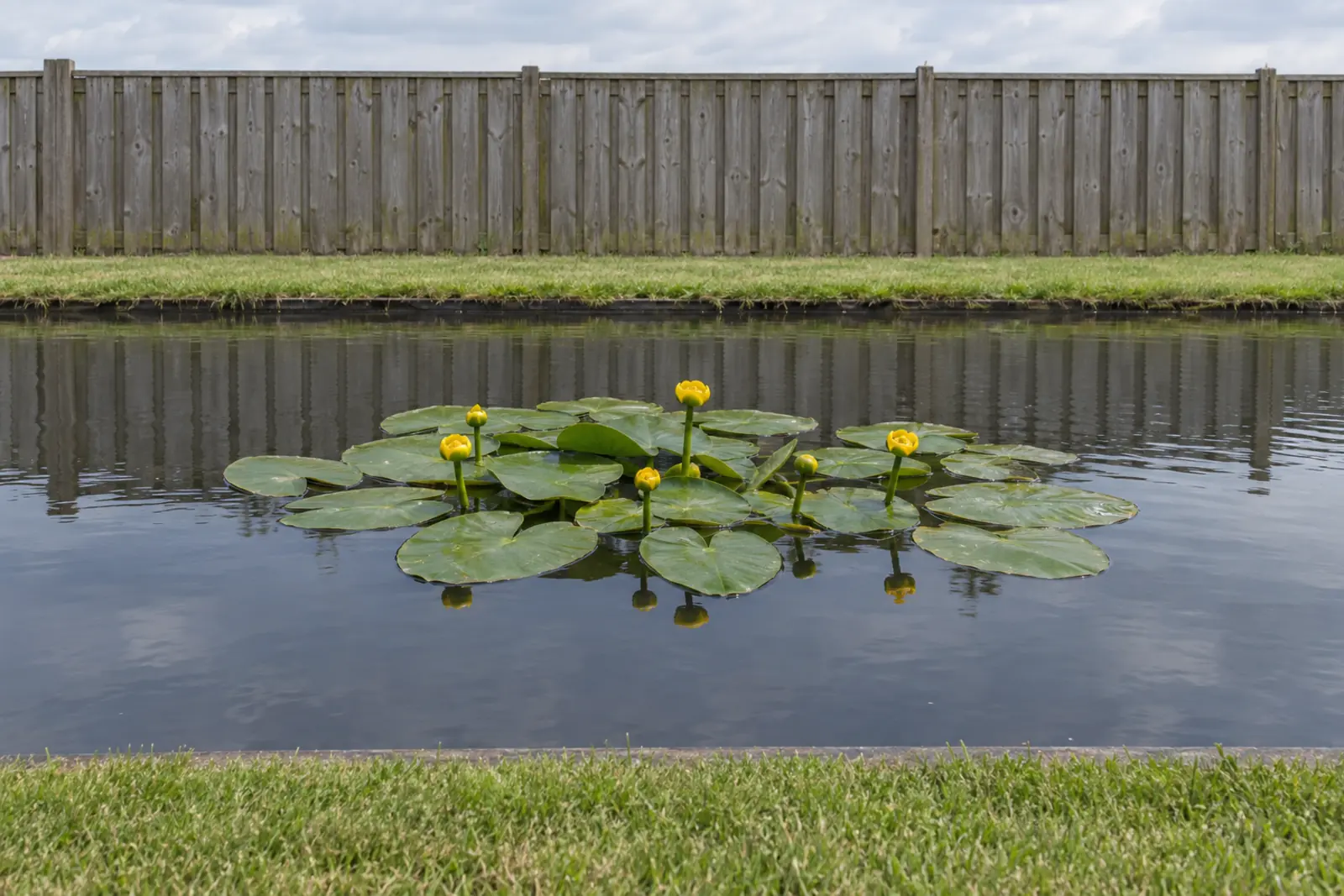
Start with the floating leaves. Each one is 10 to 30 cm long and egg-shaped, with a heart-shaped base. The leaf lies flat on the water. Other leaves grow below the surface. Those are translucent, light green and wavy.
The flower is a yellow ball of 3 to 6 cm. Five large yellow sepals, the outer flower leaves, form a cup. Inside sit many small yellow petals. Every flower rises on its own stalk, about 10 cm above the water. After flowering, a green fruit shaped like a flask forms. That fruit floats on the water.
White water lily looks like yellow water lily, but flowers white. Its flowers are 6 to 18 cm across and float on the water. The leaf of white water lily is almost round and less flat.
Where does yellow water lily grow best?
Yellow water lily grows in still to slowly flowing water that is fairly rich in nutrients. Full sun or partial shade is enough. Partial shade means three to six hours in which the sun shines straight on the water, around midsummer. In the wild the plant grows in water up to about 3 metres deep. Fish are no problem, koi included. The leaves taste so bitter that fish leave them alone.
Yellow water lily does not suit this spot:
- A small pond, a mini pond or a narrow planting section. The water fills up too quickly there.
In autumn the floating leaves die back. In January, from the bank, you see only open water.
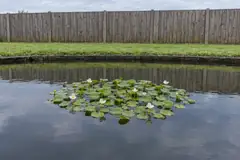
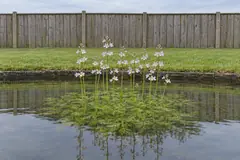
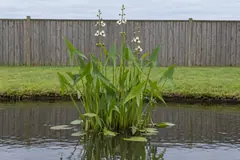
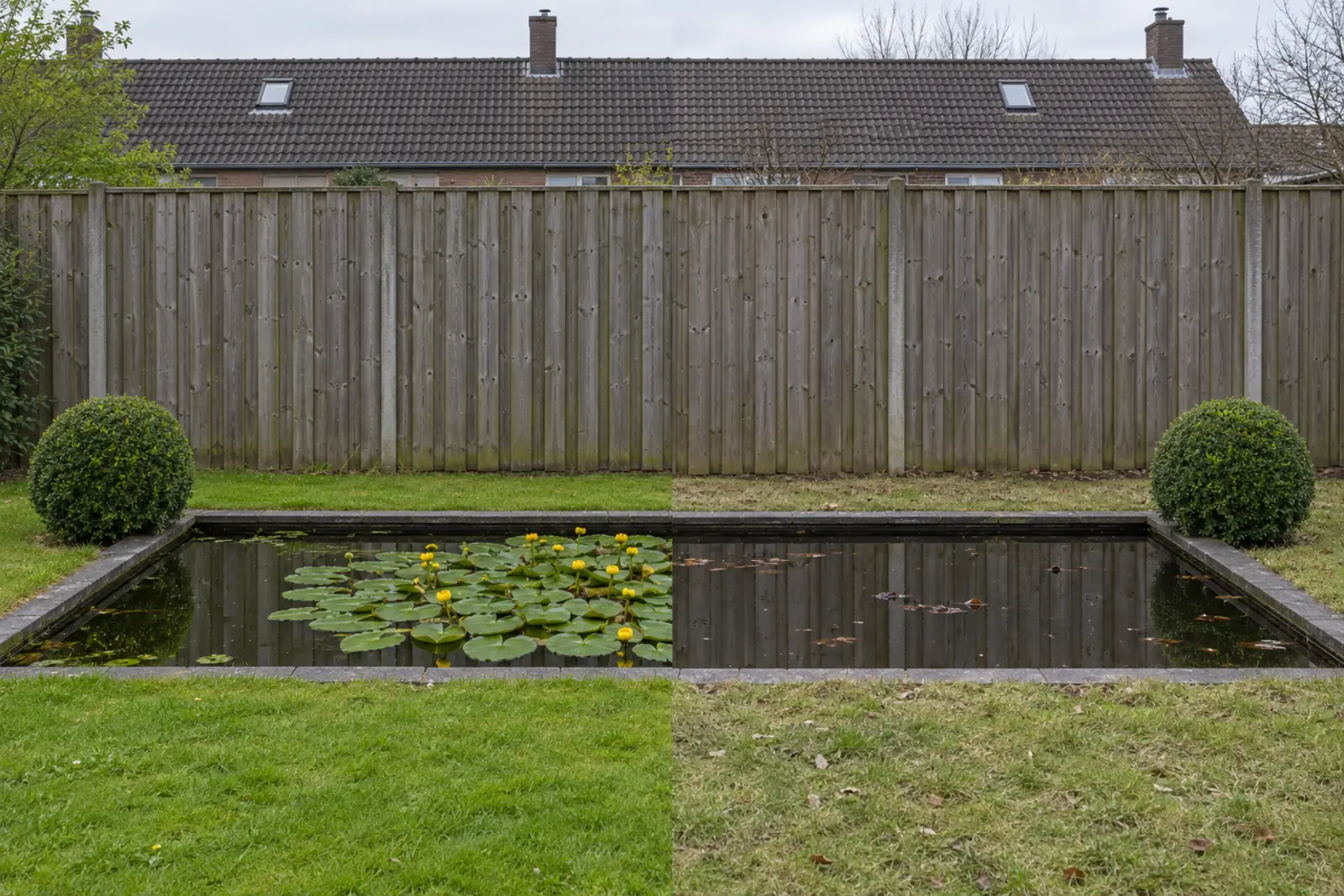 The same pond in May and in January. This is a generated image, not a photograph.
When you place yellow water lily on the map of your own garden in the app, you can see how much room one plant takes. The app draws the plant at a grown plant's width, not at pot size. Then drag the plant wider, to 1.5 metres, and compare that size with your pond.
Planting and caring for yellow water lily
Plant yellow water lily in spring. Growth starts as the water warms up, around April and May. Nurseries sell the plant as a loose rhizome, a thick stem that roots in the mud, or already planted in a pond basket.
Put a loose rhizome in a large pond basket yourself. Fill the basket with clayey pond soil or special water lily soil. The basket holds the rhizome together. Set it on the bottom, usually 40 to 100 cm deep.
Keep about 1.5 metres between two baskets. On planting day that looks like a lot of empty water for one rhizome. After a few years the leaves fill that space.
Watering is never needed, because the plant grows in the water. Pruning is not needed either.
Yellow water lily problems and what to do
The leaves are full of small holes. That is often the water lily beetle (Galerucella nymphaeae), a small beetle. Beetle and larva chew holes in the leaf but leave the underside intact. In the wild that does no real harm. In a garden pond the damage is mostly cosmetic.
The leaves under water have been eaten. That may be the great ramshorn snail (Planorbis corneus). This snail feeds on the soft underwater leaves.
The pond is filling up. Yellow water lily is a vigorous grower. If the rhizome grows loose in the pond bottom, the plant takes over a large part of the water. Lift it out and put it in a pond basket or a crate.
The fruit falls apart in pieces. That is normal. A ripe fruit splits into many segments, full of seeds.
Which insects and birds use yellow water lily?
The red-eyed damselfly (Erythromma najas) likes to sit on yellow water lily. The males fly low over floating water plants and often land on them. Yellow water lily often seems to be their favourite spot. This damselfly flies from early May to mid September.
The lilypad whiteface (Leucorrhinia caudalis), a dragonfly, also rests on the floating leaves. Leaves that lie a few metres out from the bank are its first choice. Yellow water lily appears on the list of plants for a dragonfly pond as well. Which birds benefit from this plant is not well described.
Is yellow water lily poisonous or edible?
Whether yellow water lily is poisonous has not been established. The sources disagree on it. A few sources call the rhizome edible after cooking. Either way, the rhizome tastes bitter.
The photos on this page were made with AI, based on real photos and descriptions of this plant.
Frequently asked questions
How deep should yellow water lily be planted in a pond?
Usually set the basket 40 to 100 cm deep. In the wild, yellow water lily grows in water up to about 3 metres deep.
Is yellow water lily suitable for a small pond?
Usually not. Yellow water lily grows vigorously and can take over a large part of the water. Choose a larger pond and keep the plant in a pond basket.
When does yellow water lily flower?
From May through August. The yellow flowers are 3 to 6 cm across and rise about 10 cm above the water.
Is yellow water lily poisonous?
That has not been established, because the sources disagree. A few sources call the rhizome edible after cooking. The rhizome does taste bitter.
What is the difference between yellow water lily and white water lily?
Yellow water lily has small yellow flowers above the water. White water lily has white flowers of 6 to 18 cm that float on the water, and almost round leaves.
Sources (25)
- Duistermaat, Sparrius & Denters, Standaardlijst van de Nederlandse flora 2020 (Gorteria 43)
- NDFF Verspreidingsatlas — Nuphar lutea
- Flora van Nederland — Gele plomp
- Flora van Nederland — Witte waterlelie
- Wilde planten in Nederland en België — Gele plomp
- RHS — Nuphar lutea
- RHS — Shade gardening (definities zon en schaduw)
- Plants For A Future — Nuphar lutea
- Imkerpedia — Drachtplanten
- Pollennieuws — Aandachtspunten hooikoortsvriendelijke tuin
- Bloemenpark Appeltern — Nuphar lutea
- Microcosmos — Waterleliehaantje
- De Vlinderstichting — Grote roodoogjuffer
- De Vlinderstichting — Sierlijke witsnuitlibel
- De Vlinderstichting — Planten voor een libellenvijver
- Provincie Fryslân — De Friese vlag
- Directplant — Gele plomp (planten en diepte)
- Biovijver — Gele plomp
- Vijvermeester — Gele plomp (prijs)
- Vijverplanten webshop — Gele plomp (prijs)
- Vijverplantenland — Gele plomp (prijs)
- De Vijvertuinen van Ada Hofman — Gele plomp (prijs)
- Wikimedia Commons — Leaf: photo by AnRo0002 (CC0)
- Wikimedia Commons — Flower: photo by AnRo0002 (CC0)
- Wikimedia Commons — Fruit: photo by AnRo0002 (CC0)